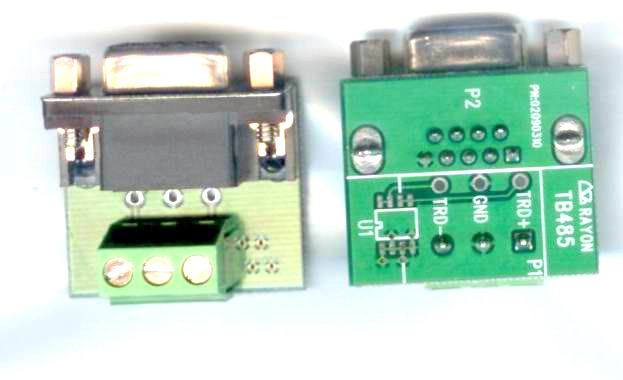
TB485
SUCHEN SIE DIE PASSENDE
INDUSTRIELLE LÖSUNG?
Entdecken Sie Embedded-, Kommunikations- und Automatisierungslösungen für Ihre Anwendung.
APort080
IP Device Server TX to Isolated 8*RS232
242,00 EUR
inkl. Umsatzsteuer 287,98 EUR
- Eight Ground-Isolated RS232 Ports: Each port is individually isolated from system ground and other ports, ensuring electrical protection and noise immunity in industrial environments.
- 10/100 Mbps Ethernet Interface: Auto-detecting 10/100 Base-T Ethernet port with RJ45 connector for flexible network integration.
- High-Performance Embedded CPU: 32-bit 100 MHz MIPS RISC processor delivers superior performance compared to 16-bit architectures.
- Linux-Based System Board: Embedded Linux OS provides stability, multitasking, and network stack reliability.
- Multiple Communication Modes: Supports TCP Server, TCP Client, UDP Send/Receive, and UDP Multi-Serial modes for diverse networking applications.
- Cross-Platform Driver Support:
- Windows NT/2000/XP/Vista/7/8/10 virtual COM port drivers
- Linux raw TTY driver
- SCO UNIX real TTY driver
- Web, Telnet, and Console Configuration: Multiple configuration interfaces for flexible setup and management.
- Virtual COM Port Functionality: Enables remote serial devices to appear as local COM ports on Windows systems.
- Ground Isolation: Each RS232 port is galvanically isolated to prevent ground loops and protect connected equipment.
- Compact Industrial Design: Rugged metal enclosure suitable for control cabinets and industrial automation systems.
- Firmware Upgradeable: Supports TFTP-based firmware updates for maintenance and feature enhancements.
- Diagnostic LEDs: Indicators for power, LAN link/activity, and serial port TX/RX status.
- 10/100 Mbps Ethernet Interface: Auto-detecting 10/100 Base-T Ethernet port with RJ45 connector for flexible network integration.
- High-Performance Embedded CPU: 32-bit 100 MHz MIPS RISC processor delivers superior performance compared to 16-bit architectures.
- Linux-Based System Board: Embedded Linux OS provides stability, multitasking, and network stack reliability.
- Multiple Communication Modes: Supports TCP Server, TCP Client, UDP Send/Receive, and UDP Multi-Serial modes for diverse networking applications.
- Cross-Platform Driver Support:
- Windows NT/2000/XP/Vista/7/8/10 virtual COM port drivers
- Linux raw TTY driver
- SCO UNIX real TTY driver
- Web, Telnet, and Console Configuration: Multiple configuration interfaces for flexible setup and management.
- Virtual COM Port Functionality: Enables remote serial devices to appear as local COM ports on Windows systems.
- Ground Isolation: Each RS232 port is galvanically isolated to prevent ground loops and protect connected equipment.
- Compact Industrial Design: Rugged metal enclosure suitable for control cabinets and industrial automation systems.
- Firmware Upgradeable: Supports TFTP-based firmware updates for maintenance and feature enhancements.
- Diagnostic LEDs: Indicators for power, LAN link/activity, and serial port TX/RX status.
1. Product Overview
Product Name: APort080
Model: APort080
Series: APORT Series – IP to Serial Port Converters
Article Number: APort080
Manufacturer: Rayon Technology Co., Ltd.
Manufacturer Address: 2F, No. 177, Chung Shan 2 Rd., Lu Chou City, Taipei Hsien, Taiwan
Contact: Tel: +886-2-82858362 | Fax: +886-2-82857065
Email: rayon@ms1.hinet.net / info@rayontech.com.tw
Websites: [www.rayontech.com.tw](http://www.rayontech.com.tw), [www.computex.com.tw/rayon](http://www.computex.com.tw/rayon)
The Rayon APort080 is an industrial-grade IP Device Server designed to convert Ethernet-based TCP/IP or UDP/IP communication into eight isolated RS232 serial interfaces. It provides a reliable and flexible solution for connecting multiple serial devices to an IP network, enabling remote management, monitoring, and data exchange. The device integrates a high-performance 32-bit MIPS RISC processor running at 100 MHz, with 16 MB Flash ROM and 16 MB SDRAM, ensuring stable operation and efficient data handling.
2. Key Features
- Eight Ground-Isolated RS232 Ports: Each port is individually isolated from system ground and other ports, ensuring electrical protection and noise immunity in industrial environments.
- 10/100 Mbps Ethernet Interface: Auto-detecting 10/100 Base-T Ethernet port with RJ45 connector for flexible network integration.
- High-Performance Embedded CPU: 32-bit 100 MHz MIPS RISC processor delivers superior performance compared to 16-bit architectures.
- Linux-Based System Board: Embedded Linux OS provides stability, multitasking, and network stack reliability.
- Multiple Communication Modes: Supports TCP Server, TCP Client, UDP Send/Receive, and UDP Multi-Serial modes for diverse networking applications.
- Cross-Platform Driver Support:
- Windows NT/2000/XP/Vista/7/8/10 virtual COM port drivers
- Linux raw TTY driver
- SCO UNIX real TTY driver
- Web, Telnet, and Console Configuration: Multiple configuration interfaces for flexible setup and management.
- Virtual COM Port Functionality: Enables remote serial devices to appear as local COM ports on Windows systems.
- Ground Isolation: Each RS232 port is galvanically isolated to prevent ground loops and protect connected equipment.
- Compact Industrial Design: Rugged metal enclosure suitable for control cabinets and industrial automation systems.
- Firmware Upgradeable: Supports TFTP-based firmware updates for maintenance and feature enhancements.
- Diagnostic LEDs: Indicators for power, LAN link/activity, and serial port TX/RX status.
3. Technical Specifications
Processor & Memory:
- CPU: 32-bit MIPS RISC, 100 MHz
- Flash ROM: 16 MB
- SDRAM: 16 MB
Network Interface:
- Type: 10/100 Mbps Ethernet (IEEE 802.3 compliant)
- Connector: RJ45
- Auto-negotiation for 10/100 Base-T operation
Serial Interfaces:
- Type: RS232 (Ground Isolated)
- Connector: DB9 male (x8)
- Number of Ports: 8
- Baud Rate: Up to 230,400 bps
- Isolation: Each port isolated from system and other ports
- Console Port: Shared with Serial Port 1 (selectable via DIP switch)
Power Requirements:
- Input Voltage: 5 V DC
- Current Consumption: 1.6 A (typical)
- Power Adapter: UP110/UP220 (supplied)
Physical Characteristics:
- Dimensions: 205 mm × 135 mm × 48 mm
- Weight: Approx. 0.8 kg (typical)
- Enclosure Material: Metal (Rayon industrial-grade housing)
Environmental Conditions:
- Operating Temperature: 5 °C to 40 °C
- Storage Temperature: 0 °C to 65 °C
- Operating Humidity: 10 %–90 % RH (non-condensing)
- Storage Humidity: 5 %–90 % RH
4. Functionality
The APort080 functions as an IP-to-Serial converter, bridging Ethernet networks and serial devices. Each of its eight RS232 ports can be configured independently for different communication modes:
- TCP Server Mode: The APort080 listens for incoming TCP connections on assigned port numbers, allowing remote clients to access serial devices via standard socket or Telnet connections.
- TCP Client Mode: The device initiates a connection to a specified remote server, suitable for centralized data collection or SCADA systems.
- UDP Mode: Enables broadcast or point-to-multipoint communication, sending serial data to up to four remote hosts simultaneously.
- UDP Multi-Serial Mode: Allows multiple serial ports to share the same UDP port number for synchronized data distribution.
- Real TTY Modes:
- *COM Real TTY Mode* (UDP-based) for Windows and SCO UNIX systems.
- *GVMODEM Real TTY Mode* (TCP-based) for Linux and UNIX systems.
Use Cases and Applications:
- Industrial automation and control systems
- SCADA and telemetry networks
- Remote monitoring of sensors, PLCs, and meters
- POS systems and data acquisition terminals
- Serial device networking in manufacturing or laboratory environments
Compatibility:
- Windows (NT/2000/XP/Vista/7/8/10) via Virtual COM driver
- Linux (raw TTY driver)
- SCO UNIX (real TTY driver)
- Supports RFC2217 for Telnet-based serial configuration
5. Components & Accessories
Included Items:
- APort080 main unit
- UP110/UP220 5 V DC power adapter
- User manual and software CD (drivers, utilities, and documentation)
Optional Accessories:
- Console cable (RS232)
- Ethernet cable (RJ45)
- DIN-rail or wall-mounting brackets (optional)
Connectors:
- 1 × RJ45 Ethernet port
- 8 × DB9 male RS232 ports
- Power input jack (5 V DC)
6. Installation & Setup
Hardware Installation:
1. Connect the APort080 to a network hub or switch using a standard Ethernet cable.
2. Attach serial cables between the APort080’s DB9 connectors and target RS232 devices.
3. Configure DIP switches:
- Bit 1: Console port enable (ON = console, OFF = normal serial port)
- Bit 2: Firmware upgrade mode (ON = upgrade, OFF = normal operation)
4. Connect the 5 V DC power adapter (UP110/UP220).
5. Observe LED indicators for power and network link status.
Software Configuration:
- Access via Web Browser, Telnet, or Console Terminal.
- Default IP Address: 192.168.1.254
- Default Password: 11111
- Configuration options include IP settings (static or DHCP), serial port parameters (baud rate, parity, stop bits, flow control), and operating mode selection.
Driver Installation:
- Windows: Install APORT or TPORT virtual COM drivers using provided utilities (`aport_ap.exe` or `tport_ap.exe`).
- Linux/UNIX: Install `gvmodem` or `rtty` drivers for real TTY operation.
- SCO UNIX: Use `rtty100.tar` package for real TTY driver installation.
Firmware Upgrade Procedure:
- Enable firmware upgrade mode via DIP switch 2.
- Connect via console terminal (115200 bps, 8N1).
- Use TFTP client to upload new firmware image to 192.168.1.254.
7. Performance & Capabilities
- Data Rate: Up to 230.4 kbps per serial port.
- Network Throughput: 10/100 Mbps auto-negotiation.
- Latency: Dependent on network conditions; optimized for low-latency serial data exchange.
- Concurrent Connections: Each serial port can handle one TCP/UDP session; multiple ports operate independently.
- Buffering: Internal buffering managed by embedded Linux system for reliable data flow.
- Efficiency: 32-bit RISC CPU ensures minimal packet delay and efficient protocol handling.
- Limitations:
- TCP-based communication may introduce variable latency compared to direct COM ports.
- Only one host can occupy a serial port in TPORT mode; use RPORT driver for multi-host environments.
8. Standards & Compliance
- Ethernet Standards: IEEE 802.3 10/100 Base-T
- Serial Standards: EIA/TIA RS232
- Protocol Support: TCP/IP, UDP/IP, Telnet, RFC2217
- Operating System Compatibility: Windows, Linux, UNIX, SCO UNIX
- Safety & Isolation: Ground-isolated serial ports for electrical protection
- Firmware Upgrade Protocol: TFTP (Trivial File Transfer Protocol)
- Environmental Compliance: Designed for industrial temperature and humidity ranges
9. Additional Information
Warranty:
- One-year limited warranty covering defects in materials and workmanship.
- Excludes damage from misuse, unauthorized servicing, or electrical faults.
Support & Maintenance:
- Technical support available via email (rayon@ms1.hinet.net).
- Firmware updates and driver downloads provided by Rayon Technology.
- RMA (Return Material Authorization) required for repairs.
Maintenance Recommendations:
- Use only the supplied 5 V DC adapter.
- Avoid exposure to excessive heat or humidity.
- Periodically check firmware version and update if necessary.
Firmware & Software Utilities:
- `aport_ap.exe` – APORT mode configuration utility
- `tport_ap.exe` – TPORT mode configuration utility
- `aport_search.exe` / `tport_search.exe` – Network discovery tools
- `wftp8.exe` – Firmware upgrade utility
- `gvmodem` / `rtty` – UNIX/Linux driver packages
Related Models in APORT Series:
- APORT200: 2 × RS232 ports
- APORT020: 2 × Ground-Isolated RS232 ports
- APORT101: 1 × RS232 + 1 × RS422/485 isolated port
- APORT400: 4 × RS232 ports
- APORT040: 4 × Ground-Isolated RS232 ports
- APORT004: 4 × Ground-Isolated RS422/485 ports
- APORT008: 8 × Ground-Isolated RS422/485 ports
- APORT602: 6 × RS232 + 2 × RS422/485 isolated ports
- APORT620: 6 × RS232 + 2 × Ground-Isolated RS232 ports
Summary:
The Rayon APort080 is a robust, high-performance IP-to-Serial device server engineered for industrial and enterprise environments requiring multiple isolated RS232 connections over Ethernet. Its combination of eight isolated serial ports, flexible communication modes, and cross-platform driver support makes it ideal for integrating legacy serial equipment into modern IP networks. With a Linux-based architecture, comprehensive configuration options, and reliable performance, the APort080 provides a scalable and secure solution for remote serial communication and device management.

Product Name: APort080
Model: APort080
Series: APORT Series – IP to Serial Port Converters
Article Number: APort080
Manufacturer: Rayon Technology Co., Ltd.
Manufacturer Address: 2F, No. 177, Chung Shan 2 Rd., Lu Chou City, Taipei Hsien, Taiwan
Contact: Tel: +886-2-82858362 | Fax: +886-2-82857065
Email: rayon@ms1.hinet.net / info@rayontech.com.tw
Websites: [www.rayontech.com.tw](http://www.rayontech.com.tw), [www.computex.com.tw/rayon](http://www.computex.com.tw/rayon)
The Rayon APort080 is an industrial-grade IP Device Server designed to convert Ethernet-based TCP/IP or UDP/IP communication into eight isolated RS232 serial interfaces. It provides a reliable and flexible solution for connecting multiple serial devices to an IP network, enabling remote management, monitoring, and data exchange. The device integrates a high-performance 32-bit MIPS RISC processor running at 100 MHz, with 16 MB Flash ROM and 16 MB SDRAM, ensuring stable operation and efficient data handling.
2. Key Features
- Eight Ground-Isolated RS232 Ports: Each port is individually isolated from system ground and other ports, ensuring electrical protection and noise immunity in industrial environments.
- 10/100 Mbps Ethernet Interface: Auto-detecting 10/100 Base-T Ethernet port with RJ45 connector for flexible network integration.
- High-Performance Embedded CPU: 32-bit 100 MHz MIPS RISC processor delivers superior performance compared to 16-bit architectures.
- Linux-Based System Board: Embedded Linux OS provides stability, multitasking, and network stack reliability.
- Multiple Communication Modes: Supports TCP Server, TCP Client, UDP Send/Receive, and UDP Multi-Serial modes for diverse networking applications.
- Cross-Platform Driver Support:
- Windows NT/2000/XP/Vista/7/8/10 virtual COM port drivers
- Linux raw TTY driver
- SCO UNIX real TTY driver
- Web, Telnet, and Console Configuration: Multiple configuration interfaces for flexible setup and management.
- Virtual COM Port Functionality: Enables remote serial devices to appear as local COM ports on Windows systems.
- Ground Isolation: Each RS232 port is galvanically isolated to prevent ground loops and protect connected equipment.
- Compact Industrial Design: Rugged metal enclosure suitable for control cabinets and industrial automation systems.
- Firmware Upgradeable: Supports TFTP-based firmware updates for maintenance and feature enhancements.
- Diagnostic LEDs: Indicators for power, LAN link/activity, and serial port TX/RX status.
3. Technical Specifications
Processor & Memory:
- CPU: 32-bit MIPS RISC, 100 MHz
- Flash ROM: 16 MB
- SDRAM: 16 MB
Network Interface:
- Type: 10/100 Mbps Ethernet (IEEE 802.3 compliant)
- Connector: RJ45
- Auto-negotiation for 10/100 Base-T operation
Serial Interfaces:
- Type: RS232 (Ground Isolated)
- Connector: DB9 male (x8)
- Number of Ports: 8
- Baud Rate: Up to 230,400 bps
- Isolation: Each port isolated from system and other ports
- Console Port: Shared with Serial Port 1 (selectable via DIP switch)
Power Requirements:
- Input Voltage: 5 V DC
- Current Consumption: 1.6 A (typical)
- Power Adapter: UP110/UP220 (supplied)
Physical Characteristics:
- Dimensions: 205 mm × 135 mm × 48 mm
- Weight: Approx. 0.8 kg (typical)
- Enclosure Material: Metal (Rayon industrial-grade housing)
Environmental Conditions:
- Operating Temperature: 5 °C to 40 °C
- Storage Temperature: 0 °C to 65 °C
- Operating Humidity: 10 %–90 % RH (non-condensing)
- Storage Humidity: 5 %–90 % RH
4. Functionality
The APort080 functions as an IP-to-Serial converter, bridging Ethernet networks and serial devices. Each of its eight RS232 ports can be configured independently for different communication modes:
- TCP Server Mode: The APort080 listens for incoming TCP connections on assigned port numbers, allowing remote clients to access serial devices via standard socket or Telnet connections.
- TCP Client Mode: The device initiates a connection to a specified remote server, suitable for centralized data collection or SCADA systems.
- UDP Mode: Enables broadcast or point-to-multipoint communication, sending serial data to up to four remote hosts simultaneously.
- UDP Multi-Serial Mode: Allows multiple serial ports to share the same UDP port number for synchronized data distribution.
- Real TTY Modes:
- *COM Real TTY Mode* (UDP-based) for Windows and SCO UNIX systems.
- *GVMODEM Real TTY Mode* (TCP-based) for Linux and UNIX systems.
Use Cases and Applications:
- Industrial automation and control systems
- SCADA and telemetry networks
- Remote monitoring of sensors, PLCs, and meters
- POS systems and data acquisition terminals
- Serial device networking in manufacturing or laboratory environments
Compatibility:
- Windows (NT/2000/XP/Vista/7/8/10) via Virtual COM driver
- Linux (raw TTY driver)
- SCO UNIX (real TTY driver)
- Supports RFC2217 for Telnet-based serial configuration
5. Components & Accessories
Included Items:
- APort080 main unit
- UP110/UP220 5 V DC power adapter
- User manual and software CD (drivers, utilities, and documentation)
Optional Accessories:
- Console cable (RS232)
- Ethernet cable (RJ45)
- DIN-rail or wall-mounting brackets (optional)
Connectors:
- 1 × RJ45 Ethernet port
- 8 × DB9 male RS232 ports
- Power input jack (5 V DC)
6. Installation & Setup
Hardware Installation:
1. Connect the APort080 to a network hub or switch using a standard Ethernet cable.
2. Attach serial cables between the APort080’s DB9 connectors and target RS232 devices.
3. Configure DIP switches:
- Bit 1: Console port enable (ON = console, OFF = normal serial port)
- Bit 2: Firmware upgrade mode (ON = upgrade, OFF = normal operation)
4. Connect the 5 V DC power adapter (UP110/UP220).
5. Observe LED indicators for power and network link status.
Software Configuration:
- Access via Web Browser, Telnet, or Console Terminal.
- Default IP Address: 192.168.1.254
- Default Password: 11111
- Configuration options include IP settings (static or DHCP), serial port parameters (baud rate, parity, stop bits, flow control), and operating mode selection.
Driver Installation:
- Windows: Install APORT or TPORT virtual COM drivers using provided utilities (`aport_ap.exe` or `tport_ap.exe`).
- Linux/UNIX: Install `gvmodem` or `rtty` drivers for real TTY operation.
- SCO UNIX: Use `rtty100.tar` package for real TTY driver installation.
Firmware Upgrade Procedure:
- Enable firmware upgrade mode via DIP switch 2.
- Connect via console terminal (115200 bps, 8N1).
- Use TFTP client to upload new firmware image to 192.168.1.254.
7. Performance & Capabilities
- Data Rate: Up to 230.4 kbps per serial port.
- Network Throughput: 10/100 Mbps auto-negotiation.
- Latency: Dependent on network conditions; optimized for low-latency serial data exchange.
- Concurrent Connections: Each serial port can handle one TCP/UDP session; multiple ports operate independently.
- Buffering: Internal buffering managed by embedded Linux system for reliable data flow.
- Efficiency: 32-bit RISC CPU ensures minimal packet delay and efficient protocol handling.
- Limitations:
- TCP-based communication may introduce variable latency compared to direct COM ports.
- Only one host can occupy a serial port in TPORT mode; use RPORT driver for multi-host environments.
8. Standards & Compliance
- Ethernet Standards: IEEE 802.3 10/100 Base-T
- Serial Standards: EIA/TIA RS232
- Protocol Support: TCP/IP, UDP/IP, Telnet, RFC2217
- Operating System Compatibility: Windows, Linux, UNIX, SCO UNIX
- Safety & Isolation: Ground-isolated serial ports for electrical protection
- Firmware Upgrade Protocol: TFTP (Trivial File Transfer Protocol)
- Environmental Compliance: Designed for industrial temperature and humidity ranges
9. Additional Information
Warranty:
- One-year limited warranty covering defects in materials and workmanship.
- Excludes damage from misuse, unauthorized servicing, or electrical faults.
Support & Maintenance:
- Technical support available via email (rayon@ms1.hinet.net).
- Firmware updates and driver downloads provided by Rayon Technology.
- RMA (Return Material Authorization) required for repairs.
Maintenance Recommendations:
- Use only the supplied 5 V DC adapter.
- Avoid exposure to excessive heat or humidity.
- Periodically check firmware version and update if necessary.
Firmware & Software Utilities:
- `aport_ap.exe` – APORT mode configuration utility
- `tport_ap.exe` – TPORT mode configuration utility
- `aport_search.exe` / `tport_search.exe` – Network discovery tools
- `wftp8.exe` – Firmware upgrade utility
- `gvmodem` / `rtty` – UNIX/Linux driver packages
Related Models in APORT Series:
- APORT200: 2 × RS232 ports
- APORT020: 2 × Ground-Isolated RS232 ports
- APORT101: 1 × RS232 + 1 × RS422/485 isolated port
- APORT400: 4 × RS232 ports
- APORT040: 4 × Ground-Isolated RS232 ports
- APORT004: 4 × Ground-Isolated RS422/485 ports
- APORT008: 8 × Ground-Isolated RS422/485 ports
- APORT602: 6 × RS232 + 2 × RS422/485 isolated ports
- APORT620: 6 × RS232 + 2 × Ground-Isolated RS232 ports
Summary:
The Rayon APort080 is a robust, high-performance IP-to-Serial device server engineered for industrial and enterprise environments requiring multiple isolated RS232 connections over Ethernet. Its combination of eight isolated serial ports, flexible communication modes, and cross-platform driver support makes it ideal for integrating legacy serial equipment into modern IP networks. With a Linux-based architecture, comprehensive configuration options, and reliable performance, the APort080 provides a scalable and secure solution for remote serial communication and device management.
-
APORT080_Catalog_en.pdf
PDF Catalog
-
APORT_manual.pdf
Manual
-
TPORT driver feature.pdf
Manual
- TB485 - DB9 Female to RS485 terminal screw block kit