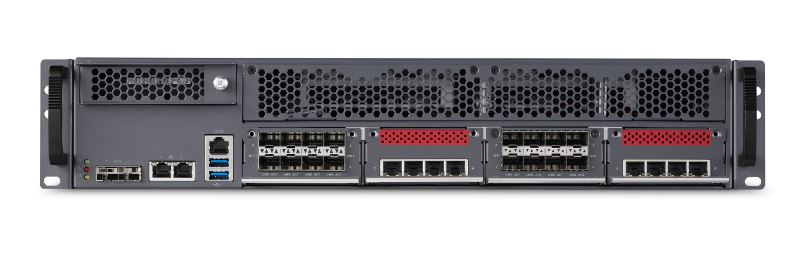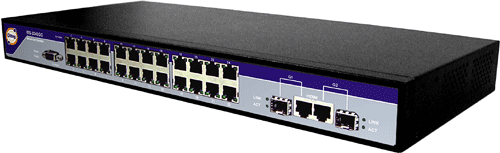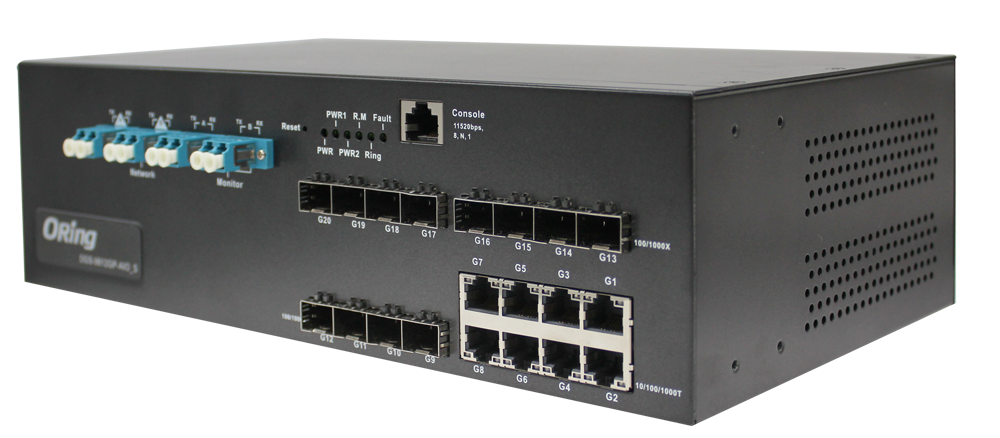
 SUCHEN SIE DIE PASSENDE
INDUSTRIELLE LÖSUNG?
Entdecken Sie Embedded-, Kommunikations- und Automatisierungslösungen für Ihre Anwendung.

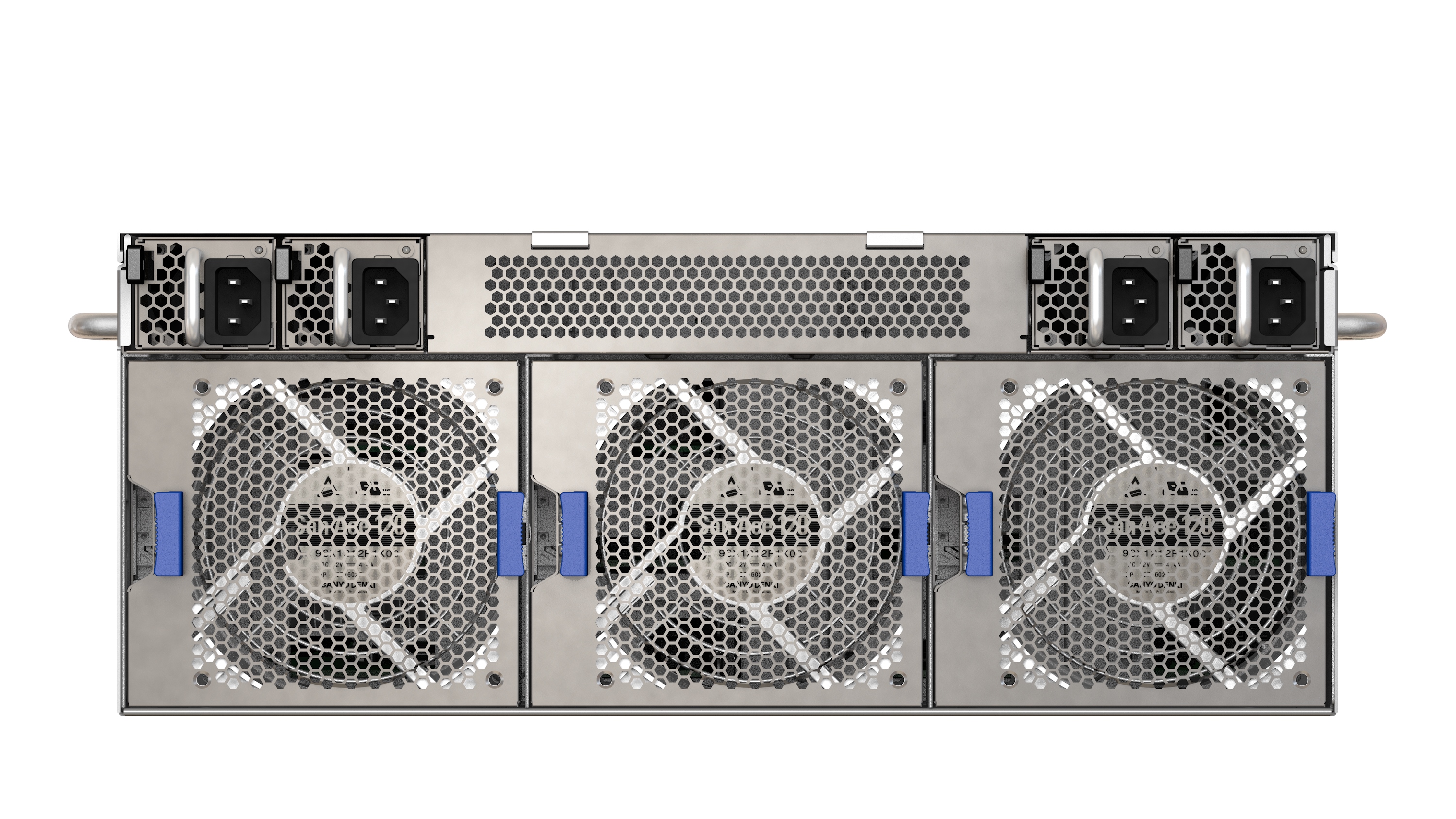
- High‑Density Compute Platform:
Supports four dual‑socket Intel® Xeon® E5‑2600 v3/v4 or Xeon® Scalable processors, enabling up to 8 CPUs and 160 cores per system.
- Open Compute Carrier‑Grade Architecture:
Fully compliant with OCCERA standards for modular, carrier‑grade edge infrastructure.
- Flexible Networking Architecture:
Dual switch modules (MXN‑3610 or MXN‑4100SR) provide 2×50 Gb internal Ethernet links per compute node and up to 1.2 Tb/s total bandwidth.
- Scalable I/O Options:
Configurable via switch sleds and Network Interface Modules (NIMs):
- MXN‑3610: 20×10 Gb SFP+ ports
- MXN‑4100SR: 4×100 Gb QSFP28 ports
- NIM‑1610: 16×10 Gb SFP+ ports
- NIM‑0440: 4×40 Gb QSFP+ ports
- Advanced Chassis Management:
Integrated Chassis Management Module (CMM) with IPMI v2.0, CLI, and web interface for monitoring CPU nodes, fans, and PSUs.
- Redundant Power and Cooling:
3+1 redundant 850 W AC/DC PSUs and variable‑speed fans ensure high availability.
- Hot‑Swappable Modules:
Compute and switch sleds are field‑replaceable and hot‑swappable for uninterrupted service.
- Software Integration:
Includes ADLINK PacketManager with Layer 2/3 switch stacks, ACLs, VLAN, and load‑balancing features. Validated with DPDK for high‑throughput packet processing.
Supports four dual‑socket Intel® Xeon® E5‑2600 v3/v4 or Xeon® Scalable processors, enabling up to 8 CPUs and 160 cores per system.
- Open Compute Carrier‑Grade Architecture:
Fully compliant with OCCERA standards for modular, carrier‑grade edge infrastructure.
- Flexible Networking Architecture:
Dual switch modules (MXN‑3610 or MXN‑4100SR) provide 2×50 Gb internal Ethernet links per compute node and up to 1.2 Tb/s total bandwidth.
- Scalable I/O Options:
Configurable via switch sleds and Network Interface Modules (NIMs):
- MXN‑3610: 20×10 Gb SFP+ ports
- MXN‑4100SR: 4×100 Gb QSFP28 ports
- NIM‑1610: 16×10 Gb SFP+ ports
- NIM‑0440: 4×40 Gb QSFP+ ports
- Advanced Chassis Management:
Integrated Chassis Management Module (CMM) with IPMI v2.0, CLI, and web interface for monitoring CPU nodes, fans, and PSUs.
- Redundant Power and Cooling:
3+1 redundant 850 W AC/DC PSUs and variable‑speed fans ensure high availability.
- Hot‑Swappable Modules:
Compute and switch sleds are field‑replaceable and hot‑swappable for uninterrupted service.
- Software Integration:
Includes ADLINK PacketManager with Layer 2/3 switch stacks, ACLs, VLAN, and load‑balancing features. Validated with DPDK for high‑throughput packet processing.
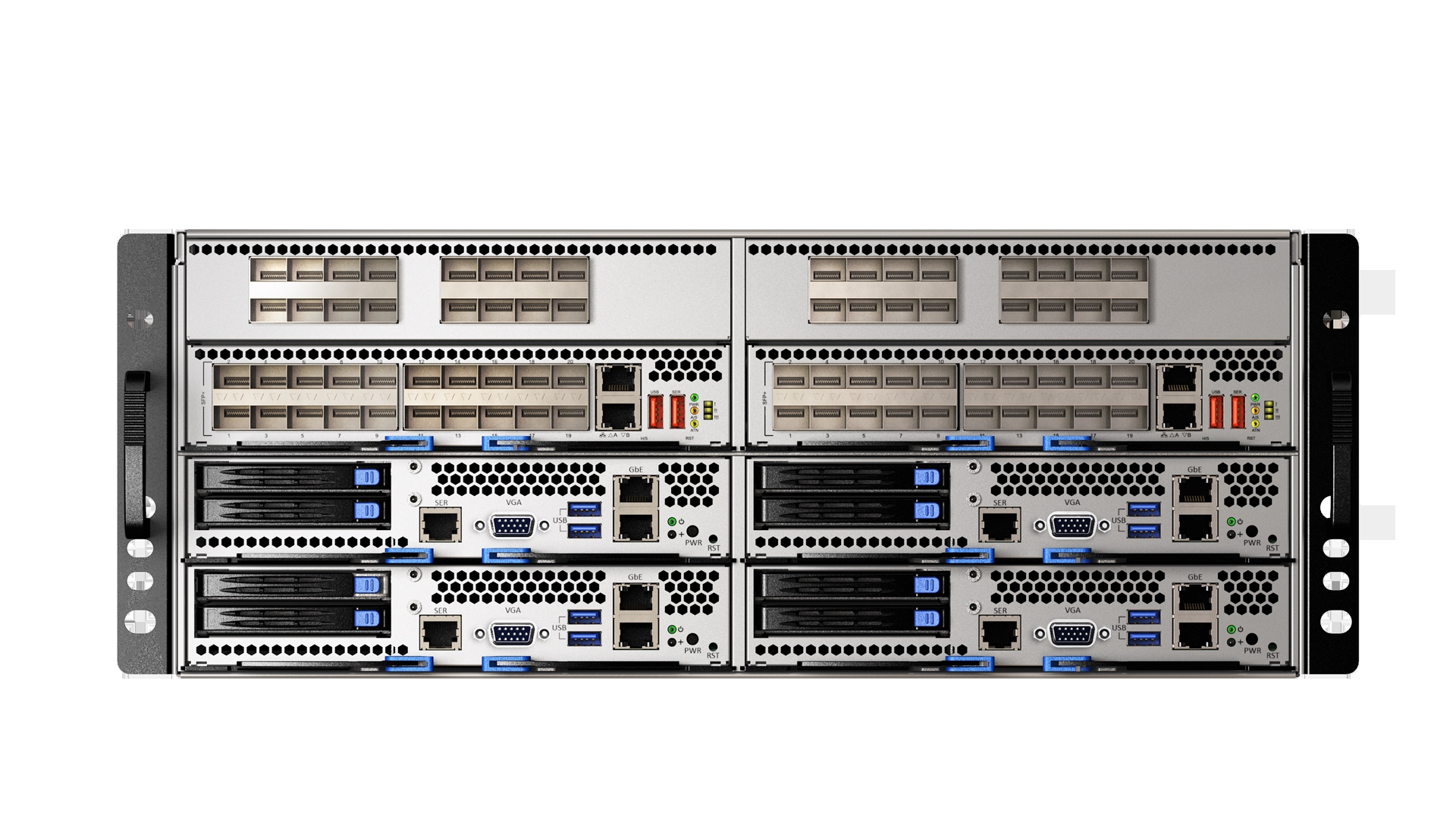
Comprehensive Product Summary: ADLINK CSA‑7400 4U 19” Network Appliance
### 1. Product Overview
Product Name: CSA‑7400
Model / Article Number: CSA‑7400
Series: Carrier‑Grade Edge / OCCERA‑Based Network Appliance
Manufacturer: ADLINK Technology, Inc.
Part Number: 50‑40349‑5010
Manual Revision: 1.1 (November 5, 2018)
The ADLINK CSA‑7400 is a 4U 19‑inch rackmount network appliance designed for high‑density, carrier‑grade edge computing applications. It is based on the Open Compute Carrier‑grade Edge Reference Architecture (OCCERA) and integrates up to four dual Intel® Xeon® E5 or Scalable processor compute nodes, interconnected by dual redundant switch modules. The system supports up to eight CPUs and 160 cores in a single chassis, providing exceptional compute density and network throughput for telecom, NFV, and data‑center edge deployments.
### 2. Key Features
- High‑Density Compute Platform:
Supports four dual‑socket Intel® Xeon® E5‑2600 v3/v4 or Xeon® Scalable processors, enabling up to 8 CPUs and 160 cores per system.
- Open Compute Carrier‑Grade Architecture:
Fully compliant with OCCERA standards for modular, carrier‑grade edge infrastructure.
- Flexible Networking Architecture:
Dual switch modules (MXN‑3610 or MXN‑4100SR) provide 2×50 Gb internal Ethernet links per compute node and up to 1.2 Tb/s total bandwidth.
- Scalable I/O Options:
Configurable via switch sleds and Network Interface Modules (NIMs):
- MXN‑3610: 20×10 Gb SFP+ ports
- MXN‑4100SR: 4×100 Gb QSFP28 ports
- NIM‑1610: 16×10 Gb SFP+ ports
- NIM‑0440: 4×40 Gb QSFP+ ports
- Advanced Chassis Management:
Integrated Chassis Management Module (CMM) with IPMI v2.0, CLI, and web interface for monitoring CPU nodes, fans, and PSUs.
- Redundant Power and Cooling:
3+1 redundant 850 W AC/DC PSUs and variable‑speed fans ensure high availability.
- Hot‑Swappable Modules:
Compute and switch sleds are field‑replaceable and hot‑swappable for uninterrupted service.
- Software Integration:
Includes ADLINK PacketManager with Layer 2/3 switch stacks, ACLs, VLAN, and load‑balancing features. Validated with DPDK for high‑throughput packet processing.
### 3. Technical Specifications
Form Factor: 4U 19” rackmount
Dimensions: 440 mm (W) × 176 mm (H) × 600 mm (D)
Weight: Varies by configuration (approx. 25–30 kg)
Material: Heavy‑gauge steel chassis with modular sled design
Environmental Conditions:
- Operating Temperature: 0 °C to +40 °C
- Short‑Term Operation: –5 °C to +45 °C, 5–90 % RH
- Storage Temperature: –40 °C to +70 °C
- Operating Humidity: 10–85 % RH @ 40 °C (non‑condensing)
- Non‑Operating Humidity: 5–90 % RH
- Shock: 2 G (11 ms half‑sine, 100 pulses each direction)
- Vibration: 2.2 Grms (non‑operating, 10 min per axis)
- Acoustic Noise: < 75 dBA @ 1 m (max fan speed)
- MTBF: 90,000 hours
Power Supply:
- 3 + 1 redundant 850 W PSUs
- Input: 100–240 V AC @ 50/60 Hz or –36 V to –72 V DC
Regulatory Compliance:
FCC Class A, CE, UL, CB, CCC, and RoHS compliant
### 4. Functionality
The CSA‑7400 operates as a modular, multi‑node network appliance. Each compute node (MCN‑2600T or MCN‑2610T) functions as an independent dual‑socket server connected to redundant switch nodes (MXN‑3610/MXN‑4100SR). The switch nodes manage internal and external network traffic, while the CMM oversees system health, power, and thermal management.
Use Cases:
- Network Function Virtualization (NFV) infrastructure
- Carrier‑grade edge computing
- High‑performance firewalls and security gateways
- Virtualized telecom elements (vEPC, vIMS)
- Data‑center edge aggregation and packet processing
Compatibility:
Supports Windows 7/10 64‑bit, Windows Server 2016, and Linux Kernel 2.6 and above. Compatible with DPDK and optional Wind River® Titanium Server or OPNFV software stacks.
### 5. Components & Accessories
Chassis Modules:
- 4 × Compute Nodes (MCN‑2600T or MCN‑2610T)
- 2 × Switch Nodes (MXN‑3610 or MXN‑4100SR)
- 2 × I/O Cards (NIM‑1610 or NIM‑0440)
- 4 × Fan Modules
- 4 × Power Supply Units
Included Accessories:
- Console cable
- Power cords
- Quick Start Guide and documentation
Optional Add‑Ons:
- Additional NIM modules for I/O expansion
- COMe Type 6 management module (Intel Core i7‑4700EQ or Celeron 2002E)
- Rackmount rails and mounting hardware
### 6. Installation & Setup
Rack Installation:
Mounts in a standard 19‑inch rack (4U height). Ensure adequate airflow and secure mechanical loading.
Module Insertion:
- Insert MCN compute sleds into lower four slots.
- Insert MXN switch sleds into upper two slots.
- Engage ejector handles until a click is heard to lock modules in place.
Power Connection:
Connect all redundant PSUs to AC or DC inputs as shown in the manual.
Initial Setup:
- Connect VGA and USB for local console access.
- Configure BIOS via serial port or VGA display.
- Assign network settings (DHCP or static) for COMe and CMM modules.
- Verify PacketManager installation and network interfaces.
Hot‑Swap Procedures:
- For MCN sleds: shutdown OS before removal.
- For MXN sleds: press Hot‑Swap button and wait for ATN LED before removal.
### 7. Performance & Capabilities
Compute Node (MCN‑2600T):
- CPU Options:
Intel® Xeon® E5‑2620 v3 (6C/12T) to E5‑2699 v3 (18C/36T); E5‑2680 v4 (14C/28T)
- Chipset: Intel® C610
- Memory: 12 × DDR4‑1600/1866/2133 ECC DIMMs, up to 192 GB
- Storage: 2 × 2.5” hot‑swappable SATA bays + 2 × M.2 SSD
- I/O: 2 × GbE RJ‑45, 2 × USB 3.0, 1 × VGA, 1 × RJ‑45 console
- Backplane: 2 × PCIe x8 Gen3 + 2 × GbE links to switch nodes
Compute Node (MCN‑2610T):
- CPU Options: Xeon® Silver 4110/4114 or Gold 5120T/6130/6138
- Chipset: Intel® C621
- Memory: 12 × DDR4‑2400/2666 ECC DIMMs, up to 384 GB
- Storage: 2 × 2.5” SATA bays + 1 × M.2 SSD
- I/O: 2 × GbE RJ‑45, 2 × USB 3.0, 1 × VGA, 1 × RJ‑45 console
Switch Node (MXN‑3610 / MXN‑4100SR):
- Switch Chipset: Intel® FM10840 (600 Gb/s bandwidth, 4 × PCIe x8 Gen3)
- Control Plane: Microsemi® VSC7512 GbE switch for independent management
- Management Module: AST1250 CMM with optional COMe Type 6 (Intel Core i7‑4700EQ or Celeron 2002E)
- Memory: 2 × SODIMM DDR3 1600/1333 (up to 16 GB)
- Storage: 2 × mSATA
- I/O: 20 × 10 Gb SFP+ (MXN‑3610) or 4 × 100 Gb QSFP28 (MXN‑4100SR)
- Backplane: 4 × PCIe x8 Gen3 to CPU nodes
Aggregate Bandwidth: 2 × 400 Gb/s Ethernet + 2 × 200 Gb/s PCIe = 1.2 Tb/s total
Software Performance:
Validated with DPDK for high‑throughput packet processing; supports Layer 2/3 switching, VLAN, ACL, and QoS management via PacketManager CLI.
### 8. Standards & Compliance
- Architecture: OCCERA (Open Compute Carrier‑grade Edge Reference Architecture)
- Management: IPMI v2.0 compliant with CLI and web interfaces
- Environmental: RoHS and WEEE directives compliant
- Safety: UL, CB, CCC certified
- EMC: FCC Class A and CE emission standards
- Software Validation: DPDK and PacketManager certified for carrier‑grade network functions
### 9. Additional Information
Warranty & Support:
ADLINK provides standard limited warranty coverage and global technical support through regional offices. Service and RMA requests can be initiated via [Ask an Expert](http://askanexpert.adlinktech.com) or local ADLINK representatives.
Maintenance:
- Regularly monitor fan status and PSU health via CMM.
- Replace modules only with qualified ADLINK components.
- Follow hot‑swap procedures to avoid data loss or hardware damage.
Firmware and Software Updates:
- BIOS and CMM firmware upgradable via IPMI or serial console.
- PacketManager updates available from ADLINK support portal.
Safety and Environmental Compliance:
- Meets California Proposition 65 requirements.
- Designed for operation in restricted access server rooms with adequate ventilation and grounding.
- Lithium battery replacement must use approved types to avoid explosion risk.
Regional Contacts:
- ADLINK Technology, Inc. (Taiwan) – +886‑2‑8226‑5877 | service@adlinktech.com
- Ampro ADLINK Technology, Inc. (USA) – +1‑408‑360‑0200 | info@adlinktech.com
- ADLINK Technology (China) – +86‑21‑5132‑8988 | market@adlinktech.com
- ADLINK Technology GmbH (Germany) – +49‑621‑43214‑0 | emea@adlinktech.com
### Summary
The ADLINK CSA‑7400 is a modular, high‑availability 4U network appliance engineered for carrier‑grade edge and telecom applications. Combining up to eight Intel® Xeon® processors, 1.2 Tb/s aggregate bandwidth, and redundant switch and power modules, it delivers exceptional compute density and network throughput. Its OCCERA‑based architecture, advanced chassis management, and PacketManager software stack make it ideal for NFV, SDN, and edge data center deployments requiring carrier‑grade reliability and scalability.
### 1. Product Overview
Product Name: CSA‑7400
Model / Article Number: CSA‑7400
Series: Carrier‑Grade Edge / OCCERA‑Based Network Appliance
Manufacturer: ADLINK Technology, Inc.
Part Number: 50‑40349‑5010
Manual Revision: 1.1 (November 5, 2018)
The ADLINK CSA‑7400 is a 4U 19‑inch rackmount network appliance designed for high‑density, carrier‑grade edge computing applications. It is based on the Open Compute Carrier‑grade Edge Reference Architecture (OCCERA) and integrates up to four dual Intel® Xeon® E5 or Scalable processor compute nodes, interconnected by dual redundant switch modules. The system supports up to eight CPUs and 160 cores in a single chassis, providing exceptional compute density and network throughput for telecom, NFV, and data‑center edge deployments.
### 2. Key Features
- High‑Density Compute Platform:
Supports four dual‑socket Intel® Xeon® E5‑2600 v3/v4 or Xeon® Scalable processors, enabling up to 8 CPUs and 160 cores per system.
- Open Compute Carrier‑Grade Architecture:
Fully compliant with OCCERA standards for modular, carrier‑grade edge infrastructure.
- Flexible Networking Architecture:
Dual switch modules (MXN‑3610 or MXN‑4100SR) provide 2×50 Gb internal Ethernet links per compute node and up to 1.2 Tb/s total bandwidth.
- Scalable I/O Options:
Configurable via switch sleds and Network Interface Modules (NIMs):
- MXN‑3610: 20×10 Gb SFP+ ports
- MXN‑4100SR: 4×100 Gb QSFP28 ports
- NIM‑1610: 16×10 Gb SFP+ ports
- NIM‑0440: 4×40 Gb QSFP+ ports
- Advanced Chassis Management:
Integrated Chassis Management Module (CMM) with IPMI v2.0, CLI, and web interface for monitoring CPU nodes, fans, and PSUs.
- Redundant Power and Cooling:
3+1 redundant 850 W AC/DC PSUs and variable‑speed fans ensure high availability.
- Hot‑Swappable Modules:
Compute and switch sleds are field‑replaceable and hot‑swappable for uninterrupted service.
- Software Integration:
Includes ADLINK PacketManager with Layer 2/3 switch stacks, ACLs, VLAN, and load‑balancing features. Validated with DPDK for high‑throughput packet processing.
### 3. Technical Specifications
Form Factor: 4U 19” rackmount
Dimensions: 440 mm (W) × 176 mm (H) × 600 mm (D)
Weight: Varies by configuration (approx. 25–30 kg)
Material: Heavy‑gauge steel chassis with modular sled design
Environmental Conditions:
- Operating Temperature: 0 °C to +40 °C
- Short‑Term Operation: –5 °C to +45 °C, 5–90 % RH
- Storage Temperature: –40 °C to +70 °C
- Operating Humidity: 10–85 % RH @ 40 °C (non‑condensing)
- Non‑Operating Humidity: 5–90 % RH
- Shock: 2 G (11 ms half‑sine, 100 pulses each direction)
- Vibration: 2.2 Grms (non‑operating, 10 min per axis)
- Acoustic Noise: < 75 dBA @ 1 m (max fan speed)
- MTBF: 90,000 hours
Power Supply:
- 3 + 1 redundant 850 W PSUs
- Input: 100–240 V AC @ 50/60 Hz or –36 V to –72 V DC
Regulatory Compliance:
FCC Class A, CE, UL, CB, CCC, and RoHS compliant
### 4. Functionality
The CSA‑7400 operates as a modular, multi‑node network appliance. Each compute node (MCN‑2600T or MCN‑2610T) functions as an independent dual‑socket server connected to redundant switch nodes (MXN‑3610/MXN‑4100SR). The switch nodes manage internal and external network traffic, while the CMM oversees system health, power, and thermal management.
Use Cases:
- Network Function Virtualization (NFV) infrastructure
- Carrier‑grade edge computing
- High‑performance firewalls and security gateways
- Virtualized telecom elements (vEPC, vIMS)
- Data‑center edge aggregation and packet processing
Compatibility:
Supports Windows 7/10 64‑bit, Windows Server 2016, and Linux Kernel 2.6 and above. Compatible with DPDK and optional Wind River® Titanium Server or OPNFV software stacks.
### 5. Components & Accessories
Chassis Modules:
- 4 × Compute Nodes (MCN‑2600T or MCN‑2610T)
- 2 × Switch Nodes (MXN‑3610 or MXN‑4100SR)
- 2 × I/O Cards (NIM‑1610 or NIM‑0440)
- 4 × Fan Modules
- 4 × Power Supply Units
Included Accessories:
- Console cable
- Power cords
- Quick Start Guide and documentation
Optional Add‑Ons:
- Additional NIM modules for I/O expansion
- COMe Type 6 management module (Intel Core i7‑4700EQ or Celeron 2002E)
- Rackmount rails and mounting hardware
### 6. Installation & Setup
Rack Installation:
Mounts in a standard 19‑inch rack (4U height). Ensure adequate airflow and secure mechanical loading.
Module Insertion:
- Insert MCN compute sleds into lower four slots.
- Insert MXN switch sleds into upper two slots.
- Engage ejector handles until a click is heard to lock modules in place.
Power Connection:
Connect all redundant PSUs to AC or DC inputs as shown in the manual.
Initial Setup:
- Connect VGA and USB for local console access.
- Configure BIOS via serial port or VGA display.
- Assign network settings (DHCP or static) for COMe and CMM modules.
- Verify PacketManager installation and network interfaces.
Hot‑Swap Procedures:
- For MCN sleds: shutdown OS before removal.
- For MXN sleds: press Hot‑Swap button and wait for ATN LED before removal.
### 7. Performance & Capabilities
Compute Node (MCN‑2600T):
- CPU Options:
Intel® Xeon® E5‑2620 v3 (6C/12T) to E5‑2699 v3 (18C/36T); E5‑2680 v4 (14C/28T)
- Chipset: Intel® C610
- Memory: 12 × DDR4‑1600/1866/2133 ECC DIMMs, up to 192 GB
- Storage: 2 × 2.5” hot‑swappable SATA bays + 2 × M.2 SSD
- I/O: 2 × GbE RJ‑45, 2 × USB 3.0, 1 × VGA, 1 × RJ‑45 console
- Backplane: 2 × PCIe x8 Gen3 + 2 × GbE links to switch nodes
Compute Node (MCN‑2610T):
- CPU Options: Xeon® Silver 4110/4114 or Gold 5120T/6130/6138
- Chipset: Intel® C621
- Memory: 12 × DDR4‑2400/2666 ECC DIMMs, up to 384 GB
- Storage: 2 × 2.5” SATA bays + 1 × M.2 SSD
- I/O: 2 × GbE RJ‑45, 2 × USB 3.0, 1 × VGA, 1 × RJ‑45 console
Switch Node (MXN‑3610 / MXN‑4100SR):
- Switch Chipset: Intel® FM10840 (600 Gb/s bandwidth, 4 × PCIe x8 Gen3)
- Control Plane: Microsemi® VSC7512 GbE switch for independent management
- Management Module: AST1250 CMM with optional COMe Type 6 (Intel Core i7‑4700EQ or Celeron 2002E)
- Memory: 2 × SODIMM DDR3 1600/1333 (up to 16 GB)
- Storage: 2 × mSATA
- I/O: 20 × 10 Gb SFP+ (MXN‑3610) or 4 × 100 Gb QSFP28 (MXN‑4100SR)
- Backplane: 4 × PCIe x8 Gen3 to CPU nodes
Aggregate Bandwidth: 2 × 400 Gb/s Ethernet + 2 × 200 Gb/s PCIe = 1.2 Tb/s total
Software Performance:
Validated with DPDK for high‑throughput packet processing; supports Layer 2/3 switching, VLAN, ACL, and QoS management via PacketManager CLI.
### 8. Standards & Compliance
- Architecture: OCCERA (Open Compute Carrier‑grade Edge Reference Architecture)
- Management: IPMI v2.0 compliant with CLI and web interfaces
- Environmental: RoHS and WEEE directives compliant
- Safety: UL, CB, CCC certified
- EMC: FCC Class A and CE emission standards
- Software Validation: DPDK and PacketManager certified for carrier‑grade network functions
### 9. Additional Information
Warranty & Support:
ADLINK provides standard limited warranty coverage and global technical support through regional offices. Service and RMA requests can be initiated via [Ask an Expert](http://askanexpert.adlinktech.com) or local ADLINK representatives.
Maintenance:
- Regularly monitor fan status and PSU health via CMM.
- Replace modules only with qualified ADLINK components.
- Follow hot‑swap procedures to avoid data loss or hardware damage.
Firmware and Software Updates:
- BIOS and CMM firmware upgradable via IPMI or serial console.
- PacketManager updates available from ADLINK support portal.
Safety and Environmental Compliance:
- Meets California Proposition 65 requirements.
- Designed for operation in restricted access server rooms with adequate ventilation and grounding.
- Lithium battery replacement must use approved types to avoid explosion risk.
Regional Contacts:
- ADLINK Technology, Inc. (Taiwan) – +886‑2‑8226‑5877 | service@adlinktech.com
- Ampro ADLINK Technology, Inc. (USA) – +1‑408‑360‑0200 | info@adlinktech.com
- ADLINK Technology (China) – +86‑21‑5132‑8988 | market@adlinktech.com
- ADLINK Technology GmbH (Germany) – +49‑621‑43214‑0 | emea@adlinktech.com
### Summary
The ADLINK CSA‑7400 is a modular, high‑availability 4U network appliance engineered for carrier‑grade edge and telecom applications. Combining up to eight Intel® Xeon® processors, 1.2 Tb/s aggregate bandwidth, and redundant switch and power modules, it delivers exceptional compute density and network throughput. Its OCCERA‑based architecture, advanced chassis management, and PacketManager software stack make it ideal for NFV, SDN, and edge data center deployments requiring carrier‑grade reliability and scalability.
-
 Datasheet_CSA-7400_20180704.pdf
PDF Catalog
Datasheet_CSA-7400_20180704.pdf
PDF Catalog

Kein Zubehör vorhanden.