DIN-100M15
SUCHEN SIE DIE PASSENDE
INDUSTRIELLE LÖSUNG?
Entdecken Sie Embedded-, Kommunikations- und Automatisierungslösungen für Ihre Anwendung.
- 32‑bit PCI Bus, Plug‑and‑Play: Fully compliant with PCI 2.1 specifications, supporting automatic resource allocation by system BIOS.
- 6‑Channel 32‑bit Industrial Counters: Each channel supports three differential pulse modes—A/B phase, CW/CCW, and Pulse/Direction—with up to 3 MHz counting speed and 2500 V DC optical isolation.
- 6‑Channel Differential Pulse Generators: Programmable output modes (CW/CCW, Pulse/Direction, A/B phase) with maximum pulse rate of 500 kHz.
- 6‑Channel 16‑bit Analog Output: Bipolar ±10 V range, 14‑bit guaranteed accuracy, 2 µs settling time, and auto‑calibration capability.
- 6‑Channel 12‑bit Analog Input: Differential or single‑ended configuration, ±10 V or 0–20 mA range, 133 kHz multiplexed sampling rate.
- Opto‑Isolated Digital I/O: 19 isolated digital inputs and 7 open‑collector digital outputs, each isolated to 2500 V RMS.
- Position Compare and Interrupt Functions: Six 32‑bit position compare registers with interrupt generation for precise motion control.
- Programmable Timer: One 24‑bit timer with 33 MHz base clock for periodic interrupts or timing control.
- Auto‑Calibration Utility: Built‑in software for analog I/O calibration and error compensation.
- Comprehensive Software Support: Drivers and APIs for Windows 8/7/XP/Vista and Linux; compatible with VB, VC++, Delphi, and Borland C++ 3.1.
- Thread‑Safe API Library: Over 50 functions for analog, digital, and pulse I/O operations, including interrupt handling and event‑driven control.
- 6‑Channel 32‑bit Industrial Counters: Each channel supports three differential pulse modes—A/B phase, CW/CCW, and Pulse/Direction—with up to 3 MHz counting speed and 2500 V DC optical isolation.
- 6‑Channel Differential Pulse Generators: Programmable output modes (CW/CCW, Pulse/Direction, A/B phase) with maximum pulse rate of 500 kHz.
- 6‑Channel 16‑bit Analog Output: Bipolar ±10 V range, 14‑bit guaranteed accuracy, 2 µs settling time, and auto‑calibration capability.
- 6‑Channel 12‑bit Analog Input: Differential or single‑ended configuration, ±10 V or 0–20 mA range, 133 kHz multiplexed sampling rate.
- Opto‑Isolated Digital I/O: 19 isolated digital inputs and 7 open‑collector digital outputs, each isolated to 2500 V RMS.
- Position Compare and Interrupt Functions: Six 32‑bit position compare registers with interrupt generation for precise motion control.
- Programmable Timer: One 24‑bit timer with 33 MHz base clock for periodic interrupts or timing control.
- Auto‑Calibration Utility: Built‑in software for analog I/O calibration and error compensation.
- Comprehensive Software Support: Drivers and APIs for Windows 8/7/XP/Vista and Linux; compatible with VB, VC++, Delphi, and Borland C++ 3.1.
- Thread‑Safe API Library: Over 50 functions for analog, digital, and pulse I/O operations, including interrupt handling and event‑driven control.
Comprehensive Product Summary – ADLINK PCI‑8136 6‑Channel Quadrature Encoder and Multi‑Function I/O Card
### 1. Product Overview
Product Name: PCI‑8136
Model: PCI‑8136
Series: ADLINK NuDAQ Industrial I/O Series
Article Number: PCI‑8136
Manufacturer: ADLINK Technology Inc., Taipei, Taiwan
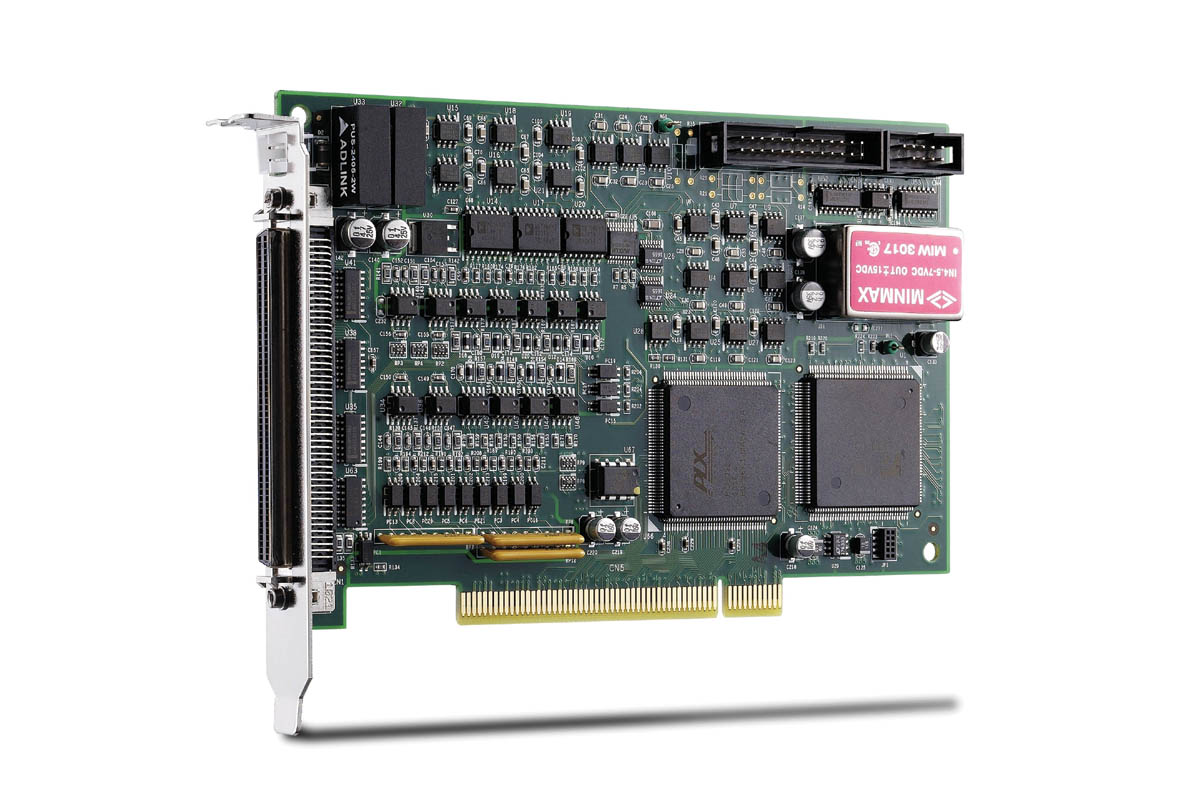
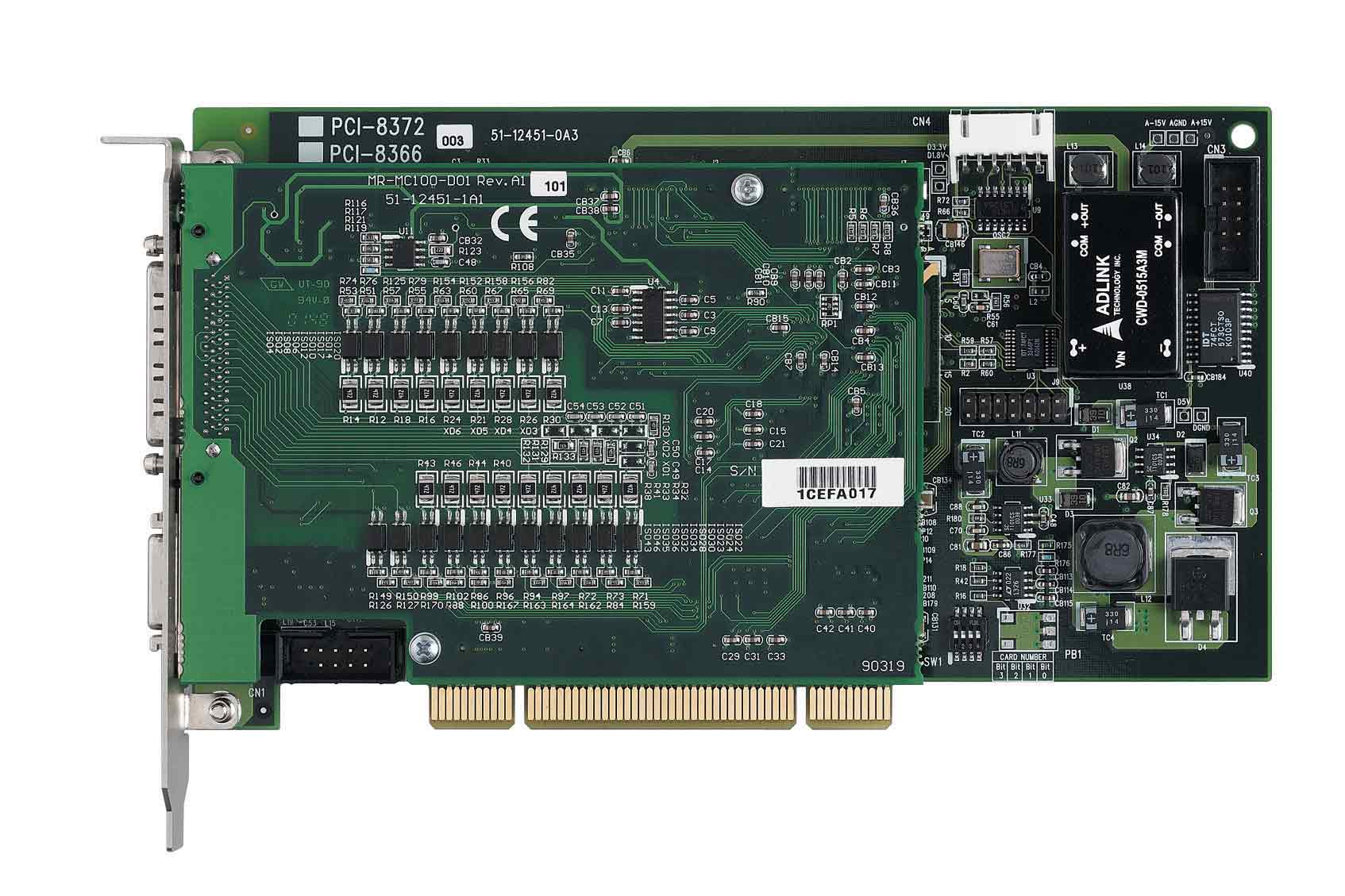
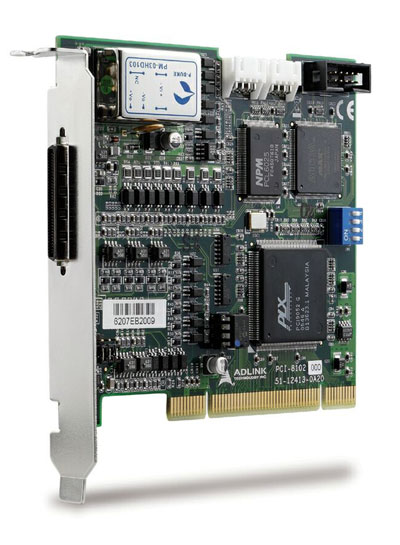
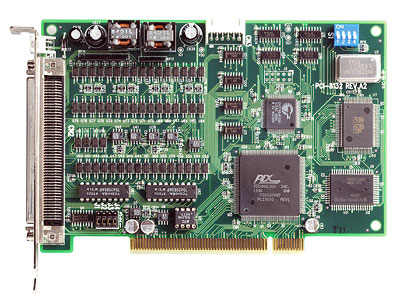
The ADLINK PCI‑8136 is a high‑performance, 32‑bit PCI‑bus data acquisition and control card designed for industrial automation, motion control, and measurement applications. It integrates six channels of quadrature encoder counters, six channels of pulse train generators, analog input and output channels, and optically isolated digital I/O. The card provides a unified platform for analog, digital, and pulse‑based signal processing—collectively referred to as ADPIO (Analog/Digital/Pulse Input/Output)—and is fully compatible with Windows and Linux operating systems.
### 2. Key Features
- 32‑bit PCI Bus, Plug‑and‑Play: Fully compliant with PCI 2.1 specifications, supporting automatic resource allocation by system BIOS.
- 6‑Channel 32‑bit Industrial Counters: Each channel supports three differential pulse modes—A/B phase, CW/CCW, and Pulse/Direction—with up to 3 MHz counting speed and 2500 V DC optical isolation.
- 6‑Channel Differential Pulse Generators: Programmable output modes (CW/CCW, Pulse/Direction, A/B phase) with maximum pulse rate of 500 kHz.
- 6‑Channel 16‑bit Analog Output: Bipolar ±10 V range, 14‑bit guaranteed accuracy, 2 µs settling time, and auto‑calibration capability.
- 6‑Channel 12‑bit Analog Input: Differential or single‑ended configuration, ±10 V or 0–20 mA range, 133 kHz multiplexed sampling rate.
- Opto‑Isolated Digital I/O: 19 isolated digital inputs and 7 open‑collector digital outputs, each isolated to 2500 V RMS.
- Position Compare and Interrupt Functions: Six 32‑bit position compare registers with interrupt generation for precise motion control.
- Programmable Timer: One 24‑bit timer with 33 MHz base clock for periodic interrupts or timing control.
- Auto‑Calibration Utility: Built‑in software for analog I/O calibration and error compensation.
- Comprehensive Software Support: Drivers and APIs for Windows 8/7/XP/Vista and Linux; compatible with VB, VC++, Delphi, and Borland C++ 3.1.
- Thread‑Safe API Library: Over 50 functions for analog, digital, and pulse I/O operations, including interrupt handling and event‑driven control.
### 3. Technical Specifications
Physical Characteristics
- Dimensions: 164 mm (L) × 98.4 mm (H) (6.46 in × 3.87 in)
- Form Factor: Half‑size PCI card
- Connectors:
- CN1: 100‑pin SCSI‑II type (main I/O)
- CN2: 2‑pin plug‑in terminal (external power input)
- CN3: DB‑25 female (analog I/O and remote I/O)
- CN4: DB‑9 male (reserved remote I/O)
- Weight: Approx. 200 g (typical)
- Material: Multi‑layer PCB with gold‑plated edge connector
Environmental Conditions
- Operating Temperature: 0 °C – 50 °C (32 °F – 122 °F)
- Storage Temperature: −20 °C – 80 °C (−4 °F – 176 °F)
- Humidity: 5 % – 85 %, non‑condensing
Power Requirements
- PCI Slot Power: +5 V DC ± 5 %, 900 mA (max)
- External Power Input: +24 V DC ± 5 %, 500 mA (max)
- External Power Output: +5 V DC ± 5 %, 500 mA (max)
### 4. Functionality and Applications
The PCI‑8136 consolidates multiple I/O functions into a single PCI card, enabling synchronized analog, digital, and pulse operations. It is ideal for:
- Motion Control Systems: Reading encoder feedback, generating stepper or servo motor pulse trains, and performing position comparison interrupts.
- Data Acquisition and Measurement: Sampling analog signals, generating control voltages, and monitoring digital sensors.
- Industrial Automation: Machine vision synchronization, process control, and test automation requiring mixed‑signal I/O.
- Laboratory and Research: Precision analog output for instrumentation and waveform generation.
Operating Principle:
Each encoder channel counts differential pulse inputs (A/B/Z) and stores position data in a 32‑bit register. Pulse outputs are generated by programmable line drivers capable of CW/CCW, Pulse/Direction, or A/B phase formats. Analog I/O channels use multiplexed 12‑bit ADCs and 16‑bit DACs for signal conversion. Digital I/O lines are optically isolated for noise immunity and safety. The onboard timer and interrupt controller allow event‑driven operation and synchronization with external processes.
Compatibility:
Supports up to four PCI‑8136 cards per system. Compatible with standard PCI slots on industrial PCs and workstations.
### 5. Components & Accessories
Included Items:
- PCI‑8136 card
- DB‑9 and DB‑25 bracket assemblies
- External power cable for CN2
- Six 124 Ω resistors for current‑mode analog input configuration
- ADLINK All‑in‑One software CD (drivers, utilities, sample code)
- User’s Manual
Optional Accessories:
- DIN‑100S‑01: Terminal board with one 100‑pin SCSI‑II connector and DIN‑rail mounting.
- ACL‑102100‑1: 100‑pin SCSI‑II cable (1 m, mating with AMP‑787082‑9).
- DIN‑100M15 / DIN‑100M30: General‑purpose termination boards with 1.5 m or 3 m cables.
### 6. Installation & Setup
Hardware Installation Steps:
1. Power off the PC and disconnect peripherals.
2. Select an available 32‑bit PCI slot; avoid ISA slots.
3. Discharge static electricity before handling the card.
4. Insert the PCI‑8136 firmly into the slot and secure it with a screw.
5. Connect external +24 V DC power to CN2 (EX+24 V / EXGND).
6. Attach I/O cables to CN1, CN3, or CN4 as required.
7. Power on the system; BIOS automatically assigns resources.
Software Installation:
Install ADLINK drivers and libraries from the provided CD or website. The package includes DLLs for Windows and libraries for Linux and DOS. Sample programs demonstrate analog, digital, and pulse I/O operations.
Configuration:
- Analog input range selectable via soldered 124 Ω resistor (±10 V or 0–20 mA).
- Pulse input/output modes programmable by software.
- Timer and interrupt sources configurable through API functions.
### 7. Performance & Capabilities
Pulse Input (Encoder Counter):
- Channels: 6 differential
- Counter Resolution: 32‑bit
- Modes: A/B phase, CW/CCW, Pulse/Direction
- Max Input Frequency: 2 – 3 MHz (depending on mode)
- Isolation: 2500 V RMS
- Position Compare: 6 channels with interrupt generation
Pulse Output (Generator):
- Channels: 6 differential
- Output Modes: CW/CCW, Pulse/Direction, A/B phase
- Max Output Frequency: 500 kHz (1 µs pulse width)
- Output Driver: Differential line driver
Analog Input:
- Channels: 6 differential/single‑ended
- Range: ±10 V or 0–20 mA
- Resolution: 12 bits (1 bit non‑linearity)
- Input Impedance: 440 kΩ (voltage), 124 Ω (current)
- Sampling Rate: 133 kHz multiplexed
Analog Output:
- Channels: 6 single‑ended
- Range: ±10 V bipolar
- Resolution: 16 bits (14‑bit accuracy guaranteed)
- Settling Time: 2 µs
- Drive Capability: 5 mA max per channel
Digital Input:
- Channels: 19 opto‑isolated (NPN type)
- Input Impedance: 4.7 kΩ
- Max Current: 20 mA
- Isolation Voltage: 2500 V RMS
- Throughput: 10 kHz (0.1 ms)
Digital Output:
- Channels: 7 open‑collector (Darlington ULN2003A)
- Sink Current: 90 mA typ., 150 mA max per channel, 500 mA total
- Isolation Voltage: 2500 V RMS
- Switching Frequency: 10 kHz
Timer:
- Type: 24‑bit programmable counter
- Base Clock: 33 MHz (PCI bus)
- Typical Interval Example: 333 000 counts = 10 ms
Overall Performance:
The PCI‑8136 delivers precise timing and synchronization across analog, digital, and pulse domains. Its high isolation and differential signaling ensure reliable operation in noisy industrial environments. The combination of 16‑bit DACs and 12‑bit ADCs provides accurate analog control and measurement, while the 32‑bit counters support high‑resolution motion feedback.
### 8. Standards & Compliance
- Bus Interface: PCI 2.1, 32‑bit, 33 MHz
- Isolation: 2500 V RMS optical isolation for digital I/O and counters
- Safety & EMC: Designed for industrial environments; compliant with CE and FCC Class A (typical for ADLINK industrial cards)
- Software Standards:
- Windows 95/98/NT/2000/XP/Vista/7/8 compatible DLLs
- Linux driver support
- Thread‑safe API library for multi‑threaded applications
- Programming Environments: Visual Basic, Visual C++, Delphi, Borland C++ 3.1, and .NET languages
### 9. Additional Information
Warranty:
- Standard limited warranty: two years (one year in China).
- Covers defects in materials and workmanship from date of shipment.
- Excludes damage from misuse, improper installation, or unauthorized repair.
Support & Service:
- Technical support via email: service@adlinktech.com
- Website: [www.adlinktech.com](http://www.adlinktech.com)
- Telephone: +886‑2‑8226‑5877
- Address: 9F, No. 166, Jian Yi Road, Chungho City, Taipei 235, Taiwan
Maintenance & Calibration:
- Auto‑calibration utility provided for analog channels.
- Periodic verification recommended using a multimeter and the included calibration software.
- Fine adjustment controls available for each DAC/ADC channel.
Software Updates:
- Driver and library updates available from ADLINK’s website.
- Sample code and documentation included for all supported languages.
Safety Notes:
- Always use external +24 V DC supply for isolated I/O circuits.
- Do not connect the internal +5 V VCC pin to external devices; doing so may defeat isolation.
- Ensure proper grounding and shielding to minimize noise coupling.
### Summary
The ADLINK PCI‑8136 is a robust, multifunction industrial I/O card that integrates high‑speed encoder counting, pulse generation, analog signal processing, and isolated digital I/O in a single PCI interface. With its 32‑bit architecture, 2500 V isolation, and comprehensive software library, it provides a flexible platform for motion control, automation, and data acquisition tasks. Its combination of six 32‑bit counters, six 16‑bit DACs, six 12‑bit ADCs, and opto‑isolated digital channels makes it particularly suited for precision control systems requiring synchronized analog and digital operations.
The card’s plug‑and‑play PCI interface, extensive driver support, and programmable interrupt structure simplify integration into both legacy and modern industrial PCs. Optional terminal boards and cables facilitate wiring and field deployment. Backed by ADLINK’s two‑year warranty and global support network, the PCI‑8136 remains a reliable choice for engineers seeking a compact, high‑performance, and versatile data acquisition and motion control solution.

### 1. Product Overview
Product Name: PCI‑8136
Model: PCI‑8136
Series: ADLINK NuDAQ Industrial I/O Series
Article Number: PCI‑8136
Manufacturer: ADLINK Technology Inc., Taipei, Taiwan
The ADLINK PCI‑8136 is a high‑performance, 32‑bit PCI‑bus data acquisition and control card designed for industrial automation, motion control, and measurement applications. It integrates six channels of quadrature encoder counters, six channels of pulse train generators, analog input and output channels, and optically isolated digital I/O. The card provides a unified platform for analog, digital, and pulse‑based signal processing—collectively referred to as ADPIO (Analog/Digital/Pulse Input/Output)—and is fully compatible with Windows and Linux operating systems.
### 2. Key Features
- 32‑bit PCI Bus, Plug‑and‑Play: Fully compliant with PCI 2.1 specifications, supporting automatic resource allocation by system BIOS.
- 6‑Channel 32‑bit Industrial Counters: Each channel supports three differential pulse modes—A/B phase, CW/CCW, and Pulse/Direction—with up to 3 MHz counting speed and 2500 V DC optical isolation.
- 6‑Channel Differential Pulse Generators: Programmable output modes (CW/CCW, Pulse/Direction, A/B phase) with maximum pulse rate of 500 kHz.
- 6‑Channel 16‑bit Analog Output: Bipolar ±10 V range, 14‑bit guaranteed accuracy, 2 µs settling time, and auto‑calibration capability.
- 6‑Channel 12‑bit Analog Input: Differential or single‑ended configuration, ±10 V or 0–20 mA range, 133 kHz multiplexed sampling rate.
- Opto‑Isolated Digital I/O: 19 isolated digital inputs and 7 open‑collector digital outputs, each isolated to 2500 V RMS.
- Position Compare and Interrupt Functions: Six 32‑bit position compare registers with interrupt generation for precise motion control.
- Programmable Timer: One 24‑bit timer with 33 MHz base clock for periodic interrupts or timing control.
- Auto‑Calibration Utility: Built‑in software for analog I/O calibration and error compensation.
- Comprehensive Software Support: Drivers and APIs for Windows 8/7/XP/Vista and Linux; compatible with VB, VC++, Delphi, and Borland C++ 3.1.
- Thread‑Safe API Library: Over 50 functions for analog, digital, and pulse I/O operations, including interrupt handling and event‑driven control.
### 3. Technical Specifications
Physical Characteristics
- Dimensions: 164 mm (L) × 98.4 mm (H) (6.46 in × 3.87 in)
- Form Factor: Half‑size PCI card
- Connectors:
- CN1: 100‑pin SCSI‑II type (main I/O)
- CN2: 2‑pin plug‑in terminal (external power input)
- CN3: DB‑25 female (analog I/O and remote I/O)
- CN4: DB‑9 male (reserved remote I/O)
- Weight: Approx. 200 g (typical)
- Material: Multi‑layer PCB with gold‑plated edge connector
Environmental Conditions
- Operating Temperature: 0 °C – 50 °C (32 °F – 122 °F)
- Storage Temperature: −20 °C – 80 °C (−4 °F – 176 °F)
- Humidity: 5 % – 85 %, non‑condensing
Power Requirements
- PCI Slot Power: +5 V DC ± 5 %, 900 mA (max)
- External Power Input: +24 V DC ± 5 %, 500 mA (max)
- External Power Output: +5 V DC ± 5 %, 500 mA (max)
### 4. Functionality and Applications
The PCI‑8136 consolidates multiple I/O functions into a single PCI card, enabling synchronized analog, digital, and pulse operations. It is ideal for:
- Motion Control Systems: Reading encoder feedback, generating stepper or servo motor pulse trains, and performing position comparison interrupts.
- Data Acquisition and Measurement: Sampling analog signals, generating control voltages, and monitoring digital sensors.
- Industrial Automation: Machine vision synchronization, process control, and test automation requiring mixed‑signal I/O.
- Laboratory and Research: Precision analog output for instrumentation and waveform generation.
Operating Principle:
Each encoder channel counts differential pulse inputs (A/B/Z) and stores position data in a 32‑bit register. Pulse outputs are generated by programmable line drivers capable of CW/CCW, Pulse/Direction, or A/B phase formats. Analog I/O channels use multiplexed 12‑bit ADCs and 16‑bit DACs for signal conversion. Digital I/O lines are optically isolated for noise immunity and safety. The onboard timer and interrupt controller allow event‑driven operation and synchronization with external processes.
Compatibility:
Supports up to four PCI‑8136 cards per system. Compatible with standard PCI slots on industrial PCs and workstations.
### 5. Components & Accessories
Included Items:
- PCI‑8136 card
- DB‑9 and DB‑25 bracket assemblies
- External power cable for CN2
- Six 124 Ω resistors for current‑mode analog input configuration
- ADLINK All‑in‑One software CD (drivers, utilities, sample code)
- User’s Manual
Optional Accessories:
- DIN‑100S‑01: Terminal board with one 100‑pin SCSI‑II connector and DIN‑rail mounting.
- ACL‑102100‑1: 100‑pin SCSI‑II cable (1 m, mating with AMP‑787082‑9).
- DIN‑100M15 / DIN‑100M30: General‑purpose termination boards with 1.5 m or 3 m cables.
### 6. Installation & Setup
Hardware Installation Steps:
1. Power off the PC and disconnect peripherals.
2. Select an available 32‑bit PCI slot; avoid ISA slots.
3. Discharge static electricity before handling the card.
4. Insert the PCI‑8136 firmly into the slot and secure it with a screw.
5. Connect external +24 V DC power to CN2 (EX+24 V / EXGND).
6. Attach I/O cables to CN1, CN3, or CN4 as required.
7. Power on the system; BIOS automatically assigns resources.
Software Installation:
Install ADLINK drivers and libraries from the provided CD or website. The package includes DLLs for Windows and libraries for Linux and DOS. Sample programs demonstrate analog, digital, and pulse I/O operations.
Configuration:
- Analog input range selectable via soldered 124 Ω resistor (±10 V or 0–20 mA).
- Pulse input/output modes programmable by software.
- Timer and interrupt sources configurable through API functions.
### 7. Performance & Capabilities
Pulse Input (Encoder Counter):
- Channels: 6 differential
- Counter Resolution: 32‑bit
- Modes: A/B phase, CW/CCW, Pulse/Direction
- Max Input Frequency: 2 – 3 MHz (depending on mode)
- Isolation: 2500 V RMS
- Position Compare: 6 channels with interrupt generation
Pulse Output (Generator):
- Channels: 6 differential
- Output Modes: CW/CCW, Pulse/Direction, A/B phase
- Max Output Frequency: 500 kHz (1 µs pulse width)
- Output Driver: Differential line driver
Analog Input:
- Channels: 6 differential/single‑ended
- Range: ±10 V or 0–20 mA
- Resolution: 12 bits (1 bit non‑linearity)
- Input Impedance: 440 kΩ (voltage), 124 Ω (current)
- Sampling Rate: 133 kHz multiplexed
Analog Output:
- Channels: 6 single‑ended
- Range: ±10 V bipolar
- Resolution: 16 bits (14‑bit accuracy guaranteed)
- Settling Time: 2 µs
- Drive Capability: 5 mA max per channel
Digital Input:
- Channels: 19 opto‑isolated (NPN type)
- Input Impedance: 4.7 kΩ
- Max Current: 20 mA
- Isolation Voltage: 2500 V RMS
- Throughput: 10 kHz (0.1 ms)
Digital Output:
- Channels: 7 open‑collector (Darlington ULN2003A)
- Sink Current: 90 mA typ., 150 mA max per channel, 500 mA total
- Isolation Voltage: 2500 V RMS
- Switching Frequency: 10 kHz
Timer:
- Type: 24‑bit programmable counter
- Base Clock: 33 MHz (PCI bus)
- Typical Interval Example: 333 000 counts = 10 ms
Overall Performance:
The PCI‑8136 delivers precise timing and synchronization across analog, digital, and pulse domains. Its high isolation and differential signaling ensure reliable operation in noisy industrial environments. The combination of 16‑bit DACs and 12‑bit ADCs provides accurate analog control and measurement, while the 32‑bit counters support high‑resolution motion feedback.
### 8. Standards & Compliance
- Bus Interface: PCI 2.1, 32‑bit, 33 MHz
- Isolation: 2500 V RMS optical isolation for digital I/O and counters
- Safety & EMC: Designed for industrial environments; compliant with CE and FCC Class A (typical for ADLINK industrial cards)
- Software Standards:
- Windows 95/98/NT/2000/XP/Vista/7/8 compatible DLLs
- Linux driver support
- Thread‑safe API library for multi‑threaded applications
- Programming Environments: Visual Basic, Visual C++, Delphi, Borland C++ 3.1, and .NET languages
### 9. Additional Information
Warranty:
- Standard limited warranty: two years (one year in China).
- Covers defects in materials and workmanship from date of shipment.
- Excludes damage from misuse, improper installation, or unauthorized repair.
Support & Service:
- Technical support via email: service@adlinktech.com
- Website: [www.adlinktech.com](http://www.adlinktech.com)
- Telephone: +886‑2‑8226‑5877
- Address: 9F, No. 166, Jian Yi Road, Chungho City, Taipei 235, Taiwan
Maintenance & Calibration:
- Auto‑calibration utility provided for analog channels.
- Periodic verification recommended using a multimeter and the included calibration software.
- Fine adjustment controls available for each DAC/ADC channel.
Software Updates:
- Driver and library updates available from ADLINK’s website.
- Sample code and documentation included for all supported languages.
Safety Notes:
- Always use external +24 V DC supply for isolated I/O circuits.
- Do not connect the internal +5 V VCC pin to external devices; doing so may defeat isolation.
- Ensure proper grounding and shielding to minimize noise coupling.
### Summary
The ADLINK PCI‑8136 is a robust, multifunction industrial I/O card that integrates high‑speed encoder counting, pulse generation, analog signal processing, and isolated digital I/O in a single PCI interface. With its 32‑bit architecture, 2500 V isolation, and comprehensive software library, it provides a flexible platform for motion control, automation, and data acquisition tasks. Its combination of six 32‑bit counters, six 16‑bit DACs, six 12‑bit ADCs, and opto‑isolated digital channels makes it particularly suited for precision control systems requiring synchronized analog and digital operations.
The card’s plug‑and‑play PCI interface, extensive driver support, and programmable interrupt structure simplify integration into both legacy and modern industrial PCs. Optional terminal boards and cables facilitate wiring and field deployment. Backed by ADLINK’s two‑year warranty and global support network, the PCI‑8136 remains a reliable choice for engineers seeking a compact, high‑performance, and versatile data acquisition and motion control solution.

-
PCI-8136_Datasheet_en_1.pdf
PDF Catalog
-
PCI-8136_Datasheet_4.pdf
PDF Catalog
-
PCI-8136_Manual_4.pdf
Manual
-
PCI-8136_Manual_1.pdf
Manual
- DIN-100M15 - 100pin SCSI-II servo driver panel 1,5m cable
- DIN-100M30 - 100pin SCSI-II servo driver panel 3m cable