Comprehensive Product Summary – ADLINK USB‑1902 Multi‑Function USB Data Acquisition Module
### 1. Product Overview
Product Name: USB‑1902
Model: USB‑1902
Series: USB‑1900 Series (includes USB‑1901, USB‑1902, USB‑1903)
Article Number: USB‑1902
Manufacturer: ADLINK Technology Inc.
Product Type: USB Bus‑Powered 16‑Channel 250 kS/s Multi‑Function Data Acquisition (DAQ) Module
Part Number: 50‑1Z084‑2000
Manual Revision: 2.00 (August 31, 2011)
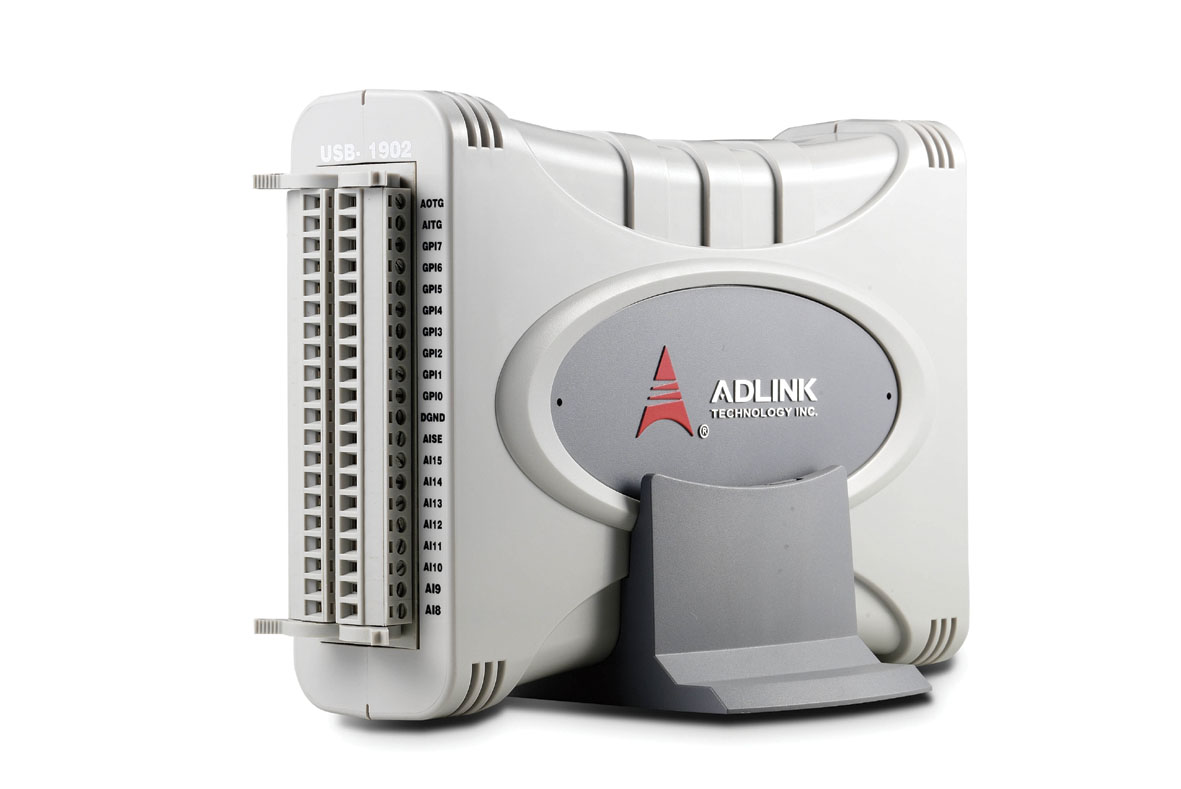
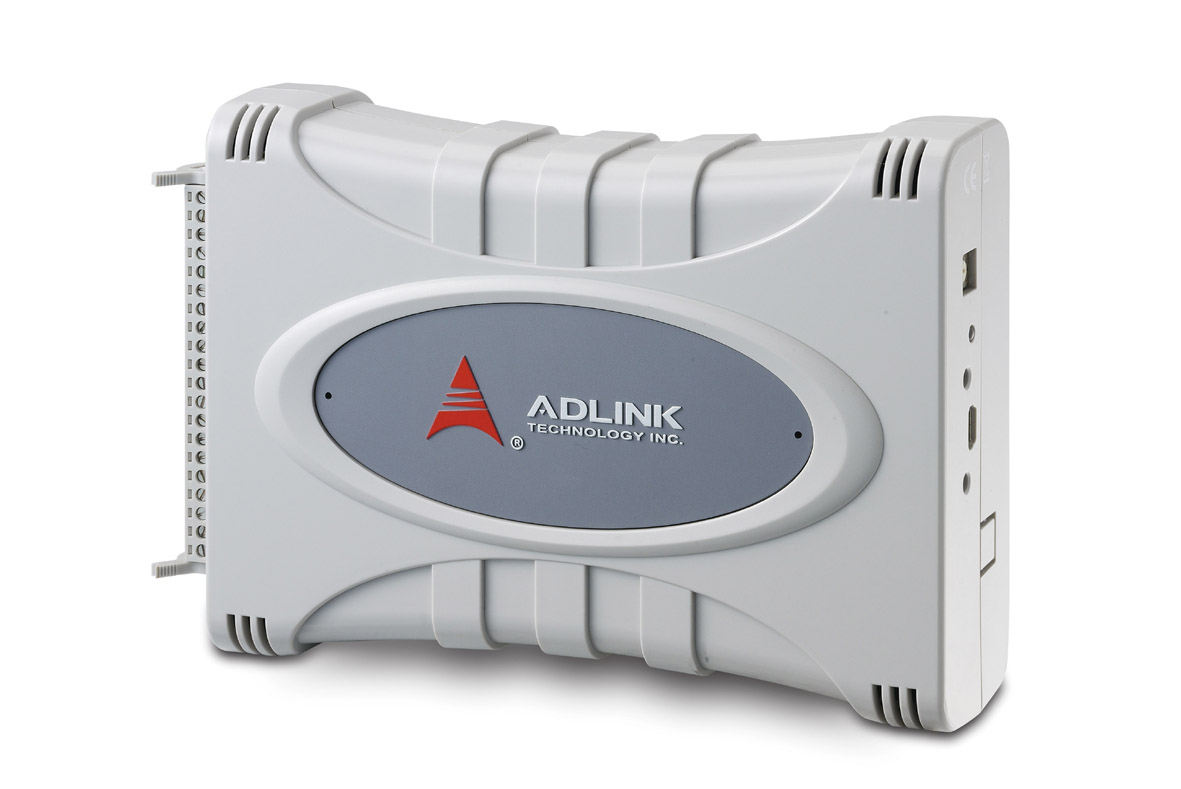
The ADLINK USB‑1902 is a high‑performance, 16‑bit, 250 kS/s USB 2.0‑based multi‑function data acquisition module designed for laboratory, industrial, and automation applications. It integrates analog input, analog output, digital I/O, and timer/counter functions in a compact, bus‑powered form factor. The module operates entirely from USB power (5 V @ 400 mA) and connects directly to a host PC via a lockable USB 2.0 interface, eliminating the need for external power supplies.
### 2. Key Features
- High‑Speed USB 2.0 Interface: Full‑speed data transfer with USB bulk transfer mode for continuous acquisition.
- USB Bus‑Powered Operation: 5 V @ 400 mA from the USB port; no external power adapter required.
- 16‑Channel Analog Input: 16 SE or 8 pseudo‑differential voltage inputs, 16‑bit resolution, up to 250 kS/s sampling rate.
- 2‑Channel Analog Output: 16‑bit resolution, simultaneous update up to 1 MS/s, ±10 V output range.
- Programmable Function I/O: 8 digital inputs, 4 digital outputs (TTL level), two 32‑bit general‑purpose timer/counters, and four PWM outputs.
- Flexible Triggering: Supports software, external digital, and analog triggers with post, delay, retrigger, and gated modes.
- Removable Screw‑Down Terminals: Two 20‑pin connectors for secure and easy wiring.
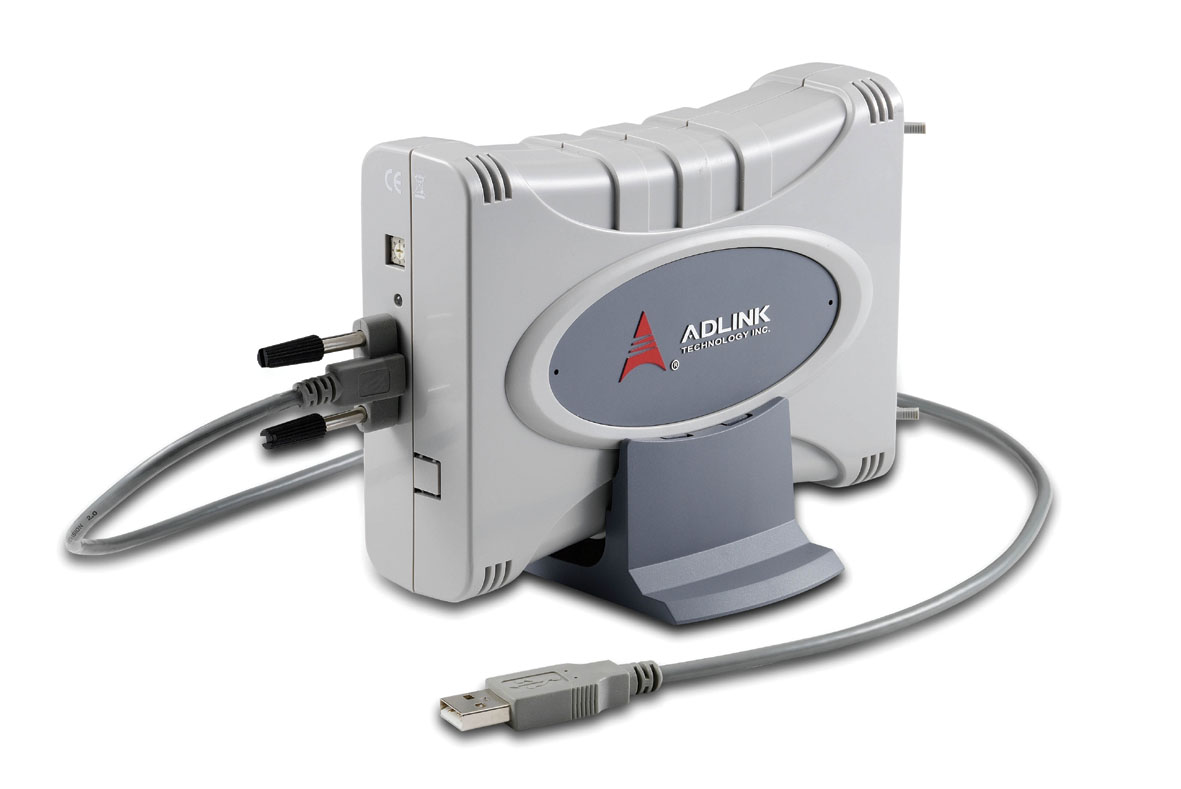
- Lockable USB Cable: Prevents accidental disconnection during operation.
- Auto‑Calibration: Built‑in self‑calibration circuitry (USB‑1901/1902) ensures long‑term accuracy.
- Mounting Flexibility: Includes a multi‑function stand for desktop, DIN‑rail, or wall mounting.
- Software Support: Compatible with Windows XP/Vista/7; drivers for VB, VC++, .NET, Delphi, LabVIEW®, and MATLAB®.
- Free Utility: U‑Test software for instant testing, data collection, and FFT analysis without programming.
### 3. Technical Specifications
Physical Characteristics
- Dimensions: 115 mm (W) × 150 mm (D) × 40 mm (H) (4.5 × 5.91 × 1.57 in.)
- Weight: Approx. 0.5 kg (module only)
- Material: Industrial‑grade aluminum enclosure with plastic stand
- Operating Temperature: 0 °C to 55 °C
- Storage Temperature: –20 °C to 70 °C
- Relative Humidity: 5 % – 95 %, non‑condensing
- Power Supply: USB bus‑powered, 5 V @ 400 mA
- Interface: USB 2.0 high‑speed, Mini‑B connector
Analog Input (AI)
- Channels: 16 single‑ended / 8 pseudo‑differential
- Resolution: 16 bits
- Sampling Rate: 250 kS/s (single channel)
- Input Range: ±10 V, ±2 V, ±1 V, ±200 mV (programmable)
- Input Coupling: DC
- Input Impedance: > 1 GΩ
- Overvoltage Protection: ±24 V continuous
- Programmable Gain: 1, 5, 10, 50
- Offset Error: ±0.1 mV (typical)
- Gain Error: ±0.05 % of FSR (typical)
- Bandwidth (–3 dB): 600 kHz (±10 V), 630 kHz (±2 V), 660 kHz (±1 V), 350 kHz (±200 mV)
- CMRR: 90 – 110 dB (depending on range)
- SNR: 89 dB (typical)
- THD: 102 dB (typical)
- ENOB: 14.5 bits (typical)
- FIFO Buffer: 4 k samples
- Trigger Sources: Software, external digital, or analog
- Trigger Modes: Post, delay, retrigger, gated
- External Conversion Source: ECLK (up to 250 kS/s)
- Data Transfer: Programmed I/O or continuous USB bulk transfer
Analog Output (AO)
- Channels: 2
- Resolution: 16 bits
- Update Rate: 1 MS/s (simultaneous)
- Output Range: ±10 V
- Offset Error: ±0.15 mV (typical)
- Gain Error: ±0.05 % of FSR (typical)
- Slew Rate: 20 V/µs
- Settling Time: 2.5 µs (0.1 % FS)
- Rise/Fall Time: 0.5 µs
- Output Drive: ±5 mA (max)
- FIFO Buffer: 10 k samples (shared by 2 channels)
- Output Mode: Programmed I/O or continuous bulk transfer
Digital I/O (DIO)
- Inputs: 8 TTL‑level DI
- Outputs: 4 TTL‑level DO
- Logic Levels: Input Low ≤ 0.8 V, High ≥ 2.0 V; Output Low ≤ 0.5 V, High ≥ 2.6 V
- Drive Capability: 10 mA per channel
- Modes: Digital I/O, Timer/Counter, PWM (only one mode active at a time)
Timer/Counter
- Channels: 2 × 32‑bit
- Base Clock: 80 MHz (internal), 10 MHz (external)
- Modes: 10 programmable modes including event counting, period measurement, pulse generation, PWM, and edge separation.
- PWM Output: 0.01 Hz – 5 MHz frequency, 1 % – 99 % duty cycle
### 4. Functionality
The USB‑1902 functions as a complete data acquisition interface between sensors, actuators, and a host PC. It digitizes analog signals, generates analog waveforms, and handles digital control and timing tasks.
Operation Principles:
- Analog Input: Signals are multiplexed, amplified, and digitized by a 16‑bit ADC (AD7610 or equivalent).
- Analog Output: Two DAC8871 16‑bit DACs generate bipolar ±10 V outputs for waveform generation or control signals.
- Digital I/O: FPGA‑controlled TTL lines support bit‑level read/write operations and timing functions.
- Triggering: Flexible software and hardware trigger sources enable precise synchronization of data acquisition and generation.
- Calibration: Auto‑calibration ensures measurement accuracy without external references.
Typical Applications:
- Laboratory data logging and signal analysis
- Industrial process monitoring and control
- Automated test equipment (ATE)
- Waveform generation and stimulus/response testing
- Biomedical and biotech measurement
- Automotive and aerospace sensor testing
Compatibility:
- Operating Systems: Windows XP, Vista, 7
- Driver Support: UD‑DASK (VB.NET, VC.NET, VB, VC++, BCB, Delphi), DAQPilot (for LabVIEW®), DAQ‑MTLB (for MATLAB®)
- Utility Software: U‑Test for real‑time testing and FFT analysis
### 5. Components & Accessories
Included Items:
- USB‑1902 module
- Multi‑function stand (for desktop, rail, or wall mounting)
- Two removable 20‑pin screw‑down terminal blocks (RST‑20P)
- Lockable 2 m USB Type‑A to Mini‑B cable (USB‑2M‑L)
- Rail mount kit
- ADLINK All‑in‑One CD (driver and software package)
- User’s manual
Optional Accessories:
- Additional RST‑20P terminal blocks
- Extended USB cables with locking mechanism
- Mounting brackets and DIN rail adapters
Connectors:
- Two 40‑pin removable screw terminals (CN1/CN2) for AI, AO, DIO, and trigger signals
- Mini‑USB 2.0 port for PC connection
### 6. Installation & Setup
Requirements:
- PC with available USB 2.0 port
- Windows 7/Vista/XP operating system
- UD‑DASK or DAQPilot driver installed before connecting the device
Installation Steps:
1. Install the ADLINK driver and software from the All‑in‑One CD or website.
2. Connect the USB‑1902 to a USB 2.0 port using the lockable cable.
3. Wait for firmware loading (LED changes from amber to green).
4. Verify device recognition in Windows Device Manager.
5. Configure device ID (1–8) using the rear rotary switch for multi‑device systems.
6. Launch U‑Test or custom software to begin data acquisition.
Mounting Options:
- Desktop: Use the included stand.
- DIN Rail: Attach rail mount kit to stand and snap onto rail.
- Wall Mount: Use four 3.4 mm screws through stand mounting holes.
### 7. Performance & Capabilities
Analog Input Performance:
- 16‑bit resolution with 14.5‑bit ENOB effective accuracy
- 250 kS/s maximum sampling rate (single channel)
- High linearity and low noise (0.3 LSB RMS system noise)
- Excellent dynamic range (SFDR 108 dB, THD 102 dB)
- Supports RSE, NRSE, and pseudo‑differential input configurations
Analog Output Performance:
- 1 MS/s update rate for simultaneous dual‑channel waveform generation
- 20 V/µs slew rate and 2.5 µs settling time for high‑speed signal output
- FIFO buffer (10 k samples) for continuous waveform generation
- Supports post, delay, and retriggered waveform modes
Digital I/O & Timing:
- 8 DI / 4 DO lines for control and status monitoring
- Two 32‑bit timers/counters with 80 MHz base clock
- PWM generation up to 5 MHz with 1 % duty cycle resolution
- Supports event counting, pulse measurement, and edge separation
Limitations:
- USB bus power limits total current consumption to 400 mA
- Only one function mode (DIO, Timer, or PWM) active at a time
- Maximum analog input rate shared across channels in scanning mode
### 8. Standards & Compliance
- USB 2.0 High‑Speed Compliance
- RoHS Directive Compliant (Restriction of Hazardous Substances)
- WEEE Directive Compliant (Waste Electrical and Electronic Equipment)
- CE and FCC Class A Compliance (for industrial environments)
- Environmental Responsibility: ADLINK ensures low environmental impact through eco‑friendly manufacturing and recycling programs.
### 9. Additional Information
Warranty:
- Standard ADLINK limited warranty (typically 2 years) covering manufacturing defects.
Support & Maintenance:
- Worldwide technical support via email and regional offices.
- Calibration service available through ADLINK service centers.
- Firmware and driver updates available from [www.adlinktech.com](http://www.adlinktech.com).
Service Contacts:
- Headquarters: ADLINK Technology Inc., New Taipei City, Taiwan (+886‑2‑8226‑5877)
- USA: Ampro ADLINK Technology Inc., San Jose, CA (+1‑408‑360‑0200)
- Europe: ADLINK Technology (Europe) GmbH, Düsseldorf, Germany (+49‑211‑495‑5552)
- China: ADLINK Technology (Shanghai, Beijing, Shenzhen)
- Japan: ADLINK Technology Japan Corporation, Tokyo
- Korea: ADLINK Technology Korean Liaison Office, Seoul
- Singapore & India: ADLINK Technology Singapore Pte. Ltd.
Maintenance Recommendations:
- Warm up for 15 minutes before calibration or precision measurement.
- Perform auto‑calibration periodically to compensate for temperature drift.
- Keep ventilation openings clear and avoid exposure to moisture or heat.
Software Updates:
- Latest drivers and utilities (UD‑DASK, DAQPilot, U‑Test) available for download from ADLINK’s website.
- Firmware updates can be applied via USB connection using ADLINK tools.
### Summary
The ADLINK USB‑1902 is a robust, high‑precision, and cost‑effective USB 2.0 data acquisition module that integrates 16‑bit A/D and D/A conversion, digital I/O, and timing functions into a single compact unit. Its bus‑powered design, removable terminal blocks, and comprehensive software support make it ideal for laboratory research, industrial automation, and embedded measurement applications. With up to 250 kS/s analog input and 1 MS/s analog output performance, the USB‑1902 delivers high‑speed, high‑accuracy data acquisition in a portable and easy‑to‑deploy form factor.



 SUCHEN SIE DIE PASSENDE
 USB-1901+1902+1903_Datasheet_en_1.pdf
PDF Catalog
USB-1901+1902+1903_Datasheet_en_1.pdf
PDF Catalog
 USB-1900_series_datasheet.pdf
PDF Catalog
USB-1900_series_datasheet.pdf
PDF Catalog