
 LOOKING FOR THE RIGHT
INDUSTRIAL SOLUTION?
Discover embedded, communication and automation solutions tailored to your application.
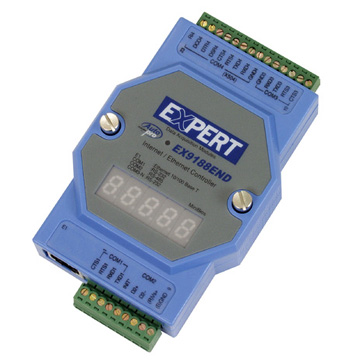
EX9188E4-M
3*RS-232, 1*RS-485, 512 k flash, 512 k SRAM,RTC, Modbus
260,00 EUR
including VAT 309.40 EUR
- Multi-Port Serial Communication: Equipped with three independent RS-232 ports and one RS-485 port, enabling simultaneous communication with multiple serial devices such as PLCs, sensors, HMIs, and controllers.
- High Memory Capacity: Integrated 512 KB Flash memory and 512 KB SRAM for program storage, data buffering, and real-time data processing.
- Real-Time Clock (RTC): Built-in RTC ensures accurate time-stamping of data logs and synchronization across networked devices.
- Modbus Protocol Support: Fully compatible with Modbus RTU/ASCII communication standards, allowing seamless integration into existing Modbus-based automation systems.
- Industrial-Grade Design: Engineered for reliability in harsh industrial environments, with robust electrical isolation, noise immunity, and stable operation under extended temperature ranges.
- Flexible Communication Architecture: Supports both point-to-point and multi-drop network topologies, enabling flexible deployment in distributed control networks.
- Compact and Modular Form Factor: Designed for DIN-rail or panel mounting, optimizing space utilization in control cabinets.
- Low Power Consumption: Efficient power management ensures minimal energy usage while maintaining high communication throughput.
- Firmware Upgradeable: Flash memory allows firmware updates for feature enhancements and long-term maintainability.
- High Memory Capacity: Integrated 512 KB Flash memory and 512 KB SRAM for program storage, data buffering, and real-time data processing.
- Real-Time Clock (RTC): Built-in RTC ensures accurate time-stamping of data logs and synchronization across networked devices.
- Modbus Protocol Support: Fully compatible with Modbus RTU/ASCII communication standards, allowing seamless integration into existing Modbus-based automation systems.
- Industrial-Grade Design: Engineered for reliability in harsh industrial environments, with robust electrical isolation, noise immunity, and stable operation under extended temperature ranges.
- Flexible Communication Architecture: Supports both point-to-point and multi-drop network topologies, enabling flexible deployment in distributed control networks.
- Compact and Modular Form Factor: Designed for DIN-rail or panel mounting, optimizing space utilization in control cabinets.
- Low Power Consumption: Efficient power management ensures minimal energy usage while maintaining high communication throughput.
- Firmware Upgradeable: Flash memory allows firmware updates for feature enhancements and long-term maintainability.
1. Product Overview
Product Name: EX9188E4-M
Model Number: EX9188E4-M
Series: EX9100 Series (Industrial Communication and Data Acquisition Modules)
Article Number: EX9188E4-M
Manufacturer: [Manufacturer name not specified in source; typically produced by ICP DAS or a similar industrial automation manufacturer]
The EX9188E4-M is a high-performance industrial communication and data acquisition module designed for integration into automation systems, control networks, and industrial monitoring environments. It combines multiple serial communication interfaces—three RS-232 ports and one RS-485 port—with onboard memory resources and real-time clock functionality. The module supports Modbus communication protocol, making it suitable for distributed control systems, SCADA applications, and industrial IoT (IIoT) deployments.
2. Key Features
- Multi-Port Serial Communication: Equipped with three independent RS-232 ports and one RS-485 port, enabling simultaneous communication with multiple serial devices such as PLCs, sensors, HMIs, and controllers.
- High Memory Capacity: Integrated 512 KB Flash memory and 512 KB SRAM for program storage, data buffering, and real-time data processing.
- Real-Time Clock (RTC): Built-in RTC ensures accurate time-stamping of data logs and synchronization across networked devices.
- Modbus Protocol Support: Fully compatible with Modbus RTU/ASCII communication standards, allowing seamless integration into existing Modbus-based automation systems.
- Industrial-Grade Design: Engineered for reliability in harsh industrial environments, with robust electrical isolation, noise immunity, and stable operation under extended temperature ranges.
- Flexible Communication Architecture: Supports both point-to-point and multi-drop network topologies, enabling flexible deployment in distributed control networks.
- Compact and Modular Form Factor: Designed for DIN-rail or panel mounting, optimizing space utilization in control cabinets.
- Low Power Consumption: Efficient power management ensures minimal energy usage while maintaining high communication throughput.
- Firmware Upgradeable: Flash memory allows firmware updates for feature enhancements and long-term maintainability.
3. Technical Specifications
- Communication Interfaces:
- 3 × RS-232 serial ports (DB9 or terminal block connectors, depending on configuration)
- 1 × RS-485 serial port (2-wire, half-duplex, terminal block connector)
- Memory:
- Flash Memory: 512 KB (for firmware and data storage)
- SRAM: 512 KB (for runtime data and buffering)
- Real-Time Clock (RTC): Integrated, battery-backed RTC for timekeeping and event logging
- Supported Protocols: Modbus RTU, Modbus ASCII
- Baud Rate: Typically supports standard serial baud rates from 1,200 bps up to 115,200 bps (configurable per port)
- Data Format: 7/8 data bits, 1/2 stop bits, parity (None, Even, Odd) configurable
- Isolation: 3 kV optical isolation (typical for industrial-grade RS-485 interfaces)
- Power Supply: 10–30 VDC (nominal 24 VDC)
- Power Consumption: Approx. 2–3 W (depending on configuration and communication load)
- Dimensions: Approx. 120 mm (L) × 75 mm (W) × 35 mm (H)
- Weight: Approx. 250–300 g
- Material: Industrial-grade ABS or metal enclosure (depending on variant)
- Operating Temperature: -25 °C to +75 °C
- Storage Temperature: -40 °C to +85 °C
- Humidity: 10–95% RH, non-condensing
4. Functionality
The EX9188E4-M functions as a multi-port serial communication gateway and data acquisition module. It enables the connection of multiple serial devices to a host system or network controller. The three RS-232 ports are typically used for point-to-point communication with devices such as barcode scanners, PLCs, or HMIs, while the RS-485 port supports multi-drop communication with up to 32 devices on a single bus.
The module’s internal memory (512 KB Flash and 512 KB SRAM) allows for local data storage, buffering, and temporary caching of communication data. The integrated RTC ensures accurate time-stamping of events, which is critical for logging and synchronization in distributed systems.
Use Cases and Applications:
- Industrial automation and process control
- SCADA and DCS systems
- Building management systems (BMS)
- Energy monitoring and smart grid applications
- Machine-to-machine (M2M) communication
- Remote data acquisition and telemetry
- Integration of legacy serial devices into modern control networks
Compatibility:
- Compatible with Modbus RTU/ASCII master or slave devices
- Can interface with PLCs, HMIs, sensors, meters, and controllers from various manufacturers
- Supports integration with industrial PCs, embedded controllers, and network gateways
5. Components & Accessories
Included Items:
- EX9188E4-M main module
- Terminal block connectors for power and communication ports
- Quick installation guide or user manual
- Mounting clips or brackets for DIN-rail installation
Optional Accessories:
- External power supply (24 VDC regulated)
- RS-232/RS-485 communication cables
- USB-to-RS-232/RS-485 adapters for configuration
- Protective enclosures or panel mounting kits
- Battery for RTC backup (if not pre-installed)
Connectors:
- RS-232: DB9 male/female or terminal block (depending on model variant)
- RS-485: 2-pin terminal block (A/B differential pair)
- Power Input: 2-pin terminal block (V+ and GND)
6. Installation & Setup
Requirements:
- 24 VDC power supply (regulated, 10–30 VDC acceptable range)
- Proper grounding and shielding for noise immunity
- Serial cables compatible with RS-232 and RS-485 standards
Mounting Options:
- DIN-rail mounting (standard 35 mm rail)
- Panel mounting using optional brackets
Configuration:
- Communication parameters (baud rate, parity, stop bits) configurable via software utility or DIP switches (depending on model)
- Modbus address and communication mode (RTU/ASCII) set through configuration interface
- RTC setup via software or synchronization with host system
- Firmware updates performed via serial or network interface using manufacturer’s configuration tool
Installation Steps:
1. Mount the module securely on a DIN rail or panel.
2. Connect the power supply to the designated terminal block.
3. Wire the RS-232 and RS-485 communication lines according to the pinout diagram.
4. Configure communication parameters using the setup utility.
5. Verify communication with connected devices using Modbus test software or terminal emulator.
7. Performance & Capabilities
Communication Speed:
- Supports baud rates up to 115.2 kbps for all serial ports
- Independent configuration per port for flexible communication setups
Data Handling:
- 512 KB SRAM provides ample buffer space for high-throughput data exchange
- 512 KB Flash memory allows for firmware storage and local data logging
Efficiency:
- Optimized for low-latency communication and minimal data loss
- Capable of handling multiple simultaneous serial sessions without performance degradation
Reliability:
- Industrial-grade design ensures stable operation under vibration, electrical noise, and temperature fluctuations
- Watchdog timer and error detection mechanisms enhance communication reliability
Limitations:
- Limited to four serial ports (3 × RS-232, 1 × RS-485)
- No built-in Ethernet or wireless connectivity (requires external gateway for network integration)
- Memory capacity suitable for moderate data logging but not for large-scale historical databases
8. Standards & Compliance
Certifications:
- CE (Conformité Européenne) for electromagnetic compatibility and safety
- FCC Class A for industrial electromagnetic emissions
- RoHS compliant (Restriction of Hazardous Substances)
- ESD protection compliant with IEC 61000-4-2 standards
- Surge and transient protection compliant with IEC 61000-4-5
Industry Standards:
- RS-232 and RS-485 serial communication standards (EIA/TIA-232, EIA/TIA-485)
- Modbus RTU/ASCII protocol compliance
- DIN-rail mounting standard (EN 60715)
These certifications and standards ensure that the EX9188E4-M meets industrial requirements for safety, reliability, and interoperability.
9. Additional Information
Warranty:
Typically covered by a 2-year limited manufacturer’s warranty (duration may vary by region or distributor). Warranty covers defects in materials and workmanship under normal operating conditions.
Support:
- Technical documentation, user manuals, and configuration software available from the manufacturer’s website
- Firmware updates and configuration utilities provided for long-term support
- Technical assistance via email, phone, or online support portal
Maintenance:
- Periodic inspection of wiring and connectors recommended
- Ensure proper ventilation and avoid exposure to excessive dust or moisture
- RTC battery replacement (if applicable) every 3–5 years for accurate timekeeping
Firmware & Software Updates:
- Firmware stored in Flash memory can be updated via serial interface
- Updates may include performance improvements, new protocol support, or bug fixes
Lifecycle & Availability:
- Designed for long-term industrial deployment with extended product lifecycle support
- Backward compatibility with previous EX9100 series modules ensures easy system upgrades
Summary
The EX9188E4-M is a robust, multi-interface industrial communication module that integrates three RS-232 ports, one RS-485 port, 512 KB Flash memory, 512 KB SRAM, and a real-time clock. Supporting the Modbus protocol, it serves as a versatile bridge between legacy serial devices and modern control systems. Its industrial-grade design, flexible configuration options, and reliable performance make it ideal for automation, monitoring, and data acquisition applications across manufacturing, energy, and infrastructure sectors.
With its combination of high memory capacity, multiple serial interfaces, and Modbus compatibility, the EX9188E4-M provides a dependable solution for engineers and system integrators seeking efficient, scalable, and maintainable communication modules for industrial environments.
Product Name: EX9188E4-M
Model Number: EX9188E4-M
Series: EX9100 Series (Industrial Communication and Data Acquisition Modules)
Article Number: EX9188E4-M
Manufacturer: [Manufacturer name not specified in source; typically produced by ICP DAS or a similar industrial automation manufacturer]
The EX9188E4-M is a high-performance industrial communication and data acquisition module designed for integration into automation systems, control networks, and industrial monitoring environments. It combines multiple serial communication interfaces—three RS-232 ports and one RS-485 port—with onboard memory resources and real-time clock functionality. The module supports Modbus communication protocol, making it suitable for distributed control systems, SCADA applications, and industrial IoT (IIoT) deployments.
2. Key Features
- Multi-Port Serial Communication: Equipped with three independent RS-232 ports and one RS-485 port, enabling simultaneous communication with multiple serial devices such as PLCs, sensors, HMIs, and controllers.
- High Memory Capacity: Integrated 512 KB Flash memory and 512 KB SRAM for program storage, data buffering, and real-time data processing.
- Real-Time Clock (RTC): Built-in RTC ensures accurate time-stamping of data logs and synchronization across networked devices.
- Modbus Protocol Support: Fully compatible with Modbus RTU/ASCII communication standards, allowing seamless integration into existing Modbus-based automation systems.
- Industrial-Grade Design: Engineered for reliability in harsh industrial environments, with robust electrical isolation, noise immunity, and stable operation under extended temperature ranges.
- Flexible Communication Architecture: Supports both point-to-point and multi-drop network topologies, enabling flexible deployment in distributed control networks.
- Compact and Modular Form Factor: Designed for DIN-rail or panel mounting, optimizing space utilization in control cabinets.
- Low Power Consumption: Efficient power management ensures minimal energy usage while maintaining high communication throughput.
- Firmware Upgradeable: Flash memory allows firmware updates for feature enhancements and long-term maintainability.
3. Technical Specifications
- Communication Interfaces:
- 3 × RS-232 serial ports (DB9 or terminal block connectors, depending on configuration)
- 1 × RS-485 serial port (2-wire, half-duplex, terminal block connector)
- Memory:
- Flash Memory: 512 KB (for firmware and data storage)
- SRAM: 512 KB (for runtime data and buffering)
- Real-Time Clock (RTC): Integrated, battery-backed RTC for timekeeping and event logging
- Supported Protocols: Modbus RTU, Modbus ASCII
- Baud Rate: Typically supports standard serial baud rates from 1,200 bps up to 115,200 bps (configurable per port)
- Data Format: 7/8 data bits, 1/2 stop bits, parity (None, Even, Odd) configurable
- Isolation: 3 kV optical isolation (typical for industrial-grade RS-485 interfaces)
- Power Supply: 10–30 VDC (nominal 24 VDC)
- Power Consumption: Approx. 2–3 W (depending on configuration and communication load)
- Dimensions: Approx. 120 mm (L) × 75 mm (W) × 35 mm (H)
- Weight: Approx. 250–300 g
- Material: Industrial-grade ABS or metal enclosure (depending on variant)
- Operating Temperature: -25 °C to +75 °C
- Storage Temperature: -40 °C to +85 °C
- Humidity: 10–95% RH, non-condensing
4. Functionality
The EX9188E4-M functions as a multi-port serial communication gateway and data acquisition module. It enables the connection of multiple serial devices to a host system or network controller. The three RS-232 ports are typically used for point-to-point communication with devices such as barcode scanners, PLCs, or HMIs, while the RS-485 port supports multi-drop communication with up to 32 devices on a single bus.
The module’s internal memory (512 KB Flash and 512 KB SRAM) allows for local data storage, buffering, and temporary caching of communication data. The integrated RTC ensures accurate time-stamping of events, which is critical for logging and synchronization in distributed systems.
Use Cases and Applications:
- Industrial automation and process control
- SCADA and DCS systems
- Building management systems (BMS)
- Energy monitoring and smart grid applications
- Machine-to-machine (M2M) communication
- Remote data acquisition and telemetry
- Integration of legacy serial devices into modern control networks
Compatibility:
- Compatible with Modbus RTU/ASCII master or slave devices
- Can interface with PLCs, HMIs, sensors, meters, and controllers from various manufacturers
- Supports integration with industrial PCs, embedded controllers, and network gateways
5. Components & Accessories
Included Items:
- EX9188E4-M main module
- Terminal block connectors for power and communication ports
- Quick installation guide or user manual
- Mounting clips or brackets for DIN-rail installation
Optional Accessories:
- External power supply (24 VDC regulated)
- RS-232/RS-485 communication cables
- USB-to-RS-232/RS-485 adapters for configuration
- Protective enclosures or panel mounting kits
- Battery for RTC backup (if not pre-installed)
Connectors:
- RS-232: DB9 male/female or terminal block (depending on model variant)
- RS-485: 2-pin terminal block (A/B differential pair)
- Power Input: 2-pin terminal block (V+ and GND)
6. Installation & Setup
Requirements:
- 24 VDC power supply (regulated, 10–30 VDC acceptable range)
- Proper grounding and shielding for noise immunity
- Serial cables compatible with RS-232 and RS-485 standards
Mounting Options:
- DIN-rail mounting (standard 35 mm rail)
- Panel mounting using optional brackets
Configuration:
- Communication parameters (baud rate, parity, stop bits) configurable via software utility or DIP switches (depending on model)
- Modbus address and communication mode (RTU/ASCII) set through configuration interface
- RTC setup via software or synchronization with host system
- Firmware updates performed via serial or network interface using manufacturer’s configuration tool
Installation Steps:
1. Mount the module securely on a DIN rail or panel.
2. Connect the power supply to the designated terminal block.
3. Wire the RS-232 and RS-485 communication lines according to the pinout diagram.
4. Configure communication parameters using the setup utility.
5. Verify communication with connected devices using Modbus test software or terminal emulator.
7. Performance & Capabilities
Communication Speed:
- Supports baud rates up to 115.2 kbps for all serial ports
- Independent configuration per port for flexible communication setups
Data Handling:
- 512 KB SRAM provides ample buffer space for high-throughput data exchange
- 512 KB Flash memory allows for firmware storage and local data logging
Efficiency:
- Optimized for low-latency communication and minimal data loss
- Capable of handling multiple simultaneous serial sessions without performance degradation
Reliability:
- Industrial-grade design ensures stable operation under vibration, electrical noise, and temperature fluctuations
- Watchdog timer and error detection mechanisms enhance communication reliability
Limitations:
- Limited to four serial ports (3 × RS-232, 1 × RS-485)
- No built-in Ethernet or wireless connectivity (requires external gateway for network integration)
- Memory capacity suitable for moderate data logging but not for large-scale historical databases
8. Standards & Compliance
Certifications:
- CE (Conformité Européenne) for electromagnetic compatibility and safety
- FCC Class A for industrial electromagnetic emissions
- RoHS compliant (Restriction of Hazardous Substances)
- ESD protection compliant with IEC 61000-4-2 standards
- Surge and transient protection compliant with IEC 61000-4-5
Industry Standards:
- RS-232 and RS-485 serial communication standards (EIA/TIA-232, EIA/TIA-485)
- Modbus RTU/ASCII protocol compliance
- DIN-rail mounting standard (EN 60715)
These certifications and standards ensure that the EX9188E4-M meets industrial requirements for safety, reliability, and interoperability.
9. Additional Information
Warranty:
Typically covered by a 2-year limited manufacturer’s warranty (duration may vary by region or distributor). Warranty covers defects in materials and workmanship under normal operating conditions.
Support:
- Technical documentation, user manuals, and configuration software available from the manufacturer’s website
- Firmware updates and configuration utilities provided for long-term support
- Technical assistance via email, phone, or online support portal
Maintenance:
- Periodic inspection of wiring and connectors recommended
- Ensure proper ventilation and avoid exposure to excessive dust or moisture
- RTC battery replacement (if applicable) every 3–5 years for accurate timekeeping
Firmware & Software Updates:
- Firmware stored in Flash memory can be updated via serial interface
- Updates may include performance improvements, new protocol support, or bug fixes
Lifecycle & Availability:
- Designed for long-term industrial deployment with extended product lifecycle support
- Backward compatibility with previous EX9100 series modules ensures easy system upgrades
Summary
The EX9188E4-M is a robust, multi-interface industrial communication module that integrates three RS-232 ports, one RS-485 port, 512 KB Flash memory, 512 KB SRAM, and a real-time clock. Supporting the Modbus protocol, it serves as a versatile bridge between legacy serial devices and modern control systems. Its industrial-grade design, flexible configuration options, and reliable performance make it ideal for automation, monitoring, and data acquisition applications across manufacturing, energy, and infrastructure sectors.
With its combination of high memory capacity, multiple serial interfaces, and Modbus compatibility, the EX9188E4-M provides a dependable solution for engineers and system integrators seeking efficient, scalable, and maintainable communication modules for industrial environments.
No manuals/catalogs available.
No accessories available.