 LOOKING FOR THE RIGHT
INDUSTRIAL SOLUTION?
Discover embedded, communication and automation solutions tailored to your application.

- HSL Communication Protocol: Fully compatible with ADLINK’s High‑Speed Link (HSL) distributed I/O and motion control architecture.
- Selectable Transmission Speeds: 3, 6, or 12 Mbps; supports both half‑ and full‑duplex modes.
- On‑board DSP (TMS320C6711): Handles motion command dispatching, data management, and real‑time control tasks independently of the host CPU.
- 4‑Axis Pulse‑Train Output: Supports stepper, AC/DC servo, linear, or rotary motors.
- Pulse Frequency: Up to 6.55 MHz per axis.
- Interpolation:
- 2–4 axis linear interpolation
- 2‑axis circular interpolation
- Multi‑axis continuous contouring for smooth velocity transitions
- Motion Point Table Management: Up to 2000 motion points stored locally for CPU‑free execution.
- Motion Script Download: G‑code‑like scripting for autonomous, time‑critical motion sequences.
- Dynamic Motion Control: Position and speed can be changed on‑the‑fly during operation.
- Home Return Modes: 13 configurable homing sequences with automatic search.
- Dedicated Motion I/O: EL, ORG, INP, RDY, SVON, ERC, ALM signals per axis.
- Pulse Output Modes: OUT/DIR, CW/CCW, or AB‑phase.
- Encoder Feedback: 28‑bit up/down incremental encoder counter (±134,217,727 pulses).
- Safety & Isolation: 2500 Vrms isolation on all digital I/O; hardware emergency stop input.
- Backlash Compensation & Vibration Suppression: Hardware‑based correction and damping functions.
- Software Limits: Dual programmable software end‑limits per axis.
- Network Scalability: Up to 15 modules (60 axes) per HSL network.
- CE Certified: Complies with European EMC and safety standards.
- Selectable Transmission Speeds: 3, 6, or 12 Mbps; supports both half‑ and full‑duplex modes.
- On‑board DSP (TMS320C6711): Handles motion command dispatching, data management, and real‑time control tasks independently of the host CPU.
- 4‑Axis Pulse‑Train Output: Supports stepper, AC/DC servo, linear, or rotary motors.
- Pulse Frequency: Up to 6.55 MHz per axis.
- Interpolation:
- 2–4 axis linear interpolation
- 2‑axis circular interpolation
- Multi‑axis continuous contouring for smooth velocity transitions
- Motion Point Table Management: Up to 2000 motion points stored locally for CPU‑free execution.
- Motion Script Download: G‑code‑like scripting for autonomous, time‑critical motion sequences.
- Dynamic Motion Control: Position and speed can be changed on‑the‑fly during operation.
- Home Return Modes: 13 configurable homing sequences with automatic search.
- Dedicated Motion I/O: EL, ORG, INP, RDY, SVON, ERC, ALM signals per axis.
- Pulse Output Modes: OUT/DIR, CW/CCW, or AB‑phase.
- Encoder Feedback: 28‑bit up/down incremental encoder counter (±134,217,727 pulses).
- Safety & Isolation: 2500 Vrms isolation on all digital I/O; hardware emergency stop input.
- Backlash Compensation & Vibration Suppression: Hardware‑based correction and damping functions.
- Software Limits: Dual programmable software end‑limits per axis.
- Network Scalability: Up to 15 modules (60 axes) per HSL network.
- CE Certified: Complies with European EMC and safety standards.
Comprehensive Product Summary: ADLINK HSL‑4XMO‑CD‑N Remote 4‑Axis Stepper & Servo Motor Module
### 1. Product Overview
Product Name: HSL‑4XMO‑CD‑N
Article Number: HSL‑4XMO‑CD‑N
Series: HSL‑4XMO Series (High‑Speed Link 4‑Axis Motion Control Modules)
Manufacturer: ADLINK Technology Inc.
Model Variants: HSL‑4XMO‑CG‑N/‑P and HSL‑4XMO‑CD‑N/‑P
Product Type: Remote 4‑axis pulse‑train motion control module for stepper and servo motors
Interface Type: D‑Sub interface (for servo motor connection)
Manufacturer Website: [www.adlinktech.com](http://www.adlinktech.com)
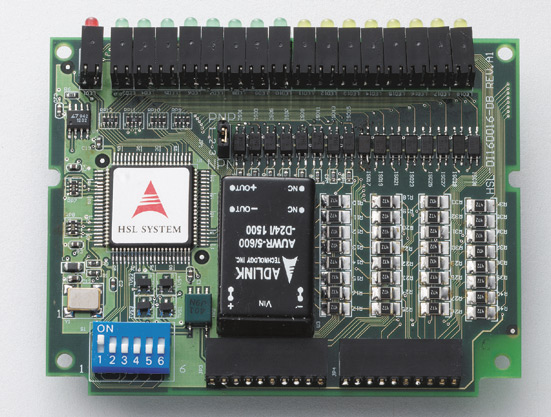
The ADLINK HSL‑4XMO‑CD‑N is a distributed 4‑axis motion control module designed for high‑performance stepper and servo motor control over the High‑Speed Link (HSL) bus. It integrates a dedicated DSP and motion ASIC to deliver real‑time, deterministic motion control with minimal CPU overhead. The module supports up to 60 axes per HSL network and is optimized for industrial automation, robotics, and precision motion systems.
### 2. Key Features
- HSL Communication Protocol: Fully compatible with ADLINK’s High‑Speed Link (HSL) distributed I/O and motion control architecture.
- Selectable Transmission Speeds: 3, 6, or 12 Mbps; supports both half‑ and full‑duplex modes.
- On‑board DSP (TMS320C6711): Handles motion command dispatching, data management, and real‑time control tasks independently of the host CPU.
- 4‑Axis Pulse‑Train Output: Supports stepper, AC/DC servo, linear, or rotary motors.
- Pulse Frequency: Up to 6.55 MHz per axis.
- Interpolation:
- 2–4 axis linear interpolation
- 2‑axis circular interpolation
- Multi‑axis continuous contouring for smooth velocity transitions
- Motion Point Table Management: Up to 2000 motion points stored locally for CPU‑free execution.
- Motion Script Download: G‑code‑like scripting for autonomous, time‑critical motion sequences.
- Dynamic Motion Control: Position and speed can be changed on‑the‑fly during operation.
- Home Return Modes: 13 configurable homing sequences with automatic search.
- Dedicated Motion I/O: EL, ORG, INP, RDY, SVON, ERC, ALM signals per axis.
- Pulse Output Modes: OUT/DIR, CW/CCW, or AB‑phase.
- Encoder Feedback: 28‑bit up/down incremental encoder counter (±134,217,727 pulses).
- Safety & Isolation: 2500 Vrms isolation on all digital I/O; hardware emergency stop input.
- Backlash Compensation & Vibration Suppression: Hardware‑based correction and damping functions.
- Software Limits: Dual programmable software end‑limits per axis.
- Network Scalability: Up to 15 modules (60 axes) per HSL network.
- CE Certified: Complies with European EMC and safety standards.
### 3. Technical Specifications
Axes & Control
- Controllable Axes: 4 per module
- Maximum Axes per Network: 60 (15 modules)
- Slave ID Consumption: 4 IDs per module
- Internal Reference Clock: 19.66 MHz
- Position Counter Range: ±134,217,727 pulses (28‑bit)
- Pulse Output Frequency: Up to 6.55 MHz
- Encoder Input Frequency: Up to 5 MHz
- Encoder Resolution: 28‑bit up/down counter
- Pulse Output Modes: OUT/DIR, CW/CCW, AB‑phase
- Pulse Output Voltage: Logic H ≥ 2.5 V, Logic L ≤ 0.5 V
- Encoder Input Voltage: Logic H 3–5 V, Logic L 0–2.4 V
- Encoder Input Resistance: 220 Ω @ 0.125 W
- Isolation Voltage: 500 Vrms (signal level), 2500 Vrms (I/O isolation)
Digital I/O
- General‑Purpose Inputs: 4 channels, NPN/PNP selectable
- Input Voltage: ON 6.5–24 V, OFF 0–3 V
- Input Resistance: 4.7 kΩ @ 0.5 W
- Input Frequency: 10 kHz
- General‑Purpose Outputs: 4 channels, NPN (‑N) or PNP (‑P) type
- Output Current: ±90 mA max.
- Output Frequency: 2 kHz @ 24 V, 300 Ω load
- Isolation: 500 Vrms
Power & Environmental
- Power Supply: 22–26 V DC (nominal 24 V)
- Power Consumption: 5–8 W max.
- Operating Temperature: 0 °C – 60 °C
- Storage Temperature: –20 °C – 80 °C
- Humidity: 0–90 % RH, non‑condensing
- Certification: CE
Physical Dimensions
- Width: 163.5 mm
- Depth: 74.9 mm
- Height: 52.7 mm
- Weight: Approx. 0.5 kg (typical module)
- Mounting: DIN‑rail or panel mount (via enclosure)
### 4. Functionality
The HSL‑4XMO‑CD‑N operates as a distributed motion control slave on the HSL network. It generates high‑frequency pulse trains to drive stepper or servo amplifiers. Each axis can operate independently or in coordinated multi‑axis modes.
Operating Modes:
- Velocity Mode: Constant or variable speed control with trapezoidal or S‑curve acceleration profiles.
- Position Mode: Absolute or relative positioning with programmable acceleration/deceleration.
- Interpolation Modes: Linear (2–4 axes) and circular (2 axes) interpolation for coordinated motion.
- Continuous Contouring: Seamless transition between motion segments for smooth path control.
- Home Return: 13 configurable homing sequences using ORG, EZ, and EL signals.
- On‑the‑Fly Adjustments: Real‑time modification of target position or velocity during motion.
- Position Compare & Trigger: Hardware‑based comparator outputs trigger pulses at defined positions.
- Backlash Compensation: Automatic corrective pulses on direction change.
- Vibration Suppression: Programmable damping pulses after motion completion.
Applications:
- Multi‑axis CNC and robotic systems
- Semiconductor and electronics assembly
- Precision inspection and pick‑and‑place equipment
- Automated test and measurement platforms
- Packaging and labeling machinery
- General industrial motion automation
Compatibility:
- Supports stepper, AC/DC servo, linear, and rotary motors with pulse‑train interfaces.
- Compatible with ADLINK HSL master controllers and LinkMaster software suite.
- Software libraries available for DOS, Windows 9x/NT/2000/XP, and Linux.
### 5. Components & Accessories
Included Items:
- HSL‑4XMO‑CD‑N module
- ADLINK all‑in‑one software CD (drivers, libraries, LinkMaster utility)
- User’s Manual (Rev. 2.02, Part No. 50‑1I001‑200)
Connectors:
- CN1: External Power Input (+24 V DC, EGND)
- CN2: Emergency Stop Input (EMG) and Input Common (ICOM)
- HS1/HS2: HSL Communication (RJ‑45)
- HS3: HSL Communication (WAGO terminal)
- CM1–CM4: Servo Interface Connectors (D‑Sub)
- IOIF1–IOIF4: Mechanical I/O and GPIO connectors
Optional Accessories:
- HSL communication cables (RJ‑45 or WAGO)
- Servo interface cables (D‑Sub to amplifier)
- DIN‑rail mounting brackets
- External encoder and limit switch wiring harnesses
### 6. Installation & Setup
Requirements:
- 24 V DC power supply (22–26 V DC ± 5 %)
- HSL master controller (e.g., ADLINK PCI‑7856 or equivalent)
- Compatible servo/stepper drivers with pulse‑train input
Configuration Steps:
1. Hardware Installation: Mount the module on DIN‑rail or panel; connect power and communication lines.
2. Slave ID Setting: Configure via rotary switch S1; each module occupies 4 HSL IDs.
- Half‑duplex: consecutive IDs (e.g., 1–4)
- Full‑duplex: alternate IDs (e.g., 1, 3, 5, 7)
3. Jumper Settings:
- JP1: Communication speed (3/6/12 Mbps)
- JP2–JP3: Transmission mode (half/full duplex)
- JP4: Termination resistor enable
- JP5–JP8, JP10–JP13: DO reset enable for servo driver
- JP9: EMG signal NPN/PNP selection
4. Signal Wiring: Connect motor drivers, encoders, limit switches, and I/O per pin assignments.
5. Software Setup: Install ADLINK drivers and LinkMaster utility; configure module parameters using Motion Creator GUI.
6. Testing: Verify communication, I/O logic, and motion operation via LinkMaster before deployment.
### 7. Performance & Capabilities
Motion Performance:
- Maximum Pulse Output: 6.55 MHz
- Encoder Feedback Rate: 5 MHz
- Command Response Time: ≈ 240 µs @ 6 Mbps
- Command Execution Time (typical): 0.4–3 ms depending on command type and network size
- Position Range: ±134,217,727 pulses (28‑bit)
- Point Table Capacity: Up to 2000 entries
- Motion Script Execution: G‑code‑like interpreter for autonomous operation
Interpolation & Contouring:
- 2–4 axis linear interpolation
- 2 axis circular interpolation (with optional acceleration/deceleration profiles)
- Continuous contouring for seamless multi‑segment motion
Efficiency & Scalability:
- Up to 15 modules (60 axes) per HSL network
- Minimal CPU load due to on‑board DSP and motion ASIC
- Real‑time deterministic control with hardware‑based timing
Limitations:
- Circular interpolation with acceleration/deceleration requires hardware version ≥ 1001
- Position/velocity change on‑the‑fly limited by remaining motion distance
- Encoder input limited to 5 MHz maximum frequency
### 8. Standards & Compliance
- CE Certification: Conforms to European EMC and safety directives.
- Electrical Isolation: 2500 Vrms isolation on all digital I/O channels.
- Environmental Compliance: RoHS‑compliant manufacturing.
- Industry Standards:
- HSL (High‑Speed Link) distributed motion control protocol
- Compatible with standard pulse‑train servo/stepper interfaces (OUT/DIR, CW/CCW, AB‑phase)
- Supports G‑code‑like motion scripting for CNC‑style automation
### 9. Additional Information
Software Support:
- Programming Libraries:
- Borland C/C++ 3.1 and Windows 95/98/NT/2000/XP APIs
- Function libraries for DOS and Linux environments
- Motion Creator (LinkMaster Utility):
- Windows‑based configuration and diagnostic tool
- Provides GUI for I/O setup, motion testing, and parameter tuning
- Supports saving/loading configuration files (HSL‑4XMO.ini, HSL4XMOMC.ini)
- Supported Functions:
- Single‑axis and multi‑axis motion commands
- On‑the‑fly speed/position change
- Homing configuration
- I/O monitoring and diagnostics
Maintenance & Service:
- Regularly inspect connectors and wiring for secure contact.
- Maintain clean, dry environment within specified temperature/humidity range.
- Firmware and software updates available via ADLINK website.
Warranty & Support:
- Warranty Period: Two years (one year in China) from factory shipment.
- Coverage: Manufacturing defects under normal operation.
- Exclusions: Damage from misuse, improper installation, environmental factors, or unauthorized repair.
- RMA Procedure: Submit online form at [rma.adlinktech.com/policy](http://rma.adlinktech.com/policy) before returning products.
- Technical Support: service@adlinktech.com | Tel +886‑2‑82265877 | Fax +886‑2‑82265717
- Address: 9F, No. 166, Jian Yi Road, Chungho City, Taipei 235, Taiwan
### Summary
The ADLINK HSL‑4XMO‑CD‑N is a high‑performance, distributed 4‑axis motion control module engineered for precision automation. Its combination of a dedicated DSP, motion ASIC, and HSL network interface enables deterministic, real‑time control of stepper and servo motors with minimal host CPU load. Supporting up to 6.55 MHz pulse output, 28‑bit encoder feedback, and advanced interpolation modes, it is ideal for complex multi‑axis applications requiring high accuracy and smooth motion profiles. With robust isolation, CE certification, and comprehensive software tools, the HSL‑4XMO‑CD‑N delivers industrial‑grade reliability and flexibility for modern motion control systems.
### 1. Product Overview
Product Name: HSL‑4XMO‑CD‑N
Article Number: HSL‑4XMO‑CD‑N
Series: HSL‑4XMO Series (High‑Speed Link 4‑Axis Motion Control Modules)
Manufacturer: ADLINK Technology Inc.
Model Variants: HSL‑4XMO‑CG‑N/‑P and HSL‑4XMO‑CD‑N/‑P
Product Type: Remote 4‑axis pulse‑train motion control module for stepper and servo motors
Interface Type: D‑Sub interface (for servo motor connection)
Manufacturer Website: [www.adlinktech.com](http://www.adlinktech.com)
The ADLINK HSL‑4XMO‑CD‑N is a distributed 4‑axis motion control module designed for high‑performance stepper and servo motor control over the High‑Speed Link (HSL) bus. It integrates a dedicated DSP and motion ASIC to deliver real‑time, deterministic motion control with minimal CPU overhead. The module supports up to 60 axes per HSL network and is optimized for industrial automation, robotics, and precision motion systems.
### 2. Key Features
- HSL Communication Protocol: Fully compatible with ADLINK’s High‑Speed Link (HSL) distributed I/O and motion control architecture.
- Selectable Transmission Speeds: 3, 6, or 12 Mbps; supports both half‑ and full‑duplex modes.
- On‑board DSP (TMS320C6711): Handles motion command dispatching, data management, and real‑time control tasks independently of the host CPU.
- 4‑Axis Pulse‑Train Output: Supports stepper, AC/DC servo, linear, or rotary motors.
- Pulse Frequency: Up to 6.55 MHz per axis.
- Interpolation:
- 2–4 axis linear interpolation
- 2‑axis circular interpolation
- Multi‑axis continuous contouring for smooth velocity transitions
- Motion Point Table Management: Up to 2000 motion points stored locally for CPU‑free execution.
- Motion Script Download: G‑code‑like scripting for autonomous, time‑critical motion sequences.
- Dynamic Motion Control: Position and speed can be changed on‑the‑fly during operation.
- Home Return Modes: 13 configurable homing sequences with automatic search.
- Dedicated Motion I/O: EL, ORG, INP, RDY, SVON, ERC, ALM signals per axis.
- Pulse Output Modes: OUT/DIR, CW/CCW, or AB‑phase.
- Encoder Feedback: 28‑bit up/down incremental encoder counter (±134,217,727 pulses).
- Safety & Isolation: 2500 Vrms isolation on all digital I/O; hardware emergency stop input.
- Backlash Compensation & Vibration Suppression: Hardware‑based correction and damping functions.
- Software Limits: Dual programmable software end‑limits per axis.
- Network Scalability: Up to 15 modules (60 axes) per HSL network.
- CE Certified: Complies with European EMC and safety standards.
### 3. Technical Specifications
Axes & Control
- Controllable Axes: 4 per module
- Maximum Axes per Network: 60 (15 modules)
- Slave ID Consumption: 4 IDs per module
- Internal Reference Clock: 19.66 MHz
- Position Counter Range: ±134,217,727 pulses (28‑bit)
- Pulse Output Frequency: Up to 6.55 MHz
- Encoder Input Frequency: Up to 5 MHz
- Encoder Resolution: 28‑bit up/down counter
- Pulse Output Modes: OUT/DIR, CW/CCW, AB‑phase
- Pulse Output Voltage: Logic H ≥ 2.5 V, Logic L ≤ 0.5 V
- Encoder Input Voltage: Logic H 3–5 V, Logic L 0–2.4 V
- Encoder Input Resistance: 220 Ω @ 0.125 W
- Isolation Voltage: 500 Vrms (signal level), 2500 Vrms (I/O isolation)
Digital I/O
- General‑Purpose Inputs: 4 channels, NPN/PNP selectable
- Input Voltage: ON 6.5–24 V, OFF 0–3 V
- Input Resistance: 4.7 kΩ @ 0.5 W
- Input Frequency: 10 kHz
- General‑Purpose Outputs: 4 channels, NPN (‑N) or PNP (‑P) type
- Output Current: ±90 mA max.
- Output Frequency: 2 kHz @ 24 V, 300 Ω load
- Isolation: 500 Vrms
Power & Environmental
- Power Supply: 22–26 V DC (nominal 24 V)
- Power Consumption: 5–8 W max.
- Operating Temperature: 0 °C – 60 °C
- Storage Temperature: –20 °C – 80 °C
- Humidity: 0–90 % RH, non‑condensing
- Certification: CE
Physical Dimensions
- Width: 163.5 mm
- Depth: 74.9 mm
- Height: 52.7 mm
- Weight: Approx. 0.5 kg (typical module)
- Mounting: DIN‑rail or panel mount (via enclosure)
### 4. Functionality
The HSL‑4XMO‑CD‑N operates as a distributed motion control slave on the HSL network. It generates high‑frequency pulse trains to drive stepper or servo amplifiers. Each axis can operate independently or in coordinated multi‑axis modes.
Operating Modes:
- Velocity Mode: Constant or variable speed control with trapezoidal or S‑curve acceleration profiles.
- Position Mode: Absolute or relative positioning with programmable acceleration/deceleration.
- Interpolation Modes: Linear (2–4 axes) and circular (2 axes) interpolation for coordinated motion.
- Continuous Contouring: Seamless transition between motion segments for smooth path control.
- Home Return: 13 configurable homing sequences using ORG, EZ, and EL signals.
- On‑the‑Fly Adjustments: Real‑time modification of target position or velocity during motion.
- Position Compare & Trigger: Hardware‑based comparator outputs trigger pulses at defined positions.
- Backlash Compensation: Automatic corrective pulses on direction change.
- Vibration Suppression: Programmable damping pulses after motion completion.
Applications:
- Multi‑axis CNC and robotic systems
- Semiconductor and electronics assembly
- Precision inspection and pick‑and‑place equipment
- Automated test and measurement platforms
- Packaging and labeling machinery
- General industrial motion automation
Compatibility:
- Supports stepper, AC/DC servo, linear, and rotary motors with pulse‑train interfaces.
- Compatible with ADLINK HSL master controllers and LinkMaster software suite.
- Software libraries available for DOS, Windows 9x/NT/2000/XP, and Linux.
### 5. Components & Accessories
Included Items:
- HSL‑4XMO‑CD‑N module
- ADLINK all‑in‑one software CD (drivers, libraries, LinkMaster utility)
- User’s Manual (Rev. 2.02, Part No. 50‑1I001‑200)
Connectors:
- CN1: External Power Input (+24 V DC, EGND)
- CN2: Emergency Stop Input (EMG) and Input Common (ICOM)
- HS1/HS2: HSL Communication (RJ‑45)
- HS3: HSL Communication (WAGO terminal)
- CM1–CM4: Servo Interface Connectors (D‑Sub)
- IOIF1–IOIF4: Mechanical I/O and GPIO connectors
Optional Accessories:
- HSL communication cables (RJ‑45 or WAGO)
- Servo interface cables (D‑Sub to amplifier)
- DIN‑rail mounting brackets
- External encoder and limit switch wiring harnesses
### 6. Installation & Setup
Requirements:
- 24 V DC power supply (22–26 V DC ± 5 %)
- HSL master controller (e.g., ADLINK PCI‑7856 or equivalent)
- Compatible servo/stepper drivers with pulse‑train input
Configuration Steps:
1. Hardware Installation: Mount the module on DIN‑rail or panel; connect power and communication lines.
2. Slave ID Setting: Configure via rotary switch S1; each module occupies 4 HSL IDs.
- Half‑duplex: consecutive IDs (e.g., 1–4)
- Full‑duplex: alternate IDs (e.g., 1, 3, 5, 7)
3. Jumper Settings:
- JP1: Communication speed (3/6/12 Mbps)
- JP2–JP3: Transmission mode (half/full duplex)
- JP4: Termination resistor enable
- JP5–JP8, JP10–JP13: DO reset enable for servo driver
- JP9: EMG signal NPN/PNP selection
4. Signal Wiring: Connect motor drivers, encoders, limit switches, and I/O per pin assignments.
5. Software Setup: Install ADLINK drivers and LinkMaster utility; configure module parameters using Motion Creator GUI.
6. Testing: Verify communication, I/O logic, and motion operation via LinkMaster before deployment.
### 7. Performance & Capabilities
Motion Performance:
- Maximum Pulse Output: 6.55 MHz
- Encoder Feedback Rate: 5 MHz
- Command Response Time: ≈ 240 µs @ 6 Mbps
- Command Execution Time (typical): 0.4–3 ms depending on command type and network size
- Position Range: ±134,217,727 pulses (28‑bit)
- Point Table Capacity: Up to 2000 entries
- Motion Script Execution: G‑code‑like interpreter for autonomous operation
Interpolation & Contouring:
- 2–4 axis linear interpolation
- 2 axis circular interpolation (with optional acceleration/deceleration profiles)
- Continuous contouring for seamless multi‑segment motion
Efficiency & Scalability:
- Up to 15 modules (60 axes) per HSL network
- Minimal CPU load due to on‑board DSP and motion ASIC
- Real‑time deterministic control with hardware‑based timing
Limitations:
- Circular interpolation with acceleration/deceleration requires hardware version ≥ 1001
- Position/velocity change on‑the‑fly limited by remaining motion distance
- Encoder input limited to 5 MHz maximum frequency
### 8. Standards & Compliance
- CE Certification: Conforms to European EMC and safety directives.
- Electrical Isolation: 2500 Vrms isolation on all digital I/O channels.
- Environmental Compliance: RoHS‑compliant manufacturing.
- Industry Standards:
- HSL (High‑Speed Link) distributed motion control protocol
- Compatible with standard pulse‑train servo/stepper interfaces (OUT/DIR, CW/CCW, AB‑phase)
- Supports G‑code‑like motion scripting for CNC‑style automation
### 9. Additional Information
Software Support:
- Programming Libraries:
- Borland C/C++ 3.1 and Windows 95/98/NT/2000/XP APIs
- Function libraries for DOS and Linux environments
- Motion Creator (LinkMaster Utility):
- Windows‑based configuration and diagnostic tool
- Provides GUI for I/O setup, motion testing, and parameter tuning
- Supports saving/loading configuration files (HSL‑4XMO.ini, HSL4XMOMC.ini)
- Supported Functions:
- Single‑axis and multi‑axis motion commands
- On‑the‑fly speed/position change
- Homing configuration
- I/O monitoring and diagnostics
Maintenance & Service:
- Regularly inspect connectors and wiring for secure contact.
- Maintain clean, dry environment within specified temperature/humidity range.
- Firmware and software updates available via ADLINK website.
Warranty & Support:
- Warranty Period: Two years (one year in China) from factory shipment.
- Coverage: Manufacturing defects under normal operation.
- Exclusions: Damage from misuse, improper installation, environmental factors, or unauthorized repair.
- RMA Procedure: Submit online form at [rma.adlinktech.com/policy](http://rma.adlinktech.com/policy) before returning products.
- Technical Support: service@adlinktech.com | Tel +886‑2‑82265877 | Fax +886‑2‑82265717
- Address: 9F, No. 166, Jian Yi Road, Chungho City, Taipei 235, Taiwan
### Summary
The ADLINK HSL‑4XMO‑CD‑N is a high‑performance, distributed 4‑axis motion control module engineered for precision automation. Its combination of a dedicated DSP, motion ASIC, and HSL network interface enables deterministic, real‑time control of stepper and servo motors with minimal host CPU load. Supporting up to 6.55 MHz pulse output, 28‑bit encoder feedback, and advanced interpolation modes, it is ideal for complex multi‑axis applications requiring high accuracy and smooth motion profiles. With robust isolation, CE certification, and comprehensive software tools, the HSL‑4XMO‑CD‑N delivers industrial‑grade reliability and flexibility for modern motion control systems.
-
 HSL-4XMO_Datasheet_17.pdf
PDF Catalog
HSL-4XMO_Datasheet_17.pdf
PDF Catalog
-
 HSL-4XMO_Manual_9.pdf
Manual
HSL-4XMO_Manual_9.pdf
Manual
No accessories available.