 LOOKING FOR THE RIGHT
INDUSTRIAL SOLUTION?
Discover embedded, communication and automation solutions tailored to your application.
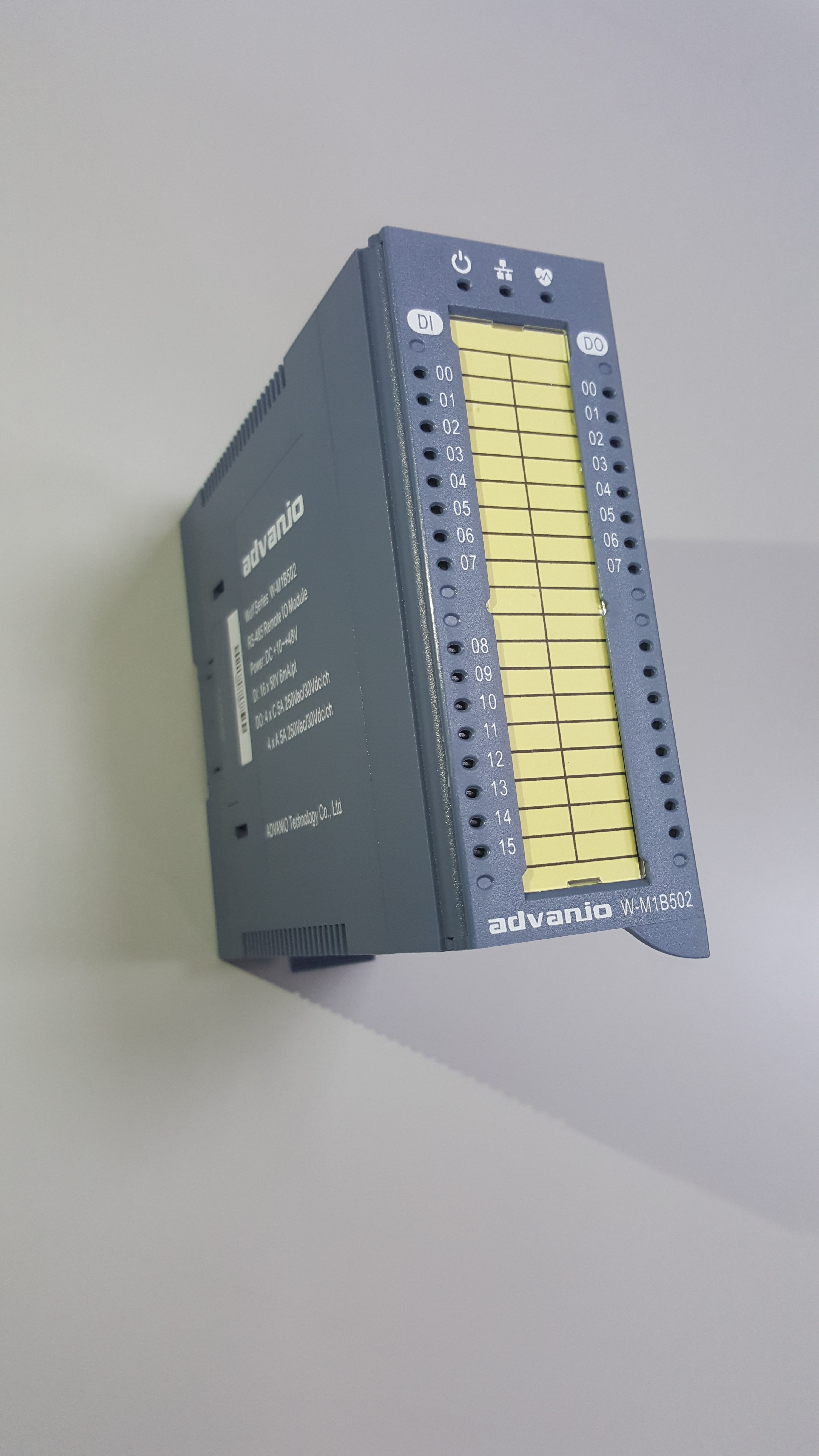
W-M1B104
16*DI AD V/mA/thermo RS485 Modbus CMR 240V module
350,00 EUR
including VAT 416.50 EUR
- Universal Analog Input Capability:
Sixteen independent differential analog input channels supporting voltage, current, and thermocouple signals.
- Wide Input Range:
Configurable per channel for ±100 mV, ±500 mV, ±1 V, ±5 V, ±10 V, or 0–100 mV, 0–500 mV, 0–1 V, 0–5 V, 0–10 V; current ranges ±20 mA, 0–20 mA, 4–20 mA.
- Thermocouple Compatibility:
Direct connection for J, K, T, E, R, S, B, N types with built‑in cold‑junction compensation (CJC) and disconnection detection.
- High Accuracy and Resolution:
16‑bit A/D conversion with ±0.1 % FSR accuracy and 2.5 samples per second per channel.
- High Voltage and Common‑Mode Protection:
±240 V input protection and 240 V common‑mode isolation between channels.
- Robust Isolation:
3 kV DC isolation between power, communication, and I/O circuits.
- Hot‑Swap and Auto‑Configuration:
Modules can be replaced without rewiring; configuration stored in removable EEPROM for quick restoration.
- Programmable Power‑On and Safety Values:
Ensures safe system states during startup or communication failure.
- Wide Power Supply Range:
Operates from +10 V DC to +60 V DC (ripple ≤ 5 V p‑p).
- RS‑485 Modbus/RTU Communication:
Baud rates selectable from 1200 bps to 115.2 kbps; node address set via dual rotary switches (1–247).
- Compact, Space‑Saving Design:
47.2 mm slim vertical housing for dense DIN‑rail installations.
- Industrial‑Grade Reliability:
Built‑in hardware and system watchdogs, 3‑LED diagnostic indicators, and rugged EMC‑certified design.
Sixteen independent differential analog input channels supporting voltage, current, and thermocouple signals.
- Wide Input Range:
Configurable per channel for ±100 mV, ±500 mV, ±1 V, ±5 V, ±10 V, or 0–100 mV, 0–500 mV, 0–1 V, 0–5 V, 0–10 V; current ranges ±20 mA, 0–20 mA, 4–20 mA.
- Thermocouple Compatibility:
Direct connection for J, K, T, E, R, S, B, N types with built‑in cold‑junction compensation (CJC) and disconnection detection.
- High Accuracy and Resolution:
16‑bit A/D conversion with ±0.1 % FSR accuracy and 2.5 samples per second per channel.
- High Voltage and Common‑Mode Protection:
±240 V input protection and 240 V common‑mode isolation between channels.
- Robust Isolation:
3 kV DC isolation between power, communication, and I/O circuits.
- Hot‑Swap and Auto‑Configuration:
Modules can be replaced without rewiring; configuration stored in removable EEPROM for quick restoration.
- Programmable Power‑On and Safety Values:
Ensures safe system states during startup or communication failure.
- Wide Power Supply Range:
Operates from +10 V DC to +60 V DC (ripple ≤ 5 V p‑p).
- RS‑485 Modbus/RTU Communication:
Baud rates selectable from 1200 bps to 115.2 kbps; node address set via dual rotary switches (1–247).
- Compact, Space‑Saving Design:
47.2 mm slim vertical housing for dense DIN‑rail installations.
- Industrial‑Grade Reliability:
Built‑in hardware and system watchdogs, 3‑LED diagnostic indicators, and rugged EMC‑certified design.
Comprehensive Product Summary – Advanio W‑M1B104 RS‑485 Modbus Universal Analog Input Module
### 1. Product Overview
Product Name: Wolf Series 16‑Channel Universal Analog Input Module with High Voltage Protection
Model Number: W‑M1B104
Series: Wolf Series RS‑485 Remote I/O Modules
Article Number: W‑M1B104
Manufacturer: Advanio Technology Co., Ltd.
Manufacturer Background:
Advanio Technology, founded by a team of IoT and automation experts with over 20 years of field experience, specializes in advanced industrial I/O and data acquisition solutions. The company’s mission is to enable smart factory and Industry 4.0 implementations through robust, intelligent, and easily maintainable I/O systems. Advanio’s Wolf Series modules are designed for harsh industrial environments, offering high reliability, modular scalability, and compliance with global EMC and FCC standards.
### 2. Key Features
- Universal Analog Input Capability:
Sixteen independent differential analog input channels supporting voltage, current, and thermocouple signals.
- Wide Input Range:
Configurable per channel for ±100 mV, ±500 mV, ±1 V, ±5 V, ±10 V, or 0–100 mV, 0–500 mV, 0–1 V, 0–5 V, 0–10 V; current ranges ±20 mA, 0–20 mA, 4–20 mA.
- Thermocouple Compatibility:
Direct connection for J, K, T, E, R, S, B, N types with built‑in cold‑junction compensation (CJC) and disconnection detection.
- High Accuracy and Resolution:
16‑bit A/D conversion with ±0.1 % FSR accuracy and 2.5 samples per second per channel.
- High Voltage and Common‑Mode Protection:
±240 V input protection and 240 V common‑mode isolation between channels.
- Robust Isolation:
3 kV DC isolation between power, communication, and I/O circuits.
- Hot‑Swap and Auto‑Configuration:
Modules can be replaced without rewiring; configuration stored in removable EEPROM for quick restoration.
- Programmable Power‑On and Safety Values:
Ensures safe system states during startup or communication failure.
- Wide Power Supply Range:
Operates from +10 V DC to +60 V DC (ripple ≤ 5 V p‑p).
- RS‑485 Modbus/RTU Communication:
Baud rates selectable from 1200 bps to 115.2 kbps; node address set via dual rotary switches (1–247).
- Compact, Space‑Saving Design:
47.2 mm slim vertical housing for dense DIN‑rail installations.
- Industrial‑Grade Reliability:
Built‑in hardware and system watchdogs, 3‑LED diagnostic indicators, and rugged EMC‑certified design.
### 3. Technical Specifications
| Parameter | Specification |
|----------------|------------------|
| Input Channels | 16 differential, individually configurable |
| Input Signal Types | Voltage, current, thermocouple |
| Voltage Ranges | ±100 mV, ±500 mV, ±1 V, ±5 V, ±10 V; 0–100 mV, 0–500 mV, 0–1 V, 0–5 V, 0–10 V |
| Current Ranges | ±20 mA, 0–20 mA, 4–20 mA (DIP switch selectable) |
| Thermocouple Types | J, K, T, E, R, S, B, N |
| Resolution | 16 bits |
| Sampling Rate | 2.5 samples/s per channel |
| Accuracy | ±0.1 % FSR |
| Input Impedance | Voltage 2 MΩ; Current 120 Ω |
| CMR/NMR (50/60 Hz) | 120 dB / 100 dB |
| Input Protection | ±240 V differential; 240 V common‑mode |
| Isolation Voltage | 3000 V DC between I/O, power, and communication |
| Power Supply | +10 V DC to +60 V DC (reverse polarity protected) |
| Power Consumption | 2.8 W @ 24 V DC |
| Operating Temperature | −25 °C to +70 °C |
| Storage Temperature | −30 °C to +75 °C |
| Humidity | 5 % to 95 % RH (non‑condensing) |
| Communication Interface | RS‑485, Modbus RTU |
| Communication Distance | Up to 1.2 km |
| Baud Rate Options | 1200 – 115.2 kbps |
| Node Address Range | 1 – 247 (hex 01 – F7) |
| Isolation Protection | 3 kV DC |
| Dimensions | 47.2 mm (W) × 115.2 mm (H) × 126.7 mm (D) (typical Wolf housing) |
| Mounting | DIN‑rail 35 mm or wall‑mount |
| Weight | Approx. 0.3 kg |
| Enclosure Material | Industrial‑grade ABS/PC plastic |
| Ingress Protection | IP20 (for control cabinet installation) |
### 4. Functionality
Operating Principle:
The W‑M1B104 converts analog voltage, current, or thermocouple signals into digital data via 16‑bit A/D converters. Each pair of channels shares one ADC, allowing independent configuration per group. The module communicates with a host controller (PLC, PAC, or PC) through RS‑485 using the Modbus/RTU protocol. The host polls the module for data acquisition or configuration commands.
Use Cases and Applications:
- Industrial process monitoring and control
- Energy management and power distribution systems
- Building automation and HVAC control
- Laboratory and test automation
- Supervisory control and data acquisition (SCADA)
- Security and environmental monitoring
- Remote data acquisition in distributed control networks
Compatibility:
Fully compatible with standard Modbus RTU masters, SCADA software, and PLCs supporting RS‑485 communication. Works with Advanio’s RS‑232/RS‑485 or USB/RS‑485 converters and repeaters for extended networks.
### 5. Components & Accessories
Included Items:
- W‑M1B104 module
- 14‑pin removable terminal block connectors
- Detachable DIN‑rail base (fixed seat)
- Plastic grounding tab and buckle
- Quick start guide
Optional Accessories:
- RS‑232 ↔ RS‑485 isolated converter (G‑M1E001)
- USB ↔ RS‑485 converter (G‑M1A001)
- RS‑485 ↔ RS‑485 repeater (G‑M1F001)
- EEPROM replacement module for configuration backup
Connectors:
- Plug‑in terminal blocks for signal wiring (#16–30 AWG)
- RS‑485 port (D+, D−)
- Power input (+VS, GND, FG)
### 6. Installation & Setup
Requirements:
- DC power supply +10 V to +60 V DC
- Host PC or controller with RS‑485 or converter interface
- Proper grounding and shielding for noise immunity
Mounting Options:
1. DIN‑Rail Mounting:
Attach the detachable base to a standard DIN 35 mm rail. Modules can be docked side‑by‑side using the 14‑pin connector array for power and communication daisy‑chaining (up to 10 modules per rail, ≈ 30 W total).
2. Wall Mounting:
Secure the base with screws using the provided mounting holes.
Grounding:
Use the aluminum DIN rail as frame ground (FG) or connect FG via the power connector. Plastic isolation tabs are available if electrical isolation from the rail is required.
Power Wiring:
Connect +VS and GND to the power supply; ensure ripple ≤ 5 V p‑p. Keep cable length short to minimize voltage drop.
Communication Wiring:
RS‑485 differential pair (D+, D−) connects in daisy‑chain topology. Only the first and last modules should be termination points. For long distances (> 1200 m) or > 32 nodes, use repeaters.
Configuration:
- Node Address: Set via two rotary switches (tens & ones).
- Baud Rate & Parity: Default 9600 bps, N, 8, 1; configurable via Modbus register 44107 (0x100A).
- Factory Reset: Press INIT button ≥ 3 s to restore defaults.
- EEPROM Handling: Configuration stored in removable EEPROM; transfer to replacement module for instant restoration.
Indicators:
- Power LED: ON = power OK; flashes 3× at startup.
- System LED: Flash = normal; steady = fault.
- Communication LED: Flash = data exchange; steady = timeout.
### 7. Performance & Capabilities
- Sampling Rate: 2.5 Hz per channel (40 samples/s total).
- Resolution: 16 bits (1 part in 65 536).
- Accuracy: ±0.1 % FSR typical.
- Drift: Span ±25 ppm/°C; Zero ±6 µV/°C.
- Noise Rejection: CMR 120 dB, NMR 100 dB @ 50/60 Hz.
- Input Protection: ±240 V differential; 240 V common‑mode.
- Isolation: 3 kV DC between I/O, power, and communication.
- Power Efficiency: 2.8 W @ 24 V DC (≈ 117 mA).
- Communication Distance: Up to 1.2 km without repeater.
- Hot‑Swap Capability: Yes – no rewiring required.
- EEPROM Backup: Non‑volatile storage for parameters and calibration.
- Watchdog Timers: Hardware (1.6 s fixed) and software (programmable 0–25.5 s).
- Safety Mode: Outputs reset to preset safe values on timeout or fault.
Limitations:
- Sampling rate (2.5 Hz) optimized for precision monitoring rather than high‑speed transient capture.
- Requires proper grounding and shielding for maximum accuracy in noisy environments.
### 8. Standards & Compliance
- Electrical Safety: Isolation 3 kV DC tested.
- EMC Compliance: Designed and tested for EMI/EMS per industrial EMC standards.
- FCC Compliance: Part 15 Class A device – operation subject to standard interference conditions.
- CE Recommendation: Use with CE‑certified industrial chassis for full compliance.
- Environmental Ratings: −25 °C to +70 °C operation; 5–95 % RH non‑condensing.
- RoHS Conformity: Lead‑free manufacturing process.
### 9. Additional Information
Warranty:
5‑year limited manufacturer warranty from date of purchase. Covers defects in materials and workmanship under normal use. Excludes damage from misuse, improper installation, or unauthorized modification. Defective units will be repaired or replaced free of charge within warranty period.
Support & Service:
- Email: service@advanio.com.tw
- Website: [www.advanio.com.tw](http://www.advanio.com.tw)
- RMA procedure available through authorized dealers.
Maintenance:
No routine maintenance required. Ensure clean ventilation and tight terminal connections. EEPROM can be replaced if configuration transfer is needed.
Firmware & Updates:
Firmware version readable via Modbus register 44097 (0x1000). Updates available through Advanio support portal.
Calibration:
Each channel supports zero and span calibration via Modbus registers 40577–40580. Calibration data stored in EEPROM.
Safety Notes:
- Do not apply AC mains voltage to input terminals.
- Ensure proper polarity of DC supply.
- Observe ESD precautions when handling EEPROM or signal connectors.
### Summary
The Advanio W‑M1B104 is a high‑precision, 16‑channel universal analog input module engineered for industrial data acquisition over RS‑485 Modbus RTU networks. It combines wide‑range signal compatibility (voltage, current, thermocouple) with robust electrical isolation, high‑voltage protection, and flexible configuration. Its modular Wolf‑series architecture supports hot‑swap replacement, EEPROM‑based configuration backup, and simple rotary‑switch addressing, making it ideal for distributed control systems requiring reliability, safety, and ease of maintenance.
With 16‑bit resolution, ±0.1 % FSR accuracy, and 3 kV isolation, the W‑M1B104 delivers dependable performance in harsh industrial environments such as process plants, power systems, and automation facilities—fully aligned with Advanio’s Industry 4.0 vision of smart, connected manufacturing.
### 1. Product Overview
Product Name: Wolf Series 16‑Channel Universal Analog Input Module with High Voltage Protection
Model Number: W‑M1B104
Series: Wolf Series RS‑485 Remote I/O Modules
Article Number: W‑M1B104
Manufacturer: Advanio Technology Co., Ltd.
Manufacturer Background:
Advanio Technology, founded by a team of IoT and automation experts with over 20 years of field experience, specializes in advanced industrial I/O and data acquisition solutions. The company’s mission is to enable smart factory and Industry 4.0 implementations through robust, intelligent, and easily maintainable I/O systems. Advanio’s Wolf Series modules are designed for harsh industrial environments, offering high reliability, modular scalability, and compliance with global EMC and FCC standards.
### 2. Key Features
- Universal Analog Input Capability:
Sixteen independent differential analog input channels supporting voltage, current, and thermocouple signals.
- Wide Input Range:
Configurable per channel for ±100 mV, ±500 mV, ±1 V, ±5 V, ±10 V, or 0–100 mV, 0–500 mV, 0–1 V, 0–5 V, 0–10 V; current ranges ±20 mA, 0–20 mA, 4–20 mA.
- Thermocouple Compatibility:
Direct connection for J, K, T, E, R, S, B, N types with built‑in cold‑junction compensation (CJC) and disconnection detection.
- High Accuracy and Resolution:
16‑bit A/D conversion with ±0.1 % FSR accuracy and 2.5 samples per second per channel.
- High Voltage and Common‑Mode Protection:
±240 V input protection and 240 V common‑mode isolation between channels.
- Robust Isolation:
3 kV DC isolation between power, communication, and I/O circuits.
- Hot‑Swap and Auto‑Configuration:
Modules can be replaced without rewiring; configuration stored in removable EEPROM for quick restoration.
- Programmable Power‑On and Safety Values:
Ensures safe system states during startup or communication failure.
- Wide Power Supply Range:
Operates from +10 V DC to +60 V DC (ripple ≤ 5 V p‑p).
- RS‑485 Modbus/RTU Communication:
Baud rates selectable from 1200 bps to 115.2 kbps; node address set via dual rotary switches (1–247).
- Compact, Space‑Saving Design:
47.2 mm slim vertical housing for dense DIN‑rail installations.
- Industrial‑Grade Reliability:
Built‑in hardware and system watchdogs, 3‑LED diagnostic indicators, and rugged EMC‑certified design.
### 3. Technical Specifications
| Parameter | Specification |
|----------------|------------------|
| Input Channels | 16 differential, individually configurable |
| Input Signal Types | Voltage, current, thermocouple |
| Voltage Ranges | ±100 mV, ±500 mV, ±1 V, ±5 V, ±10 V; 0–100 mV, 0–500 mV, 0–1 V, 0–5 V, 0–10 V |
| Current Ranges | ±20 mA, 0–20 mA, 4–20 mA (DIP switch selectable) |
| Thermocouple Types | J, K, T, E, R, S, B, N |
| Resolution | 16 bits |
| Sampling Rate | 2.5 samples/s per channel |
| Accuracy | ±0.1 % FSR |
| Input Impedance | Voltage 2 MΩ; Current 120 Ω |
| CMR/NMR (50/60 Hz) | 120 dB / 100 dB |
| Input Protection | ±240 V differential; 240 V common‑mode |
| Isolation Voltage | 3000 V DC between I/O, power, and communication |
| Power Supply | +10 V DC to +60 V DC (reverse polarity protected) |
| Power Consumption | 2.8 W @ 24 V DC |
| Operating Temperature | −25 °C to +70 °C |
| Storage Temperature | −30 °C to +75 °C |
| Humidity | 5 % to 95 % RH (non‑condensing) |
| Communication Interface | RS‑485, Modbus RTU |
| Communication Distance | Up to 1.2 km |
| Baud Rate Options | 1200 – 115.2 kbps |
| Node Address Range | 1 – 247 (hex 01 – F7) |
| Isolation Protection | 3 kV DC |
| Dimensions | 47.2 mm (W) × 115.2 mm (H) × 126.7 mm (D) (typical Wolf housing) |
| Mounting | DIN‑rail 35 mm or wall‑mount |
| Weight | Approx. 0.3 kg |
| Enclosure Material | Industrial‑grade ABS/PC plastic |
| Ingress Protection | IP20 (for control cabinet installation) |
### 4. Functionality
Operating Principle:
The W‑M1B104 converts analog voltage, current, or thermocouple signals into digital data via 16‑bit A/D converters. Each pair of channels shares one ADC, allowing independent configuration per group. The module communicates with a host controller (PLC, PAC, or PC) through RS‑485 using the Modbus/RTU protocol. The host polls the module for data acquisition or configuration commands.
Use Cases and Applications:
- Industrial process monitoring and control
- Energy management and power distribution systems
- Building automation and HVAC control
- Laboratory and test automation
- Supervisory control and data acquisition (SCADA)
- Security and environmental monitoring
- Remote data acquisition in distributed control networks
Compatibility:
Fully compatible with standard Modbus RTU masters, SCADA software, and PLCs supporting RS‑485 communication. Works with Advanio’s RS‑232/RS‑485 or USB/RS‑485 converters and repeaters for extended networks.
### 5. Components & Accessories
Included Items:
- W‑M1B104 module
- 14‑pin removable terminal block connectors
- Detachable DIN‑rail base (fixed seat)
- Plastic grounding tab and buckle
- Quick start guide
Optional Accessories:
- RS‑232 ↔ RS‑485 isolated converter (G‑M1E001)
- USB ↔ RS‑485 converter (G‑M1A001)
- RS‑485 ↔ RS‑485 repeater (G‑M1F001)
- EEPROM replacement module for configuration backup
Connectors:
- Plug‑in terminal blocks for signal wiring (#16–30 AWG)
- RS‑485 port (D+, D−)
- Power input (+VS, GND, FG)
### 6. Installation & Setup
Requirements:
- DC power supply +10 V to +60 V DC
- Host PC or controller with RS‑485 or converter interface
- Proper grounding and shielding for noise immunity
Mounting Options:
1. DIN‑Rail Mounting:
Attach the detachable base to a standard DIN 35 mm rail. Modules can be docked side‑by‑side using the 14‑pin connector array for power and communication daisy‑chaining (up to 10 modules per rail, ≈ 30 W total).
2. Wall Mounting:
Secure the base with screws using the provided mounting holes.
Grounding:
Use the aluminum DIN rail as frame ground (FG) or connect FG via the power connector. Plastic isolation tabs are available if electrical isolation from the rail is required.
Power Wiring:
Connect +VS and GND to the power supply; ensure ripple ≤ 5 V p‑p. Keep cable length short to minimize voltage drop.
Communication Wiring:
RS‑485 differential pair (D+, D−) connects in daisy‑chain topology. Only the first and last modules should be termination points. For long distances (> 1200 m) or > 32 nodes, use repeaters.
Configuration:
- Node Address: Set via two rotary switches (tens & ones).
- Baud Rate & Parity: Default 9600 bps, N, 8, 1; configurable via Modbus register 44107 (0x100A).
- Factory Reset: Press INIT button ≥ 3 s to restore defaults.
- EEPROM Handling: Configuration stored in removable EEPROM; transfer to replacement module for instant restoration.
Indicators:
- Power LED: ON = power OK; flashes 3× at startup.
- System LED: Flash = normal; steady = fault.
- Communication LED: Flash = data exchange; steady = timeout.
### 7. Performance & Capabilities
- Sampling Rate: 2.5 Hz per channel (40 samples/s total).
- Resolution: 16 bits (1 part in 65 536).
- Accuracy: ±0.1 % FSR typical.
- Drift: Span ±25 ppm/°C; Zero ±6 µV/°C.
- Noise Rejection: CMR 120 dB, NMR 100 dB @ 50/60 Hz.
- Input Protection: ±240 V differential; 240 V common‑mode.
- Isolation: 3 kV DC between I/O, power, and communication.
- Power Efficiency: 2.8 W @ 24 V DC (≈ 117 mA).
- Communication Distance: Up to 1.2 km without repeater.
- Hot‑Swap Capability: Yes – no rewiring required.
- EEPROM Backup: Non‑volatile storage for parameters and calibration.
- Watchdog Timers: Hardware (1.6 s fixed) and software (programmable 0–25.5 s).
- Safety Mode: Outputs reset to preset safe values on timeout or fault.
Limitations:
- Sampling rate (2.5 Hz) optimized for precision monitoring rather than high‑speed transient capture.
- Requires proper grounding and shielding for maximum accuracy in noisy environments.
### 8. Standards & Compliance
- Electrical Safety: Isolation 3 kV DC tested.
- EMC Compliance: Designed and tested for EMI/EMS per industrial EMC standards.
- FCC Compliance: Part 15 Class A device – operation subject to standard interference conditions.
- CE Recommendation: Use with CE‑certified industrial chassis for full compliance.
- Environmental Ratings: −25 °C to +70 °C operation; 5–95 % RH non‑condensing.
- RoHS Conformity: Lead‑free manufacturing process.
### 9. Additional Information
Warranty:
5‑year limited manufacturer warranty from date of purchase. Covers defects in materials and workmanship under normal use. Excludes damage from misuse, improper installation, or unauthorized modification. Defective units will be repaired or replaced free of charge within warranty period.
Support & Service:
- Email: service@advanio.com.tw
- Website: [www.advanio.com.tw](http://www.advanio.com.tw)
- RMA procedure available through authorized dealers.
Maintenance:
No routine maintenance required. Ensure clean ventilation and tight terminal connections. EEPROM can be replaced if configuration transfer is needed.
Firmware & Updates:
Firmware version readable via Modbus register 44097 (0x1000). Updates available through Advanio support portal.
Calibration:
Each channel supports zero and span calibration via Modbus registers 40577–40580. Calibration data stored in EEPROM.
Safety Notes:
- Do not apply AC mains voltage to input terminals.
- Ensure proper polarity of DC supply.
- Observe ESD precautions when handling EEPROM or signal connectors.
### Summary
The Advanio W‑M1B104 is a high‑precision, 16‑channel universal analog input module engineered for industrial data acquisition over RS‑485 Modbus RTU networks. It combines wide‑range signal compatibility (voltage, current, thermocouple) with robust electrical isolation, high‑voltage protection, and flexible configuration. Its modular Wolf‑series architecture supports hot‑swap replacement, EEPROM‑based configuration backup, and simple rotary‑switch addressing, making it ideal for distributed control systems requiring reliability, safety, and ease of maintenance.
With 16‑bit resolution, ±0.1 % FSR accuracy, and 3 kV isolation, the W‑M1B104 delivers dependable performance in harsh industrial environments such as process plants, power systems, and automation facilities—fully aligned with Advanio’s Industry 4.0 vision of smart, connected manufacturing.
-
 Datasheeet_Advanio_Wolf_W-M1B103-W-M1B104.pdf
PDF Catalog
Datasheeet_Advanio_Wolf_W-M1B103-W-M1B104.pdf
PDF Catalog
-
 Advanio_Catalog_Wolf_Series_General.pdf
PDF Catalog
Advanio_Catalog_Wolf_Series_General.pdf
PDF Catalog


No accessories available.