 LOOKING FOR THE RIGHT
INDUSTRIAL SOLUTION?
Discover embedded, communication and automation solutions tailored to your application.
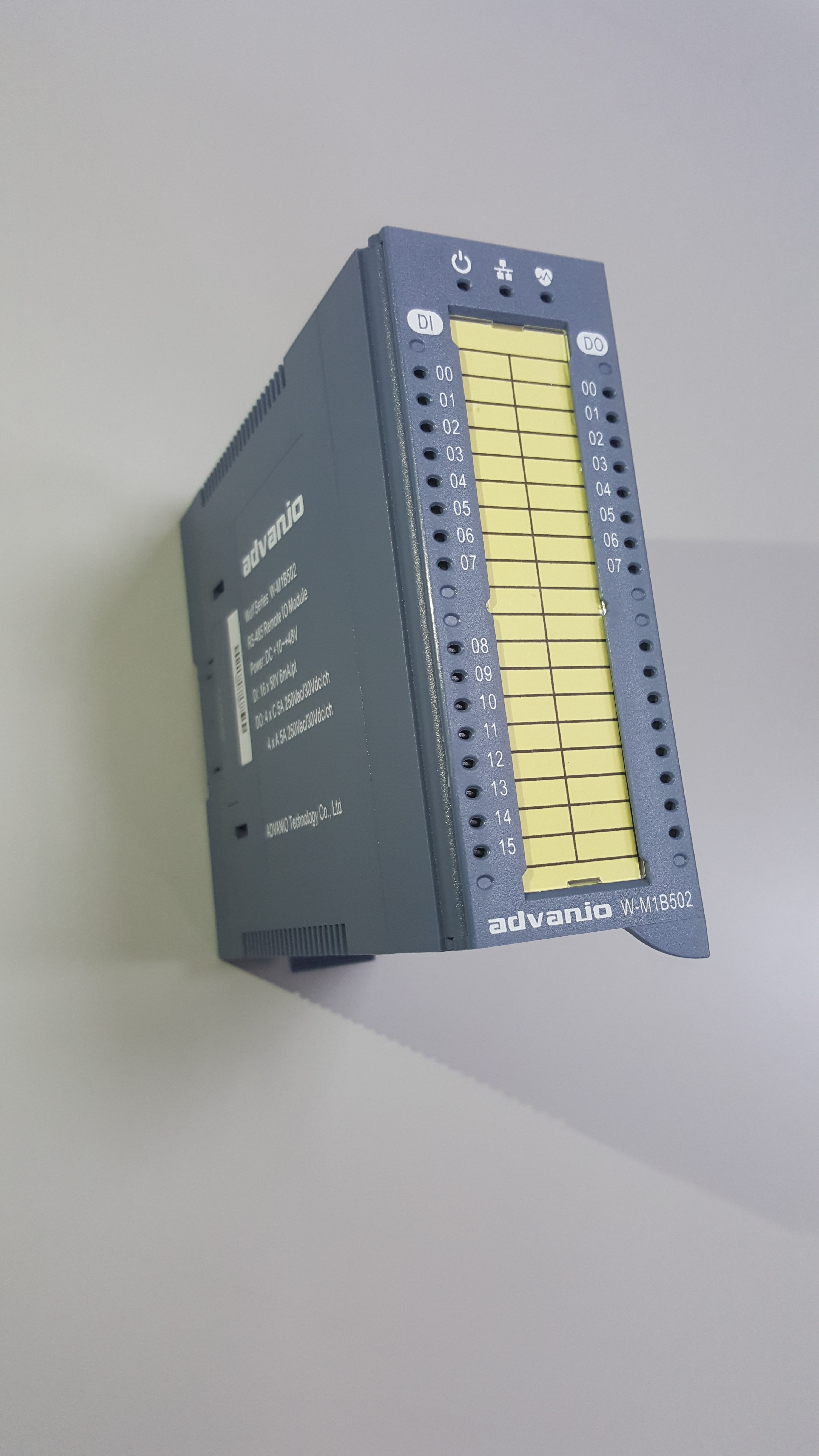
WiFio-111
8*AD WiFi LAN Modbus-TCP/RTU module
296,00 EUR
including VAT 352.24 EUR
- Integrated Wireless and Wired Communication:
Built‑in Wi‑Fi interface compliant with IEEE 802.11 b/g/n standards, supporting both internal PCB antenna and optional external IPEX antenna for extended range.
Dual‑protocol support for Modbus‑TCP over LAN/Wi‑Fi and Modbus‑RTU over RS‑232/422/485.
- High‑Precision Analog Input:
Eight isolated analog input channels with configurable voltage ranges of ±1 V, ±5 V, ±10 V, or 0–1/5/10 V.
16‑bit resolution with ±0.1 % FSR accuracy and 2.5 samples/s per channel sampling rate.
- Industrial‑Grade Isolation and Protection:
3 kV DC isolation between power, communication, and I/O circuits.
Over‑voltage protection up to ±240 V DC on analog inputs.
Reverse‑polarity protection on power input.
- Flexible Communication Interface:
One isolated DB9 port supporting RS‑232/422/485 Modbus‑RTU communication, baud‑rate selectable from 1200 bps to 115.2 kbps.
Supports daisy‑chain, star, or mixed RS‑485 topologies up to 1.2 km per segment.
- Compact, Space‑Saving Design:
Vertical “upright” housing (Wolf‑series mechanical format) only 47.2 mm thick, allowing 1.5× more modules per DIN‑rail length compared with flat‑type I/O devices.
- Hot‑Swap and Auto‑Configuration:
Detachable EEPROM stores configuration parameters.
When replacing a module, transferring the EEPROM restores all settings instantly without re‑wiring.
- Programmable Power‑On and Safety Values:
User‑defined safe‑state outputs ensure controlled behavior during power‑up or communication failure.
- Wide Power Input Range:
Operates from +10 V DC to +60 V DC (nominal 24 V DC, 1.6 W consumption).
Tolerates industrial power ripple ≤ 5 V p‑p.
- Environmental Robustness:
Operating temperature –25 °C to +70 °C; humidity 5–95 % RH (non‑condensing).
EMC‑tested for EMI/EMS immunity; CE and FCC Part 15 compliant.
- Ease of Installation and Maintenance:
DIN‑rail or wall‑mount base with quick‑dock connectors for power and bus.
Front‑facing terminal blocks for convenient wiring.
Rotary switches for Modbus node address; LED indicators for power, system, and communication status.
- Long‑Term Reliability:
Hardware and system watchdogs automatically recover from transient faults.
5‑year manufacturer warranty.
Built‑in Wi‑Fi interface compliant with IEEE 802.11 b/g/n standards, supporting both internal PCB antenna and optional external IPEX antenna for extended range.
Dual‑protocol support for Modbus‑TCP over LAN/Wi‑Fi and Modbus‑RTU over RS‑232/422/485.
- High‑Precision Analog Input:
Eight isolated analog input channels with configurable voltage ranges of ±1 V, ±5 V, ±10 V, or 0–1/5/10 V.
16‑bit resolution with ±0.1 % FSR accuracy and 2.5 samples/s per channel sampling rate.
- Industrial‑Grade Isolation and Protection:
3 kV DC isolation between power, communication, and I/O circuits.
Over‑voltage protection up to ±240 V DC on analog inputs.
Reverse‑polarity protection on power input.
- Flexible Communication Interface:
One isolated DB9 port supporting RS‑232/422/485 Modbus‑RTU communication, baud‑rate selectable from 1200 bps to 115.2 kbps.
Supports daisy‑chain, star, or mixed RS‑485 topologies up to 1.2 km per segment.
- Compact, Space‑Saving Design:
Vertical “upright” housing (Wolf‑series mechanical format) only 47.2 mm thick, allowing 1.5× more modules per DIN‑rail length compared with flat‑type I/O devices.
- Hot‑Swap and Auto‑Configuration:
Detachable EEPROM stores configuration parameters.
When replacing a module, transferring the EEPROM restores all settings instantly without re‑wiring.
- Programmable Power‑On and Safety Values:
User‑defined safe‑state outputs ensure controlled behavior during power‑up or communication failure.
- Wide Power Input Range:
Operates from +10 V DC to +60 V DC (nominal 24 V DC, 1.6 W consumption).
Tolerates industrial power ripple ≤ 5 V p‑p.
- Environmental Robustness:
Operating temperature –25 °C to +70 °C; humidity 5–95 % RH (non‑condensing).
EMC‑tested for EMI/EMS immunity; CE and FCC Part 15 compliant.
- Ease of Installation and Maintenance:
DIN‑rail or wall‑mount base with quick‑dock connectors for power and bus.
Front‑facing terminal blocks for convenient wiring.
Rotary switches for Modbus node address; LED indicators for power, system, and communication status.
- Long‑Term Reliability:
Hardware and system watchdogs automatically recover from transient faults.
5‑year manufacturer warranty.
Comprehensive Product Summary – Advanio WiFio‑111 (8×AD WiFi LAN Modbus‑TCP/RTU Module)
### 1. Product Overview
Product Name: WiFio‑111
Article Number: WiFio‑111
Series: Wolf Series – Wireless/Modbus‑TCP/RTU Remote I/O Family
Model Type: 8‑Channel Analog Input (8×AD) WiFi LAN Modbus‑TCP/RTU Module
Manufacturer: Advanio Technology Co., Ltd.
Origin: Taiwan
Manufacturer Background:
Advanio Technology Co., Ltd. is a professional developer of industrial I/O and data‑acquisition modules designed for Industry 4.0 and IoT‑driven automation. Founded by a team of IoT and embedded‑system engineers with over 20 years of field experience, Advanio focuses on rugged, serviceable, and intelligent I/O solutions for harsh industrial environments. The company’s product lines cover wired (RS‑485, CAN, Ethernet, EtherCAT, PROFINET) and wireless (Wi‑Fi, Bluetooth, 3G/4G) connectivity, providing modular data‑acquisition and control platforms for smart factories, energy management, and process automation.
### 2. Key Features
- Integrated Wireless and Wired Communication:
Built‑in Wi‑Fi interface compliant with IEEE 802.11 b/g/n standards, supporting both internal PCB antenna and optional external IPEX antenna for extended range.
Dual‑protocol support for Modbus‑TCP over LAN/Wi‑Fi and Modbus‑RTU over RS‑232/422/485.
- High‑Precision Analog Input:
Eight isolated analog input channels with configurable voltage ranges of ±1 V, ±5 V, ±10 V, or 0–1/5/10 V.
16‑bit resolution with ±0.1 % FSR accuracy and 2.5 samples/s per channel sampling rate.
- Industrial‑Grade Isolation and Protection:
3 kV DC isolation between power, communication, and I/O circuits.
Over‑voltage protection up to ±240 V DC on analog inputs.
Reverse‑polarity protection on power input.
- Flexible Communication Interface:
One isolated DB9 port supporting RS‑232/422/485 Modbus‑RTU communication, baud‑rate selectable from 1200 bps to 115.2 kbps.
Supports daisy‑chain, star, or mixed RS‑485 topologies up to 1.2 km per segment.
- Compact, Space‑Saving Design:
Vertical “upright” housing (Wolf‑series mechanical format) only 47.2 mm thick, allowing 1.5× more modules per DIN‑rail length compared with flat‑type I/O devices.
- Hot‑Swap and Auto‑Configuration:
Detachable EEPROM stores configuration parameters.
When replacing a module, transferring the EEPROM restores all settings instantly without re‑wiring.
- Programmable Power‑On and Safety Values:
User‑defined safe‑state outputs ensure controlled behavior during power‑up or communication failure.
- Wide Power Input Range:
Operates from +10 V DC to +60 V DC (nominal 24 V DC, 1.6 W consumption).
Tolerates industrial power ripple ≤ 5 V p‑p.
- Environmental Robustness:
Operating temperature –25 °C to +70 °C; humidity 5–95 % RH (non‑condensing).
EMC‑tested for EMI/EMS immunity; CE and FCC Part 15 compliant.
- Ease of Installation and Maintenance:
DIN‑rail or wall‑mount base with quick‑dock connectors for power and bus.
Front‑facing terminal blocks for convenient wiring.
Rotary switches for Modbus node address; LED indicators for power, system, and communication status.
- Long‑Term Reliability:
Hardware and system watchdogs automatically recover from transient faults.
5‑year manufacturer warranty.
### 3. Technical Specifications
| Parameter | Specification |
|----------------|------------------|
| Analog Inputs | 8 channels, differential, isolated |
| Input Ranges | ±1 V / ±5 V / ±10 V / 0–1 V / 0–5 V / 0–10 V |
| Resolution | 16 bits |
| Accuracy | ±0.1 % FSR |
| Sampling Rate | 2.5 samples per second per channel |
| Input Impedance | Voltage 2 MΩ; Current 120 Ω |
| Input Protection | ±240 V DC over‑voltage; 240 V common‑mode |
| Isolation Voltage | 3000 V DC (power / I/O / communication) |
| Communication Ports | 1 × RS‑232/422/485 (DB9, isolated) |
| Baud Rate | 1200 – 115.2 kbps |
| Communication Protocols | Modbus‑RTU (serial), Modbus‑TCP (Ethernet/Wi‑Fi) |
| Wireless Interface | Wi‑Fi IEEE 802.11 b/g/n, internal antenna + optional IPEX external |
| Power Supply | +10 V DC to +60 V DC (unregulated) |
| Power Consumption | 1.6 W @ 24 V DC |
| Operating Temperature | –25 °C to +70 °C |
| Storage Temperature | –30 °C to +75 °C |
| Humidity | 5 % – 95 % RH (non‑condensing) |
| Dimensions (W × H × D) | 120.1 mm × 94.4 mm × 121.1 mm |
| Weight | ~ 360 g |
| Mounting | DIN‑rail (35 mm) or wall mount |
| Enclosure Material | Industrial ABS plastic housing |
| Isolation Protection | 3 kV DC between power, I/O, and communication |
| Watchdog Timers | Hardware (1.6 s fixed) and software (programmable) |
| Compliance | CE EMC, FCC Part 15 Class A |
### 4. Functionality
Operating Principle:
The WiFio‑111 functions as a remote analog‑input acquisition node within a Modbus network. It converts analog voltage or current signals from sensors into digital data and transmits them via Modbus‑TCP (over Wi‑Fi/LAN) or Modbus‑RTU (over RS‑485). The host controller—PLC, PAC, or SCADA system—polls the module for data and can configure channel parameters through standard Modbus registers.
Use Cases and Applications:
- Industrial process monitoring and control
- Energy‑management systems and power‑distribution monitoring
- Building automation and HVAC control
- Laboratory instrumentation and data logging
- Security and environmental monitoring
- Remote telemetry and supervisory control (SCADA)
- Automatic test and measurement systems
Compatibility:
Fully compatible with Modbus‑compliant controllers, HMIs, and SCADA software. Supports integration with Advanio’s Wolf‑series wired modules and computing platforms. Configuration and diagnostics can be performed via Advanio ARIO Utility software (Windows) or mobile Advanio App (Android/iOS).
### 5. Components & Accessories
Included in Standard Package:
- WiFio‑111 module
- Detachable DIN‑rail base (fixed seat)
- 14‑pin signal connector terminal block
- Plastic grounding tab and buckles
- Quick‑start guide
Optional Accessories:
- External IPEX Wi‑Fi antenna
- RS‑232 ↔ RS‑485 isolated converter (model G‑M1A001)
- USB ↔ RS‑485 converter (model G‑M1E001)
- RS‑485 ↔ RS‑485 repeater (model G‑M1F001)
- Replacement EEPROM configuration chip
- Wall‑mount kit
Connectors:
- Plug‑in terminal blocks (#16–30 AWG) for I/O and power
- DB9 male connector for serial communication
- IPEX RF connector (optional) for external antenna
### 6. Installation & Setup
Requirements:
- DC power supply 10–60 V DC (24 V nominal)
- Host PC or controller with RS‑485 or Ethernet/Wi‑Fi interface
- Advanio ARIO Utility software (for configuration)
Mounting Options:
1. DIN‑Rail Mounting:
Attach the detachable base to a standard DIN‑35 rail. Modules can be cascaded using the 14‑pin docking connector for shared power and communication. Up to 10 modules (~30 W total) per rail segment.
2. Wall Mounting:
Secure the base to a flat surface using screws through the designated mounting holes.
Grounding:
Use the aluminum DIN‑rail as frame ground (F.G.) or connect the F.G. terminal to earth. If electrical noise is present, isolate the frame ground using the provided plastic tab.
Power Wiring:
Connect +VS (10–60 V DC) and GND to the power terminal. Keep cable length short to minimize voltage drop. Only one power source per module chain.
Communication Setup:
- RS‑485: Connect D+ and D– lines in daisy‑chain (topology limit 32 nodes per segment). Use repeaters for longer distances (> 1200 m).
- Wi‑Fi: Configure SSID, security mode, and IP parameters via utility software or web interface.
- Node Address: Set Modbus address (1–247) using two rotary switches (hexadecimal).
- Baud Rate: Default 9600 bps N,8,1; configurable to 115.2 kbps via software or Modbus register 0x100A.
Indicators:
- Power LED: Steady ON = power OK.
- System LED: Flashing = normal operation; steady ON = fault.
- Communication LED: Flashes on data activity; steady ON = timeout.
Factory Reset:
Press the INIT button for ≥ 3 s to restore defaults (baud 9600 bps, N,8,1, address 01).
### 7. Performance & Capabilities
- Analog Performance: 16‑bit resolution, ±0.1 % FSR accuracy, 2.5 S/s per channel.
- Isolation: 3 kV DC galvanic isolation between I/O, power, and communication.
- Noise Immunity: CMR 120 dB, NMR 100 dB @ 50/60 Hz.
- Power Efficiency: 1.6 W @ 24 V DC typical.
- Communication Distance: RS‑485 up to 1.2 km per segment; Wi‑Fi range dependent on antenna and environment.
- System Watchdog: Programmable timeout (0–25.5 s) resets outputs to safe state on communication loss.
- Module Watchdog: Hardware reset after 1.6 s of internal fault detection.
- Hot‑Swap Capability: EEPROM retains configuration for instant replacement.
- Scalability: Up to 247 nodes via 8 repeaters on RS‑485 network.
Limitations:
Sampling rate (2.5 S/s per channel) is optimized for process monitoring rather than high‑speed transient capture. Wi‑Fi performance depends on signal environment and antenna placement.
### 8. Standards & Compliance
- Electrical Safety: Isolation 3 kV DC tested between power, I/O, and communication.
- EMC/EMI: Tested for Electromagnetic Compatibility (EMC) including EMI and EMS per CE requirements.
- Regulatory Compliance:
- CE Mark (EMC Directive 2014/30/EU)
- FCC Part 15 Subpart B (Class A) – operation subject to no harmful interference and acceptance of interference received.
- Environmental: RoHS compliant; operational temperature –25 °C to +70 °C.
- Recommended Installation: Use with industrial chassis certified by CE for optimal EMC performance.
### 9. Additional Information
Warranty:
5‑year limited warranty from date of purchase. Covers manufacturing defects and component failures under normal operation. Excludes damage from misuse, improper installation, or unauthorized modification. Defective units will be repaired or replaced free of charge within warranty period.
Service & Support:
For RMA service, contact authorized dealer or Advanio support with model number, serial number, firmware version, and problem description. Email support available at service@advanio.com with response within 2 business days.
Maintenance:
Modules require no routine maintenance. Ensure clean ventilation and stable power supply. Firmware updates and configuration utilities available from Advanio website (www.advanio.com).
Software Tools:
- ARIO Utility (Windows): Configuration and diagnostic software for Wolf series modules.
- Advanio Mobile App (Android/iOS): Remote monitoring and sales cloud access.
Firmware & Updates:
Firmware version readable via Modbus register 0x1000. Updates provided through official support channels.
Safety Notes:
- Ensure proper grounding and isolation when connecting to high‑voltage signals.
- Do not exceed specified input ranges or environmental limits.
- Use only Advanio‑approved accessories for communication and power interfaces.
### Summary
The Advanio WiFio‑111 is a compact, high‑reliability 8‑channel analog input module integrating Wi‑Fi LAN and RS‑485 Modbus‑RTU/TCP communication for distributed data acquisition in industrial automation. It combines precision 16‑bit A/D conversion, wide‑range ±10 V inputs, and robust 3 kV isolation within a space‑saving Wolf‑series enclosure. Designed for harsh environments and continuous operation, it supports hot‑swap replacement, programmable safe states, and watchdog protection. With its wide 10–60 V DC power range, –25 °C to +70 °C temperature tolerance, and 5‑year warranty, the WiFio‑111 delivers a durable and flexible solution for Industry 4.0 applications requiring wireless connectivity and precise analog data acquisition.
### 1. Product Overview
Product Name: WiFio‑111
Article Number: WiFio‑111
Series: Wolf Series – Wireless/Modbus‑TCP/RTU Remote I/O Family
Model Type: 8‑Channel Analog Input (8×AD) WiFi LAN Modbus‑TCP/RTU Module
Manufacturer: Advanio Technology Co., Ltd.
Origin: Taiwan
Manufacturer Background:
Advanio Technology Co., Ltd. is a professional developer of industrial I/O and data‑acquisition modules designed for Industry 4.0 and IoT‑driven automation. Founded by a team of IoT and embedded‑system engineers with over 20 years of field experience, Advanio focuses on rugged, serviceable, and intelligent I/O solutions for harsh industrial environments. The company’s product lines cover wired (RS‑485, CAN, Ethernet, EtherCAT, PROFINET) and wireless (Wi‑Fi, Bluetooth, 3G/4G) connectivity, providing modular data‑acquisition and control platforms for smart factories, energy management, and process automation.
### 2. Key Features
- Integrated Wireless and Wired Communication:
Built‑in Wi‑Fi interface compliant with IEEE 802.11 b/g/n standards, supporting both internal PCB antenna and optional external IPEX antenna for extended range.
Dual‑protocol support for Modbus‑TCP over LAN/Wi‑Fi and Modbus‑RTU over RS‑232/422/485.
- High‑Precision Analog Input:
Eight isolated analog input channels with configurable voltage ranges of ±1 V, ±5 V, ±10 V, or 0–1/5/10 V.
16‑bit resolution with ±0.1 % FSR accuracy and 2.5 samples/s per channel sampling rate.
- Industrial‑Grade Isolation and Protection:
3 kV DC isolation between power, communication, and I/O circuits.
Over‑voltage protection up to ±240 V DC on analog inputs.
Reverse‑polarity protection on power input.
- Flexible Communication Interface:
One isolated DB9 port supporting RS‑232/422/485 Modbus‑RTU communication, baud‑rate selectable from 1200 bps to 115.2 kbps.
Supports daisy‑chain, star, or mixed RS‑485 topologies up to 1.2 km per segment.
- Compact, Space‑Saving Design:
Vertical “upright” housing (Wolf‑series mechanical format) only 47.2 mm thick, allowing 1.5× more modules per DIN‑rail length compared with flat‑type I/O devices.
- Hot‑Swap and Auto‑Configuration:
Detachable EEPROM stores configuration parameters.
When replacing a module, transferring the EEPROM restores all settings instantly without re‑wiring.
- Programmable Power‑On and Safety Values:
User‑defined safe‑state outputs ensure controlled behavior during power‑up or communication failure.
- Wide Power Input Range:
Operates from +10 V DC to +60 V DC (nominal 24 V DC, 1.6 W consumption).
Tolerates industrial power ripple ≤ 5 V p‑p.
- Environmental Robustness:
Operating temperature –25 °C to +70 °C; humidity 5–95 % RH (non‑condensing).
EMC‑tested for EMI/EMS immunity; CE and FCC Part 15 compliant.
- Ease of Installation and Maintenance:
DIN‑rail or wall‑mount base with quick‑dock connectors for power and bus.
Front‑facing terminal blocks for convenient wiring.
Rotary switches for Modbus node address; LED indicators for power, system, and communication status.
- Long‑Term Reliability:
Hardware and system watchdogs automatically recover from transient faults.
5‑year manufacturer warranty.
### 3. Technical Specifications
| Parameter | Specification |
|----------------|------------------|
| Analog Inputs | 8 channels, differential, isolated |
| Input Ranges | ±1 V / ±5 V / ±10 V / 0–1 V / 0–5 V / 0–10 V |
| Resolution | 16 bits |
| Accuracy | ±0.1 % FSR |
| Sampling Rate | 2.5 samples per second per channel |
| Input Impedance | Voltage 2 MΩ; Current 120 Ω |
| Input Protection | ±240 V DC over‑voltage; 240 V common‑mode |
| Isolation Voltage | 3000 V DC (power / I/O / communication) |
| Communication Ports | 1 × RS‑232/422/485 (DB9, isolated) |
| Baud Rate | 1200 – 115.2 kbps |
| Communication Protocols | Modbus‑RTU (serial), Modbus‑TCP (Ethernet/Wi‑Fi) |
| Wireless Interface | Wi‑Fi IEEE 802.11 b/g/n, internal antenna + optional IPEX external |
| Power Supply | +10 V DC to +60 V DC (unregulated) |
| Power Consumption | 1.6 W @ 24 V DC |
| Operating Temperature | –25 °C to +70 °C |
| Storage Temperature | –30 °C to +75 °C |
| Humidity | 5 % – 95 % RH (non‑condensing) |
| Dimensions (W × H × D) | 120.1 mm × 94.4 mm × 121.1 mm |
| Weight | ~ 360 g |
| Mounting | DIN‑rail (35 mm) or wall mount |
| Enclosure Material | Industrial ABS plastic housing |
| Isolation Protection | 3 kV DC between power, I/O, and communication |
| Watchdog Timers | Hardware (1.6 s fixed) and software (programmable) |
| Compliance | CE EMC, FCC Part 15 Class A |
### 4. Functionality
Operating Principle:
The WiFio‑111 functions as a remote analog‑input acquisition node within a Modbus network. It converts analog voltage or current signals from sensors into digital data and transmits them via Modbus‑TCP (over Wi‑Fi/LAN) or Modbus‑RTU (over RS‑485). The host controller—PLC, PAC, or SCADA system—polls the module for data and can configure channel parameters through standard Modbus registers.
Use Cases and Applications:
- Industrial process monitoring and control
- Energy‑management systems and power‑distribution monitoring
- Building automation and HVAC control
- Laboratory instrumentation and data logging
- Security and environmental monitoring
- Remote telemetry and supervisory control (SCADA)
- Automatic test and measurement systems
Compatibility:
Fully compatible with Modbus‑compliant controllers, HMIs, and SCADA software. Supports integration with Advanio’s Wolf‑series wired modules and computing platforms. Configuration and diagnostics can be performed via Advanio ARIO Utility software (Windows) or mobile Advanio App (Android/iOS).
### 5. Components & Accessories
Included in Standard Package:
- WiFio‑111 module
- Detachable DIN‑rail base (fixed seat)
- 14‑pin signal connector terminal block
- Plastic grounding tab and buckles
- Quick‑start guide
Optional Accessories:
- External IPEX Wi‑Fi antenna
- RS‑232 ↔ RS‑485 isolated converter (model G‑M1A001)
- USB ↔ RS‑485 converter (model G‑M1E001)
- RS‑485 ↔ RS‑485 repeater (model G‑M1F001)
- Replacement EEPROM configuration chip
- Wall‑mount kit
Connectors:
- Plug‑in terminal blocks (#16–30 AWG) for I/O and power
- DB9 male connector for serial communication
- IPEX RF connector (optional) for external antenna
### 6. Installation & Setup
Requirements:
- DC power supply 10–60 V DC (24 V nominal)
- Host PC or controller with RS‑485 or Ethernet/Wi‑Fi interface
- Advanio ARIO Utility software (for configuration)
Mounting Options:
1. DIN‑Rail Mounting:
Attach the detachable base to a standard DIN‑35 rail. Modules can be cascaded using the 14‑pin docking connector for shared power and communication. Up to 10 modules (~30 W total) per rail segment.
2. Wall Mounting:
Secure the base to a flat surface using screws through the designated mounting holes.
Grounding:
Use the aluminum DIN‑rail as frame ground (F.G.) or connect the F.G. terminal to earth. If electrical noise is present, isolate the frame ground using the provided plastic tab.
Power Wiring:
Connect +VS (10–60 V DC) and GND to the power terminal. Keep cable length short to minimize voltage drop. Only one power source per module chain.
Communication Setup:
- RS‑485: Connect D+ and D– lines in daisy‑chain (topology limit 32 nodes per segment). Use repeaters for longer distances (> 1200 m).
- Wi‑Fi: Configure SSID, security mode, and IP parameters via utility software or web interface.
- Node Address: Set Modbus address (1–247) using two rotary switches (hexadecimal).
- Baud Rate: Default 9600 bps N,8,1; configurable to 115.2 kbps via software or Modbus register 0x100A.
Indicators:
- Power LED: Steady ON = power OK.
- System LED: Flashing = normal operation; steady ON = fault.
- Communication LED: Flashes on data activity; steady ON = timeout.
Factory Reset:
Press the INIT button for ≥ 3 s to restore defaults (baud 9600 bps, N,8,1, address 01).
### 7. Performance & Capabilities
- Analog Performance: 16‑bit resolution, ±0.1 % FSR accuracy, 2.5 S/s per channel.
- Isolation: 3 kV DC galvanic isolation between I/O, power, and communication.
- Noise Immunity: CMR 120 dB, NMR 100 dB @ 50/60 Hz.
- Power Efficiency: 1.6 W @ 24 V DC typical.
- Communication Distance: RS‑485 up to 1.2 km per segment; Wi‑Fi range dependent on antenna and environment.
- System Watchdog: Programmable timeout (0–25.5 s) resets outputs to safe state on communication loss.
- Module Watchdog: Hardware reset after 1.6 s of internal fault detection.
- Hot‑Swap Capability: EEPROM retains configuration for instant replacement.
- Scalability: Up to 247 nodes via 8 repeaters on RS‑485 network.
Limitations:
Sampling rate (2.5 S/s per channel) is optimized for process monitoring rather than high‑speed transient capture. Wi‑Fi performance depends on signal environment and antenna placement.
### 8. Standards & Compliance
- Electrical Safety: Isolation 3 kV DC tested between power, I/O, and communication.
- EMC/EMI: Tested for Electromagnetic Compatibility (EMC) including EMI and EMS per CE requirements.
- Regulatory Compliance:
- CE Mark (EMC Directive 2014/30/EU)
- FCC Part 15 Subpart B (Class A) – operation subject to no harmful interference and acceptance of interference received.
- Environmental: RoHS compliant; operational temperature –25 °C to +70 °C.
- Recommended Installation: Use with industrial chassis certified by CE for optimal EMC performance.
### 9. Additional Information
Warranty:
5‑year limited warranty from date of purchase. Covers manufacturing defects and component failures under normal operation. Excludes damage from misuse, improper installation, or unauthorized modification. Defective units will be repaired or replaced free of charge within warranty period.
Service & Support:
For RMA service, contact authorized dealer or Advanio support with model number, serial number, firmware version, and problem description. Email support available at service@advanio.com with response within 2 business days.
Maintenance:
Modules require no routine maintenance. Ensure clean ventilation and stable power supply. Firmware updates and configuration utilities available from Advanio website (www.advanio.com).
Software Tools:
- ARIO Utility (Windows): Configuration and diagnostic software for Wolf series modules.
- Advanio Mobile App (Android/iOS): Remote monitoring and sales cloud access.
Firmware & Updates:
Firmware version readable via Modbus register 0x1000. Updates provided through official support channels.
Safety Notes:
- Ensure proper grounding and isolation when connecting to high‑voltage signals.
- Do not exceed specified input ranges or environmental limits.
- Use only Advanio‑approved accessories for communication and power interfaces.
### Summary
The Advanio WiFio‑111 is a compact, high‑reliability 8‑channel analog input module integrating Wi‑Fi LAN and RS‑485 Modbus‑RTU/TCP communication for distributed data acquisition in industrial automation. It combines precision 16‑bit A/D conversion, wide‑range ±10 V inputs, and robust 3 kV isolation within a space‑saving Wolf‑series enclosure. Designed for harsh environments and continuous operation, it supports hot‑swap replacement, programmable safe states, and watchdog protection. With its wide 10–60 V DC power range, –25 °C to +70 °C temperature tolerance, and 5‑year warranty, the WiFio‑111 delivers a durable and flexible solution for Industry 4.0 applications requiring wireless connectivity and precise analog data acquisition.
-
 Advanio WiFio Datasheet-111.pdf
PDF Catalog
Advanio WiFio Datasheet-111.pdf
PDF Catalog
-
 Advanio_Catalog_Wolf_Series_General.pdf
PDF Catalog
Advanio_Catalog_Wolf_Series_General.pdf
PDF Catalog


No accessories available.