 LOOKING FOR THE RIGHT
INDUSTRIAL SOLUTION?
Discover embedded, communication and automation solutions tailored to your application.
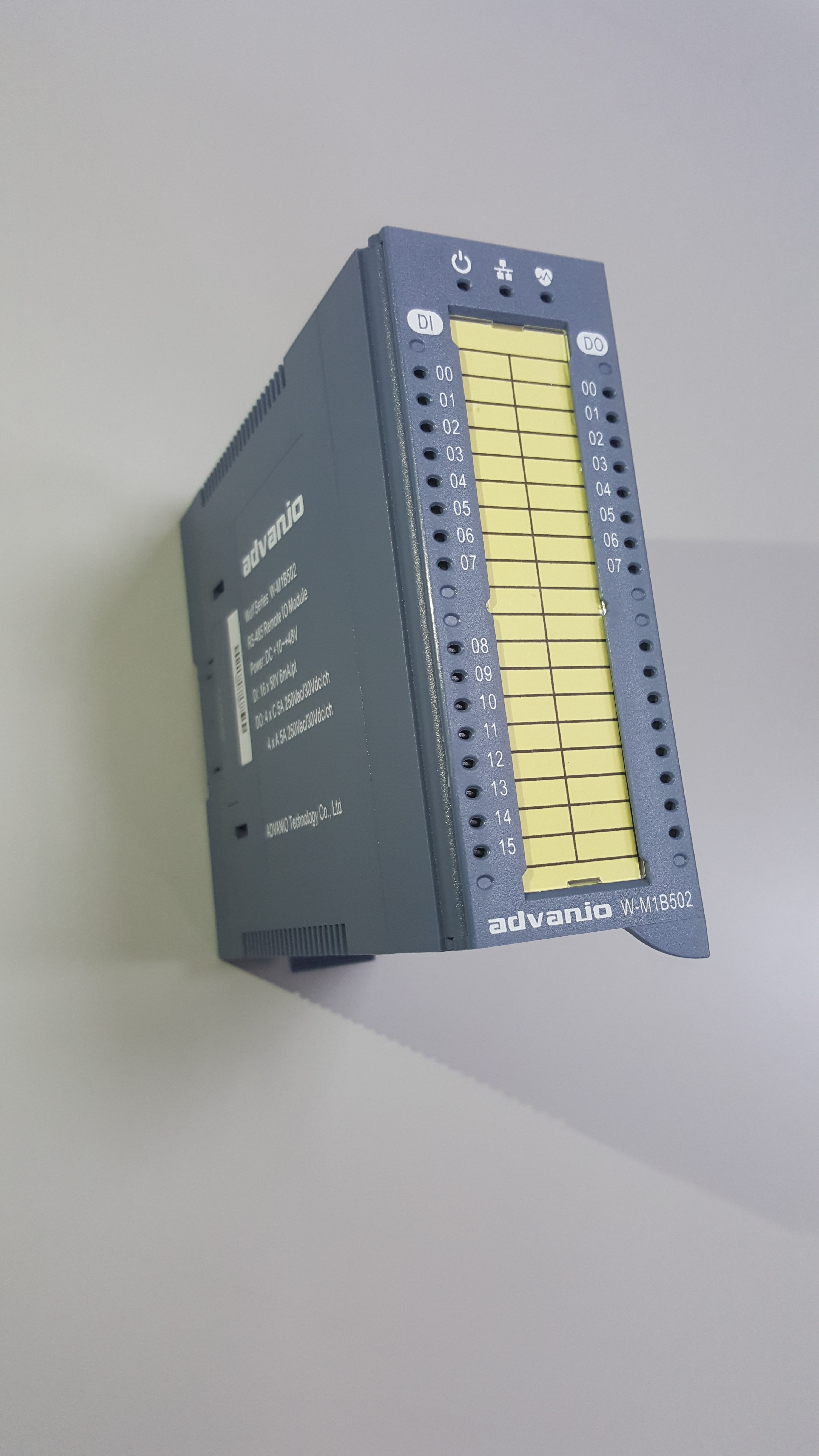
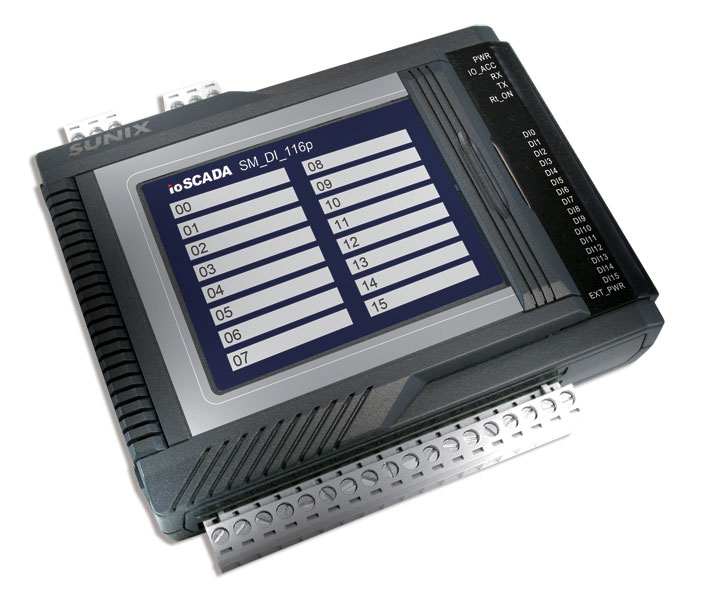
WiFio-301
16*DI WiFi LAN Modbus-TCP/RTU module
230,00 EUR
including VAT 273.70 EUR
- 16 Isolated Digital Inputs: Supports both dry and wet contact configurations for versatile signal acquisition.
- DI Latch Function: Captures transient signals ≥ 5 ms to ensure reliable detection of short pulses.
- DI Counter Function: Built‑in 16‑bit counter per channel, supporting up to 100 Hz input frequency.
- Normal/Inverted Logic Selection: Each input channel can be configured for normal or inverted logic, simplifying integration into existing systems.
- High Isolation Protection: 2.5 kV isolation between channels and system circuitry for robust noise immunity.
- Wide Input Voltage Range: Accepts up to ± 55 V DC on input channels.
- Flexible Power Supply: Operates from +10 V DC to +60 V DC; ripple peak ≤ 5 V.
- Dual Communication Interfaces: Integrated Wi‑Fi and LAN ports supporting Modbus‑TCP and Modbus‑RTU for hybrid network environments.
- High‑Speed Serial Communication: Baud rate configurable from 1200 bps to 115.2 kbps.
- LED Indicators: Dedicated System, Configuration, and WLAN LEDs for quick status diagnostics.
- Industrial‑Grade Design: Operating temperature –25 °C to +70 °C; humidity 5–95 % RH.
- Compact and Lightweight: Space‑saving vertical form factor; 120.1 × 94.4 × 121.1 mm; approx. 360 g.
- Low Power Consumption: 200 mA @ 24 V DC typical.
- Long‑Term Reliability: Designed for continuous operation in harsh industrial environments with watchdog protection and EEPROM configuration backup.
- DI Latch Function: Captures transient signals ≥ 5 ms to ensure reliable detection of short pulses.
- DI Counter Function: Built‑in 16‑bit counter per channel, supporting up to 100 Hz input frequency.
- Normal/Inverted Logic Selection: Each input channel can be configured for normal or inverted logic, simplifying integration into existing systems.
- High Isolation Protection: 2.5 kV isolation between channels and system circuitry for robust noise immunity.
- Wide Input Voltage Range: Accepts up to ± 55 V DC on input channels.
- Flexible Power Supply: Operates from +10 V DC to +60 V DC; ripple peak ≤ 5 V.
- Dual Communication Interfaces: Integrated Wi‑Fi and LAN ports supporting Modbus‑TCP and Modbus‑RTU for hybrid network environments.
- High‑Speed Serial Communication: Baud rate configurable from 1200 bps to 115.2 kbps.
- LED Indicators: Dedicated System, Configuration, and WLAN LEDs for quick status diagnostics.
- Industrial‑Grade Design: Operating temperature –25 °C to +70 °C; humidity 5–95 % RH.
- Compact and Lightweight: Space‑saving vertical form factor; 120.1 × 94.4 × 121.1 mm; approx. 360 g.
- Low Power Consumption: 200 mA @ 24 V DC typical.
- Long‑Term Reliability: Designed for continuous operation in harsh industrial environments with watchdog protection and EEPROM configuration backup.
Comprehensive Product Summary – Advanio WiFio‑301 (16×DI WiFi/LAN Modbus‑TCP/RTU Module)
### 1. Product Overview
Product Name: WiFio‑301
Article Number: WiFio‑301
Model/Series: Wolf Series – Wireless I/O Family
Manufacturer: Advanio Technology Co., Ltd.
Product Type: 16‑Channel Isolated Digital Input Module with Wi‑Fi and LAN Connectivity
Communication Protocols: Modbus‑TCP and Modbus‑RTU over Wi‑Fi or Ethernet
Advanio’s WiFio‑301 belongs to the Wolf series of remote I/O modules designed for industrial automation and IoT‑driven smart factory applications. It integrates 16 isolated digital input channels with both wireless (Wi‑Fi) and wired (LAN) communication interfaces, supporting Modbus‑TCP and Modbus‑RTU protocols for flexible deployment in distributed control systems.
### 2. Key Features
- 16 Isolated Digital Inputs: Supports both dry and wet contact configurations for versatile signal acquisition.
- DI Latch Function: Captures transient signals ≥ 5 ms to ensure reliable detection of short pulses.
- DI Counter Function: Built‑in 16‑bit counter per channel, supporting up to 100 Hz input frequency.
- Normal/Inverted Logic Selection: Each input channel can be configured for normal or inverted logic, simplifying integration into existing systems.
- High Isolation Protection: 2.5 kV isolation between channels and system circuitry for robust noise immunity.
- Wide Input Voltage Range: Accepts up to ± 55 V DC on input channels.
- Flexible Power Supply: Operates from +10 V DC to +60 V DC; ripple peak ≤ 5 V.
- Dual Communication Interfaces: Integrated Wi‑Fi and LAN ports supporting Modbus‑TCP and Modbus‑RTU for hybrid network environments.
- High‑Speed Serial Communication: Baud rate configurable from 1200 bps to 115.2 kbps.
- LED Indicators: Dedicated System, Configuration, and WLAN LEDs for quick status diagnostics.
- Industrial‑Grade Design: Operating temperature –25 °C to +70 °C; humidity 5–95 % RH.
- Compact and Lightweight: Space‑saving vertical form factor; 120.1 × 94.4 × 121.1 mm; approx. 360 g.
- Low Power Consumption: 200 mA @ 24 V DC typical.
- Long‑Term Reliability: Designed for continuous operation in harsh industrial environments with watchdog protection and EEPROM configuration backup.
### 3. Technical Specifications
| Parameter | Specification |
|----------------|------------------|
| Digital Inputs | 16 channels, isolated dry/wet contact |
| Input Voltage Range | Up to ± 55 V DC |
| Input Type | Dry contact (logic 0 = open, logic 1 = close to GND); Wet contact (logic 0 ≤ 3 V, logic 1 = 10–50 V) |
| Input Resistance | 10 kΩ typical |
| Isolation Voltage | 2.5 kV DC channel‑to‑system |
| Over‑Voltage Protection | 70 V DC |
| Counter Frequency | Max 100 Hz (16‑bit counter) |
| Latch Function | Detects pulses ≥ 5 ms |
| Logic Configuration | Normal or inverted per channel |
| Communication Interfaces | Wi‑Fi (IEEE 802.11 b/g/n) and LAN (10/100 Base‑T) |
| Protocols Supported | Modbus‑TCP, Modbus‑RTU |
| Baud Rate (Serial) | 1200 – 115.2 kbps |
| Power Supply | +10 V DC to +60 V DC (ripple ≤ 5 V p‑p) |
| Power Consumption | 200 mA @ 24 V DC |
| Isolation Protection | 2.5 kV DC |
| Operating Temperature | –25 °C to +70 °C |
| Storage Temperature | –30 °C to +75 °C |
| Humidity | 5 % to 95 % RH (non‑condensing) |
| Dimensions (W × H × D) | 120.1 mm × 94.4 mm × 121.1 mm |
| Weight | Approx. 360 g |
| Indicators | System, Config, WLAN LEDs |
| Mounting | DIN‑rail or wall‑mount |
| Enclosure Material | Industrial‑grade ABS/PC plastic |
| Isolation Type | Optical and galvanic isolation |
| Watchdog Timers | Hardware (1.6 s fixed) and software (programmable) |
| Compliance | CE, FCC Part 15, EMC (EMI/EMS) tested |
### 4. Functionality
The WiFio‑301 functions as a remote digital input acquisition module within a Modbus‑based control network. It collects discrete input signals from sensors, switches, or contact devices and transmits their status to a host controller (PLC, PAC, or SCADA system) via Wi‑Fi or Ethernet.
Operating Principle:
- Each input channel detects voltage or contact closure according to its configuration (dry or wet).
- The internal microcontroller samples inputs, applies latch and counter logic, and updates Modbus registers.
- Data is transmitted over Modbus‑TCP (Ethernet/Wi‑Fi) or Modbus‑RTU (serial encapsulated) to the supervisory system.
- The DI latch ensures short pulses are captured even if polling intervals are long.
- The DI counter accumulates pulse counts up to 100 Hz for flow, speed, or event monitoring.
Typical Applications:
- Industrial process monitoring and control
- Building and facility automation
- Energy management and metering systems
- Security and access control
- Machine status and alarm monitoring
- Laboratory and test automation
- Remote data acquisition in distributed plants
Compatibility:
Fully compatible with standard Modbus‑TCP/RTU masters, including PLCs, SCADA software, and industrial PCs.
### 5. Components & Accessories
Included Items:
- WiFio‑301 module
- Quick start guide
- 14‑pin removable terminal block for I/O connections
- DIN‑rail mounting base and plastic isolation tab
- Power connector (plug‑in terminal block)
Optional Accessories:
- RS‑232 ↔ RS‑485 isolated converter (G‑M1A001)
- USB ↔ RS‑485 converter (G‑M1E001)
- RS‑485 repeater (G‑M1F001) for extended networks
- Additional DIN‑rail bases for modular expansion
Connectors:
- Plug‑in terminal blocks (#16–30 AWG) for I/O and power
- RJ‑45 Ethernet port
- Wi‑Fi antenna interface (internal or external depending on configuration)
### 6. Installation & Setup
Requirements:
- DC power supply +10 V to +60 V DC (regulated, ripple ≤ 5 V)
- Host PC or controller with Modbus‑TCP/RTU capability
- Wi‑Fi access point or Ethernet switch for network connection
Mounting Options:
- DIN‑Rail Mounting: Attach the detachable base to a standard DIN‑35 rail; modules can be docked side‑by‑side using the 14‑pin connector array for power and communication bus continuity.
- Wall Mounting: Secure the base to a flat surface using screws through pre‑formed mounting holes.
Grounding:
- Use frame grounding (FG) via aluminum DIN rail or dedicated FG terminal.
- For noisy environments, isolate frame ground using the provided plastic grounding tab.
Power Wiring:
- Connect +VS and GND to the power connector; ensure short cable runs to minimize voltage drop.
- Only one power source should feed a chain of up to 10 modules (≈ 30 W total).
Communication Setup:
- Configure Modbus node address via dual rotary switches (range 0x01–0xF7).
- Default communication: 9600 bps, N, 8, 1.
- Baud rate and parity adjustable via configuration utility or Modbus registers.
- Wi‑Fi parameters (SSID, security, IP) set through configuration mode using the Advanio utility.
Indicators:
- Power LED: Steady = power OK; flashing = initialization.
- System LED: Normal = flashing 0.5 s; abnormal = steady ON.
- WLAN LED: Indicates wireless link and activity.
Factory Reset:
Press and hold the INIT button ≥ 3 s to restore default settings (address 01, 9600 bps, N, 8, 1).
### 7. Performance & Capabilities
- Input Response Time: < 5 ms for latch detection; typical scan 1 ms.
- Counter Frequency: Up to 100 Hz per channel.
- Communication Throughput: Up to 115.2 kbps serial; Ethernet 10/100 Mbps.
- Power Efficiency: 200 mA @ 24 V DC (≈ 4.8 W).
- Reliability: Hardware and software watchdogs ensure automatic recovery from communication or system faults.
- EEPROM Backup: Non‑volatile memory retains configuration; transferable to replacement modules for hot‑swap maintenance.
- Hot‑Swap Capability: Modules can be replaced without rewiring; configuration restored via EEPROM.
- Environmental Robustness: EMC‑tested for EMI/EMS immunity; designed for continuous operation in high‑noise industrial sites.
Limitations:
- Maximum 10 modules per DIN‑rail power segment.
- Total communication distance (RS‑485 mode) ≤ 1.2 km without repeater.
- Wi‑Fi performance depends on network environment and antenna placement.
### 8. Standards & Compliance
- Electrical Safety: Isolation 2.5 kV DC between I/O and logic.
- EMC Compliance: Tested for EMI and EMS per industrial standards.
- CE Certification: Meets European EMC and Low Voltage Directives.
- FCC Compliance:
- Complies with FCC Part 15 Class A/B.
- Operation subject to (1) no harmful interference and (2) acceptance of any interference received.
- Environmental: RoHS compliant materials; operational temperature –25 °C to +70 °C.
- Quality Assurance: Manufactured under ISO‑certified processes with rigorous validation and burn‑in testing.
### 9. Additional Information
Warranty:
- Duration: 5 years from date of purchase.
- Coverage: Free repair or replacement for manufacturing defects under normal use.
- Exclusions: Damage from improper installation, modification, or misuse not covered.
- Procedure: Contact authorized dealer for RMA number; return product with proof of purchase and completed repair form.
Technical Support:
- Email: service@advanio.com.tw
- Website: [https://www.advanio.com.tw](https://www.advanio.com.tw)
- Support Response: Within 2 working days.
- Information Required: Model number, serial number, firmware version, host configuration, and detailed problem description.
Maintenance:
- Periodically inspect terminal connections for tightness and corrosion.
- Keep ventilation openings free of dust.
- Use Advanio configuration utility for firmware updates and parameter backup.
Software & Utilities:
- Advanio Utility for Windows: Provides configuration, diagnostics, and firmware update functions via RS‑485 or Ethernet.
- Mobile Access: Advanio App for Android/iOS enables remote monitoring and configuration through the Global Sales Cloud platform.
Manufacturer Profile:
Advanio Technology Co., Ltd. is a Taiwan‑based industrial automation company founded by IoT and system integration experts with over 20 years of field experience. The company specializes in advanced I/O technologies for Industry 4.0 applications, offering wired and wireless data acquisition solutions including RS‑485, CAN, Ethernet, EtherCAT, PROFINET, Bluetooth, Wi‑Fi, 3G/4G, and more. All products are engineered for rugged industrial environments with emphasis on reliability, ease of maintenance, and long‑term support.
### Summary
The Advanio WiFio‑301 is a high‑performance, 16‑channel digital input module that bridges traditional industrial I/O with modern wireless and Ethernet networks. Its combination of wide power range, robust isolation, and advanced features such as DI latch, counters, and watchdog timers make it ideal for mission‑critical automation tasks. With support for Modbus‑TCP and Modbus‑RTU, the WiFio‑301 integrates seamlessly into existing control architectures while offering the flexibility of wireless deployment for Industry 4.0 and IoT applications.
Keywords for Technical Search:
WiFio‑301, Advanio, Wolf Series, 16 DI module, Modbus‑TCP, Modbus‑RTU, Wi‑Fi I/O, LAN I/O, digital input module, industrial automation, remote I/O, DIN‑rail I/O, 2.5 kV isolation, ±55 V input, 10–60 V DC power, DI latch function, DI counter 100 Hz, watchdog, EEPROM backup, CE FCC certified.
### 1. Product Overview
Product Name: WiFio‑301
Article Number: WiFio‑301
Model/Series: Wolf Series – Wireless I/O Family
Manufacturer: Advanio Technology Co., Ltd.
Product Type: 16‑Channel Isolated Digital Input Module with Wi‑Fi and LAN Connectivity
Communication Protocols: Modbus‑TCP and Modbus‑RTU over Wi‑Fi or Ethernet
Advanio’s WiFio‑301 belongs to the Wolf series of remote I/O modules designed for industrial automation and IoT‑driven smart factory applications. It integrates 16 isolated digital input channels with both wireless (Wi‑Fi) and wired (LAN) communication interfaces, supporting Modbus‑TCP and Modbus‑RTU protocols for flexible deployment in distributed control systems.
### 2. Key Features
- 16 Isolated Digital Inputs: Supports both dry and wet contact configurations for versatile signal acquisition.
- DI Latch Function: Captures transient signals ≥ 5 ms to ensure reliable detection of short pulses.
- DI Counter Function: Built‑in 16‑bit counter per channel, supporting up to 100 Hz input frequency.
- Normal/Inverted Logic Selection: Each input channel can be configured for normal or inverted logic, simplifying integration into existing systems.
- High Isolation Protection: 2.5 kV isolation between channels and system circuitry for robust noise immunity.
- Wide Input Voltage Range: Accepts up to ± 55 V DC on input channels.
- Flexible Power Supply: Operates from +10 V DC to +60 V DC; ripple peak ≤ 5 V.
- Dual Communication Interfaces: Integrated Wi‑Fi and LAN ports supporting Modbus‑TCP and Modbus‑RTU for hybrid network environments.
- High‑Speed Serial Communication: Baud rate configurable from 1200 bps to 115.2 kbps.
- LED Indicators: Dedicated System, Configuration, and WLAN LEDs for quick status diagnostics.
- Industrial‑Grade Design: Operating temperature –25 °C to +70 °C; humidity 5–95 % RH.
- Compact and Lightweight: Space‑saving vertical form factor; 120.1 × 94.4 × 121.1 mm; approx. 360 g.
- Low Power Consumption: 200 mA @ 24 V DC typical.
- Long‑Term Reliability: Designed for continuous operation in harsh industrial environments with watchdog protection and EEPROM configuration backup.
### 3. Technical Specifications
| Parameter | Specification |
|----------------|------------------|
| Digital Inputs | 16 channels, isolated dry/wet contact |
| Input Voltage Range | Up to ± 55 V DC |
| Input Type | Dry contact (logic 0 = open, logic 1 = close to GND); Wet contact (logic 0 ≤ 3 V, logic 1 = 10–50 V) |
| Input Resistance | 10 kΩ typical |
| Isolation Voltage | 2.5 kV DC channel‑to‑system |
| Over‑Voltage Protection | 70 V DC |
| Counter Frequency | Max 100 Hz (16‑bit counter) |
| Latch Function | Detects pulses ≥ 5 ms |
| Logic Configuration | Normal or inverted per channel |
| Communication Interfaces | Wi‑Fi (IEEE 802.11 b/g/n) and LAN (10/100 Base‑T) |
| Protocols Supported | Modbus‑TCP, Modbus‑RTU |
| Baud Rate (Serial) | 1200 – 115.2 kbps |
| Power Supply | +10 V DC to +60 V DC (ripple ≤ 5 V p‑p) |
| Power Consumption | 200 mA @ 24 V DC |
| Isolation Protection | 2.5 kV DC |
| Operating Temperature | –25 °C to +70 °C |
| Storage Temperature | –30 °C to +75 °C |
| Humidity | 5 % to 95 % RH (non‑condensing) |
| Dimensions (W × H × D) | 120.1 mm × 94.4 mm × 121.1 mm |
| Weight | Approx. 360 g |
| Indicators | System, Config, WLAN LEDs |
| Mounting | DIN‑rail or wall‑mount |
| Enclosure Material | Industrial‑grade ABS/PC plastic |
| Isolation Type | Optical and galvanic isolation |
| Watchdog Timers | Hardware (1.6 s fixed) and software (programmable) |
| Compliance | CE, FCC Part 15, EMC (EMI/EMS) tested |
### 4. Functionality
The WiFio‑301 functions as a remote digital input acquisition module within a Modbus‑based control network. It collects discrete input signals from sensors, switches, or contact devices and transmits their status to a host controller (PLC, PAC, or SCADA system) via Wi‑Fi or Ethernet.
Operating Principle:
- Each input channel detects voltage or contact closure according to its configuration (dry or wet).
- The internal microcontroller samples inputs, applies latch and counter logic, and updates Modbus registers.
- Data is transmitted over Modbus‑TCP (Ethernet/Wi‑Fi) or Modbus‑RTU (serial encapsulated) to the supervisory system.
- The DI latch ensures short pulses are captured even if polling intervals are long.
- The DI counter accumulates pulse counts up to 100 Hz for flow, speed, or event monitoring.
Typical Applications:
- Industrial process monitoring and control
- Building and facility automation
- Energy management and metering systems
- Security and access control
- Machine status and alarm monitoring
- Laboratory and test automation
- Remote data acquisition in distributed plants
Compatibility:
Fully compatible with standard Modbus‑TCP/RTU masters, including PLCs, SCADA software, and industrial PCs.
### 5. Components & Accessories
Included Items:
- WiFio‑301 module
- Quick start guide
- 14‑pin removable terminal block for I/O connections
- DIN‑rail mounting base and plastic isolation tab
- Power connector (plug‑in terminal block)
Optional Accessories:
- RS‑232 ↔ RS‑485 isolated converter (G‑M1A001)
- USB ↔ RS‑485 converter (G‑M1E001)
- RS‑485 repeater (G‑M1F001) for extended networks
- Additional DIN‑rail bases for modular expansion
Connectors:
- Plug‑in terminal blocks (#16–30 AWG) for I/O and power
- RJ‑45 Ethernet port
- Wi‑Fi antenna interface (internal or external depending on configuration)
### 6. Installation & Setup
Requirements:
- DC power supply +10 V to +60 V DC (regulated, ripple ≤ 5 V)
- Host PC or controller with Modbus‑TCP/RTU capability
- Wi‑Fi access point or Ethernet switch for network connection
Mounting Options:
- DIN‑Rail Mounting: Attach the detachable base to a standard DIN‑35 rail; modules can be docked side‑by‑side using the 14‑pin connector array for power and communication bus continuity.
- Wall Mounting: Secure the base to a flat surface using screws through pre‑formed mounting holes.
Grounding:
- Use frame grounding (FG) via aluminum DIN rail or dedicated FG terminal.
- For noisy environments, isolate frame ground using the provided plastic grounding tab.
Power Wiring:
- Connect +VS and GND to the power connector; ensure short cable runs to minimize voltage drop.
- Only one power source should feed a chain of up to 10 modules (≈ 30 W total).
Communication Setup:
- Configure Modbus node address via dual rotary switches (range 0x01–0xF7).
- Default communication: 9600 bps, N, 8, 1.
- Baud rate and parity adjustable via configuration utility or Modbus registers.
- Wi‑Fi parameters (SSID, security, IP) set through configuration mode using the Advanio utility.
Indicators:
- Power LED: Steady = power OK; flashing = initialization.
- System LED: Normal = flashing 0.5 s; abnormal = steady ON.
- WLAN LED: Indicates wireless link and activity.
Factory Reset:
Press and hold the INIT button ≥ 3 s to restore default settings (address 01, 9600 bps, N, 8, 1).
### 7. Performance & Capabilities
- Input Response Time: < 5 ms for latch detection; typical scan 1 ms.
- Counter Frequency: Up to 100 Hz per channel.
- Communication Throughput: Up to 115.2 kbps serial; Ethernet 10/100 Mbps.
- Power Efficiency: 200 mA @ 24 V DC (≈ 4.8 W).
- Reliability: Hardware and software watchdogs ensure automatic recovery from communication or system faults.
- EEPROM Backup: Non‑volatile memory retains configuration; transferable to replacement modules for hot‑swap maintenance.
- Hot‑Swap Capability: Modules can be replaced without rewiring; configuration restored via EEPROM.
- Environmental Robustness: EMC‑tested for EMI/EMS immunity; designed for continuous operation in high‑noise industrial sites.
Limitations:
- Maximum 10 modules per DIN‑rail power segment.
- Total communication distance (RS‑485 mode) ≤ 1.2 km without repeater.
- Wi‑Fi performance depends on network environment and antenna placement.
### 8. Standards & Compliance
- Electrical Safety: Isolation 2.5 kV DC between I/O and logic.
- EMC Compliance: Tested for EMI and EMS per industrial standards.
- CE Certification: Meets European EMC and Low Voltage Directives.
- FCC Compliance:
- Complies with FCC Part 15 Class A/B.
- Operation subject to (1) no harmful interference and (2) acceptance of any interference received.
- Environmental: RoHS compliant materials; operational temperature –25 °C to +70 °C.
- Quality Assurance: Manufactured under ISO‑certified processes with rigorous validation and burn‑in testing.
### 9. Additional Information
Warranty:
- Duration: 5 years from date of purchase.
- Coverage: Free repair or replacement for manufacturing defects under normal use.
- Exclusions: Damage from improper installation, modification, or misuse not covered.
- Procedure: Contact authorized dealer for RMA number; return product with proof of purchase and completed repair form.
Technical Support:
- Email: service@advanio.com.tw
- Website: [https://www.advanio.com.tw](https://www.advanio.com.tw)
- Support Response: Within 2 working days.
- Information Required: Model number, serial number, firmware version, host configuration, and detailed problem description.
Maintenance:
- Periodically inspect terminal connections for tightness and corrosion.
- Keep ventilation openings free of dust.
- Use Advanio configuration utility for firmware updates and parameter backup.
Software & Utilities:
- Advanio Utility for Windows: Provides configuration, diagnostics, and firmware update functions via RS‑485 or Ethernet.
- Mobile Access: Advanio App for Android/iOS enables remote monitoring and configuration through the Global Sales Cloud platform.
Manufacturer Profile:
Advanio Technology Co., Ltd. is a Taiwan‑based industrial automation company founded by IoT and system integration experts with over 20 years of field experience. The company specializes in advanced I/O technologies for Industry 4.0 applications, offering wired and wireless data acquisition solutions including RS‑485, CAN, Ethernet, EtherCAT, PROFINET, Bluetooth, Wi‑Fi, 3G/4G, and more. All products are engineered for rugged industrial environments with emphasis on reliability, ease of maintenance, and long‑term support.
### Summary
The Advanio WiFio‑301 is a high‑performance, 16‑channel digital input module that bridges traditional industrial I/O with modern wireless and Ethernet networks. Its combination of wide power range, robust isolation, and advanced features such as DI latch, counters, and watchdog timers make it ideal for mission‑critical automation tasks. With support for Modbus‑TCP and Modbus‑RTU, the WiFio‑301 integrates seamlessly into existing control architectures while offering the flexibility of wireless deployment for Industry 4.0 and IoT applications.
Keywords for Technical Search:
WiFio‑301, Advanio, Wolf Series, 16 DI module, Modbus‑TCP, Modbus‑RTU, Wi‑Fi I/O, LAN I/O, digital input module, industrial automation, remote I/O, DIN‑rail I/O, 2.5 kV isolation, ±55 V input, 10–60 V DC power, DI latch function, DI counter 100 Hz, watchdog, EEPROM backup, CE FCC certified.
-
 Advanio WiFio Datasheet-301.pdf
PDF Catalog
Advanio WiFio Datasheet-301.pdf
PDF Catalog
-
 Advanio_Catalog_Wolf_Series_General.pdf
PDF Catalog
Advanio_Catalog_Wolf_Series_General.pdf
PDF Catalog


No accessories available.