 LOOKING FOR THE RIGHT
INDUSTRIAL SOLUTION?
Discover embedded, communication and automation solutions tailored to your application.
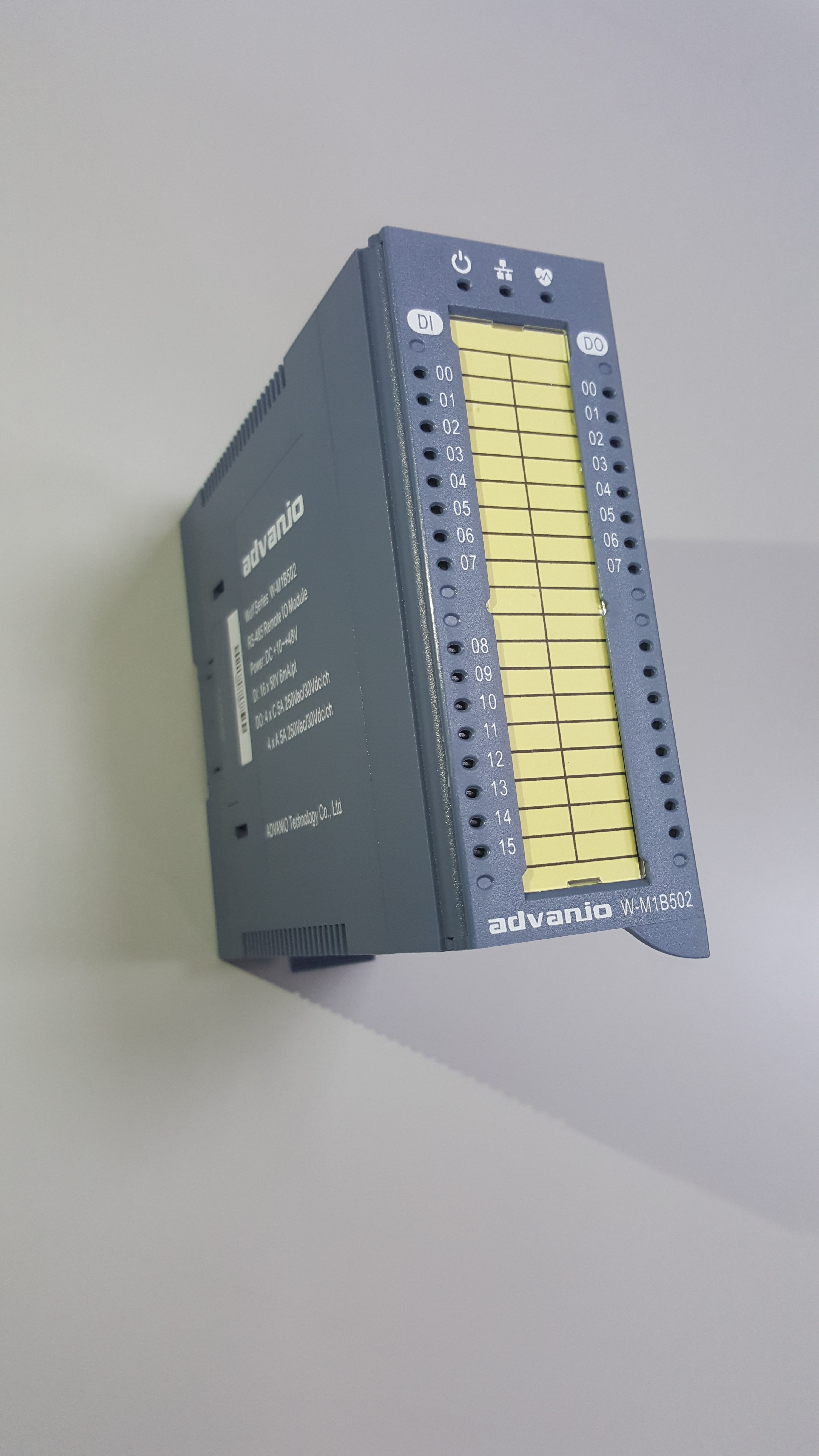
WiFio-501
16*DI 16*DO WiFi LAN Modbus-TCP/RTU module
299,00 EUR
including VAT 355.81 EUR
- Dual 16‑Channel Configuration:
16 isolated digital inputs (DI) and 16 isolated digital outputs (DO) in one compact housing.
- Flexible Input Modes:
Supports dry or wet contact digital inputs with configurable logic polarity (normal/inverted).
- High‑Speed Digital Input:
Built‑in DI latch for short pulse capture (≥ 5 ms) and counter function up to 100 Hz per channel.
- Isolated Outputs:
16 NPN‑type digital outputs rated for 3.5 – 30 V DC, 500 mA per channel, with programmable power‑on and safe‑state values.
- Robust Electrical Isolation:
Channel‑to‑channel and system isolation up to 2.5 kV DC, protecting logic circuits from industrial noise and surges.
- Wide Power Input Range:
Operates from +10 V DC to +60 V DC, with reverse‑polarity protection and ripple tolerance ≤ 5 V p‑p.
- Multi‑Protocol Communication:
Supports Modbus‑TCP, Modbus‑RTU, and LAN/Wi‑Fi interfaces for flexible integration with PLCs, PACs, and SCADA systems.
- High‑Speed Serial Communication:
Baud rate configurable from 1200 bps to 115.2 kbps.
- LED Status Indicators:
Front‑panel LEDs for System, Configuration, and WLAN status simplify diagnostics.
- Compact, Space‑Saving Design:
Vertical form factor (120.1 × 94.4 × 121.1 mm, ≈ 360 g) allows dense DIN‑rail mounting.
- Industrial‑Grade Reliability:
Operating temperature –25 °C to +70 °C, humidity 5 – 95 % RH, EMC‑tested for EMI/EMS immunity.
- Hot‑Swap and Auto‑Configuration:
Detachable EEPROM retains configuration; modules can be replaced without re‑wiring.
- Long‑Term Warranty:
Backed by 5‑year manufacturer warranty.
16 isolated digital inputs (DI) and 16 isolated digital outputs (DO) in one compact housing.
- Flexible Input Modes:
Supports dry or wet contact digital inputs with configurable logic polarity (normal/inverted).
- High‑Speed Digital Input:
Built‑in DI latch for short pulse capture (≥ 5 ms) and counter function up to 100 Hz per channel.
- Isolated Outputs:
16 NPN‑type digital outputs rated for 3.5 – 30 V DC, 500 mA per channel, with programmable power‑on and safe‑state values.
- Robust Electrical Isolation:
Channel‑to‑channel and system isolation up to 2.5 kV DC, protecting logic circuits from industrial noise and surges.
- Wide Power Input Range:
Operates from +10 V DC to +60 V DC, with reverse‑polarity protection and ripple tolerance ≤ 5 V p‑p.
- Multi‑Protocol Communication:
Supports Modbus‑TCP, Modbus‑RTU, and LAN/Wi‑Fi interfaces for flexible integration with PLCs, PACs, and SCADA systems.
- High‑Speed Serial Communication:
Baud rate configurable from 1200 bps to 115.2 kbps.
- LED Status Indicators:
Front‑panel LEDs for System, Configuration, and WLAN status simplify diagnostics.
- Compact, Space‑Saving Design:
Vertical form factor (120.1 × 94.4 × 121.1 mm, ≈ 360 g) allows dense DIN‑rail mounting.
- Industrial‑Grade Reliability:
Operating temperature –25 °C to +70 °C, humidity 5 – 95 % RH, EMC‑tested for EMI/EMS immunity.
- Hot‑Swap and Auto‑Configuration:
Detachable EEPROM retains configuration; modules can be replaced without re‑wiring.
- Long‑Term Warranty:
Backed by 5‑year manufacturer warranty.
Comprehensive Product Summary – Advanio WiFio‑501 (Wolf Series)
### 1. Product Overview
Product Name: WiFio‑501
Article Number: WiFio‑501
Model: W‑M1B501 (Wolf Series)
Series: Wolf Series Remote I/O Modules
Manufacturer: Advanio Technology Co., Ltd.
The WiFio‑501 is a dual‑function 16‑channel digital input and 16‑channel digital output industrial I/O module supporting Wi‑Fi, LAN, and Modbus‑TCP/RTU communication. It belongs to Advanio’s Wolf Series, a modular family of remote I/O devices designed for distributed control, data acquisition, and automation in Industry 4.0 environments. The module integrates both wired Ethernet and wireless Wi‑Fi connectivity, enabling flexible deployment in industrial networks.
Advanio Technology Co., Ltd., headquartered in Taiwan, specializes in advanced I/O and embedded automation solutions. With over two decades of field experience, Advanio develops rugged, high‑reliability modules for harsh industrial environments, emphasizing ease of installation, maintenance, and integration with modern IoT and SCADA systems.
### 2. Key Features
- Dual 16‑Channel Configuration:
16 isolated digital inputs (DI) and 16 isolated digital outputs (DO) in one compact housing.
- Flexible Input Modes:
Supports dry or wet contact digital inputs with configurable logic polarity (normal/inverted).
- High‑Speed Digital Input:
Built‑in DI latch for short pulse capture (≥ 5 ms) and counter function up to 100 Hz per channel.
- Isolated Outputs:
16 NPN‑type digital outputs rated for 3.5 – 30 V DC, 500 mA per channel, with programmable power‑on and safe‑state values.
- Robust Electrical Isolation:
Channel‑to‑channel and system isolation up to 2.5 kV DC, protecting logic circuits from industrial noise and surges.
- Wide Power Input Range:
Operates from +10 V DC to +60 V DC, with reverse‑polarity protection and ripple tolerance ≤ 5 V p‑p.
- Multi‑Protocol Communication:
Supports Modbus‑TCP, Modbus‑RTU, and LAN/Wi‑Fi interfaces for flexible integration with PLCs, PACs, and SCADA systems.
- High‑Speed Serial Communication:
Baud rate configurable from 1200 bps to 115.2 kbps.
- LED Status Indicators:
Front‑panel LEDs for System, Configuration, and WLAN status simplify diagnostics.
- Compact, Space‑Saving Design:
Vertical form factor (120.1 × 94.4 × 121.1 mm, ≈ 360 g) allows dense DIN‑rail mounting.
- Industrial‑Grade Reliability:
Operating temperature –25 °C to +70 °C, humidity 5 – 95 % RH, EMC‑tested for EMI/EMS immunity.
- Hot‑Swap and Auto‑Configuration:
Detachable EEPROM retains configuration; modules can be replaced without re‑wiring.
- Long‑Term Warranty:
Backed by 5‑year manufacturer warranty.
### 3. Technical Specifications
| Parameter | Specification |
|----------------|-------------------|
| Digital Inputs (DI) | 16 channels, dry/wet contact selectable |
| Logic Levels (Dry) | Logic 0 = open; Logic 1 = short to GND |
| Logic Levels (Wet) | Logic 0 ≤ 3 V DC; Logic 1 = 10 – 50 V DC |
| Input Resistance | 10 kΩ |
| Input Isolation | 2.5 kV DC |
| Over‑Voltage Protection | ± 55 V DC |
| DI Latch Function | Captures pulses ≥ 5 ms |
| DI Counter | 16‑bit, 100 Hz max |
| Digital Outputs (DO) | 16 channels, NPN open‑collector |
| Output Voltage Range | 3.5 – 30 V DC |
| Output Current | 500 mA per channel |
| Startup/Safe Values | Programmable power‑on and watchdog safe‑state |
| Isolation Protection | 2.5 kV DC (I/O to logic) |
| Power Supply | +10 V DC to +60 V DC (≤ 5 V ripple) |
| Power Consumption | ≈ 200 mA @ 24 V DC |
| Communication Interfaces | Wi‑Fi (IEEE 802.11 b/g/n), LAN 10/100 Base‑T, RS‑485 |
| Protocols | Modbus‑TCP, Modbus‑RTU |
| Baud Rate | 1200 – 115.2 kbps |
| Indicators | System LED, Config LED, WLAN LED |
| Operating Temperature | –25 °C to +70 °C |
| Storage Temperature | –30 °C to +75 °C |
| Humidity | 5 – 95 % RH (non‑condensing) |
| Dimensions (W × H × D) | 120.1 × 94.4 × 121.1 mm |
| Weight | ≈ 360 g |
| Mounting | DIN‑rail 35 mm or wall mount |
| Enclosure Material | Industrial ABS plastic |
| Isolation Voltage (System) | 3000 V DC typical |
| Compliance | CE, FCC Part 15, EMC (EMI/EMS) |
### 4. Functionality
The WiFio‑501 operates as a remote I/O node in distributed control systems. It communicates with a host controller (PLC, PAC, or SCADA server) via Modbus‑TCP over Ethernet/Wi‑Fi or Modbus‑RTU over RS‑485.
Operation Principle:
- The host sends Modbus commands to read DI states or write DO values.
- The module processes commands through its embedded controller and updates I/O channels accordingly.
- DI channels can latch transient signals or count pulses autonomously.
- DO channels can be preset to defined states on power‑up or when communication fails (safe mode).
Typical Applications:
- Remote data acquisition and process monitoring
- Industrial automation and machine control
- Energy management and building automation
- Security and access control systems
- Laboratory and test automation
- Supervisory control and data acquisition (SCADA)
- Direct digital control (DDC) in HVAC systems
Compatibility:
Fully compatible with standard Modbus‑compliant software and hardware, including PLCs, HMI panels, and SCADA platforms.
### 5. Components & Accessories
Included Items:
- WiFio‑501 module
- Detachable 14‑pin terminal block connectors
- DIN‑rail mounting base and plastic isolation tab
- Quick‑start guide
Optional Accessories:
- RS‑232 ↔ RS‑485 isolated converter (G‑M1A001)
- USB ↔ RS‑485 converter (G‑M1E001)
- RS‑485 repeater (G‑M1F001)
- Additional DIN‑rail bases and grounding tabs
Connectors:
- Plug‑in terminal blocks (#16 – 30 AWG) for I/O and power
- RJ‑45 Ethernet port
- RS‑485 2‑wire terminal
- Wi‑Fi antenna connector (internal/external depending on configuration)
### 6. Installation & Setup
Requirements:
- DC power supply 10 – 60 V DC
- Host PC or controller with Ethernet or RS‑485 port
- Modbus‑compatible software or Advanio Utility
Mounting Options:
- DIN‑Rail Mounting: Attach detachable base to standard DIN 35 mm rail; modules can be daisy‑chained for power and communication.
- Wall Mounting: Use screw holes on base for panel installation.
Grounding:
- Use aluminum DIN rail for frame ground (F.G.) or connect via power connector.
- Plastic isolation tabs available to separate frame ground if noise is present.
Power Wiring:
- Connect +VS (10 – 60 V DC) and GND to power terminal.
- Keep cable length short to minimize voltage drop.
- Only one power source per DIN‑rail chain (max 10 modules ≈ 30 W total).
Communication Setup:
- Default Modbus address = 01.
- Address set via two rotary switches (0x01 – 0xF7).
- Default baud rate = 9600 bps, N, 8, 1.
- Configurable via Advanio Utility or Modbus register 44107 (0x100A).
Indicators:
- Power LED: On = power OK.
- System LED: Flashing = normal operation; steady = fault.
- Communication LED: Flashes on data activity; steady = timeout.
- WLAN LED: Indicates Wi‑Fi connection status.
Factory Reset:
Press INIT button ≥ 3 s to restore defaults (9600 bps, N, 8, 1, address 01).
Hot‑Swap Replacement:
Detach module from base, transfer EEPROM to new unit to retain configuration.
### 7. Performance & Capabilities
- Input Response Time: ≤ 5 ms for latched signals.
- Counter Frequency: ≤ 100 Hz per DI channel.
- Output Switching Speed: < 1 ms typical.
- Communication Distance (RS‑485): up to 1.2 km (4000 ft).
- Network Topology: Supports daisy‑chain, star, or mixed topologies with repeaters.
- System Watchdog: Programmable timeout (0 – 25.5 s, 0.1 s steps).
- Module Watchdog: Hardware reset after 1.6 s of no response.
- Reliability: Continuous operation in harsh industrial environments with EMI/EMS protection.
Limitations:
- Maximum 10 modules per DIN‑rail power segment.
- Total current draw must not exceed 30 W per rail.
- Wi‑Fi range depends on antenna and environmental conditions.
### 8. Standards & Compliance
- Electrical Safety: Isolation tested to 3000 V DC.
- EMC Compliance: Tested for EMI and EMS per industrial standards.
- CE Certification: Meets European EMC and Low Voltage Directives.
- FCC Compliance: Part 15 Class A device.
- (1) This device may not cause harmful interference.
- (2) This device must accept any interference received.
- Environmental Protection: RoHS compliant.
- Recommended Installation: Use with CE‑certified industrial chassis for optimal EMC performance.
### 9. Additional Information
Warranty:
- 5 years from date of purchase.
- Covers manufacturing defects and component failures under normal use.
- Excludes damage from improper installation, modification, or misuse.
- Out‑of‑warranty repairs available at nominal cost.
Support & Service:
- Technical support via email (service@advanio.com.tw) or website (www.advanio.com).
- RMA procedure available for returns and repairs.
- Response within 2 business days.
Maintenance:
- Periodically inspect terminal connections and DIN‑rail grounding.
- Keep ventilation openings free of dust.
- Firmware updates available through Advanio Utility software.
Software Tools:
- Advanio Utility for Windows configures Modbus parameters, I/O mapping, and watchdog settings.
- Supports batch configuration and EEPROM backup/restore.
Manufacturer Profile:
Advanio Technology Co., Ltd. develops industrial I/O and embedded automation solutions for Industry 4.0 applications. Its Wolf Series modules cover analog and digital I/O, relay outputs, and communication interfaces (RS‑485, CAN, EtherCAT, PROFINET, Wi‑Fi, 3G/4G). All products are engineered for rugged environments with emphasis on reliability, serviceability, and ease of integration.
### Summary
The Advanio WiFio‑501 is a compact, high‑reliability, dual 16‑channel digital I/O module designed for industrial automation, remote monitoring, and IoT integration. Combining Wi‑Fi, LAN, and RS‑485 (Modbus‑TCP/RTU) interfaces, it bridges legacy serial systems with modern Ethernet‑based networks. Its wide power range, robust isolation, programmable safety states, and hot‑swap capability make it ideal for mission‑critical applications in manufacturing, energy, and building automation.
With industrial‑grade design, comprehensive Modbus compatibility, and five‑year warranty, the WiFio‑501 exemplifies Advanio’s commitment to delivering advanced, reliable, and serviceable I/O technology for the evolving landscape of Industry 4.0.
### 1. Product Overview
Product Name: WiFio‑501
Article Number: WiFio‑501
Model: W‑M1B501 (Wolf Series)
Series: Wolf Series Remote I/O Modules
Manufacturer: Advanio Technology Co., Ltd.
The WiFio‑501 is a dual‑function 16‑channel digital input and 16‑channel digital output industrial I/O module supporting Wi‑Fi, LAN, and Modbus‑TCP/RTU communication. It belongs to Advanio’s Wolf Series, a modular family of remote I/O devices designed for distributed control, data acquisition, and automation in Industry 4.0 environments. The module integrates both wired Ethernet and wireless Wi‑Fi connectivity, enabling flexible deployment in industrial networks.
Advanio Technology Co., Ltd., headquartered in Taiwan, specializes in advanced I/O and embedded automation solutions. With over two decades of field experience, Advanio develops rugged, high‑reliability modules for harsh industrial environments, emphasizing ease of installation, maintenance, and integration with modern IoT and SCADA systems.
### 2. Key Features
- Dual 16‑Channel Configuration:
16 isolated digital inputs (DI) and 16 isolated digital outputs (DO) in one compact housing.
- Flexible Input Modes:
Supports dry or wet contact digital inputs with configurable logic polarity (normal/inverted).
- High‑Speed Digital Input:
Built‑in DI latch for short pulse capture (≥ 5 ms) and counter function up to 100 Hz per channel.
- Isolated Outputs:
16 NPN‑type digital outputs rated for 3.5 – 30 V DC, 500 mA per channel, with programmable power‑on and safe‑state values.
- Robust Electrical Isolation:
Channel‑to‑channel and system isolation up to 2.5 kV DC, protecting logic circuits from industrial noise and surges.
- Wide Power Input Range:
Operates from +10 V DC to +60 V DC, with reverse‑polarity protection and ripple tolerance ≤ 5 V p‑p.
- Multi‑Protocol Communication:
Supports Modbus‑TCP, Modbus‑RTU, and LAN/Wi‑Fi interfaces for flexible integration with PLCs, PACs, and SCADA systems.
- High‑Speed Serial Communication:
Baud rate configurable from 1200 bps to 115.2 kbps.
- LED Status Indicators:
Front‑panel LEDs for System, Configuration, and WLAN status simplify diagnostics.
- Compact, Space‑Saving Design:
Vertical form factor (120.1 × 94.4 × 121.1 mm, ≈ 360 g) allows dense DIN‑rail mounting.
- Industrial‑Grade Reliability:
Operating temperature –25 °C to +70 °C, humidity 5 – 95 % RH, EMC‑tested for EMI/EMS immunity.
- Hot‑Swap and Auto‑Configuration:
Detachable EEPROM retains configuration; modules can be replaced without re‑wiring.
- Long‑Term Warranty:
Backed by 5‑year manufacturer warranty.
### 3. Technical Specifications
| Parameter | Specification |
|----------------|-------------------|
| Digital Inputs (DI) | 16 channels, dry/wet contact selectable |
| Logic Levels (Dry) | Logic 0 = open; Logic 1 = short to GND |
| Logic Levels (Wet) | Logic 0 ≤ 3 V DC; Logic 1 = 10 – 50 V DC |
| Input Resistance | 10 kΩ |
| Input Isolation | 2.5 kV DC |
| Over‑Voltage Protection | ± 55 V DC |
| DI Latch Function | Captures pulses ≥ 5 ms |
| DI Counter | 16‑bit, 100 Hz max |
| Digital Outputs (DO) | 16 channels, NPN open‑collector |
| Output Voltage Range | 3.5 – 30 V DC |
| Output Current | 500 mA per channel |
| Startup/Safe Values | Programmable power‑on and watchdog safe‑state |
| Isolation Protection | 2.5 kV DC (I/O to logic) |
| Power Supply | +10 V DC to +60 V DC (≤ 5 V ripple) |
| Power Consumption | ≈ 200 mA @ 24 V DC |
| Communication Interfaces | Wi‑Fi (IEEE 802.11 b/g/n), LAN 10/100 Base‑T, RS‑485 |
| Protocols | Modbus‑TCP, Modbus‑RTU |
| Baud Rate | 1200 – 115.2 kbps |
| Indicators | System LED, Config LED, WLAN LED |
| Operating Temperature | –25 °C to +70 °C |
| Storage Temperature | –30 °C to +75 °C |
| Humidity | 5 – 95 % RH (non‑condensing) |
| Dimensions (W × H × D) | 120.1 × 94.4 × 121.1 mm |
| Weight | ≈ 360 g |
| Mounting | DIN‑rail 35 mm or wall mount |
| Enclosure Material | Industrial ABS plastic |
| Isolation Voltage (System) | 3000 V DC typical |
| Compliance | CE, FCC Part 15, EMC (EMI/EMS) |
### 4. Functionality
The WiFio‑501 operates as a remote I/O node in distributed control systems. It communicates with a host controller (PLC, PAC, or SCADA server) via Modbus‑TCP over Ethernet/Wi‑Fi or Modbus‑RTU over RS‑485.
Operation Principle:
- The host sends Modbus commands to read DI states or write DO values.
- The module processes commands through its embedded controller and updates I/O channels accordingly.
- DI channels can latch transient signals or count pulses autonomously.
- DO channels can be preset to defined states on power‑up or when communication fails (safe mode).
Typical Applications:
- Remote data acquisition and process monitoring
- Industrial automation and machine control
- Energy management and building automation
- Security and access control systems
- Laboratory and test automation
- Supervisory control and data acquisition (SCADA)
- Direct digital control (DDC) in HVAC systems
Compatibility:
Fully compatible with standard Modbus‑compliant software and hardware, including PLCs, HMI panels, and SCADA platforms.
### 5. Components & Accessories
Included Items:
- WiFio‑501 module
- Detachable 14‑pin terminal block connectors
- DIN‑rail mounting base and plastic isolation tab
- Quick‑start guide
Optional Accessories:
- RS‑232 ↔ RS‑485 isolated converter (G‑M1A001)
- USB ↔ RS‑485 converter (G‑M1E001)
- RS‑485 repeater (G‑M1F001)
- Additional DIN‑rail bases and grounding tabs
Connectors:
- Plug‑in terminal blocks (#16 – 30 AWG) for I/O and power
- RJ‑45 Ethernet port
- RS‑485 2‑wire terminal
- Wi‑Fi antenna connector (internal/external depending on configuration)
### 6. Installation & Setup
Requirements:
- DC power supply 10 – 60 V DC
- Host PC or controller with Ethernet or RS‑485 port
- Modbus‑compatible software or Advanio Utility
Mounting Options:
- DIN‑Rail Mounting: Attach detachable base to standard DIN 35 mm rail; modules can be daisy‑chained for power and communication.
- Wall Mounting: Use screw holes on base for panel installation.
Grounding:
- Use aluminum DIN rail for frame ground (F.G.) or connect via power connector.
- Plastic isolation tabs available to separate frame ground if noise is present.
Power Wiring:
- Connect +VS (10 – 60 V DC) and GND to power terminal.
- Keep cable length short to minimize voltage drop.
- Only one power source per DIN‑rail chain (max 10 modules ≈ 30 W total).
Communication Setup:
- Default Modbus address = 01.
- Address set via two rotary switches (0x01 – 0xF7).
- Default baud rate = 9600 bps, N, 8, 1.
- Configurable via Advanio Utility or Modbus register 44107 (0x100A).
Indicators:
- Power LED: On = power OK.
- System LED: Flashing = normal operation; steady = fault.
- Communication LED: Flashes on data activity; steady = timeout.
- WLAN LED: Indicates Wi‑Fi connection status.
Factory Reset:
Press INIT button ≥ 3 s to restore defaults (9600 bps, N, 8, 1, address 01).
Hot‑Swap Replacement:
Detach module from base, transfer EEPROM to new unit to retain configuration.
### 7. Performance & Capabilities
- Input Response Time: ≤ 5 ms for latched signals.
- Counter Frequency: ≤ 100 Hz per DI channel.
- Output Switching Speed: < 1 ms typical.
- Communication Distance (RS‑485): up to 1.2 km (4000 ft).
- Network Topology: Supports daisy‑chain, star, or mixed topologies with repeaters.
- System Watchdog: Programmable timeout (0 – 25.5 s, 0.1 s steps).
- Module Watchdog: Hardware reset after 1.6 s of no response.
- Reliability: Continuous operation in harsh industrial environments with EMI/EMS protection.
Limitations:
- Maximum 10 modules per DIN‑rail power segment.
- Total current draw must not exceed 30 W per rail.
- Wi‑Fi range depends on antenna and environmental conditions.
### 8. Standards & Compliance
- Electrical Safety: Isolation tested to 3000 V DC.
- EMC Compliance: Tested for EMI and EMS per industrial standards.
- CE Certification: Meets European EMC and Low Voltage Directives.
- FCC Compliance: Part 15 Class A device.
- (1) This device may not cause harmful interference.
- (2) This device must accept any interference received.
- Environmental Protection: RoHS compliant.
- Recommended Installation: Use with CE‑certified industrial chassis for optimal EMC performance.
### 9. Additional Information
Warranty:
- 5 years from date of purchase.
- Covers manufacturing defects and component failures under normal use.
- Excludes damage from improper installation, modification, or misuse.
- Out‑of‑warranty repairs available at nominal cost.
Support & Service:
- Technical support via email (service@advanio.com.tw) or website (www.advanio.com).
- RMA procedure available for returns and repairs.
- Response within 2 business days.
Maintenance:
- Periodically inspect terminal connections and DIN‑rail grounding.
- Keep ventilation openings free of dust.
- Firmware updates available through Advanio Utility software.
Software Tools:
- Advanio Utility for Windows configures Modbus parameters, I/O mapping, and watchdog settings.
- Supports batch configuration and EEPROM backup/restore.
Manufacturer Profile:
Advanio Technology Co., Ltd. develops industrial I/O and embedded automation solutions for Industry 4.0 applications. Its Wolf Series modules cover analog and digital I/O, relay outputs, and communication interfaces (RS‑485, CAN, EtherCAT, PROFINET, Wi‑Fi, 3G/4G). All products are engineered for rugged environments with emphasis on reliability, serviceability, and ease of integration.
### Summary
The Advanio WiFio‑501 is a compact, high‑reliability, dual 16‑channel digital I/O module designed for industrial automation, remote monitoring, and IoT integration. Combining Wi‑Fi, LAN, and RS‑485 (Modbus‑TCP/RTU) interfaces, it bridges legacy serial systems with modern Ethernet‑based networks. Its wide power range, robust isolation, programmable safety states, and hot‑swap capability make it ideal for mission‑critical applications in manufacturing, energy, and building automation.
With industrial‑grade design, comprehensive Modbus compatibility, and five‑year warranty, the WiFio‑501 exemplifies Advanio’s commitment to delivering advanced, reliable, and serviceable I/O technology for the evolving landscape of Industry 4.0.
-
 Advanio WiFio Datasheet-501.pdf
PDF Catalog
Advanio WiFio Datasheet-501.pdf
PDF Catalog
-
 Advanio_Catalog_Wolf_Series_General.pdf
PDF Catalog
Advanio_Catalog_Wolf_Series_General.pdf
PDF Catalog


No accessories available.