 SUCHEN SIE DIE PASSENDE
INDUSTRIELLE LÖSUNG?
Entdecken Sie Embedded-, Kommunikations- und Automatisierungslösungen für Ihre Anwendung.
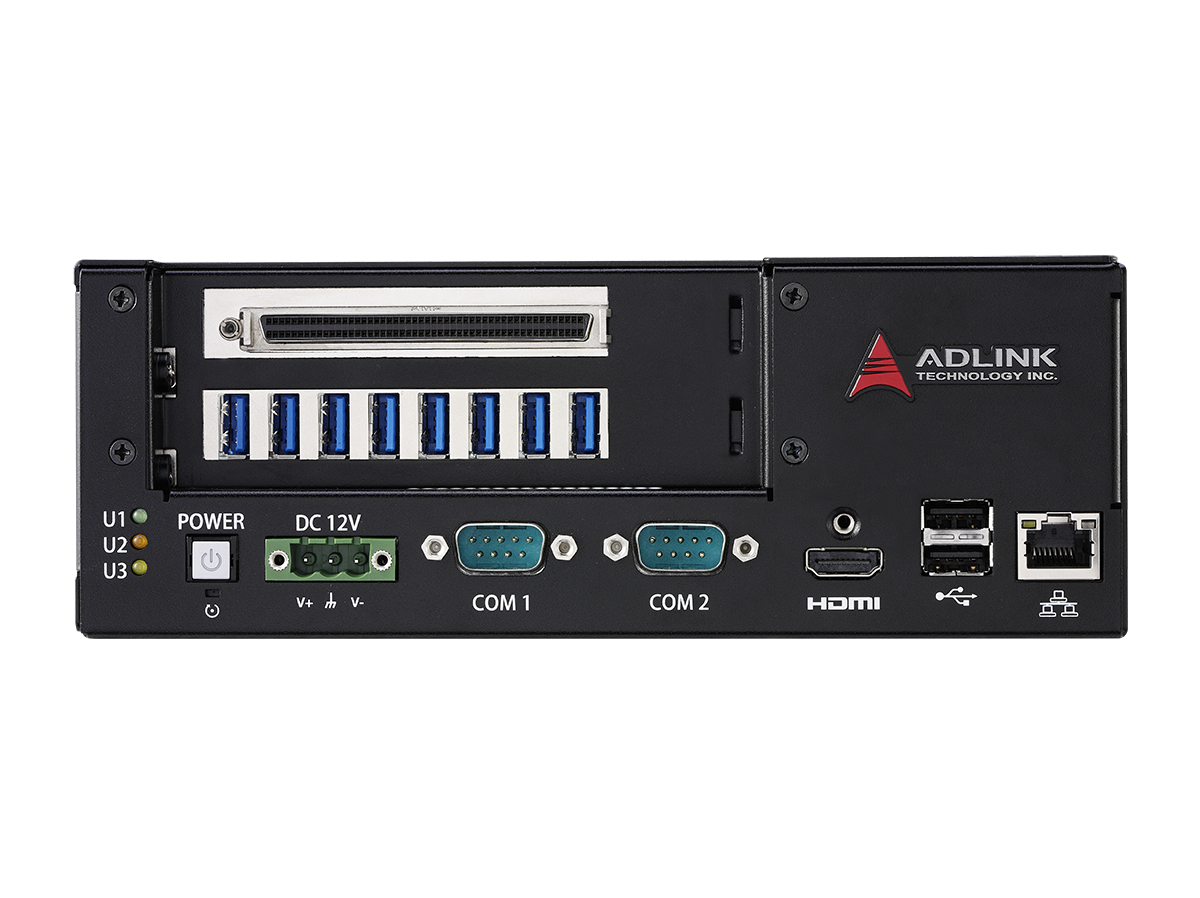
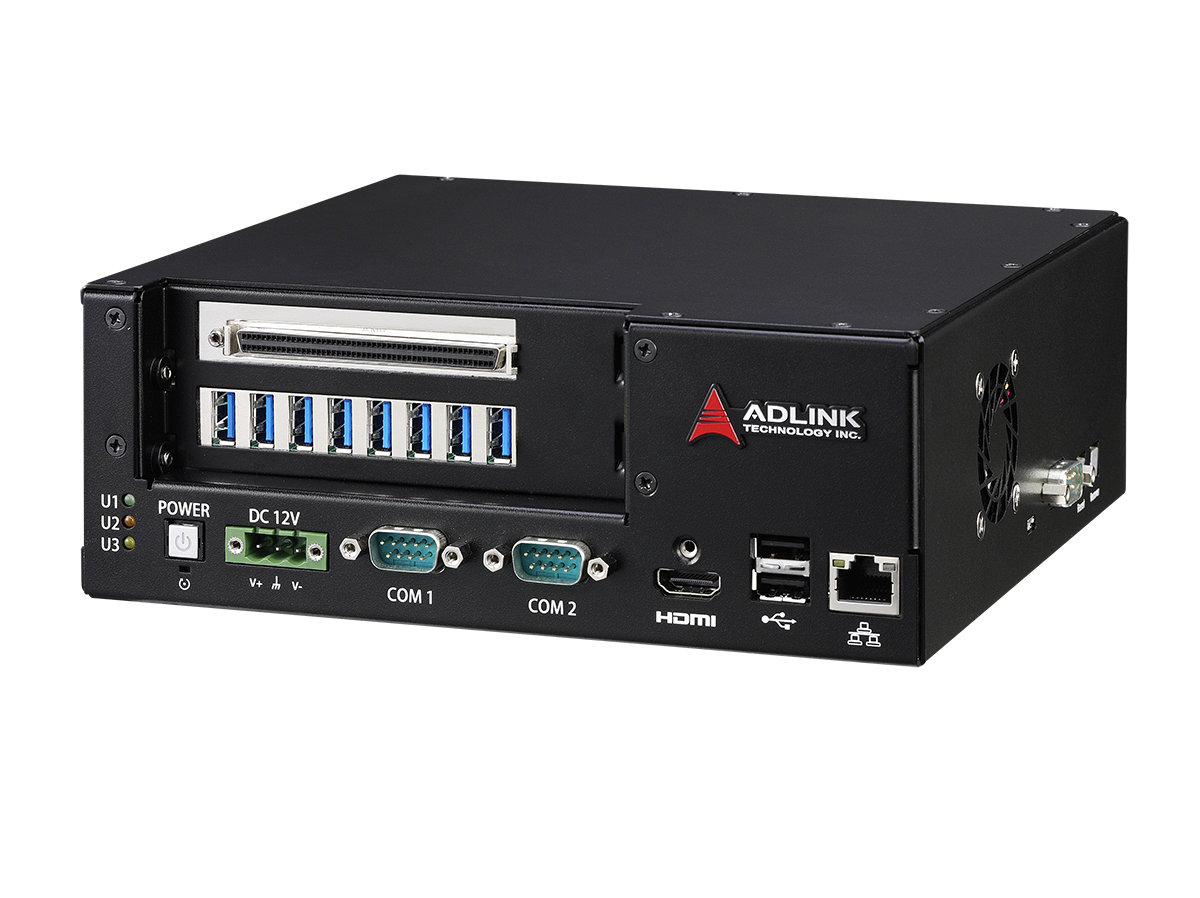
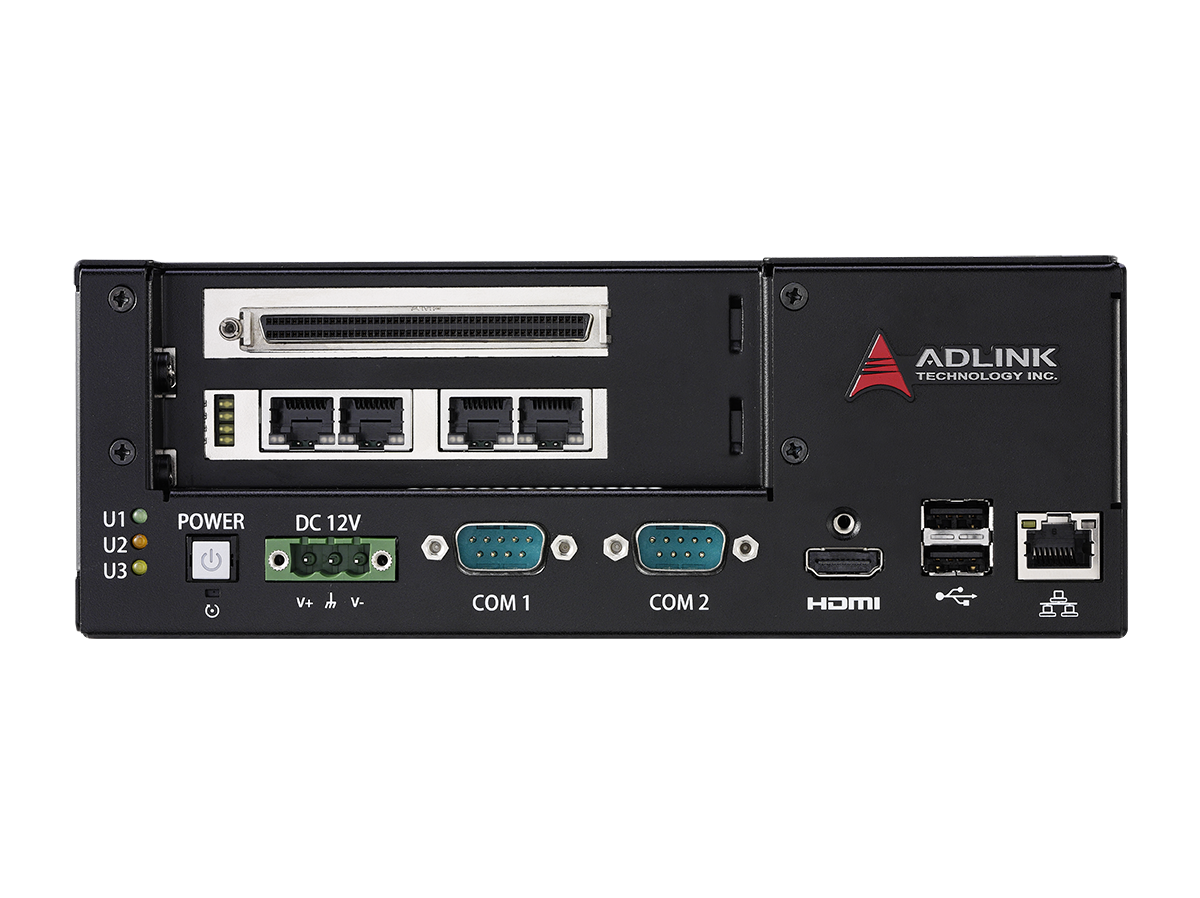
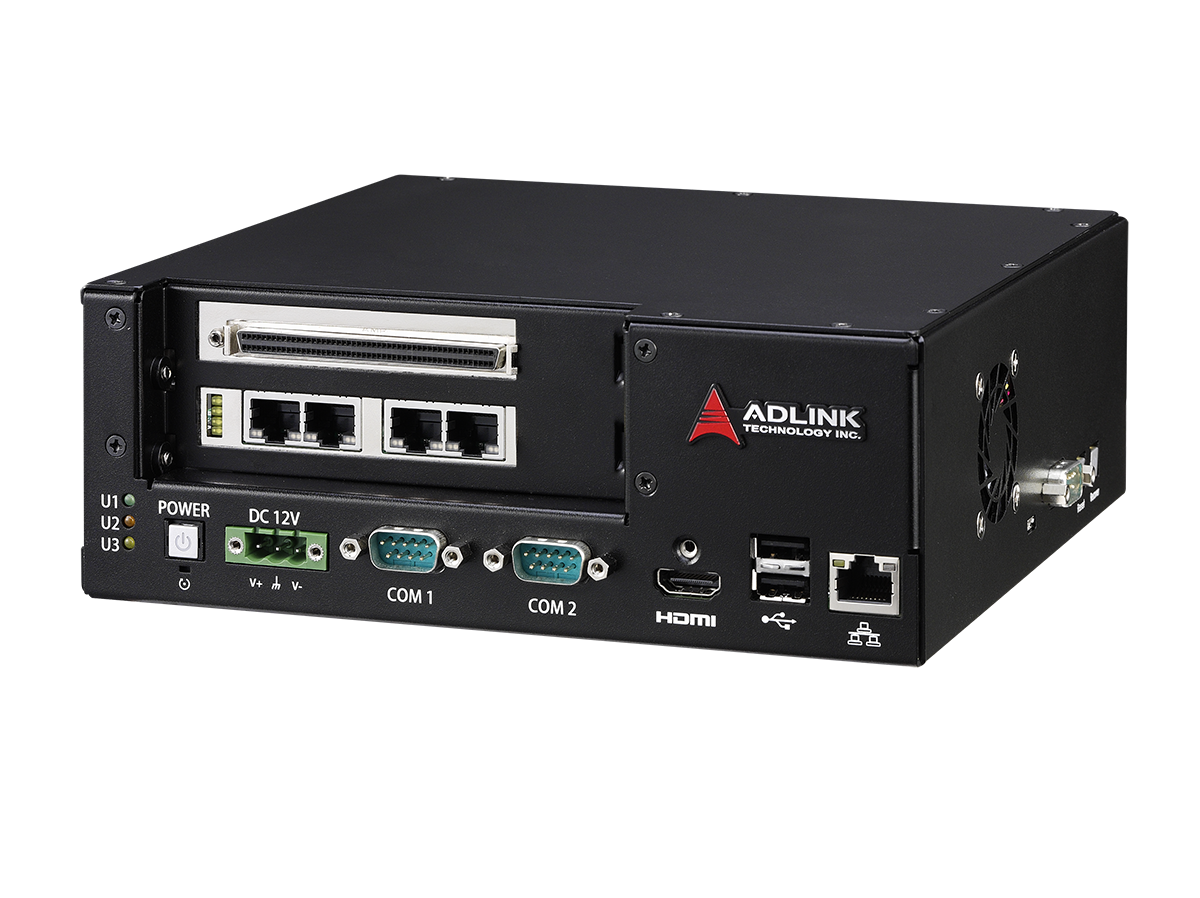
- Integrated NVIDIA® Jetson TX2 Platform: Combines GPU, CPU, and memory in a compact module for high-performance edge computing.
- 256-Core Pascal GPU: Provides exceptional parallel processing power for deep learning inference, image recognition, and AI-based vision algorithms.
- ARMv8 (64-bit) Multi-Processor CPU Complex: Features a dual-core NVIDIA Denver 2 and quad-core ARM Cortex-A57 CPU cluster operating at 2.0 GHz, enabling heterogeneous multiprocessing for efficient workload distribution.
- Industrial I/O Integration: Includes 32-channel isolated digital input/output (DI/O) for direct connection to sensors, actuators, and industrial control systems.
- Frame Grabber Support: Compatible with ADLINK GigE Vision and USB3 Vision frame grabbers, as well as other PCIe-based capture cards, allowing flexible camera integration.
- Compact, All-in-One Design: Combines compute, I/O, and connectivity in a single enclosure, reducing system complexity and footprint.
- Deep Learning Deployment: Supports deployment of neural network models optimized using NVIDIA® DIGITS or TensorRT, enabling rapid implementation of AI-based inspection and classification solutions.
- Comprehensive Connectivity: Provides HDMI display output, Gigabit Ethernet, dual COM ports, and dual USB 3.0 ports for peripheral and network integration.
- Software Ecosystem: Supports Ubuntu Linux OS, OpenGL, and CUDA for GPU-accelerated computing and AI development.
- Industrial Reliability: Designed for continuous operation in manufacturing environments with an operating temperature range of 0°C to 45°C.
- 256-Core Pascal GPU: Provides exceptional parallel processing power for deep learning inference, image recognition, and AI-based vision algorithms.
- ARMv8 (64-bit) Multi-Processor CPU Complex: Features a dual-core NVIDIA Denver 2 and quad-core ARM Cortex-A57 CPU cluster operating at 2.0 GHz, enabling heterogeneous multiprocessing for efficient workload distribution.
- Industrial I/O Integration: Includes 32-channel isolated digital input/output (DI/O) for direct connection to sensors, actuators, and industrial control systems.
- Frame Grabber Support: Compatible with ADLINK GigE Vision and USB3 Vision frame grabbers, as well as other PCIe-based capture cards, allowing flexible camera integration.
- Compact, All-in-One Design: Combines compute, I/O, and connectivity in a single enclosure, reducing system complexity and footprint.
- Deep Learning Deployment: Supports deployment of neural network models optimized using NVIDIA® DIGITS or TensorRT, enabling rapid implementation of AI-based inspection and classification solutions.
- Comprehensive Connectivity: Provides HDMI display output, Gigabit Ethernet, dual COM ports, and dual USB 3.0 ports for peripheral and network integration.
- Software Ecosystem: Supports Ubuntu Linux OS, OpenGL, and CUDA for GPU-accelerated computing and AI development.
- Industrial Reliability: Designed for continuous operation in manufacturing environments with an operating temperature range of 0°C to 45°C.
1. Product Overview
Product Name: EOS-J Series
Model Variants: EOS-J-GigE, EOS-J-USB3
Series: NVIDIA® Jetson TX2-based Vision System
Article Number: EOS-J-Series
Manufacturer: ADLINK Technology, Inc.
The ADLINK EOS-J Series represents a compact, high-performance embedded vision system designed for industrial machine vision and edge AI applications. Built around the NVIDIA® Jetson TX2 platform, the EOS-J integrates a powerful GPU, multi-core ARM CPU complex, and industrial-grade I/O interfaces into a single, ruggedized system. It is engineered to deliver deep learning inference and advanced image processing capabilities directly at the edge, minimizing latency and maximizing throughput for real-time inspection, classification, and automation tasks.
2. Key Features
- Integrated NVIDIA® Jetson TX2 Platform: Combines GPU, CPU, and memory in a compact module for high-performance edge computing.
- 256-Core Pascal GPU: Provides exceptional parallel processing power for deep learning inference, image recognition, and AI-based vision algorithms.
- ARMv8 (64-bit) Multi-Processor CPU Complex: Features a dual-core NVIDIA Denver 2 and quad-core ARM Cortex-A57 CPU cluster operating at 2.0 GHz, enabling heterogeneous multiprocessing for efficient workload distribution.
- Industrial I/O Integration: Includes 32-channel isolated digital input/output (DI/O) for direct connection to sensors, actuators, and industrial control systems.
- Frame Grabber Support: Compatible with ADLINK GigE Vision and USB3 Vision frame grabbers, as well as other PCIe-based capture cards, allowing flexible camera integration.
- Compact, All-in-One Design: Combines compute, I/O, and connectivity in a single enclosure, reducing system complexity and footprint.
- Deep Learning Deployment: Supports deployment of neural network models optimized using NVIDIA® DIGITS or TensorRT, enabling rapid implementation of AI-based inspection and classification solutions.
- Comprehensive Connectivity: Provides HDMI display output, Gigabit Ethernet, dual COM ports, and dual USB 3.0 ports for peripheral and network integration.
- Software Ecosystem: Supports Ubuntu Linux OS, OpenGL, and CUDA for GPU-accelerated computing and AI development.
- Industrial Reliability: Designed for continuous operation in manufacturing environments with an operating temperature range of 0°C to 45°C.
3. Technical Specifications
| Component | Specification |
|----------------|-------------------|
| Processor | NVIDIA® Denver 2 (Dual-Core) + ARM Cortex-A57 (Quad-Core) @ 2.0 GHz |
| GPU | 256-core NVIDIA® Pascal architecture GPU |
| Memory (RAM) | 8 GB LPDDR4 (integrated in Jetson TX2 module) |
| Storage | 32 GB eMMC onboard (Jetson TX2 built-in storage) |
| Display Output | 1 × HDMI |
| Ethernet | 1 × Gigabit Ethernet (GbE) port |
| Serial Communication | 2 × COM ports |
| USB Ports | 2 × USB 3.0 (for keyboard, mouse, or peripheral devices) |
| Digital I/O | 32-channel isolated DI/O |
| Supported Frame Grabbers | ADLINK GigE Vision and USB3 Vision frame grabbers; compatible with other PCIe-based frame grabbers |
| Power Input | 12 VDC |
| Power Consumption | 90 W (maximum) |
| Operating Temperature | 0°C to 45°C |
| Software Support | Ubuntu Linux, OpenGL, CUDA |
| Physical Construction | Industrial-grade enclosure (dimensions and weight not specified) |
| Updated Specification Date | February 22, 2019 |
4. Functionality
The EOS-J Series functions as an embedded vision and AI inference platform for industrial automation and machine vision applications. At its core, the NVIDIA® Jetson TX2 module provides a heterogeneous computing environment that combines CPU and GPU resources for parallel processing of image data and neural network inference.
Operational Workflow:
1. Image Acquisition: Cameras connected via GigE Vision or USB3 Vision interfaces capture high-resolution images or video streams.
2. Data Processing: The onboard GPU accelerates deep learning inference, while the CPU handles control logic, data management, and communication tasks.
3. I/O Control: The 32-channel isolated DI/O enables direct interaction with sensors, triggers, and actuators, allowing real-time control of inspection or sorting mechanisms.
4. Output & Communication: Processed results can be displayed via HDMI, transmitted over Ethernet, or communicated through serial ports to other control systems.
Use Cases and Applications:
- Automated optical inspection (AOI) in electronics manufacturing
- Defect detection and classification in production lines
- Object recognition and sorting in logistics and packaging
- Quality assurance and measurement in precision manufacturing
- Edge AI inference for robotics and autonomous systems
Compatibility:
The EOS-J supports ADLINK’s own GigE and USB3 frame grabbers, ensuring seamless integration with industrial cameras. It also accommodates third-party PCIe-based frame grabbers, providing flexibility for diverse imaging setups.
5. Components & Accessories
Included Components:
- EOS-J main unit with integrated NVIDIA® Jetson TX2 module
- Built-in 32 GB eMMC storage and 8 GB LPDDR4 memory
- HDMI output port
- 1 × Gigabit Ethernet port
- 2 × COM ports
- 2 × USB 3.0 ports
- 32-channel isolated DI/O interface
Optional Add-ons and Accessories:
- ADLINK GigE Vision frame grabber (for EOS-J-GigE model)
- ADLINK USB3 Vision frame grabber (for EOS-J-USB3 model)
- Additional PCIe-based frame grabbers (third-party compatible)
- Power adapter (12 VDC, 90 W)
- Mounting brackets or DIN-rail kits (depending on installation requirements)
- HDMI cable and USB peripherals (keyboard, mouse)
Connectors and Interfaces:
- HDMI Type-A connector for display output
- RJ-45 connector for Gigabit Ethernet
- DB9 connectors for serial communication
- USB Type-A connectors for USB 3.0 ports
- Terminal block or industrial connector for 32CH isolated DI/O
6. Installation & Setup
Requirements:
- 12 VDC power supply capable of delivering up to 90 W
- Compatible GigE or USB3 cameras (depending on model)
- Ubuntu Linux environment for software deployment and configuration
- Network connectivity for remote management or data transfer
Mounting Options:
The EOS-J Series is designed for flexible installation in industrial environments. It can be mounted within control cabinets, on machine frames, or in workstation setups. Mounting accessories may include brackets or DIN-rail adapters depending on the deployment scenario.
Configuration Steps:
1. Hardware Setup: Connect cameras to the appropriate frame grabber ports (GigE or USB3). Attach display, keyboard, and mouse via HDMI and USB ports.
2. Power Connection: Supply 12 VDC power to the system.
3. Software Installation: Install Ubuntu Linux and required drivers for frame grabbers and peripherals.
4. AI Model Deployment: Load pre-trained neural network models optimized using NVIDIA® DIGITS or TensorRT.
5. System Calibration: Configure camera parameters, I/O triggers, and communication settings.
6. Operational Testing: Verify image acquisition, inference performance, and I/O response before full deployment.
7. Performance & Capabilities
Processing Power:
The combination of a 256-core Pascal GPU and a six-core ARM CPU complex provides a balanced architecture for compute-intensive vision tasks. The GPU accelerates deep learning inference, while the CPU manages control and communication processes.
Speed and Throughput:
- Capable of real-time image processing and inference for multiple camera channels (up to 4 channels supported per system).
- Optimized for low-latency AI inference at the edge, reducing data transmission delays to centralized servers.
Capacity and Efficiency:
- 8 GB LPDDR4 memory ensures smooth handling of large image datasets and neural network models.
- 32 GB eMMC storage provides onboard capacity for operating system, application software, and model files.
- Power-efficient design with a maximum consumption of 90 W, suitable for continuous industrial operation.
Limitations:
- Operating temperature limited to 0°C–45°C; may require environmental control in extreme conditions.
- Storage capacity may need expansion via external drives for large-scale data logging.
- GPU performance, while robust for edge inference, may not match high-end data center GPUs for large-scale training.
8. Standards & Compliance
Certifications and Compliance:
- Designed in accordance with industrial computing standards for reliability and safety.
- Complies with GigE Vision and USB3 Vision camera interface standards.
- Supports NVIDIA® CUDA and OpenGL frameworks for GPU-accelerated computing.
- Compatible with Ubuntu Linux, ensuring open-source software compliance and flexibility.
Industry Standards Supported:
- GigE Vision: Standard for high-speed Ethernet-based camera communication.
- USB3 Vision: Standard for USB 3.0-based industrial camera connectivity.
- CUDA / OpenGL: Industry-standard APIs for GPU computing and graphics acceleration.
Regulatory Notes:
All trademarks and product names are the property of their respective owners. Specifications are subject to change without notice, as per ADLINK’s product update policy.
9. Additional Information
Warranty and Support:
ADLINK typically provides a standard limited warranty covering manufacturing defects and hardware reliability. Extended warranty and service contracts may be available upon request. Technical support includes driver updates, software patches, and integration assistance through ADLINK’s support channels.
Maintenance:
- Regularly update Ubuntu OS and NVIDIA drivers for optimal performance.
- Ensure adequate ventilation and dust protection in industrial environments.
- Periodically inspect I/O connectors and cables for wear or damage.
Software Updates and Development Tools:
- Supports NVIDIA® JetPack SDK for software development, including CUDA, cuDNN, and TensorRT libraries.
- Compatible with AI frameworks such as TensorFlow, PyTorch, and Caffe (via Jetson TX2 ecosystem).
- Developers can use NVIDIA® DIGITS for model training and TensorRT for inference optimization before deployment on the EOS-J.
Product Lifecycle and Availability:
The EOS-J Series, updated as of February 22, 2019, remains part of ADLINK’s industrial AI and vision product portfolio. It is designed for long-term availability and support, ensuring continuity for industrial automation projects.
Manufacturer Contact:
ADLINK Technology, Inc.
Website: [www.adlinktech.com](http://www.adlinktech.com)
© 2019 ADLINK Technology, Inc. All rights reserved.
### Summary
The ADLINK EOS-J Series is a robust, NVIDIA® Jetson TX2-based embedded vision system engineered for industrial AI and machine vision applications. It integrates high-performance GPU computing, multi-core ARM processing, and industrial-grade I/O in a compact, power-efficient design. Supporting both GigE and USB3 Vision interfaces, the EOS-J enables flexible camera integration and real-time deep learning inference at the edge. With its 256-core Pascal GPU, 8 GB LPDDR4 memory, and 32-channel isolated DI/O, it delivers the computational power and connectivity required for modern automated inspection, classification, and control systems.
Optimized for Ubuntu Linux and NVIDIA’s AI software stack, the EOS-J Series provides a ready-to-deploy platform for developers and system integrators seeking to implement intelligent vision solutions in manufacturing, logistics, and robotics environments.
Product Name: EOS-J Series
Model Variants: EOS-J-GigE, EOS-J-USB3
Series: NVIDIA® Jetson TX2-based Vision System
Article Number: EOS-J-Series
Manufacturer: ADLINK Technology, Inc.
The ADLINK EOS-J Series represents a compact, high-performance embedded vision system designed for industrial machine vision and edge AI applications. Built around the NVIDIA® Jetson TX2 platform, the EOS-J integrates a powerful GPU, multi-core ARM CPU complex, and industrial-grade I/O interfaces into a single, ruggedized system. It is engineered to deliver deep learning inference and advanced image processing capabilities directly at the edge, minimizing latency and maximizing throughput for real-time inspection, classification, and automation tasks.
2. Key Features
- Integrated NVIDIA® Jetson TX2 Platform: Combines GPU, CPU, and memory in a compact module for high-performance edge computing.
- 256-Core Pascal GPU: Provides exceptional parallel processing power for deep learning inference, image recognition, and AI-based vision algorithms.
- ARMv8 (64-bit) Multi-Processor CPU Complex: Features a dual-core NVIDIA Denver 2 and quad-core ARM Cortex-A57 CPU cluster operating at 2.0 GHz, enabling heterogeneous multiprocessing for efficient workload distribution.
- Industrial I/O Integration: Includes 32-channel isolated digital input/output (DI/O) for direct connection to sensors, actuators, and industrial control systems.
- Frame Grabber Support: Compatible with ADLINK GigE Vision and USB3 Vision frame grabbers, as well as other PCIe-based capture cards, allowing flexible camera integration.
- Compact, All-in-One Design: Combines compute, I/O, and connectivity in a single enclosure, reducing system complexity and footprint.
- Deep Learning Deployment: Supports deployment of neural network models optimized using NVIDIA® DIGITS or TensorRT, enabling rapid implementation of AI-based inspection and classification solutions.
- Comprehensive Connectivity: Provides HDMI display output, Gigabit Ethernet, dual COM ports, and dual USB 3.0 ports for peripheral and network integration.
- Software Ecosystem: Supports Ubuntu Linux OS, OpenGL, and CUDA for GPU-accelerated computing and AI development.
- Industrial Reliability: Designed for continuous operation in manufacturing environments with an operating temperature range of 0°C to 45°C.
3. Technical Specifications
| Component | Specification |
|----------------|-------------------|
| Processor | NVIDIA® Denver 2 (Dual-Core) + ARM Cortex-A57 (Quad-Core) @ 2.0 GHz |
| GPU | 256-core NVIDIA® Pascal architecture GPU |
| Memory (RAM) | 8 GB LPDDR4 (integrated in Jetson TX2 module) |
| Storage | 32 GB eMMC onboard (Jetson TX2 built-in storage) |
| Display Output | 1 × HDMI |
| Ethernet | 1 × Gigabit Ethernet (GbE) port |
| Serial Communication | 2 × COM ports |
| USB Ports | 2 × USB 3.0 (for keyboard, mouse, or peripheral devices) |
| Digital I/O | 32-channel isolated DI/O |
| Supported Frame Grabbers | ADLINK GigE Vision and USB3 Vision frame grabbers; compatible with other PCIe-based frame grabbers |
| Power Input | 12 VDC |
| Power Consumption | 90 W (maximum) |
| Operating Temperature | 0°C to 45°C |
| Software Support | Ubuntu Linux, OpenGL, CUDA |
| Physical Construction | Industrial-grade enclosure (dimensions and weight not specified) |
| Updated Specification Date | February 22, 2019 |
4. Functionality
The EOS-J Series functions as an embedded vision and AI inference platform for industrial automation and machine vision applications. At its core, the NVIDIA® Jetson TX2 module provides a heterogeneous computing environment that combines CPU and GPU resources for parallel processing of image data and neural network inference.
Operational Workflow:
1. Image Acquisition: Cameras connected via GigE Vision or USB3 Vision interfaces capture high-resolution images or video streams.
2. Data Processing: The onboard GPU accelerates deep learning inference, while the CPU handles control logic, data management, and communication tasks.
3. I/O Control: The 32-channel isolated DI/O enables direct interaction with sensors, triggers, and actuators, allowing real-time control of inspection or sorting mechanisms.
4. Output & Communication: Processed results can be displayed via HDMI, transmitted over Ethernet, or communicated through serial ports to other control systems.
Use Cases and Applications:
- Automated optical inspection (AOI) in electronics manufacturing
- Defect detection and classification in production lines
- Object recognition and sorting in logistics and packaging
- Quality assurance and measurement in precision manufacturing
- Edge AI inference for robotics and autonomous systems
Compatibility:
The EOS-J supports ADLINK’s own GigE and USB3 frame grabbers, ensuring seamless integration with industrial cameras. It also accommodates third-party PCIe-based frame grabbers, providing flexibility for diverse imaging setups.
5. Components & Accessories
Included Components:
- EOS-J main unit with integrated NVIDIA® Jetson TX2 module
- Built-in 32 GB eMMC storage and 8 GB LPDDR4 memory
- HDMI output port
- 1 × Gigabit Ethernet port
- 2 × COM ports
- 2 × USB 3.0 ports
- 32-channel isolated DI/O interface
Optional Add-ons and Accessories:
- ADLINK GigE Vision frame grabber (for EOS-J-GigE model)
- ADLINK USB3 Vision frame grabber (for EOS-J-USB3 model)
- Additional PCIe-based frame grabbers (third-party compatible)
- Power adapter (12 VDC, 90 W)
- Mounting brackets or DIN-rail kits (depending on installation requirements)
- HDMI cable and USB peripherals (keyboard, mouse)
Connectors and Interfaces:
- HDMI Type-A connector for display output
- RJ-45 connector for Gigabit Ethernet
- DB9 connectors for serial communication
- USB Type-A connectors for USB 3.0 ports
- Terminal block or industrial connector for 32CH isolated DI/O
6. Installation & Setup
Requirements:
- 12 VDC power supply capable of delivering up to 90 W
- Compatible GigE or USB3 cameras (depending on model)
- Ubuntu Linux environment for software deployment and configuration
- Network connectivity for remote management or data transfer
Mounting Options:
The EOS-J Series is designed for flexible installation in industrial environments. It can be mounted within control cabinets, on machine frames, or in workstation setups. Mounting accessories may include brackets or DIN-rail adapters depending on the deployment scenario.
Configuration Steps:
1. Hardware Setup: Connect cameras to the appropriate frame grabber ports (GigE or USB3). Attach display, keyboard, and mouse via HDMI and USB ports.
2. Power Connection: Supply 12 VDC power to the system.
3. Software Installation: Install Ubuntu Linux and required drivers for frame grabbers and peripherals.
4. AI Model Deployment: Load pre-trained neural network models optimized using NVIDIA® DIGITS or TensorRT.
5. System Calibration: Configure camera parameters, I/O triggers, and communication settings.
6. Operational Testing: Verify image acquisition, inference performance, and I/O response before full deployment.
7. Performance & Capabilities
Processing Power:
The combination of a 256-core Pascal GPU and a six-core ARM CPU complex provides a balanced architecture for compute-intensive vision tasks. The GPU accelerates deep learning inference, while the CPU manages control and communication processes.
Speed and Throughput:
- Capable of real-time image processing and inference for multiple camera channels (up to 4 channels supported per system).
- Optimized for low-latency AI inference at the edge, reducing data transmission delays to centralized servers.
Capacity and Efficiency:
- 8 GB LPDDR4 memory ensures smooth handling of large image datasets and neural network models.
- 32 GB eMMC storage provides onboard capacity for operating system, application software, and model files.
- Power-efficient design with a maximum consumption of 90 W, suitable for continuous industrial operation.
Limitations:
- Operating temperature limited to 0°C–45°C; may require environmental control in extreme conditions.
- Storage capacity may need expansion via external drives for large-scale data logging.
- GPU performance, while robust for edge inference, may not match high-end data center GPUs for large-scale training.
8. Standards & Compliance
Certifications and Compliance:
- Designed in accordance with industrial computing standards for reliability and safety.
- Complies with GigE Vision and USB3 Vision camera interface standards.
- Supports NVIDIA® CUDA and OpenGL frameworks for GPU-accelerated computing.
- Compatible with Ubuntu Linux, ensuring open-source software compliance and flexibility.
Industry Standards Supported:
- GigE Vision: Standard for high-speed Ethernet-based camera communication.
- USB3 Vision: Standard for USB 3.0-based industrial camera connectivity.
- CUDA / OpenGL: Industry-standard APIs for GPU computing and graphics acceleration.
Regulatory Notes:
All trademarks and product names are the property of their respective owners. Specifications are subject to change without notice, as per ADLINK’s product update policy.
9. Additional Information
Warranty and Support:
ADLINK typically provides a standard limited warranty covering manufacturing defects and hardware reliability. Extended warranty and service contracts may be available upon request. Technical support includes driver updates, software patches, and integration assistance through ADLINK’s support channels.
Maintenance:
- Regularly update Ubuntu OS and NVIDIA drivers for optimal performance.
- Ensure adequate ventilation and dust protection in industrial environments.
- Periodically inspect I/O connectors and cables for wear or damage.
Software Updates and Development Tools:
- Supports NVIDIA® JetPack SDK for software development, including CUDA, cuDNN, and TensorRT libraries.
- Compatible with AI frameworks such as TensorFlow, PyTorch, and Caffe (via Jetson TX2 ecosystem).
- Developers can use NVIDIA® DIGITS for model training and TensorRT for inference optimization before deployment on the EOS-J.
Product Lifecycle and Availability:
The EOS-J Series, updated as of February 22, 2019, remains part of ADLINK’s industrial AI and vision product portfolio. It is designed for long-term availability and support, ensuring continuity for industrial automation projects.
Manufacturer Contact:
ADLINK Technology, Inc.
Website: [www.adlinktech.com](http://www.adlinktech.com)
© 2019 ADLINK Technology, Inc. All rights reserved.
### Summary
The ADLINK EOS-J Series is a robust, NVIDIA® Jetson TX2-based embedded vision system engineered for industrial AI and machine vision applications. It integrates high-performance GPU computing, multi-core ARM processing, and industrial-grade I/O in a compact, power-efficient design. Supporting both GigE and USB3 Vision interfaces, the EOS-J enables flexible camera integration and real-time deep learning inference at the edge. With its 256-core Pascal GPU, 8 GB LPDDR4 memory, and 32-channel isolated DI/O, it delivers the computational power and connectivity required for modern automated inspection, classification, and control systems.
Optimized for Ubuntu Linux and NVIDIA’s AI software stack, the EOS-J Series provides a ready-to-deploy platform for developers and system integrators seeking to implement intelligent vision solutions in manufacturing, logistics, and robotics environments.
-
 EOS-J_datasheet_20190225-preliminary.pdf
PDF Catalog
EOS-J_datasheet_20190225-preliminary.pdf
PDF Catalog
Kein Zubehör vorhanden.