 SUCHEN SIE DIE PASSENDE
INDUSTRIELLE LÖSUNG?
Entdecken Sie Embedded-, Kommunikations- und Automatisierungslösungen für Ihre Anwendung.
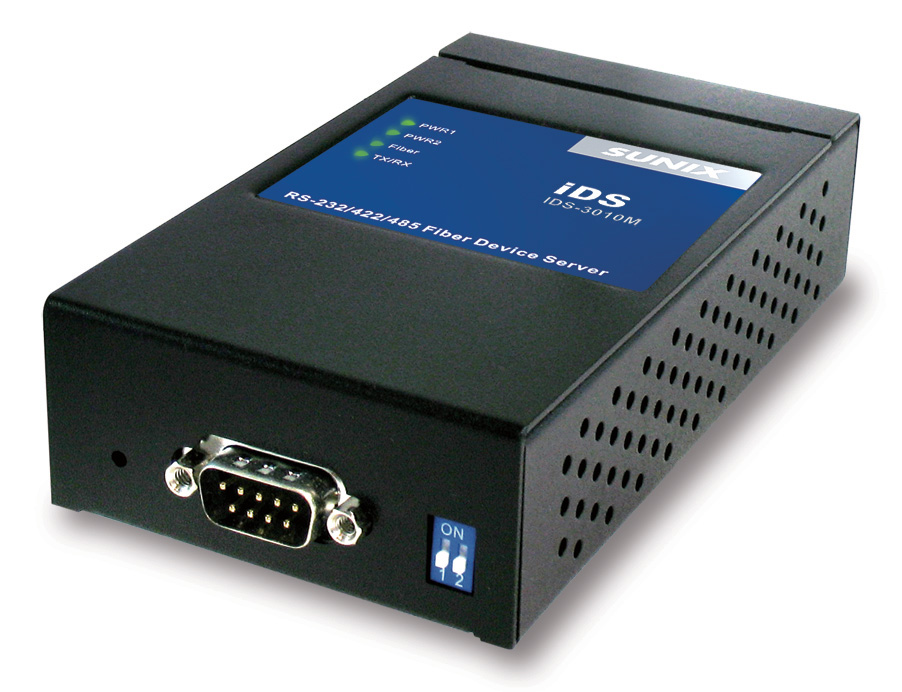
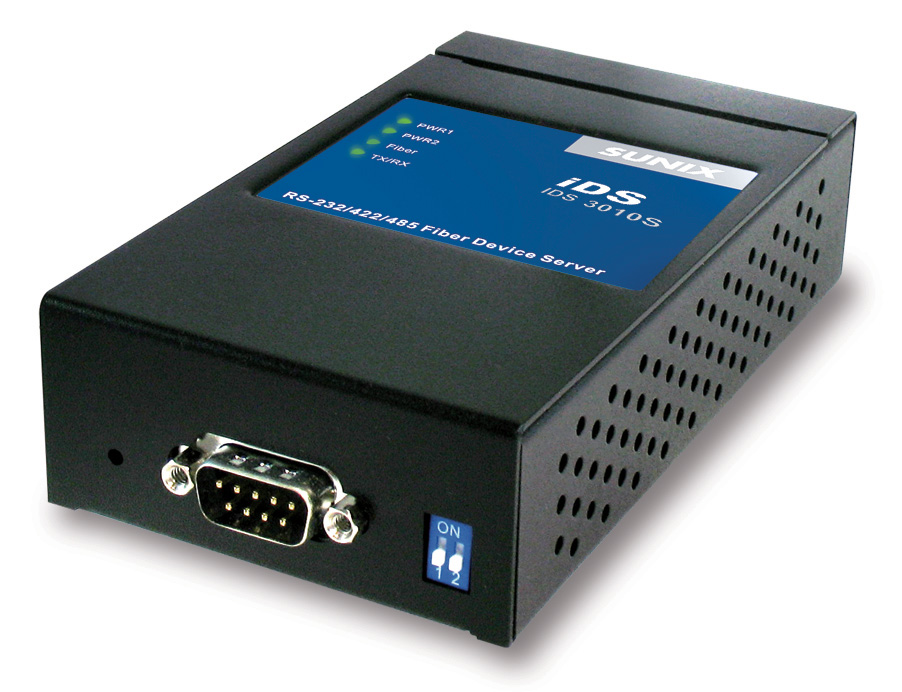
- Serial‑to‑Fiber Conversion: Converts RS‑232/422/485 serial data to Ethernet over 100Base‑FX fiber, supporting multi‑mode fiber up to 2 km at 1310 nm wavelength.
- Multi‑Protocol Support: Operates in Virtual COM, TCP Server, TCP Client, UDP, and Serial Tunnel modes for flexible integration.
- High Reliability: Dual redundant 12–48 V DC power inputs (terminal block and DC jack) with reverse polarity protection.
- Fast Ethernet Redundancy: Recovery time < 10 ms ensures continuous communication in case of link failure.
- Secure Management: HTTPS and SSH encryption, plus authentication and IP access control.
- Event Notification: Syslog, SNMP trap, E‑mail, relay output, and beeper alerts for system or port events.
- Multi‑Host Connectivity: Supports up to five simultaneous connections (Virtual COM, TCP Server, TCP Client, UDP).
- Industrial‑Grade Design: Metal IP30 enclosure, DIN‑rail or wall‑mount installation, 15 kV ESD protection, and wide temperature range (–10 °C to 60 °C).
- Software Tools: IDS‑Tools Windows utility for device discovery, configuration, firmware updates, and monitoring.
- Cross‑Platform Drivers: Virtual COM driver for Windows NT/2000/XP/2003/Vista and fixed TTY driver for Linux.
- Fiber Advantages: EMI/RFI immunity, lightning protection, and extended communication distance for harsh environments.
- Multi‑Protocol Support: Operates in Virtual COM, TCP Server, TCP Client, UDP, and Serial Tunnel modes for flexible integration.
- High Reliability: Dual redundant 12–48 V DC power inputs (terminal block and DC jack) with reverse polarity protection.
- Fast Ethernet Redundancy: Recovery time < 10 ms ensures continuous communication in case of link failure.
- Secure Management: HTTPS and SSH encryption, plus authentication and IP access control.
- Event Notification: Syslog, SNMP trap, E‑mail, relay output, and beeper alerts for system or port events.
- Multi‑Host Connectivity: Supports up to five simultaneous connections (Virtual COM, TCP Server, TCP Client, UDP).
- Industrial‑Grade Design: Metal IP30 enclosure, DIN‑rail or wall‑mount installation, 15 kV ESD protection, and wide temperature range (–10 °C to 60 °C).
- Software Tools: IDS‑Tools Windows utility for device discovery, configuration, firmware updates, and monitoring.
- Cross‑Platform Drivers: Virtual COM driver for Windows NT/2000/XP/2003/Vista and fixed TTY driver for Linux.
- Fiber Advantages: EMI/RFI immunity, lightning protection, and extended communication distance for harsh environments.
Comprehensive Product Summary – SUNIX IDS‑3010M Industrial Serial‑to‑Fiber Ethernet Device Server
### 1. Product Overview
Product Name: IDS‑3010M
Model: IDS‑3010M (Multi‑Mode Fiber version of IDS‑3010 Series)
Series: SUNIX IDS Industrial Device Server Series
Article Number: IDS‑3010M
Manufacturer: SUNIX Co., Ltd.
Product Type: Industrial Serial 1×RS‑232/422/485 to 100Base‑FX Multi‑Mode Fiber Ethernet Device Server
The SUNIX IDS‑3010M is a compact, rugged industrial device server designed to connect legacy serial equipment to modern Ethernet networks via fiber‑optic infrastructure. It provides one serial port configurable as RS‑232, RS‑422, or RS‑485 (2‑wire or 4‑wire) and one 100Base‑FX fiber port (multi‑mode). The device enables transparent serial‑over‑IP communication, offering secure, redundant, and high‑performance data transmission for industrial automation, SCADA, and remote monitoring applications.
### 2. Key Features
- Serial‑to‑Fiber Conversion: Converts RS‑232/422/485 serial data to Ethernet over 100Base‑FX fiber, supporting multi‑mode fiber up to 2 km at 1310 nm wavelength.
- Multi‑Protocol Support: Operates in Virtual COM, TCP Server, TCP Client, UDP, and Serial Tunnel modes for flexible integration.
- High Reliability: Dual redundant 12–48 V DC power inputs (terminal block and DC jack) with reverse polarity protection.
- Fast Ethernet Redundancy: Recovery time < 10 ms ensures continuous communication in case of link failure.
- Secure Management: HTTPS and SSH encryption, plus authentication and IP access control.
- Event Notification: Syslog, SNMP trap, E‑mail, relay output, and beeper alerts for system or port events.
- Multi‑Host Connectivity: Supports up to five simultaneous connections (Virtual COM, TCP Server, TCP Client, UDP).
- Industrial‑Grade Design: Metal IP30 enclosure, DIN‑rail or wall‑mount installation, 15 kV ESD protection, and wide temperature range (–10 °C to 60 °C).
- Software Tools: IDS‑Tools Windows utility for device discovery, configuration, firmware updates, and monitoring.
- Cross‑Platform Drivers: Virtual COM driver for Windows NT/2000/XP/2003/Vista and fixed TTY driver for Linux.
- Fiber Advantages: EMI/RFI immunity, lightning protection, and extended communication distance for harsh environments.
### 3. Technical Specifications
Network Interface
- Port: 1 × 100Base‑FX Fiber (SC connector)
- Type: Multi‑Mode (IDS‑3010M)
- Distance: Up to 2 km
- Wavelength: 1310 nm
- Cable: 50/125 µm or 62.5/125 µm fiber
- Protocols: ICMP, IP, TCP, UDP, DHCP, BOOTP, ARP/RARP, DNS, SNMP MIB II, HTTPS, SSH
- Redundancy: Ethernet recovery time < 10 ms
Serial Interface
- Port: 1 × RS‑232/422/485 (software‑selectable)
- Connector: DB9 Male
- Baud Rate: 110 bps – 460.8 kbps
- Data Bits: 5, 6, 7, 8
- Parity: None, Odd, Even, Mark, Space
- Stop Bits: 1, 1.5, 2
- Flow Control: XON/XOFF, RTS/CTS, DTR/DSR
- RS‑232 Signals: TxD, RxD, RTS, CTS, DTR, DSR, DCD, RI, GND
- RS‑422 Signals: Tx+, Tx–, Rx+, Rx–, GND
- RS‑485 (4‑wire): Tx+, Tx–, Rx+, Rx–, GND
- RS‑485 (2‑wire): Data+, Data–, GND
- Protection: 15 kV ESD protection
Power Requirements
- Inputs: Dual 12–48 V DC (PWR1 = 3‑pin terminal block, PWR2 = DC jack)
- Reverse Polarity Protection: Yes (terminal block)
- Power Consumption: Max 4 W (typical < 7 W)
Environmental Conditions
- Operating Temperature: –10 °C to 60 °C (14 °F to 140 °F)
- Storage Temperature: –20 °C to 85 °C (–4 °F to 185 °F)
- Humidity: 5 % – 95 % RH (non‑condensing)
Mechanical Design
- Dimensions (W × D × H): 72 × 125 × 31 mm (without connectors)
- Enclosure: Metal, IP30 protection
- Mounting: DIN‑rail or wall‑mount
- Weight: Approx. 0.5 kg
LED Indicators
- PWR1/PWR2: Green = active; Red blinking = IP conflict/DHCP error
- Fiber LNK/ACT: Green on/blinking = 100Base‑FX link/activity
- Serial TX/RX: Green = transmit; Red = receive
Reliability
- MTBF: ≥ 200,000 hours
- Warranty: 5 years
### 4. Functionality
The IDS‑3010M bridges serial devices to Ethernet networks using fiber optics. It encapsulates serial data into TCP/IP or UDP packets, enabling remote access and control of serial equipment over LAN or WAN.
Operating Modes:
- Virtual COM: Maps the serial port to a virtual COM port on a Windows host for transparent communication.
- TCP Server: Waits for incoming TCP connections from clients.
- TCP Client: Initiates TCP connections to a defined server.
- UDP Mode: Supports unicast or multicast data transmission.
- Serial Tunnel: Creates a direct serial‑to‑serial link between two IDS devices over Ethernet.
Use Cases:
- Industrial automation (PLC, HMI, SCADA)
- Remote data acquisition and monitoring
- POS terminals and digital signage
- Access control and security systems
- Medical measurement and instrumentation
Compatibility:
- Windows NT/2000/XP/2003/Vista (Virtual COM driver)
- Linux (fixed TTY driver)
- Compatible with standard TCP/IP networks, routers, and switches
- NAT pass‑through for remote management across network boundaries
### 5. Components & Accessories
Included Items:
- IDS‑3010M Device Server
- DIN‑rail mount kit (pre‑installed)
- Wall‑mount kit with screws
- Quick Installation Guide (QIG)
- CD with IDS‑Tools software and drivers
- Dust cover for connectors
Optional Accessories:
- 12–48 V DC power adapter (not included)
- Multi‑mode fiber patch cord (SC connector)
- Replacement DIN‑rail bracket or mounting hardware
Connectors:
- Serial: DB9 Male
- Fiber: SC connector (100Base‑FX)
- Power: 3‑pin terminal block and DC jack
- Reset Button: Factory default restore (press 5 seconds)
- DIP Switch: RS‑422/485 termination control
### 6. Installation & Setup
Mounting Options:
- DIN‑Rail Installation:
1. Attach the metal spring clip to the rear panel.
2. Hook the top edge onto the rail and press until it clicks securely.
- Wall Mounting:
1. Remove the DIN‑rail kit.
2. Attach the wall‑mount panel using the provided M3×5 screws.
3. Secure the unit to a flat surface.
Power Connection:
- Connect 12–48 V DC to PWR1 (terminal block) and/or PWR2 (DC jack).
- Dual inputs provide redundancy in case one source fails.
Fiber Connection:
- Use SC multi‑mode fiber cable (50/125 µm or 62.5/125 µm).
- Connect TX of IDS‑3010M to RX of switch and vice versa.
Configuration Methods:
- IDS‑Tools Utility: Windows application for device discovery, IP assignment, and parameter setup.
- Web Interface: HTTPS browser access (default IP 192.168.1.1).
- SSH Console: Secure command‑line configuration via PuTTY or similar client.
Initial Setup Steps:
1. Connect power and fiber network.
2. Run IDS‑Tools to discover the device.
3. Assign a static or DHCP IP address.
4. Configure serial parameters (baud rate, parity, mode).
5. Select operation mode (Virtual COM, TCP Server, etc.).
6. Save and reboot to apply settings.
### 7. Performance & Capabilities
- Serial Speed: 110 bps to 460.8 kbps
- Network Speed: 100 Mbps (100Base‑FX)
- Simultaneous Connections: Up to 5 (Virtual COM/TCP/UDP)
- Redundancy Recovery: < 10 ms failover
- Power Efficiency: ≤ 4 W typical (7 W max)
- Data Integrity: Configurable delimiters, buffer flush timers, and force TX intervals for optimized throughput or latency.
- Security: SSL/TLS (HTTPS), SSH, 802.1X, WEP/WPA/WPA2, Radius, TKIP support.
- Event Monitoring: Automatic alerts for power loss, IP conflict, login failure, port connection changes, and signal status (DCD, DSR, CTS, RI).
- Reliability: Continuous operation in industrial environments with EMI/RFI immunity and shock/vibration resistance.
Limitations:
- Single serial port (1 × RS‑232/422/485).
- Multi‑mode fiber distance limited to 2 km (extendable to 30 km with single‑mode IDS‑3010SC).
- No PoE support on this model.
### 8. Standards & Compliance
Electromagnetic Compatibility (EMC):
- EMI: FCC Part 15, CISPR (EN55022) Class A
- EMS: EN61000‑4‑2 (ESD), EN61000‑4‑3 (RS), EN61000‑4‑4 (EFT), EN61000‑4‑5 (Surge Level 3), EN61000‑4‑6 (CS Level 3)
Environmental Testing:
- Shock: IEC 60068‑2‑27
- Free Fall: IEC 60068‑2‑32
- Vibration: IEC 60068‑2‑6
Safety & Protection:
- IP30 enclosure for indoor industrial use
- 15 kV ESD protection on serial lines
- Reverse polarity protection on power input
Industry Standards Supported:
- IEEE 802.3u (100Base‑FX)
- TCP/IP protocol suite (ICMP, ARP, DHCP, SNMP MIB II)
- HTTPS (SSL/TLS) and SSH for secure management
### 9. Additional Information
Warranty & Support:
- Warranty: 5 years limited hardware warranty
- MTBF: ≥ 200,000 hours
- Technical Support: info@sunix.com.tw
- Website: [www.sunix.com.tw](http://www.sunix.com.tw)
Maintenance & Firmware Updates:
- Firmware upgradable via IDS‑Tools or Web interface.
- Configuration backup and restore supported (import/export functions).
- Factory reset via hardware button (press 5 seconds).
Operational Best Practices:
- Use redundant power inputs for maximum uptime.
- Employ fiber optic cabling for EMI‑sensitive or long‑distance installations.
- Utilize IDS‑Tools for group configuration and firmware management in multi‑device deployments.
- Enable HTTPS and SSH for secure remote administration.
### Summary
The SUNIX IDS‑3010M is a robust, feature‑rich industrial serial‑to‑fiber device server engineered for mission‑critical communication networks. It combines flexible serial interface options (RS‑232/422/485) with a high‑speed 100Base‑FX multi‑mode fiber link, ensuring reliable, interference‑free data transmission across extended distances. With redundant power inputs, sub‑10 ms network recovery, and comprehensive security protocols, it delivers exceptional reliability for automation, control, and monitoring systems.
Its intuitive configuration tools (IDS‑Tools, Web GUI, SSH console) and multi‑host connectivity make it ideal for integrating legacy serial devices into modern Ethernet infrastructures while maintaining industrial‑grade durability and compliance with global EMC and safety standards.
### 1. Product Overview
Product Name: IDS‑3010M
Model: IDS‑3010M (Multi‑Mode Fiber version of IDS‑3010 Series)
Series: SUNIX IDS Industrial Device Server Series
Article Number: IDS‑3010M
Manufacturer: SUNIX Co., Ltd.
Product Type: Industrial Serial 1×RS‑232/422/485 to 100Base‑FX Multi‑Mode Fiber Ethernet Device Server
The SUNIX IDS‑3010M is a compact, rugged industrial device server designed to connect legacy serial equipment to modern Ethernet networks via fiber‑optic infrastructure. It provides one serial port configurable as RS‑232, RS‑422, or RS‑485 (2‑wire or 4‑wire) and one 100Base‑FX fiber port (multi‑mode). The device enables transparent serial‑over‑IP communication, offering secure, redundant, and high‑performance data transmission for industrial automation, SCADA, and remote monitoring applications.
### 2. Key Features
- Serial‑to‑Fiber Conversion: Converts RS‑232/422/485 serial data to Ethernet over 100Base‑FX fiber, supporting multi‑mode fiber up to 2 km at 1310 nm wavelength.
- Multi‑Protocol Support: Operates in Virtual COM, TCP Server, TCP Client, UDP, and Serial Tunnel modes for flexible integration.
- High Reliability: Dual redundant 12–48 V DC power inputs (terminal block and DC jack) with reverse polarity protection.
- Fast Ethernet Redundancy: Recovery time < 10 ms ensures continuous communication in case of link failure.
- Secure Management: HTTPS and SSH encryption, plus authentication and IP access control.
- Event Notification: Syslog, SNMP trap, E‑mail, relay output, and beeper alerts for system or port events.
- Multi‑Host Connectivity: Supports up to five simultaneous connections (Virtual COM, TCP Server, TCP Client, UDP).
- Industrial‑Grade Design: Metal IP30 enclosure, DIN‑rail or wall‑mount installation, 15 kV ESD protection, and wide temperature range (–10 °C to 60 °C).
- Software Tools: IDS‑Tools Windows utility for device discovery, configuration, firmware updates, and monitoring.
- Cross‑Platform Drivers: Virtual COM driver for Windows NT/2000/XP/2003/Vista and fixed TTY driver for Linux.
- Fiber Advantages: EMI/RFI immunity, lightning protection, and extended communication distance for harsh environments.
### 3. Technical Specifications
Network Interface
- Port: 1 × 100Base‑FX Fiber (SC connector)
- Type: Multi‑Mode (IDS‑3010M)
- Distance: Up to 2 km
- Wavelength: 1310 nm
- Cable: 50/125 µm or 62.5/125 µm fiber
- Protocols: ICMP, IP, TCP, UDP, DHCP, BOOTP, ARP/RARP, DNS, SNMP MIB II, HTTPS, SSH
- Redundancy: Ethernet recovery time < 10 ms
Serial Interface
- Port: 1 × RS‑232/422/485 (software‑selectable)
- Connector: DB9 Male
- Baud Rate: 110 bps – 460.8 kbps
- Data Bits: 5, 6, 7, 8
- Parity: None, Odd, Even, Mark, Space
- Stop Bits: 1, 1.5, 2
- Flow Control: XON/XOFF, RTS/CTS, DTR/DSR
- RS‑232 Signals: TxD, RxD, RTS, CTS, DTR, DSR, DCD, RI, GND
- RS‑422 Signals: Tx+, Tx–, Rx+, Rx–, GND
- RS‑485 (4‑wire): Tx+, Tx–, Rx+, Rx–, GND
- RS‑485 (2‑wire): Data+, Data–, GND
- Protection: 15 kV ESD protection
Power Requirements
- Inputs: Dual 12–48 V DC (PWR1 = 3‑pin terminal block, PWR2 = DC jack)
- Reverse Polarity Protection: Yes (terminal block)
- Power Consumption: Max 4 W (typical < 7 W)
Environmental Conditions
- Operating Temperature: –10 °C to 60 °C (14 °F to 140 °F)
- Storage Temperature: –20 °C to 85 °C (–4 °F to 185 °F)
- Humidity: 5 % – 95 % RH (non‑condensing)
Mechanical Design
- Dimensions (W × D × H): 72 × 125 × 31 mm (without connectors)
- Enclosure: Metal, IP30 protection
- Mounting: DIN‑rail or wall‑mount
- Weight: Approx. 0.5 kg
LED Indicators
- PWR1/PWR2: Green = active; Red blinking = IP conflict/DHCP error
- Fiber LNK/ACT: Green on/blinking = 100Base‑FX link/activity
- Serial TX/RX: Green = transmit; Red = receive
Reliability
- MTBF: ≥ 200,000 hours
- Warranty: 5 years
### 4. Functionality
The IDS‑3010M bridges serial devices to Ethernet networks using fiber optics. It encapsulates serial data into TCP/IP or UDP packets, enabling remote access and control of serial equipment over LAN or WAN.
Operating Modes:
- Virtual COM: Maps the serial port to a virtual COM port on a Windows host for transparent communication.
- TCP Server: Waits for incoming TCP connections from clients.
- TCP Client: Initiates TCP connections to a defined server.
- UDP Mode: Supports unicast or multicast data transmission.
- Serial Tunnel: Creates a direct serial‑to‑serial link between two IDS devices over Ethernet.
Use Cases:
- Industrial automation (PLC, HMI, SCADA)
- Remote data acquisition and monitoring
- POS terminals and digital signage
- Access control and security systems
- Medical measurement and instrumentation
Compatibility:
- Windows NT/2000/XP/2003/Vista (Virtual COM driver)
- Linux (fixed TTY driver)
- Compatible with standard TCP/IP networks, routers, and switches
- NAT pass‑through for remote management across network boundaries
### 5. Components & Accessories
Included Items:
- IDS‑3010M Device Server
- DIN‑rail mount kit (pre‑installed)
- Wall‑mount kit with screws
- Quick Installation Guide (QIG)
- CD with IDS‑Tools software and drivers
- Dust cover for connectors
Optional Accessories:
- 12–48 V DC power adapter (not included)
- Multi‑mode fiber patch cord (SC connector)
- Replacement DIN‑rail bracket or mounting hardware
Connectors:
- Serial: DB9 Male
- Fiber: SC connector (100Base‑FX)
- Power: 3‑pin terminal block and DC jack
- Reset Button: Factory default restore (press 5 seconds)
- DIP Switch: RS‑422/485 termination control
### 6. Installation & Setup
Mounting Options:
- DIN‑Rail Installation:
1. Attach the metal spring clip to the rear panel.
2. Hook the top edge onto the rail and press until it clicks securely.
- Wall Mounting:
1. Remove the DIN‑rail kit.
2. Attach the wall‑mount panel using the provided M3×5 screws.
3. Secure the unit to a flat surface.
Power Connection:
- Connect 12–48 V DC to PWR1 (terminal block) and/or PWR2 (DC jack).
- Dual inputs provide redundancy in case one source fails.
Fiber Connection:
- Use SC multi‑mode fiber cable (50/125 µm or 62.5/125 µm).
- Connect TX of IDS‑3010M to RX of switch and vice versa.
Configuration Methods:
- IDS‑Tools Utility: Windows application for device discovery, IP assignment, and parameter setup.
- Web Interface: HTTPS browser access (default IP 192.168.1.1).
- SSH Console: Secure command‑line configuration via PuTTY or similar client.
Initial Setup Steps:
1. Connect power and fiber network.
2. Run IDS‑Tools to discover the device.
3. Assign a static or DHCP IP address.
4. Configure serial parameters (baud rate, parity, mode).
5. Select operation mode (Virtual COM, TCP Server, etc.).
6. Save and reboot to apply settings.
### 7. Performance & Capabilities
- Serial Speed: 110 bps to 460.8 kbps
- Network Speed: 100 Mbps (100Base‑FX)
- Simultaneous Connections: Up to 5 (Virtual COM/TCP/UDP)
- Redundancy Recovery: < 10 ms failover
- Power Efficiency: ≤ 4 W typical (7 W max)
- Data Integrity: Configurable delimiters, buffer flush timers, and force TX intervals for optimized throughput or latency.
- Security: SSL/TLS (HTTPS), SSH, 802.1X, WEP/WPA/WPA2, Radius, TKIP support.
- Event Monitoring: Automatic alerts for power loss, IP conflict, login failure, port connection changes, and signal status (DCD, DSR, CTS, RI).
- Reliability: Continuous operation in industrial environments with EMI/RFI immunity and shock/vibration resistance.
Limitations:
- Single serial port (1 × RS‑232/422/485).
- Multi‑mode fiber distance limited to 2 km (extendable to 30 km with single‑mode IDS‑3010SC).
- No PoE support on this model.
### 8. Standards & Compliance
Electromagnetic Compatibility (EMC):
- EMI: FCC Part 15, CISPR (EN55022) Class A
- EMS: EN61000‑4‑2 (ESD), EN61000‑4‑3 (RS), EN61000‑4‑4 (EFT), EN61000‑4‑5 (Surge Level 3), EN61000‑4‑6 (CS Level 3)
Environmental Testing:
- Shock: IEC 60068‑2‑27
- Free Fall: IEC 60068‑2‑32
- Vibration: IEC 60068‑2‑6
Safety & Protection:
- IP30 enclosure for indoor industrial use
- 15 kV ESD protection on serial lines
- Reverse polarity protection on power input
Industry Standards Supported:
- IEEE 802.3u (100Base‑FX)
- TCP/IP protocol suite (ICMP, ARP, DHCP, SNMP MIB II)
- HTTPS (SSL/TLS) and SSH for secure management
### 9. Additional Information
Warranty & Support:
- Warranty: 5 years limited hardware warranty
- MTBF: ≥ 200,000 hours
- Technical Support: info@sunix.com.tw
- Website: [www.sunix.com.tw](http://www.sunix.com.tw)
Maintenance & Firmware Updates:
- Firmware upgradable via IDS‑Tools or Web interface.
- Configuration backup and restore supported (import/export functions).
- Factory reset via hardware button (press 5 seconds).
Operational Best Practices:
- Use redundant power inputs for maximum uptime.
- Employ fiber optic cabling for EMI‑sensitive or long‑distance installations.
- Utilize IDS‑Tools for group configuration and firmware management in multi‑device deployments.
- Enable HTTPS and SSH for secure remote administration.
### Summary
The SUNIX IDS‑3010M is a robust, feature‑rich industrial serial‑to‑fiber device server engineered for mission‑critical communication networks. It combines flexible serial interface options (RS‑232/422/485) with a high‑speed 100Base‑FX multi‑mode fiber link, ensuring reliable, interference‑free data transmission across extended distances. With redundant power inputs, sub‑10 ms network recovery, and comprehensive security protocols, it delivers exceptional reliability for automation, control, and monitoring systems.
Its intuitive configuration tools (IDS‑Tools, Web GUI, SSH console) and multi‑host connectivity make it ideal for integrating legacy serial devices into modern Ethernet infrastructures while maintaining industrial‑grade durability and compliance with global EMC and safety standards.
-
 IndustrialDeviceServers.pdf
PDF Catalog
IndustrialDeviceServers.pdf
PDF Catalog
-
 IDS-3010.pdf
Manual
IDS-3010.pdf
Manual
-
 IDS_quick_start.pdf
Manual
IDS_quick_start.pdf
Manual
Kein Zubehör vorhanden.