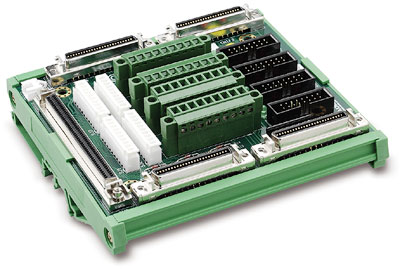
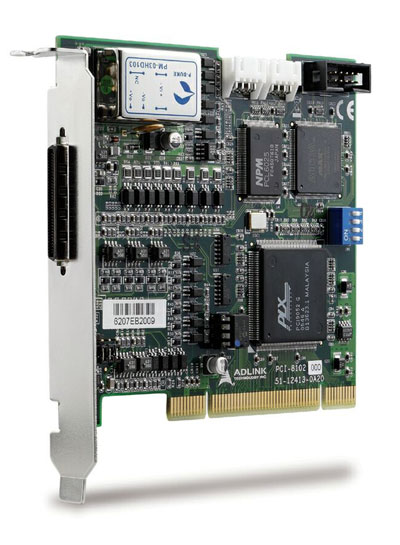
DIN-100S-01
SUCHEN SIE DIE PASSENDE
INDUSTRIELLE LÖSUNG?
Entdecken Sie Embedded-, Kommunikations- und Automatisierungslösungen für Ihre Anwendung.
- 4‑Axis Pulse‑Train Control: Supports up to four independent motion axes with pulse output rates from 0.5 pps to 2.4 Mpps.
- High‑Speed Pulse Generation: Maximum acceleration rate up to 737 Mpps, enabling smooth and rapid motion transitions.
- Flexible Pulse Output Modes: CW/CCW or OUT/DIR modes selectable via software or jumpers.
- Programmable Motion Profiles: Supports trapezoidal and S‑curve velocity profiles for smooth acceleration/deceleration.
- Dynamic Speed Adjustment: Allows on‑the‑fly speed changes during motion execution.
- Home Return and Limit Functions: Three home return modes with programmable ORG, PEL, MEL, PSD, and MSD inputs.
- Simultaneous Start/Stop: External STA/STP signal control for synchronized multi‑axis operation.
- Isolated Digital I/O: 8 optically isolated digital inputs and 8 isolated digital outputs (2500 V RMS isolation).
- Emergency Stop Input: Dedicated STP/EMG input for immediate motion halt.
- Multi‑Card Support: Up to 12 PCI‑8144 cards can be installed in one system for up to 48‑axis control.
- Software Security: User program protection and password‑based security key functions.
- Comprehensive Software Library: Over 30 thread‑safe API functions for C/C++, VB, Delphi, and BCB.
- Windows‑Based Configuration Utility: Bundled MotionCreatorPro software for setup, testing, and debugging.
- Plug‑and‑Play PCI Interface: Automatic resource allocation via BIOS; no manual IRQ or memory configuration required.
- High‑Speed Pulse Generation: Maximum acceleration rate up to 737 Mpps, enabling smooth and rapid motion transitions.
- Flexible Pulse Output Modes: CW/CCW or OUT/DIR modes selectable via software or jumpers.
- Programmable Motion Profiles: Supports trapezoidal and S‑curve velocity profiles for smooth acceleration/deceleration.
- Dynamic Speed Adjustment: Allows on‑the‑fly speed changes during motion execution.
- Home Return and Limit Functions: Three home return modes with programmable ORG, PEL, MEL, PSD, and MSD inputs.
- Simultaneous Start/Stop: External STA/STP signal control for synchronized multi‑axis operation.
- Isolated Digital I/O: 8 optically isolated digital inputs and 8 isolated digital outputs (2500 V RMS isolation).
- Emergency Stop Input: Dedicated STP/EMG input for immediate motion halt.
- Multi‑Card Support: Up to 12 PCI‑8144 cards can be installed in one system for up to 48‑axis control.
- Software Security: User program protection and password‑based security key functions.
- Comprehensive Software Library: Over 30 thread‑safe API functions for C/C++, VB, Delphi, and BCB.
- Windows‑Based Configuration Utility: Bundled MotionCreatorPro software for setup, testing, and debugging.
- Plug‑and‑Play PCI Interface: Automatic resource allocation via BIOS; no manual IRQ or memory configuration required.
Comprehensive Product Summary: ADLINK PCI‑8144 4‑Axis Stepper Motion Control Card
### 1. Product Overview
Product Name: PCI‑8144
Model: PCI‑8144
Series: PCI Motion Control Series
Article Number: PCI‑8144
Manufacturer: ADLINK Technology Inc.
Product Type: Cost‑effective 4‑axis stepping motion control card for PCI bus systems
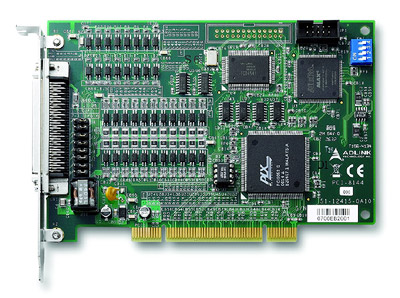
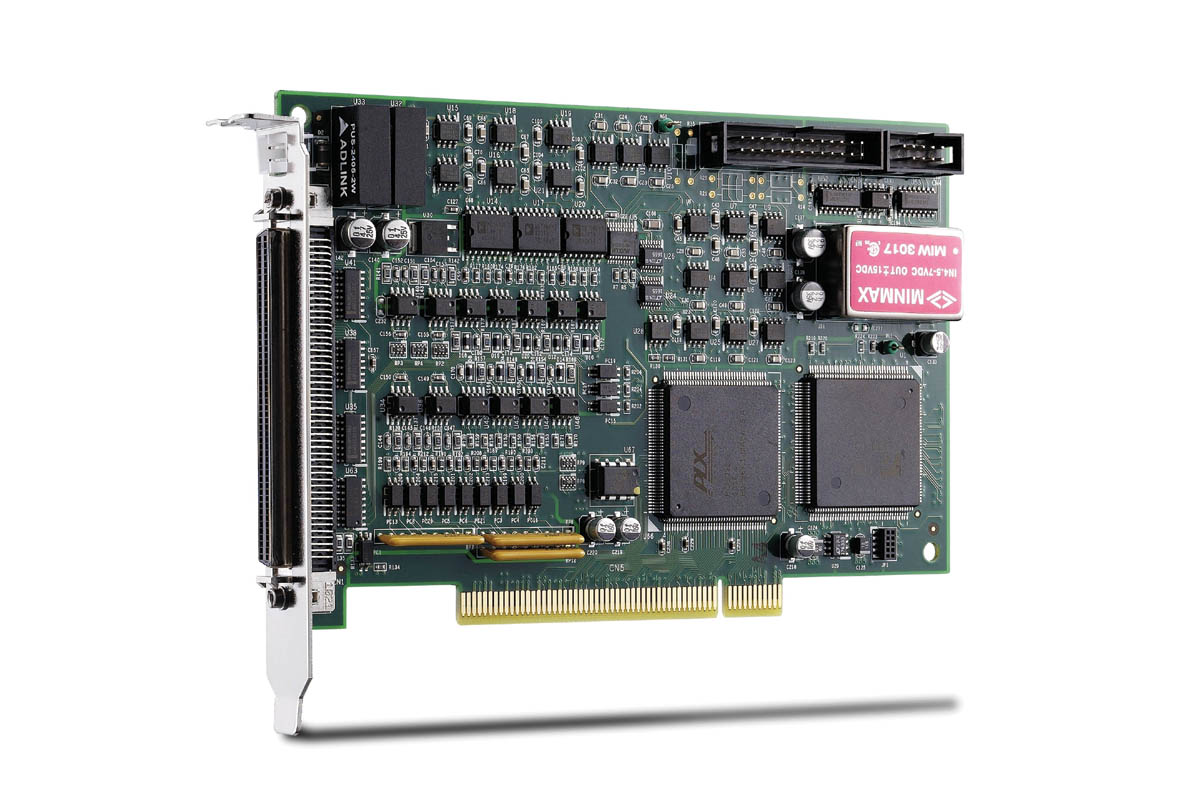
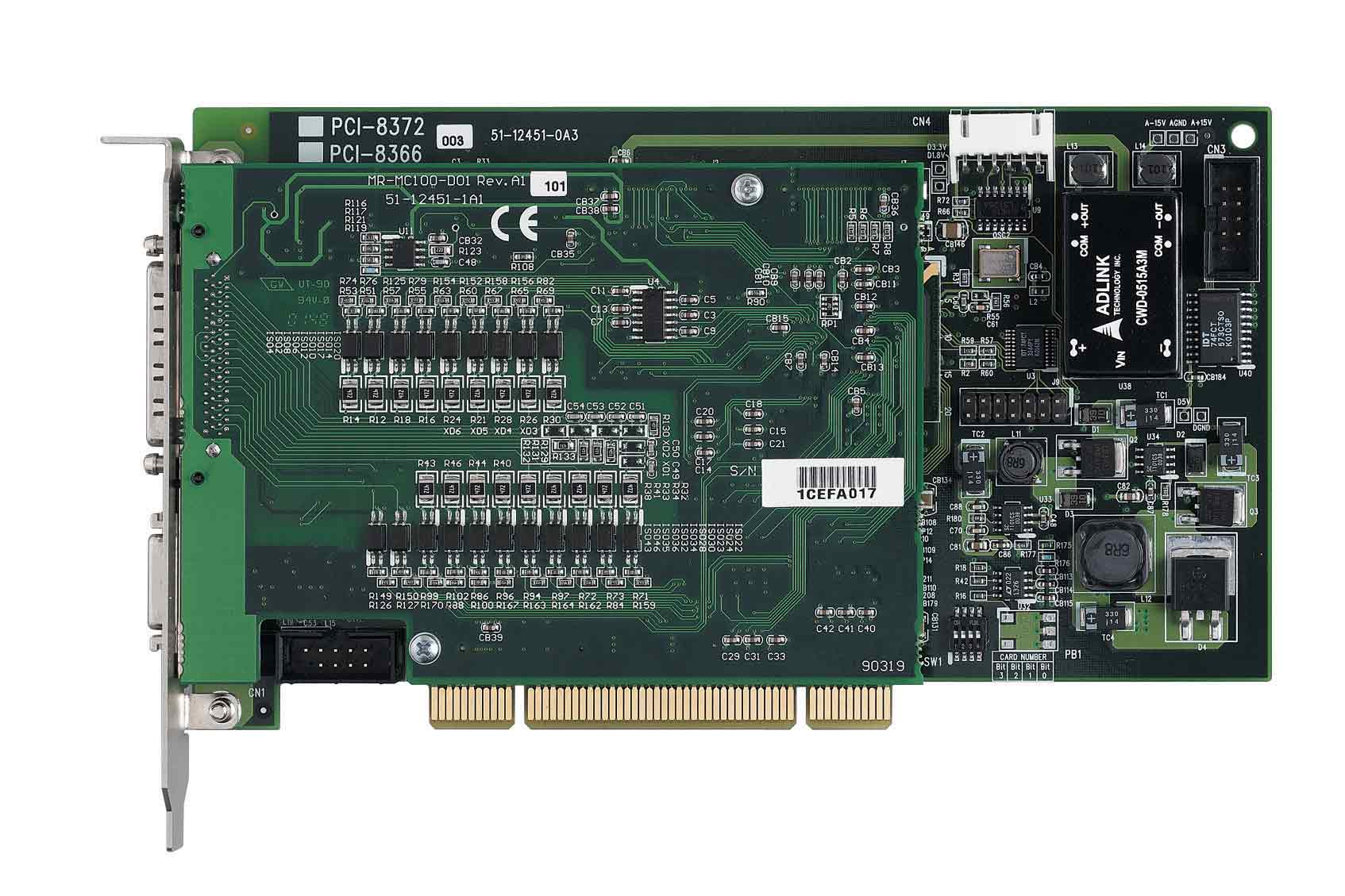
The ADLINK PCI‑8144 is a high‑performance, cost‑efficient 4‑axis motion control card designed for precise control of stepper motors, servo drives, and linear motors through pulse‑train output. It integrates a 32‑bit PCI interface compliant with PCI Rev. 2.2 and operates at 33 MHz. The card is engineered for industrial automation, robotics, and precision positioning systems requiring deterministic multi‑axis motion control.
### 2. Key Features
- 4‑Axis Pulse‑Train Control: Supports up to four independent motion axes with pulse output rates from 0.5 pps to 2.4 Mpps.
- High‑Speed Pulse Generation: Maximum acceleration rate up to 737 Mpps, enabling smooth and rapid motion transitions.
- Flexible Pulse Output Modes: CW/CCW or OUT/DIR modes selectable via software or jumpers.
- Programmable Motion Profiles: Supports trapezoidal and S‑curve velocity profiles for smooth acceleration/deceleration.
- Dynamic Speed Adjustment: Allows on‑the‑fly speed changes during motion execution.
- Home Return and Limit Functions: Three home return modes with programmable ORG, PEL, MEL, PSD, and MSD inputs.
- Simultaneous Start/Stop: External STA/STP signal control for synchronized multi‑axis operation.
- Isolated Digital I/O: 8 optically isolated digital inputs and 8 isolated digital outputs (2500 V RMS isolation).
- Emergency Stop Input: Dedicated STP/EMG input for immediate motion halt.
- Multi‑Card Support: Up to 12 PCI‑8144 cards can be installed in one system for up to 48‑axis control.
- Software Security: User program protection and password‑based security key functions.
- Comprehensive Software Library: Over 30 thread‑safe API functions for C/C++, VB, Delphi, and BCB.
- Windows‑Based Configuration Utility: Bundled MotionCreatorPro software for setup, testing, and debugging.
- Plug‑and‑Play PCI Interface: Automatic resource allocation via BIOS; no manual IRQ or memory configuration required.
### 3. Technical Specifications
Motion Control Performance
- Number of Axes: 4
- Pulse Output Rate: 0.5 pps – 2.4 Mpps
- Maximum Acceleration Rate: 737 Mpps
- Internal Reference Clock: 4.9 MHz
- Position Range: ±134,217,728 pulses (28‑bit)
- Speed Resolution: 16‑bit
Applicable Motors
- Stepping motors (2‑phase excitation supported via JP2 connector)
- Compatible with servo and linear motor drivers accepting pulse‑train input
Electrical Characteristics
- Digital I/O Isolation: 2500 V RMS optical isolation
- Input Voltage (External): +24 V DC ± 5 %
- Output Power (Isolated): +5 V DC ± 5 %, 100 mA max
- Slot Power Supply: +5 V DC ± 5 %, 900 mA max
Environmental Conditions
- Operating Temperature: 0 °C – 50 °C (32 °F – 122 °F)
- Storage Temperature: –20 °C – 80 °C (–4 °F – 176 °F)
- Humidity: 5 % – 85 %, non‑condensing
Physical Characteristics
- Dimensions: 159 mm (L) × 126 mm (W)
- Connector: 68‑pin SCSI‑II type (CN1 main I/O)
### 4. Functionality
Operating Principle
The PCI‑8144 generates high‑frequency pulse trains to command stepper or servo drivers configured in pulse‑input mode. Each axis outputs CW (clockwise) and CCW (counter‑clockwise) signals or OUT/DIR signals depending on configuration. The pulse frequency determines motor speed, while pulse count defines displacement.
Motion Modes
- Velocity Mode: Continuous motion at specified speed until stopped.
- Position Mode: Relative positioning by defined pulse count.
- Home Return Mode: Automatic homing using ORG, SD, and EL signals.
- Synchronous Start: Multi‑axis coordinated start via external STA signal.
Use Cases and Applications
- Semiconductor and PCB manufacturing equipment
- CNC and precision machining systems
- Pick‑and‑place robotics
- Automated inspection and packaging lines
- Laboratory automation and positioning stages
Compatibility
- Operating Systems: Windows XP, 7, 8 (32‑bit)
- Programming Environments: VB, VC++, BCB, Delphi
- Software Utility: MotionCreatorPro2 for configuration and diagnostics
### 5. Components & Accessories
Included Items
- PCI‑8144 motion control card
- ADLINK All‑in‑One software CD (drivers, libraries, MotionCreatorPro)
- User’s Manual (Part No. 50‑11144‑1010)
Optional Accessories
- DIN‑68S‑01 Terminal Board: 68‑pin SCSI‑II connector terminal board with DIN‑rail mounting for easy wiring.
- ACL‑10569‑1 Cable: 68‑pin SCSI‑II cable (1 m, mating with AMP‑787082‑7).
Connectors
- CN1 (68‑pin SCSI‑II): Main motion I/O interface including CW/CCW, PEL/MEL, PSD/MSD, ORG, STA/STP, DIN/DOUT, and power pins.
- JP2 (20‑pin header): Optional direct stepper control interface (PHA/PHB signals).
- SW1: Card index selector (0–15).
- J1–J8: Pulse output type selection (differential or open‑collector).
### 6. Installation & Setup
System Requirements
- 32‑bit PCI slot (Rev. 2.2 compliant)
- Windows‑based PC with available expansion slot
- +24 V DC external power supply for isolated I/O
Hardware Installation Steps
1. Power off the PC and peripherals.
2. Insert the PCI‑8144 into an available 32‑bit PCI slot.
3. Secure the bracket and reconnect power.
4. BIOS automatically assigns I/O and IRQ resources.
Software Installation
1. Insert ADLINK All‑in‑One CD and select *Driver Installation → Motion Control → PCI‑8144*.
2. Follow on‑screen instructions and reboot after installation.
3. Optionally download the latest drivers from [www.adlinktech.com](http://www.adlinktech.com).
Configuration
- Card Index (SW1): Set unique ID (0–15) for multi‑card systems.
- Pulse Output Type (J1–J8): Select differential (1–2 shorted) or open‑collector (2–3 shorted).
- Direct Stepper Control (JP2): Optional connection for 2‑phase excitation outputs.
Signal Wiring
- CW/CCW pairs for each axis (differential or single‑ended).
- Limit and home switches connected to PEL, MEL, PSD, MSD, ORG inputs.
- STA/STP for external start/stop synchronization.
- 8 DI and 8 DO channels for general‑purpose control.
### 7. Performance & Capabilities
Motion Control Performance
- Speed Range: 0.5 pps – 2.4 Mpps per axis
- Acceleration/Deceleration: Programmable, symmetrical Tacc = Tdec
- Velocity Profiles: Trapezoidal (1st‑order) and S‑curve (2nd‑order)
- Position Resolution: 1 pulse minimum; floating‑point compensation for sub‑pulse precision
- Simultaneous Operation: Up to 4 axes per card, 12 cards per system (48 axes total)
- Interrupt Handling: Motion and GPIO interrupts with maskable sources and event‑driven API support
Efficiency and Control
- Hardware‑based ASIC motion kernel ensures deterministic timing independent of host CPU load.
- Real‑time pulse generation minimizes jitter and latency.
- Supports on‑the‑fly speed modification and emergency deceleration.
Limitations
- Relative positioning only (no encoder feedback for absolute motion).
- Windows‑based driver support (no native Linux driver in standard package).
- Single‑dimension motion per axis (no built‑in interpolation).
### 8. Standards & Compliance
- Bus Interface: 32‑bit PCI, Revision 2.2, 33 MHz
- Electrical Isolation: 2500 V RMS optical isolation on all digital I/O
- Safety & EMC: Designed for industrial environments; compliant with CE and FCC Class A (per ADLINK standards)
- Environmental Compliance: RoHS‑compliant manufacturing
- Software Standards: Thread‑safe API library; Windows WDM driver architecture
### 9. Additional Information
Warranty & Support
- Standard ADLINK limited warranty (contact local distributor for terms).
- Technical support via email: Service@adlinktech.com
- Telephone: +886‑2‑82265877
- Fax: +886‑2‑82265717
- Address: 9F, No. 166, Jian Yi Road, Chungho City, Taipei 235, Taiwan
Maintenance
- Keep card and connectors free of dust and moisture.
- Ensure proper grounding and isolation when wiring external devices.
- Periodically verify jumper and switch settings for multi‑card systems.
Software Updates
- Latest drivers, libraries, and MotionCreatorPro versions available at [ADLINK Technology Website](http://www.adlinktech.com).
- Firmware updates provided through ADLINK support channels.
Documentation
- User’s Manual Rev. 2.01 (September 2, 2008)
- Part No. 50‑11144‑1010
- Updated specification sheet (January 29, 2013)
### Summary
The ADLINK PCI‑8144 is a robust, industrial‑grade 4‑axis motion control card optimized for stepper motor applications requiring precise, high‑speed pulse‑train control. Its ASIC‑based architecture offloads motion computation from the host CPU, ensuring deterministic performance and smooth motion profiles. With flexible I/O isolation, programmable acceleration curves, and comprehensive software support, the PCI‑8144 delivers a scalable solution for multi‑axis automation systems.
Its compatibility with standard PCI bus systems, extensive API library, and Windows‑based configuration tools make it ideal for OEMs, system integrators, and automation engineers seeking reliable, cost‑effective motion control in manufacturing, robotics, and laboratory automation environments.

### 1. Product Overview
Product Name: PCI‑8144
Model: PCI‑8144
Series: PCI Motion Control Series
Article Number: PCI‑8144
Manufacturer: ADLINK Technology Inc.
Product Type: Cost‑effective 4‑axis stepping motion control card for PCI bus systems
The ADLINK PCI‑8144 is a high‑performance, cost‑efficient 4‑axis motion control card designed for precise control of stepper motors, servo drives, and linear motors through pulse‑train output. It integrates a 32‑bit PCI interface compliant with PCI Rev. 2.2 and operates at 33 MHz. The card is engineered for industrial automation, robotics, and precision positioning systems requiring deterministic multi‑axis motion control.
### 2. Key Features
- 4‑Axis Pulse‑Train Control: Supports up to four independent motion axes with pulse output rates from 0.5 pps to 2.4 Mpps.
- High‑Speed Pulse Generation: Maximum acceleration rate up to 737 Mpps, enabling smooth and rapid motion transitions.
- Flexible Pulse Output Modes: CW/CCW or OUT/DIR modes selectable via software or jumpers.
- Programmable Motion Profiles: Supports trapezoidal and S‑curve velocity profiles for smooth acceleration/deceleration.
- Dynamic Speed Adjustment: Allows on‑the‑fly speed changes during motion execution.
- Home Return and Limit Functions: Three home return modes with programmable ORG, PEL, MEL, PSD, and MSD inputs.
- Simultaneous Start/Stop: External STA/STP signal control for synchronized multi‑axis operation.
- Isolated Digital I/O: 8 optically isolated digital inputs and 8 isolated digital outputs (2500 V RMS isolation).
- Emergency Stop Input: Dedicated STP/EMG input for immediate motion halt.
- Multi‑Card Support: Up to 12 PCI‑8144 cards can be installed in one system for up to 48‑axis control.
- Software Security: User program protection and password‑based security key functions.
- Comprehensive Software Library: Over 30 thread‑safe API functions for C/C++, VB, Delphi, and BCB.
- Windows‑Based Configuration Utility: Bundled MotionCreatorPro software for setup, testing, and debugging.
- Plug‑and‑Play PCI Interface: Automatic resource allocation via BIOS; no manual IRQ or memory configuration required.
### 3. Technical Specifications
Motion Control Performance
- Number of Axes: 4
- Pulse Output Rate: 0.5 pps – 2.4 Mpps
- Maximum Acceleration Rate: 737 Mpps
- Internal Reference Clock: 4.9 MHz
- Position Range: ±134,217,728 pulses (28‑bit)
- Speed Resolution: 16‑bit
Applicable Motors
- Stepping motors (2‑phase excitation supported via JP2 connector)
- Compatible with servo and linear motor drivers accepting pulse‑train input
Electrical Characteristics
- Digital I/O Isolation: 2500 V RMS optical isolation
- Input Voltage (External): +24 V DC ± 5 %
- Output Power (Isolated): +5 V DC ± 5 %, 100 mA max
- Slot Power Supply: +5 V DC ± 5 %, 900 mA max
Environmental Conditions
- Operating Temperature: 0 °C – 50 °C (32 °F – 122 °F)
- Storage Temperature: –20 °C – 80 °C (–4 °F – 176 °F)
- Humidity: 5 % – 85 %, non‑condensing
Physical Characteristics
- Dimensions: 159 mm (L) × 126 mm (W)
- Connector: 68‑pin SCSI‑II type (CN1 main I/O)
### 4. Functionality
Operating Principle
The PCI‑8144 generates high‑frequency pulse trains to command stepper or servo drivers configured in pulse‑input mode. Each axis outputs CW (clockwise) and CCW (counter‑clockwise) signals or OUT/DIR signals depending on configuration. The pulse frequency determines motor speed, while pulse count defines displacement.
Motion Modes
- Velocity Mode: Continuous motion at specified speed until stopped.
- Position Mode: Relative positioning by defined pulse count.
- Home Return Mode: Automatic homing using ORG, SD, and EL signals.
- Synchronous Start: Multi‑axis coordinated start via external STA signal.
Use Cases and Applications
- Semiconductor and PCB manufacturing equipment
- CNC and precision machining systems
- Pick‑and‑place robotics
- Automated inspection and packaging lines
- Laboratory automation and positioning stages
Compatibility
- Operating Systems: Windows XP, 7, 8 (32‑bit)
- Programming Environments: VB, VC++, BCB, Delphi
- Software Utility: MotionCreatorPro2 for configuration and diagnostics
### 5. Components & Accessories
Included Items
- PCI‑8144 motion control card
- ADLINK All‑in‑One software CD (drivers, libraries, MotionCreatorPro)
- User’s Manual (Part No. 50‑11144‑1010)
Optional Accessories
- DIN‑68S‑01 Terminal Board: 68‑pin SCSI‑II connector terminal board with DIN‑rail mounting for easy wiring.
- ACL‑10569‑1 Cable: 68‑pin SCSI‑II cable (1 m, mating with AMP‑787082‑7).
Connectors
- CN1 (68‑pin SCSI‑II): Main motion I/O interface including CW/CCW, PEL/MEL, PSD/MSD, ORG, STA/STP, DIN/DOUT, and power pins.
- JP2 (20‑pin header): Optional direct stepper control interface (PHA/PHB signals).
- SW1: Card index selector (0–15).
- J1–J8: Pulse output type selection (differential or open‑collector).
### 6. Installation & Setup
System Requirements
- 32‑bit PCI slot (Rev. 2.2 compliant)
- Windows‑based PC with available expansion slot
- +24 V DC external power supply for isolated I/O
Hardware Installation Steps
1. Power off the PC and peripherals.
2. Insert the PCI‑8144 into an available 32‑bit PCI slot.
3. Secure the bracket and reconnect power.
4. BIOS automatically assigns I/O and IRQ resources.
Software Installation
1. Insert ADLINK All‑in‑One CD and select *Driver Installation → Motion Control → PCI‑8144*.
2. Follow on‑screen instructions and reboot after installation.
3. Optionally download the latest drivers from [www.adlinktech.com](http://www.adlinktech.com).
Configuration
- Card Index (SW1): Set unique ID (0–15) for multi‑card systems.
- Pulse Output Type (J1–J8): Select differential (1–2 shorted) or open‑collector (2–3 shorted).
- Direct Stepper Control (JP2): Optional connection for 2‑phase excitation outputs.
Signal Wiring
- CW/CCW pairs for each axis (differential or single‑ended).
- Limit and home switches connected to PEL, MEL, PSD, MSD, ORG inputs.
- STA/STP for external start/stop synchronization.
- 8 DI and 8 DO channels for general‑purpose control.
### 7. Performance & Capabilities
Motion Control Performance
- Speed Range: 0.5 pps – 2.4 Mpps per axis
- Acceleration/Deceleration: Programmable, symmetrical Tacc = Tdec
- Velocity Profiles: Trapezoidal (1st‑order) and S‑curve (2nd‑order)
- Position Resolution: 1 pulse minimum; floating‑point compensation for sub‑pulse precision
- Simultaneous Operation: Up to 4 axes per card, 12 cards per system (48 axes total)
- Interrupt Handling: Motion and GPIO interrupts with maskable sources and event‑driven API support
Efficiency and Control
- Hardware‑based ASIC motion kernel ensures deterministic timing independent of host CPU load.
- Real‑time pulse generation minimizes jitter and latency.
- Supports on‑the‑fly speed modification and emergency deceleration.
Limitations
- Relative positioning only (no encoder feedback for absolute motion).
- Windows‑based driver support (no native Linux driver in standard package).
- Single‑dimension motion per axis (no built‑in interpolation).
### 8. Standards & Compliance
- Bus Interface: 32‑bit PCI, Revision 2.2, 33 MHz
- Electrical Isolation: 2500 V RMS optical isolation on all digital I/O
- Safety & EMC: Designed for industrial environments; compliant with CE and FCC Class A (per ADLINK standards)
- Environmental Compliance: RoHS‑compliant manufacturing
- Software Standards: Thread‑safe API library; Windows WDM driver architecture
### 9. Additional Information
Warranty & Support
- Standard ADLINK limited warranty (contact local distributor for terms).
- Technical support via email: Service@adlinktech.com
- Telephone: +886‑2‑82265877
- Fax: +886‑2‑82265717
- Address: 9F, No. 166, Jian Yi Road, Chungho City, Taipei 235, Taiwan
Maintenance
- Keep card and connectors free of dust and moisture.
- Ensure proper grounding and isolation when wiring external devices.
- Periodically verify jumper and switch settings for multi‑card systems.
Software Updates
- Latest drivers, libraries, and MotionCreatorPro versions available at [ADLINK Technology Website](http://www.adlinktech.com).
- Firmware updates provided through ADLINK support channels.
Documentation
- User’s Manual Rev. 2.01 (September 2, 2008)
- Part No. 50‑11144‑1010
- Updated specification sheet (January 29, 2013)
### Summary
The ADLINK PCI‑8144 is a robust, industrial‑grade 4‑axis motion control card optimized for stepper motor applications requiring precise, high‑speed pulse‑train control. Its ASIC‑based architecture offloads motion computation from the host CPU, ensuring deterministic performance and smooth motion profiles. With flexible I/O isolation, programmable acceleration curves, and comprehensive software support, the PCI‑8144 delivers a scalable solution for multi‑axis automation systems.
Its compatibility with standard PCI bus systems, extensive API library, and Windows‑based configuration tools make it ideal for OEMs, system integrators, and automation engineers seeking reliable, cost‑effective motion control in manufacturing, robotics, and laboratory automation environments.
-
PCI-8144_Datasheet_en_1.pdf
PDF Catalog
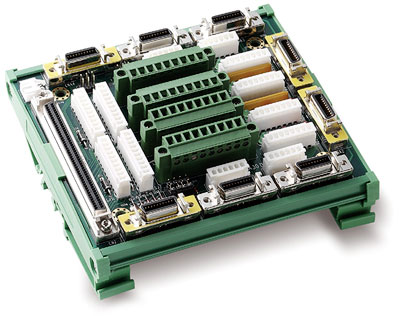
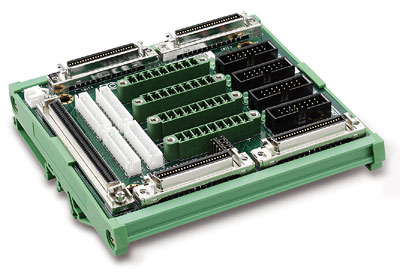
- DIN-100S-01 - 100pin SCSI-II termination board DIN rail w/o cable
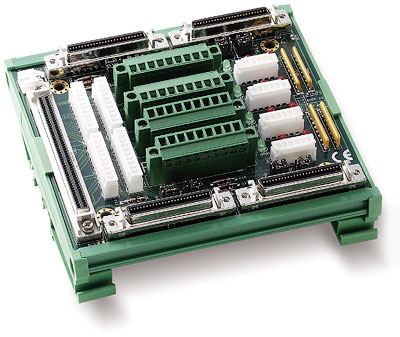
- DIN-814M0 - Panel for J2S-A Mitsubishi servo amplifier
- DIN-814M-J3A0 - Panel for J3A Mitsubishi servo amplifier
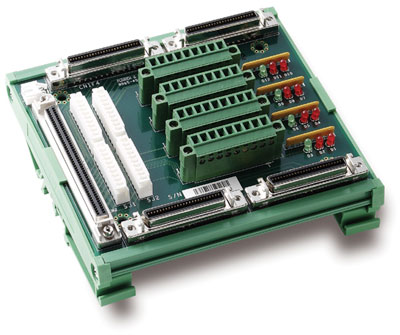
- DIN-814P-A40 - Panel for MNAS A4 Panasonic servo amplifier
- DIN-814PA0 - Panel for MNAS A Panasonic servo amplifier
- DIN-814Y0 - Panel for Sigma II Yaskawa servo amplifier
- ACL-102100-1 - 100pin SCSI-II cable 1m