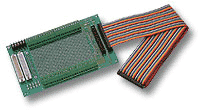
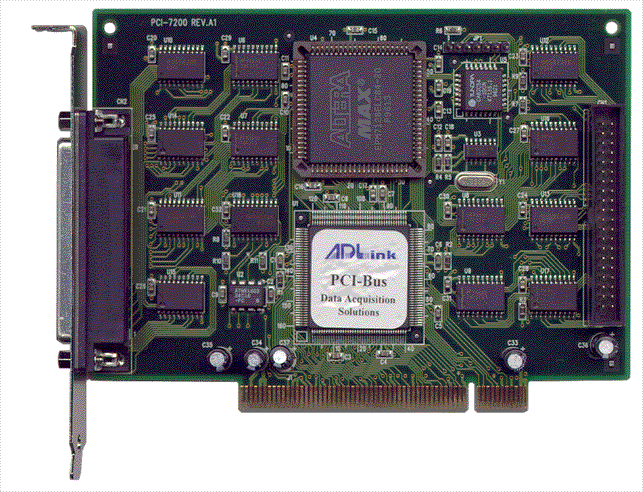
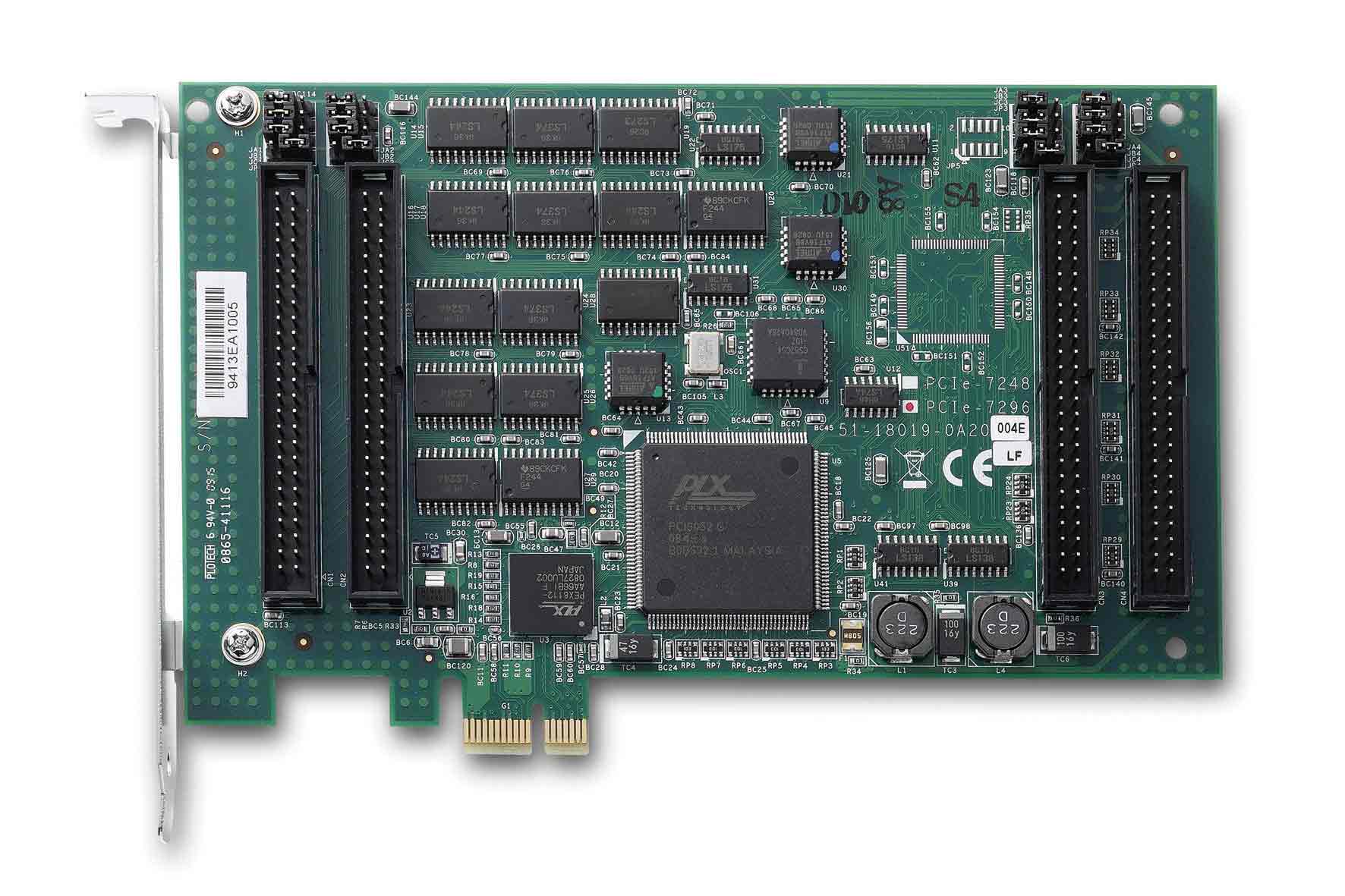
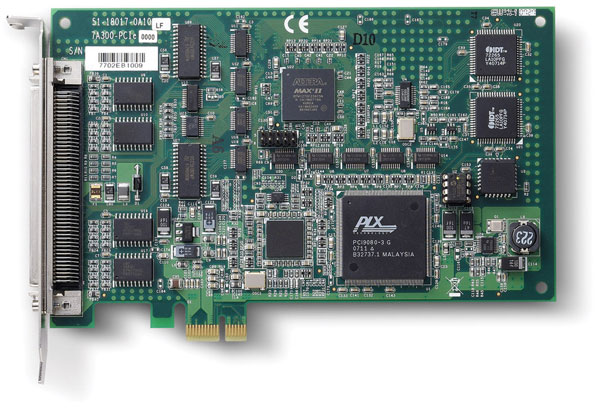
TB-24R/12-01
SUCHEN SIE DIE PASSENDE
INDUSTRIELLE LÖSUNG?
Entdecken Sie Embedded-, Kommunikations- und Automatisierungslösungen für Ihre Anwendung.
Digital I/O Capabilities
- 48-channel TTL/DTL-compatible digital I/O lines.
- Emulates two industry-standard Intel 8255 Programmable Peripheral Interface (PPI) chips operating in Mode 0.
- Buffered circuits for enhanced driving capability and signal integrity.
- Direct interface with OPTO-22-compatible I/O modules for industrial-grade isolation and signal conditioning.
- Output status read-back capability for verification and monitoring.
Timer/Counter and Interrupt System
- Integrated 8254 programmable timer/counter chip with three 16-bit counters.
- 32-bit cascaded timer for watchdog or periodic interrupt generation.
- 16-bit event counter for external event counting or frequency measurement.
- Programmable interrupt source selection with dual interrupt architecture (INT1 and INT2).
- Supports event-triggered and timer-triggered interrupts.
Power and Protection
- Provides +12V and +5V auxiliary power outputs on OPTO-22 connectors.
- Resettable fuses protect external devices from overcurrent or short-circuit conditions.
- Onboard watchdog timer and event counter for system reliability.
Software and Driver Support
- Comprehensive driver support for Windows and Linux platforms.
- Compatible with ADLINK’s PCIS-DASK, PCIS-DASK/X, and PCIS-LVIEW software libraries.
- Supports programming in C/C++, Visual Basic, Delphi, and LabVIEW environments.
- Includes ActiveX and OPC server support for SCADA and HMI integration.
Plug-and-Play Configuration
- Fully compliant with PCI Express Plug-and-Play specifications.
- Automatic resource allocation for I/O addresses and interrupts by system BIOS.
- No manual jumper or DIP switch configuration required.
- 48-channel TTL/DTL-compatible digital I/O lines.
- Emulates two industry-standard Intel 8255 Programmable Peripheral Interface (PPI) chips operating in Mode 0.
- Buffered circuits for enhanced driving capability and signal integrity.
- Direct interface with OPTO-22-compatible I/O modules for industrial-grade isolation and signal conditioning.
- Output status read-back capability for verification and monitoring.
Timer/Counter and Interrupt System
- Integrated 8254 programmable timer/counter chip with three 16-bit counters.
- 32-bit cascaded timer for watchdog or periodic interrupt generation.
- 16-bit event counter for external event counting or frequency measurement.
- Programmable interrupt source selection with dual interrupt architecture (INT1 and INT2).
- Supports event-triggered and timer-triggered interrupts.
Power and Protection
- Provides +12V and +5V auxiliary power outputs on OPTO-22 connectors.
- Resettable fuses protect external devices from overcurrent or short-circuit conditions.
- Onboard watchdog timer and event counter for system reliability.
Software and Driver Support
- Comprehensive driver support for Windows and Linux platforms.
- Compatible with ADLINK’s PCIS-DASK, PCIS-DASK/X, and PCIS-LVIEW software libraries.
- Supports programming in C/C++, Visual Basic, Delphi, and LabVIEW environments.
- Includes ActiveX and OPC server support for SCADA and HMI integration.
Plug-and-Play Configuration
- Fully compliant with PCI Express Plug-and-Play specifications.
- Automatic resource allocation for I/O addresses and interrupts by system BIOS.
- No manual jumper or DIP switch configuration required.
Comprehensive Product Summary: ADLINK PCIe-7248 Digital I/O Card
### 1. Product Overview
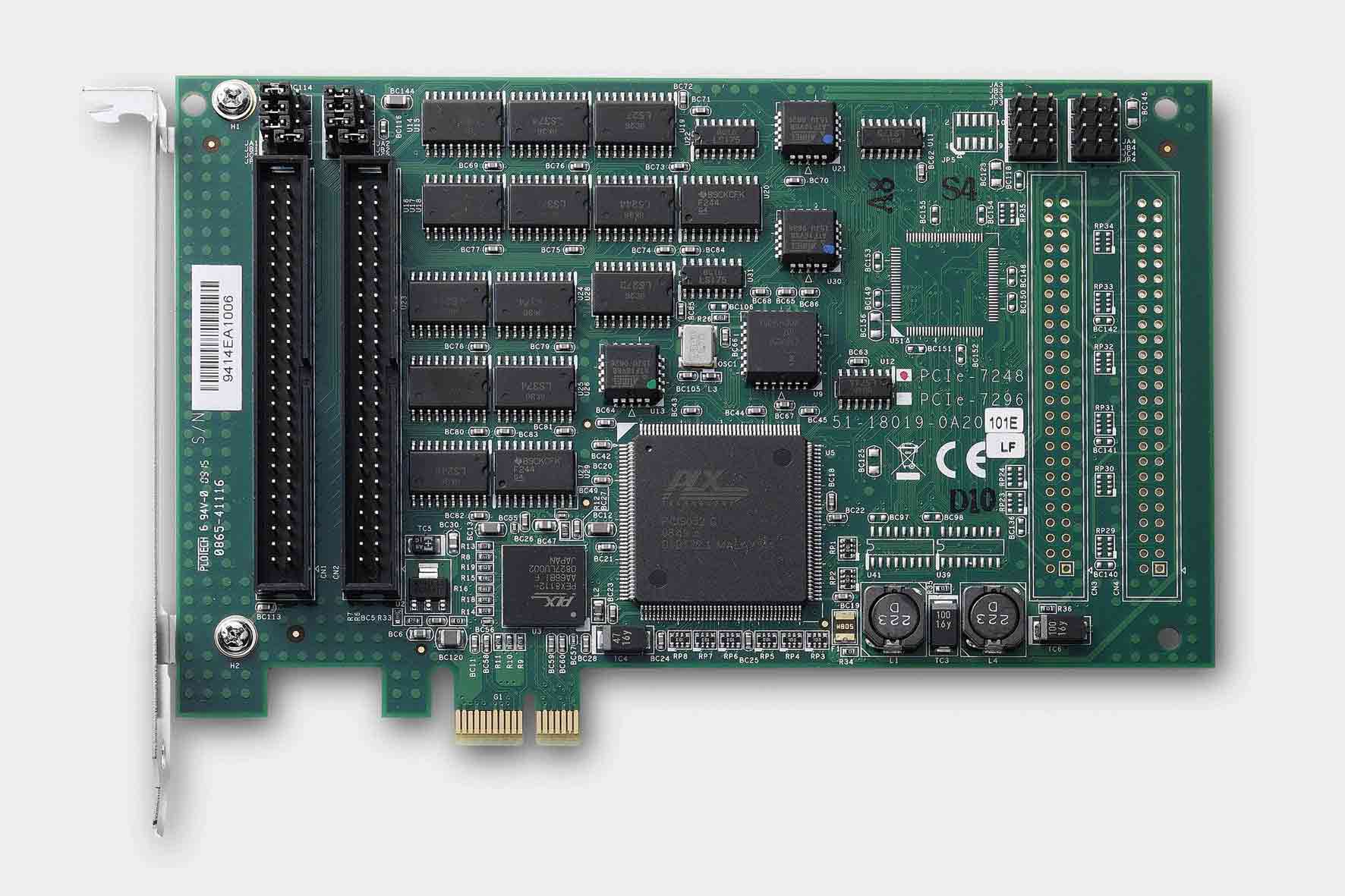
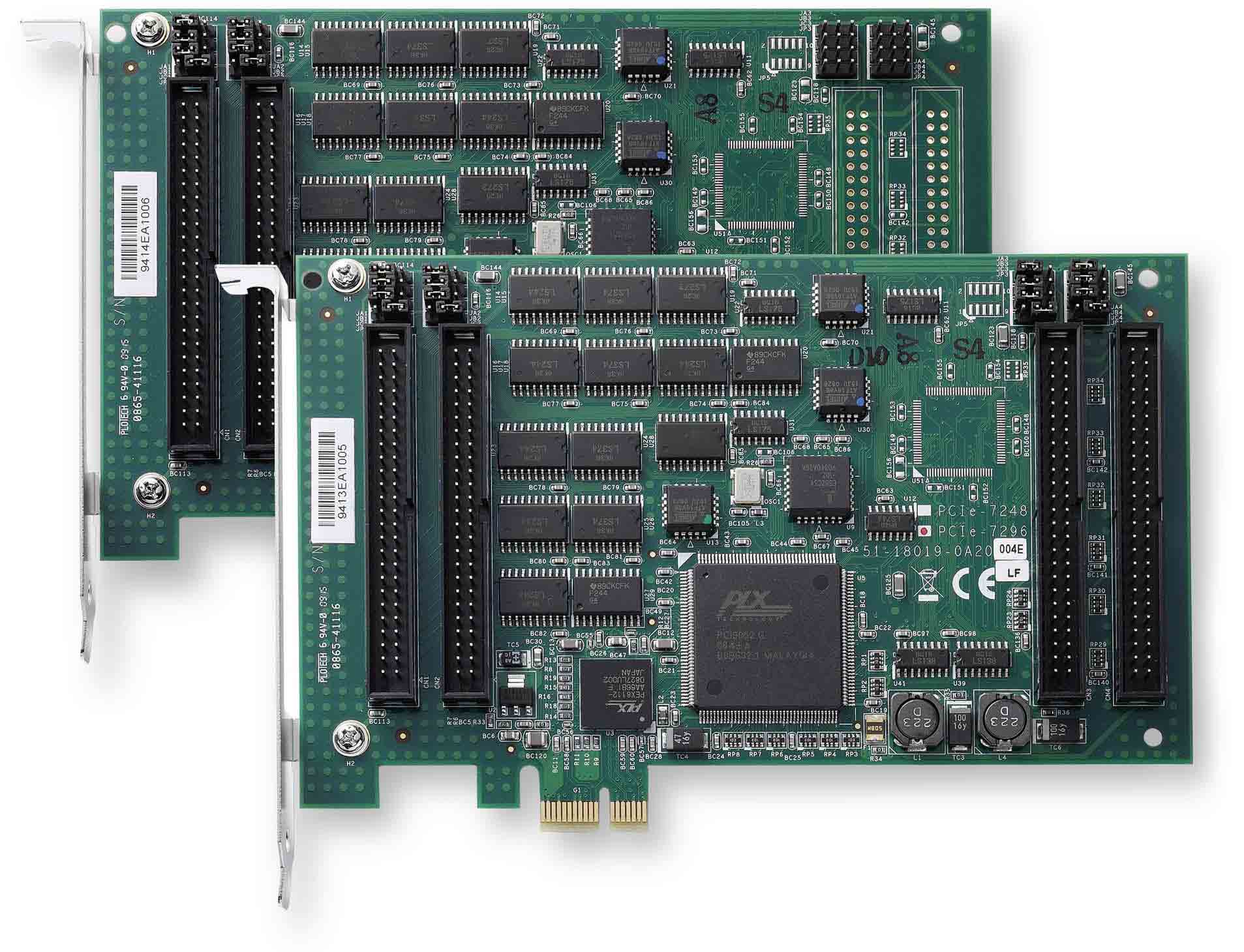
Product Name: PCIe-7248 Digital I/O Card
Model: PCIe-7248
Series: 72XX Series (24/48/96-CH Digital I/O Cards)
Article Number: 50-11104-2020
Manufacturer: ADLINK Technology Inc.
Form Factor: PCI Express x1 Interface
Product Category: Industrial Digital Input/Output (DIO) Expansion Card
Compatibility: OPTO-22 I/O module interface compatible
The ADLINK PCIe-7248 is a high-performance, general-purpose digital input/output card designed for industrial automation, data acquisition, and control applications. It belongs to ADLINK’s 72XX Series, which includes PCI, PCI Express, and CompactPCI variants offering 24, 48, or 96 digital I/O channels. The PCIe-7248 specifically provides 48 channels of TTL/DTL-compatible digital I/O and is fully compliant with the PCI Express bus standard.
### 2. Key Features
Digital I/O Capabilities
- 48-channel TTL/DTL-compatible digital I/O lines.
- Emulates two industry-standard Intel 8255 Programmable Peripheral Interface (PPI) chips operating in Mode 0.
- Buffered circuits for enhanced driving capability and signal integrity.
- Direct interface with OPTO-22-compatible I/O modules for industrial-grade isolation and signal conditioning.
- Output status read-back capability for verification and monitoring.
Timer/Counter and Interrupt System
- Integrated 8254 programmable timer/counter chip with three 16-bit counters.
- 32-bit cascaded timer for watchdog or periodic interrupt generation.
- 16-bit event counter for external event counting or frequency measurement.
- Programmable interrupt source selection with dual interrupt architecture (INT1 and INT2).
- Supports event-triggered and timer-triggered interrupts.
Power and Protection
- Provides +12V and +5V auxiliary power outputs on OPTO-22 connectors.
- Resettable fuses protect external devices from overcurrent or short-circuit conditions.
- Onboard watchdog timer and event counter for system reliability.
Software and Driver Support
- Comprehensive driver support for Windows and Linux platforms.
- Compatible with ADLINK’s PCIS-DASK, PCIS-DASK/X, and PCIS-LVIEW software libraries.
- Supports programming in C/C++, Visual Basic, Delphi, and LabVIEW environments.
- Includes ActiveX and OPC server support for SCADA and HMI integration.
Plug-and-Play Configuration
- Fully compliant with PCI Express Plug-and-Play specifications.
- Automatic resource allocation for I/O addresses and interrupts by system BIOS.
- No manual jumper or DIP switch configuration required.
### 3. Technical Specifications
| Parameter | Specification |
|----------------|-------------------|
| Digital I/O Channels | 48-bit (6 ports: 2 × 8255 PPIs) |
| Digital Input Voltage | Logic High: 2.0–5.25 V; Logic Low: 0.0–0.8 V |
| Digital Input Current | High: 20 µA; Low: –0.2 mA |
| Digital Output Voltage (Ports A/B) | High ≥ 2.4 V; Low ≤ 0.5 V |
| Digital Output Current (Ports A/B) | High: –2.6 mA; Low: 24 mA |
| Digital Output Voltage (Port C) | High ≥ 2.4 V; Low ≤ 0.4 V |
| Digital Output Current (Port C) | High: –15 mA; Low: 24 mA |
| Bus Interface | PCI Express x1 |
| Transfer Rate | Up to 500 KB/s |
| Power Consumption | 350 mA @ 12 VDC, 280 mA @ 3.3 VDC |
| Operating Temperature | 0°C to 60°C |
| Storage Temperature | –20°C to 80°C |
| Humidity | 5%–95% non-condensing |
| PCB Dimensions | 168 mm × 112 mm |
| Connectors | Two 50-pin male ribbon (IDC) connectors |
| Power Output (per connector) | +5V @ 0.5 A max; +12V @ 0.5 A max (fuse protected) |
| Fuse Type | Resettable polymeric fuses on +5V and +12V lines |
### 4. Functionality
Operating Principle
The PCIe-7248 emulates two 8255 PPI chips, each providing three 8-bit ports (A, B, and C). Each port can be independently configured as input or output. Ports C can be split into two 4-bit nibbles for finer control. The card supports both input monitoring and output control operations, with software-configurable direction and logic states.
Use Cases and Applications
- Industrial process monitoring and control.
- Machine automation and digital signal interfacing.
- Switch, relay, and contact closure monitoring.
- Digital control of actuators, solenoids, and relays.
- Integration with OPTO-22 modules for isolated I/O expansion.
- Event counting, frequency measurement, and watchdog timing.
- Data acquisition systems in manufacturing and test automation.
Compatibility
- Compatible with OPTO-22 I/O racks and modules.
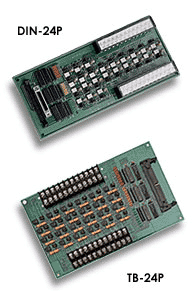
- Works with ADLINK termination boards (TB-24R, TB-24P, TB-16P8R, DIN-50S).
- Supports Windows 2000/XP/Vista/7/10 and Linux kernel drivers.
- Integrates with LabVIEW, MATLAB, and HP VEE environments.
### 5. Components & Accessories
Included Items
- PCIe-7248 card.
- ADLINK Software & Driver CD.
- Software Installation Guide.
- User’s Manual (PDF).
Optional Accessories
- TB-24R / DIN-24R: 24-channel relay output boards.
- TB-24P / DIN-24P: 24-channel opto-isolated input boards.
- TB-16P8R: 16 input + 8 relay output combination board.
- DIN-50S: 50-pin general-purpose termination board.
- DIN-100S: 100-pin SCSI-type termination board (for CompactPCI variants).
Connectors
- Two 50-pin male IDC connectors (CN1, CN2).
- Each connector provides 24 DIO lines, +5V, +12V, and ground pins.
- Pinout compatible with OPTO-22 standard.
### 6. Installation & Setup
System Requirements
- Available PCI Express x1 slot.
- Compatible motherboard supporting bus mastering.
- Windows or Linux operating system with ADLINK drivers installed.
Installation Procedure
1. Power off the host PC and disconnect all peripherals.
2. Insert the PCIe-7248 into an available PCIe x1 slot.
3. Secure the card with the chassis screw.
4. Power on the system; the OS Plug-and-Play will detect the new device.
5. Install drivers from the ADLINK CD or website.
6. Verify installation using ADLINK’s diagnostic utility (7248UTIL.EXE).
Jumper Configuration
- JA1–JC2: Configure power-on state (input pulled high, low, or floating).
- JP1–JP2: Configure +12V pins as power or ground (default: ground).
Software Setup
- Install PCIS-DASK or PCIS-DASK/X driver package.
- Use provided libraries for C/C++, VB, or LabVIEW programming.
- Configure ports and channels using ADLINK’s API functions.
### 7. Performance & Capabilities
Digital I/O Performance
- Supports simultaneous input and output operations.
- Buffered outputs ensure stable signal transmission.
- Input read-back for verification of output states.
Timer/Counter Performance
- 8254-based 3-channel timer/counter.
- Cascaded 32-bit timer for long-duration timing.
- Event counter input via P1C4 pin.
- Programmable edge detection (rising/falling).
- Timer frequency range: 0.000466 Hz to 500 kHz.
Interrupt System
- Dual interrupt channels (INT1, INT2).
- Programmable sources: digital input edges, event counter, or timer output.
- Supports edge-triggered and level-triggered interrupts.
- Software-controlled interrupt enable/disable via ISC register.
Throughput
- Maximum data transfer rate: 500 KB/s.
- Low-latency interrupt response for real-time control.
Limitations
- Non-isolated I/O (requires external isolation modules for high-voltage environments).
- Limited current sourcing capability per channel (24 mA max).
### 8. Standards & Compliance
Bus Interface Standards
- PCI Express Base Specification Revision 1.0a compliant.
- Fully Plug-and-Play compatible.
Electrical & Environmental Compliance
- CE and FCC Class A certified for industrial environments.
- RoHS compliant.
- Operating temperature: 0°C to 60°C.
- Storage temperature: –20°C to 80°C.
- Humidity: 5–95% non-condensing.
Industry Compatibility
- OPTO-22 I/O module interface standard.
- Compatible with CompactPCI and PCI variants (software-level compatibility).
### 9. Additional Information
Warranty
- Standard 2-year limited warranty from ADLINK Technology.
- Covers defects in materials and workmanship.
- Excludes damage from misuse, static discharge, or unauthorized modification.
Technical Support
- Global service centers in Taiwan, USA, China, Japan, Germany, France, Korea, and Singapore.
- Email: service@adlinktech.com
- Website: [www.adlinktech.com](http://www.adlinktech.com)
Maintenance
- No periodic calibration required.
- Keep connectors clean and free of dust.
- Avoid exceeding rated current on +5V and +12V outputs.
Software Updates
- Latest drivers and utilities available from ADLINK’s support portal.
- Backward-compatible with previous 72XX series software.
Documentation
- User’s Manual Revision 2.61 (July 4, 2009).
- Part Number: 50-11104-2020.
- Includes detailed register maps, pin assignments, and programming examples.
### Summary
The ADLINK PCIe-7248 is a robust, high-speed 48-channel digital I/O card engineered for industrial automation, data acquisition, and control systems. It combines flexible digital interfacing, programmable timers, and dual-interrupt capabilities within a PCI Express architecture. With comprehensive software support, OPTO-22 compatibility, and reliable electrical protection, the PCIe-7248 provides a scalable and dependable solution for digital control and monitoring applications in manufacturing, testing, and embedded system environments.

### 1. Product Overview
Product Name: PCIe-7248 Digital I/O Card
Model: PCIe-7248
Series: 72XX Series (24/48/96-CH Digital I/O Cards)
Article Number: 50-11104-2020
Manufacturer: ADLINK Technology Inc.
Form Factor: PCI Express x1 Interface
Product Category: Industrial Digital Input/Output (DIO) Expansion Card
Compatibility: OPTO-22 I/O module interface compatible
The ADLINK PCIe-7248 is a high-performance, general-purpose digital input/output card designed for industrial automation, data acquisition, and control applications. It belongs to ADLINK’s 72XX Series, which includes PCI, PCI Express, and CompactPCI variants offering 24, 48, or 96 digital I/O channels. The PCIe-7248 specifically provides 48 channels of TTL/DTL-compatible digital I/O and is fully compliant with the PCI Express bus standard.
### 2. Key Features
Digital I/O Capabilities
- 48-channel TTL/DTL-compatible digital I/O lines.
- Emulates two industry-standard Intel 8255 Programmable Peripheral Interface (PPI) chips operating in Mode 0.
- Buffered circuits for enhanced driving capability and signal integrity.
- Direct interface with OPTO-22-compatible I/O modules for industrial-grade isolation and signal conditioning.
- Output status read-back capability for verification and monitoring.
Timer/Counter and Interrupt System
- Integrated 8254 programmable timer/counter chip with three 16-bit counters.
- 32-bit cascaded timer for watchdog or periodic interrupt generation.
- 16-bit event counter for external event counting or frequency measurement.
- Programmable interrupt source selection with dual interrupt architecture (INT1 and INT2).
- Supports event-triggered and timer-triggered interrupts.
Power and Protection
- Provides +12V and +5V auxiliary power outputs on OPTO-22 connectors.
- Resettable fuses protect external devices from overcurrent or short-circuit conditions.
- Onboard watchdog timer and event counter for system reliability.
Software and Driver Support
- Comprehensive driver support for Windows and Linux platforms.
- Compatible with ADLINK’s PCIS-DASK, PCIS-DASK/X, and PCIS-LVIEW software libraries.
- Supports programming in C/C++, Visual Basic, Delphi, and LabVIEW environments.
- Includes ActiveX and OPC server support for SCADA and HMI integration.
Plug-and-Play Configuration
- Fully compliant with PCI Express Plug-and-Play specifications.
- Automatic resource allocation for I/O addresses and interrupts by system BIOS.
- No manual jumper or DIP switch configuration required.
### 3. Technical Specifications
| Parameter | Specification |
|----------------|-------------------|
| Digital I/O Channels | 48-bit (6 ports: 2 × 8255 PPIs) |
| Digital Input Voltage | Logic High: 2.0–5.25 V; Logic Low: 0.0–0.8 V |
| Digital Input Current | High: 20 µA; Low: –0.2 mA |
| Digital Output Voltage (Ports A/B) | High ≥ 2.4 V; Low ≤ 0.5 V |
| Digital Output Current (Ports A/B) | High: –2.6 mA; Low: 24 mA |
| Digital Output Voltage (Port C) | High ≥ 2.4 V; Low ≤ 0.4 V |
| Digital Output Current (Port C) | High: –15 mA; Low: 24 mA |
| Bus Interface | PCI Express x1 |
| Transfer Rate | Up to 500 KB/s |
| Power Consumption | 350 mA @ 12 VDC, 280 mA @ 3.3 VDC |
| Operating Temperature | 0°C to 60°C |
| Storage Temperature | –20°C to 80°C |
| Humidity | 5%–95% non-condensing |
| PCB Dimensions | 168 mm × 112 mm |
| Connectors | Two 50-pin male ribbon (IDC) connectors |
| Power Output (per connector) | +5V @ 0.5 A max; +12V @ 0.5 A max (fuse protected) |
| Fuse Type | Resettable polymeric fuses on +5V and +12V lines |
### 4. Functionality
Operating Principle
The PCIe-7248 emulates two 8255 PPI chips, each providing three 8-bit ports (A, B, and C). Each port can be independently configured as input or output. Ports C can be split into two 4-bit nibbles for finer control. The card supports both input monitoring and output control operations, with software-configurable direction and logic states.
Use Cases and Applications
- Industrial process monitoring and control.
- Machine automation and digital signal interfacing.
- Switch, relay, and contact closure monitoring.
- Digital control of actuators, solenoids, and relays.
- Integration with OPTO-22 modules for isolated I/O expansion.
- Event counting, frequency measurement, and watchdog timing.
- Data acquisition systems in manufacturing and test automation.
Compatibility
- Compatible with OPTO-22 I/O racks and modules.
- Works with ADLINK termination boards (TB-24R, TB-24P, TB-16P8R, DIN-50S).
- Supports Windows 2000/XP/Vista/7/10 and Linux kernel drivers.
- Integrates with LabVIEW, MATLAB, and HP VEE environments.
### 5. Components & Accessories
Included Items
- PCIe-7248 card.
- ADLINK Software & Driver CD.
- Software Installation Guide.
- User’s Manual (PDF).
Optional Accessories
- TB-24R / DIN-24R: 24-channel relay output boards.
- TB-24P / DIN-24P: 24-channel opto-isolated input boards.
- TB-16P8R: 16 input + 8 relay output combination board.
- DIN-50S: 50-pin general-purpose termination board.
- DIN-100S: 100-pin SCSI-type termination board (for CompactPCI variants).
Connectors
- Two 50-pin male IDC connectors (CN1, CN2).
- Each connector provides 24 DIO lines, +5V, +12V, and ground pins.
- Pinout compatible with OPTO-22 standard.
### 6. Installation & Setup
System Requirements
- Available PCI Express x1 slot.
- Compatible motherboard supporting bus mastering.
- Windows or Linux operating system with ADLINK drivers installed.
Installation Procedure
1. Power off the host PC and disconnect all peripherals.
2. Insert the PCIe-7248 into an available PCIe x1 slot.
3. Secure the card with the chassis screw.
4. Power on the system; the OS Plug-and-Play will detect the new device.
5. Install drivers from the ADLINK CD or website.
6. Verify installation using ADLINK’s diagnostic utility (7248UTIL.EXE).
Jumper Configuration
- JA1–JC2: Configure power-on state (input pulled high, low, or floating).
- JP1–JP2: Configure +12V pins as power or ground (default: ground).
Software Setup
- Install PCIS-DASK or PCIS-DASK/X driver package.
- Use provided libraries for C/C++, VB, or LabVIEW programming.
- Configure ports and channels using ADLINK’s API functions.
### 7. Performance & Capabilities
Digital I/O Performance
- Supports simultaneous input and output operations.
- Buffered outputs ensure stable signal transmission.
- Input read-back for verification of output states.
Timer/Counter Performance
- 8254-based 3-channel timer/counter.
- Cascaded 32-bit timer for long-duration timing.
- Event counter input via P1C4 pin.
- Programmable edge detection (rising/falling).
- Timer frequency range: 0.000466 Hz to 500 kHz.
Interrupt System
- Dual interrupt channels (INT1, INT2).
- Programmable sources: digital input edges, event counter, or timer output.
- Supports edge-triggered and level-triggered interrupts.
- Software-controlled interrupt enable/disable via ISC register.
Throughput
- Maximum data transfer rate: 500 KB/s.
- Low-latency interrupt response for real-time control.
Limitations
- Non-isolated I/O (requires external isolation modules for high-voltage environments).
- Limited current sourcing capability per channel (24 mA max).
### 8. Standards & Compliance
Bus Interface Standards
- PCI Express Base Specification Revision 1.0a compliant.
- Fully Plug-and-Play compatible.
Electrical & Environmental Compliance
- CE and FCC Class A certified for industrial environments.
- RoHS compliant.
- Operating temperature: 0°C to 60°C.
- Storage temperature: –20°C to 80°C.
- Humidity: 5–95% non-condensing.
Industry Compatibility
- OPTO-22 I/O module interface standard.
- Compatible with CompactPCI and PCI variants (software-level compatibility).
### 9. Additional Information
Warranty
- Standard 2-year limited warranty from ADLINK Technology.
- Covers defects in materials and workmanship.
- Excludes damage from misuse, static discharge, or unauthorized modification.
Technical Support
- Global service centers in Taiwan, USA, China, Japan, Germany, France, Korea, and Singapore.
- Email: service@adlinktech.com
- Website: [www.adlinktech.com](http://www.adlinktech.com)
Maintenance
- No periodic calibration required.
- Keep connectors clean and free of dust.
- Avoid exceeding rated current on +5V and +12V outputs.
Software Updates
- Latest drivers and utilities available from ADLINK’s support portal.
- Backward-compatible with previous 72XX series software.
Documentation
- User’s Manual Revision 2.61 (July 4, 2009).
- Part Number: 50-11104-2020.
- Includes detailed register maps, pin assignments, and programming examples.
### Summary
The ADLINK PCIe-7248 is a robust, high-speed 48-channel digital I/O card engineered for industrial automation, data acquisition, and control systems. It combines flexible digital interfacing, programmable timers, and dual-interrupt capabilities within a PCI Express architecture. With comprehensive software support, OPTO-22 compatibility, and reliable electrical protection, the PCIe-7248 provides a scalable and dependable solution for digital control and monitoring applications in manufacturing, testing, and embedded system environments.
-
PCIe-7248+7296_Datasheet_9.pdf
PDF Catalog
-
P724896 Manual.PDF
Manual
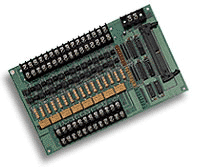
- TB-24R/12-01 - isolated 24 DO Relay (12V) panel (230VAC/2A)
- TB-24R/24-01 - isolated 24 DO Relay (24V) panel (230VAC/2A)
- TB-24P/24-01 - 24 DI opto isolated panel
- TB-16P8R/12 - isolated 16 DI 8 DO Relay 12V panel
- TB-16P8R/24-01 - isolated 16 DI 8 DO Relay 24V panel
- TB-24 - Universal screw terminal panel with 1.5m cable
- DIN-50P-01 - 50pin header termination board DIN rail