RST-20P
SUCHEN SIE DIE PASSENDE
INDUSTRIELLE LÖSUNG?
Entdecken Sie Embedded-, Kommunikations- und Automatisierungslösungen für Ihre Anwendung.
- USB 2.0 High-Speed Interface: Fully compliant with USB 2.0 specifications for plug-and-play connectivity and high data throughput.
- Bus-Powered Operation: Draws power directly from the USB port (5 V @ 400 mA), eliminating the need for an external power supply.
- 8 Isolated Digital Inputs: Optically isolated channels (2500 V RMS isolation) with bi-directional, non-polarity-sensitive inputs supporting 5–24 V logic levels or dry contact operation.
- 8 Solid-State Relay Outputs: Non-latching relays (4 × Form C and 4 × Form A) rated at 60 W/125 VA, 220 VDC/250 VAC, 2 A maximum switching current.
- 2 × 32-bit Event/Frequency Counters: Optical isolation, 1 MHz maximum input frequency, 0.1 Hz minimum, with configurable rising/falling edge detection.
- High Isolation Protection: 2500 V RMS isolation between channels and system ground to prevent ground loops and protect against high-voltage transients.
- Programmable Digital Filter: Software-configurable glitch filtering on input channels to reject transient noise.
- Change-of-State (COS) Detection: Interrupt-driven detection of input state transitions for event monitoring.
- Programmable Power-Up Output State: Ensures known output conditions at startup or reset.
- Removable Screw-Terminal Connectors: Two 20-pin connectors for easy wiring and maintenance.
- Lockable USB Cable: Prevents accidental disconnection in industrial environments.
- Multi-Mount Stand: Supports desktop, DIN rail, and wall mounting configurations.
- Software Support: Compatible with ADLINK UD-DASK, DAQPilot SDK, and U-Test utility for configuration, testing, and data acquisition.
- Environmental Compliance: RoHS and WEEE compliant for environmentally responsible design and disposal.
- Bus-Powered Operation: Draws power directly from the USB port (5 V @ 400 mA), eliminating the need for an external power supply.
- 8 Isolated Digital Inputs: Optically isolated channels (2500 V RMS isolation) with bi-directional, non-polarity-sensitive inputs supporting 5–24 V logic levels or dry contact operation.
- 8 Solid-State Relay Outputs: Non-latching relays (4 × Form C and 4 × Form A) rated at 60 W/125 VA, 220 VDC/250 VAC, 2 A maximum switching current.
- 2 × 32-bit Event/Frequency Counters: Optical isolation, 1 MHz maximum input frequency, 0.1 Hz minimum, with configurable rising/falling edge detection.
- High Isolation Protection: 2500 V RMS isolation between channels and system ground to prevent ground loops and protect against high-voltage transients.
- Programmable Digital Filter: Software-configurable glitch filtering on input channels to reject transient noise.
- Change-of-State (COS) Detection: Interrupt-driven detection of input state transitions for event monitoring.
- Programmable Power-Up Output State: Ensures known output conditions at startup or reset.
- Removable Screw-Terminal Connectors: Two 20-pin connectors for easy wiring and maintenance.
- Lockable USB Cable: Prevents accidental disconnection in industrial environments.
- Multi-Mount Stand: Supports desktop, DIN rail, and wall mounting configurations.
- Software Support: Compatible with ADLINK UD-DASK, DAQPilot SDK, and U-Test utility for configuration, testing, and data acquisition.
- Environmental Compliance: RoHS and WEEE compliant for environmentally responsible design and disposal.
Comprehensive Product Summary: ADLINK USB-7250 USB Digital I/O Module
### 1. Product Overview
Product Name: USB-7250
Model: USB-7250
Series: USB-7200 Series (USB-7230/7250 Family)
Article Number: USB-7250
Manufacturer: ADLINK Technology, Inc.
Part Number: 50-1Z138-2000
Revision: Manual Rev. 2.00 (November 16, 2012)
Product Type: USB 2.0-based Digital I/O Module
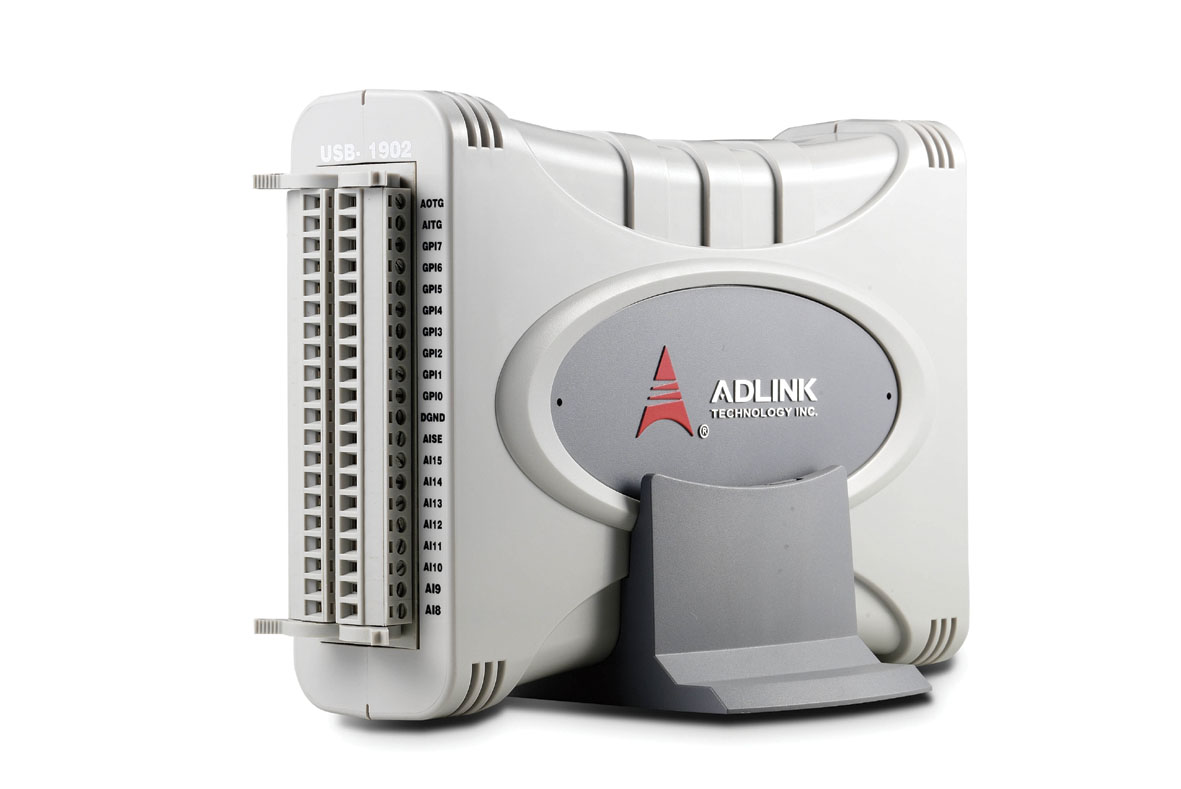
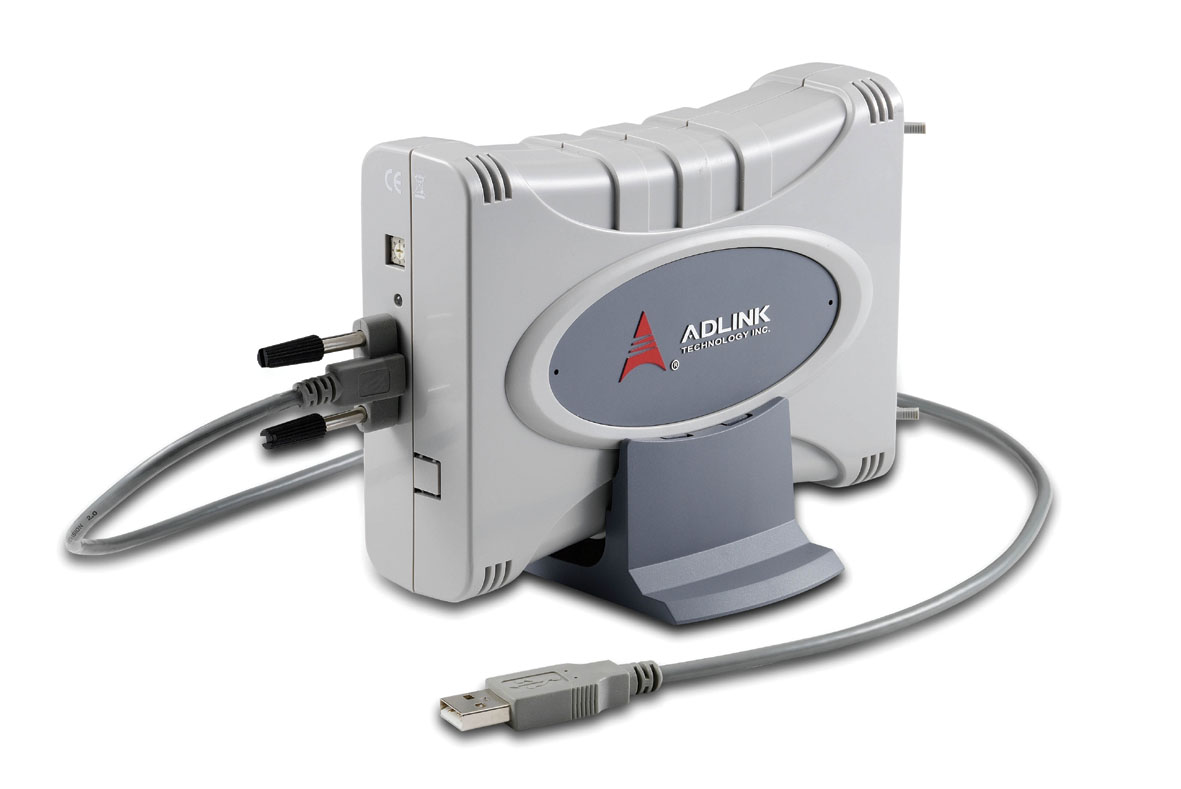
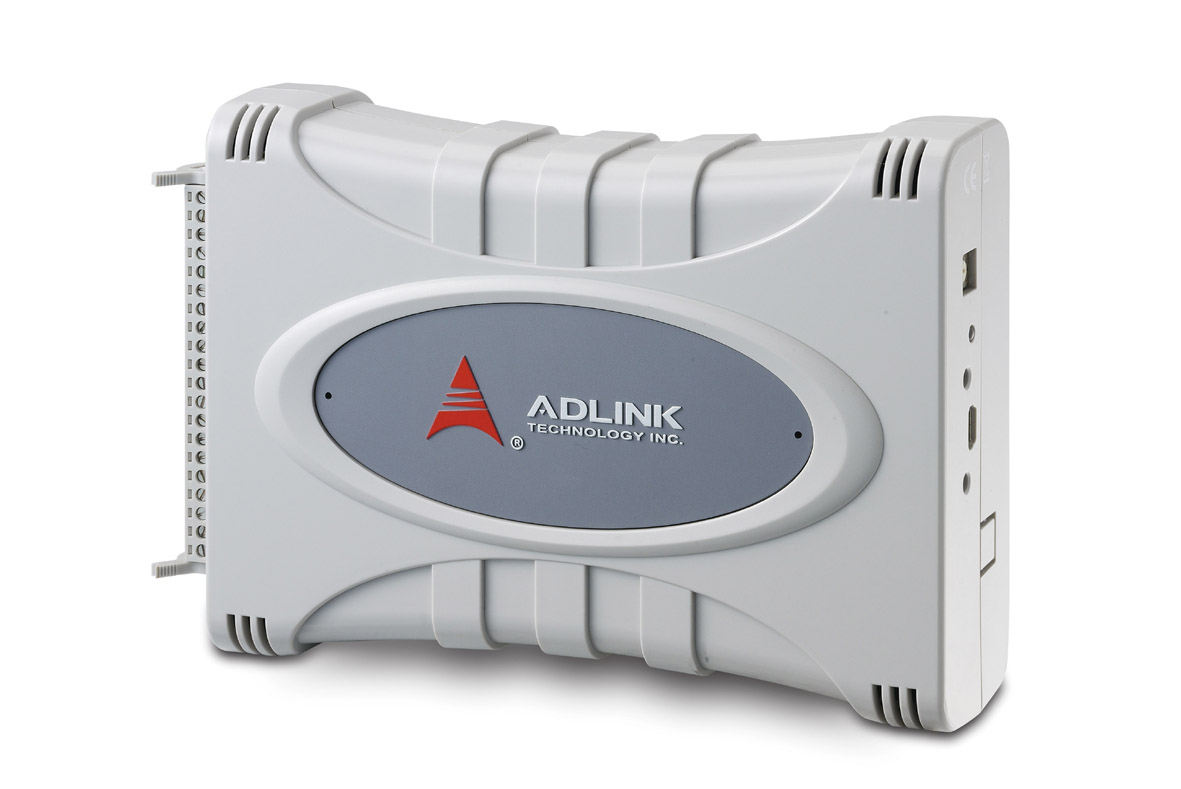
The ADLINK USB-7250 is a USB bus-powered digital input/output and counter module designed for industrial automation, laboratory testing, and signal control applications. It provides 8 isolated digital input channels, 8 solid-state relay outputs, and 2 optical isolated frequency/event counters. The module supports up to 2500 V RMS isolation voltage and is powered directly from the USB bus (5 V @ 400 mA). It features removable screw-down terminals, a lockable USB connection, and a multi-functional stand supporting desktop, DIN rail, or wall mounting.
### 2. Key Features
- USB 2.0 High-Speed Interface: Fully compliant with USB 2.0 specifications for plug-and-play connectivity and high data throughput.
- Bus-Powered Operation: Draws power directly from the USB port (5 V @ 400 mA), eliminating the need for an external power supply.
- 8 Isolated Digital Inputs: Optically isolated channels (2500 V RMS isolation) with bi-directional, non-polarity-sensitive inputs supporting 5–24 V logic levels or dry contact operation.
- 8 Solid-State Relay Outputs: Non-latching relays (4 × Form C and 4 × Form A) rated at 60 W/125 VA, 220 VDC/250 VAC, 2 A maximum switching current.
- 2 × 32-bit Event/Frequency Counters: Optical isolation, 1 MHz maximum input frequency, 0.1 Hz minimum, with configurable rising/falling edge detection.
- High Isolation Protection: 2500 V RMS isolation between channels and system ground to prevent ground loops and protect against high-voltage transients.
- Programmable Digital Filter: Software-configurable glitch filtering on input channels to reject transient noise.
- Change-of-State (COS) Detection: Interrupt-driven detection of input state transitions for event monitoring.
- Programmable Power-Up Output State: Ensures known output conditions at startup or reset.
- Removable Screw-Terminal Connectors: Two 20-pin connectors for easy wiring and maintenance.
- Lockable USB Cable: Prevents accidental disconnection in industrial environments.
- Multi-Mount Stand: Supports desktop, DIN rail, and wall mounting configurations.
- Software Support: Compatible with ADLINK UD-DASK, DAQPilot SDK, and U-Test utility for configuration, testing, and data acquisition.
- Environmental Compliance: RoHS and WEEE compliant for environmentally responsible design and disposal.
### 3. Technical Specifications
Physical Characteristics
- Dimensions: 156.5 mm (L) × 114 mm (W) × 41.3 mm (H) (6.16 × 4.49 × 1.63 in.)
- Weight: Approx. 0.5 kg (without connectors or stand)
- Material: Industrial-grade ABS housing with aluminum internal shielding
- Mounting Options: Desktop, DIN rail, or wall mount (via included stand and mounting kit)
Power Requirements
- Power Source: USB bus-powered
- Input Voltage: 5 V DC (from USB)
- Current Consumption: 400 mA typical
Environmental Conditions
- Operating Temperature: 0 °C to 55 °C
- Storage Temperature: −20 °C to 70 °C
- Operating Humidity: 10 % to 90 % RH (non-condensing)
- Storage Humidity: 5 % to 95 % RH (non-condensing)
Isolation Voltage: 2500 V RMS (channel-to-system)
### 4. Functionality
The USB-7250 functions as a USB-based digital I/O and counter module for PC-based control and monitoring systems. It connects directly to a host computer via a USB 2.0 interface and is automatically recognized as a plug-and-play device. The module’s internal microcontroller manages digital input/output operations and counter functions, communicating with the host through ADLINK’s UD-DASK driver.
Use Cases and Applications:
- Industrial automation and process control
- Laboratory instrumentation and data acquisition
- Signal switching and relay control
- Automotive and electronic testing systems
- Event counting and frequency measurement
Compatibility:
- Operating Systems: Windows 7/Vista/XP (32/64-bit) and later
- Software Environments: LabVIEW®, MATLAB®, SCADA/HMI systems via ActiveX, and ADLINK DAQPilot SDK
- Interface: USB 2.0 (Mini-USB connector)
### 5. Components & Accessories
Included Items:
- USB-7250 module
- Multi-function stand (desktop/rail/wall mount)
- Two removable 20-pin screw-down terminal blocks
- 2 m lockable USB cable
- Rail-mount kit
- ADLINK All-in-One CD (drivers, SDKs, utilities)
- User’s manual
Optional Accessories:
- Additional terminal blocks
- Extended USB cables (lockable type)
- Wall-mount hardware kits
Connectors:
- I/O Connector: Two 20-pin removable screw terminals
- USB Connector: Mini-USB type B (lockable)
### 6. Installation & Setup
Requirements:
- Host PC with available USB 2.0 port
- Windows OS with UD-DASK or DAQPilot driver installed
- 5 V @ 400 mA available from USB port
Installation Steps:
1. Install ADLINK drivers and utilities from the All-in-One CD or ADLINK website.
2. Connect the USB-7250 to the PC using the provided USB cable.
3. Wait for the system to recognize the device and load firmware (LED changes from amber to green).
4. Verify device presence in Windows Device Manager.
5. Configure device ID (rotary switch on rear panel, range 0–7) to avoid conflicts when multiple modules are connected.
Mounting Options:
- Desktop: Place module in stand for stable operation.
- DIN Rail: Attach stand to DIN rail using included rail-mount kit.
- Wall Mount: Secure stand to wall using four 3.4 mm screws.
### 7. Performance & Capabilities
Digital Inputs (DI):
- Channels: 8 (optically isolated, bi-directional)
- Input Type: Differential, non-polarity-sensitive
- Logic Levels: VIH = 5–24 V, VIL = 0–1.5 V
- Input Resistance: 2.4 kΩ @ 0.5 W
- Isolation Voltage: 2500 V RMS
- Change-of-State Detection: Software-selectable per channel
- Minimum Pulse Width (COS): 20.83 ns (software programmable)
Digital Outputs (Relay DO):
- Channels: 8 (solid-state relays, non-latching)
- Configuration: 4 × Form C (SPDT), 4 × Form A (SPST)
- Max Switching Power: 60 W / 125 VA per channel
- Max Switching Voltage: 220 VDC / 250 VAC
- Max Switching Current: 2 A
- Operate Time: 2 ms
- Release Time: 1 ms
- Contact Resistance: ≤ 75 mΩ
- Expected Lifetime: 1 × 10⁶ operations @ 50 VDC 0.1 A (resistive load)
- Breakdown Voltage: 1000 VAC
Counters:
- Channels: 2 (optically isolated)
- Counter Width: 32-bit
- Input Frequency Range: 0.1 Hz to 1 MHz
- Logic Levels: VIH = 5–12 V, VIL = 0–1.5 V
- Accuracy: ± 0.5 % (f ≤ 50 kHz), ± 1 % (50–500 kHz), ± 2 % (500 kHz–1 MHz)
- Polarity: Rising or falling edge selectable
- Data Transfer: Programmed I/O
Digital Filtering:
- Sampling Clock: 48 MHz
- Filter Range: 20.83 ns × 1 to 65535 = 20.83 ns to 1.365 ms
- Function: Rejects transient pulses shorter than configured threshold
Performance Limitations:
- COS detection frequency limited by host system latency (recommended ≤ 1 kHz).
- USB bus power must supply stable 5 V @ 400 mA; insufficient power may cause detection failure.
### 8. Standards & Compliance
- USB Compliance: USB 2.0 High-Speed (480 Mbps)
- Electrical Isolation: 2500 V RMS (channel-to-system)
- Safety: Designed for industrial environments with optical isolation and surge protection
- Environmental:
- RoHS Directive: Compliant (Restriction of Hazardous Substances)
- WEEE Directive: Compliant (Waste Electrical and Electronic Equipment)
- Quality Assurance: Manufactured under ISO 9001-certified processes
- Software Compatibility: UD-DASK ≥ v1.0.5, DAQPilot ≥ v2.3.4.1109
### 9. Additional Information
Warranty:
Standard ADLINK limited warranty (typically one year) covering defects in materials and workmanship.
Technical Support & Service:
ADLINK provides global technical support through regional offices in Taiwan, USA, China, Europe, Japan, Korea, Singapore, India, and Israel.
- Website: [www.adlinktech.com](http://www.adlinktech.com)
- Email: service@adlinktech.com
Maintenance:
- Keep module clean and free from dust.
- Avoid exposure to moisture, high humidity, or corrosive environments.
- Disconnect USB cable before cleaning or servicing.
- Do not attempt internal repairs; contact authorized ADLINK service centers.
Software & Firmware Updates:
- Latest drivers, SDKs, and utilities (UD-DASK, DAQPilot, U-Test) available from ADLINK’s website.
- Firmware updates are automatically loaded via USB connection when supported by driver.
Safety Precautions:
- Disconnect power before wiring or mounting.
- Operate within specified voltage and temperature limits.
- Ensure proper grounding and isolation when interfacing with external circuits.
- Use only qualified personnel for installation and maintenance.
### Summary
The ADLINK USB-7250 is a robust, high-isolation USB digital I/O module engineered for industrial and laboratory automation. Combining 8 optically isolated digital inputs, 8 solid-state relay outputs, and dual 32-bit event counters, it delivers reliable control and monitoring capabilities through a simple USB 2.0 interface. Its 2500 V RMS isolation, programmable digital filtering, and COS detection make it ideal for noise-prone environments. The module’s plug-and-play design, comprehensive software support, and versatile mounting options ensure rapid deployment and integration into diverse data acquisition and control systems.
With compliance to RoHS and WEEE directives, the USB-7250 exemplifies ADLINK’s commitment to performance, safety, and environmental responsibility—providing a dependable solution for modern industrial I/O applications.

### 1. Product Overview
Product Name: USB-7250
Model: USB-7250
Series: USB-7200 Series (USB-7230/7250 Family)
Article Number: USB-7250
Manufacturer: ADLINK Technology, Inc.
Part Number: 50-1Z138-2000
Revision: Manual Rev. 2.00 (November 16, 2012)
Product Type: USB 2.0-based Digital I/O Module
The ADLINK USB-7250 is a USB bus-powered digital input/output and counter module designed for industrial automation, laboratory testing, and signal control applications. It provides 8 isolated digital input channels, 8 solid-state relay outputs, and 2 optical isolated frequency/event counters. The module supports up to 2500 V RMS isolation voltage and is powered directly from the USB bus (5 V @ 400 mA). It features removable screw-down terminals, a lockable USB connection, and a multi-functional stand supporting desktop, DIN rail, or wall mounting.
### 2. Key Features
- USB 2.0 High-Speed Interface: Fully compliant with USB 2.0 specifications for plug-and-play connectivity and high data throughput.
- Bus-Powered Operation: Draws power directly from the USB port (5 V @ 400 mA), eliminating the need for an external power supply.
- 8 Isolated Digital Inputs: Optically isolated channels (2500 V RMS isolation) with bi-directional, non-polarity-sensitive inputs supporting 5–24 V logic levels or dry contact operation.
- 8 Solid-State Relay Outputs: Non-latching relays (4 × Form C and 4 × Form A) rated at 60 W/125 VA, 220 VDC/250 VAC, 2 A maximum switching current.
- 2 × 32-bit Event/Frequency Counters: Optical isolation, 1 MHz maximum input frequency, 0.1 Hz minimum, with configurable rising/falling edge detection.
- High Isolation Protection: 2500 V RMS isolation between channels and system ground to prevent ground loops and protect against high-voltage transients.
- Programmable Digital Filter: Software-configurable glitch filtering on input channels to reject transient noise.
- Change-of-State (COS) Detection: Interrupt-driven detection of input state transitions for event monitoring.
- Programmable Power-Up Output State: Ensures known output conditions at startup or reset.
- Removable Screw-Terminal Connectors: Two 20-pin connectors for easy wiring and maintenance.
- Lockable USB Cable: Prevents accidental disconnection in industrial environments.
- Multi-Mount Stand: Supports desktop, DIN rail, and wall mounting configurations.
- Software Support: Compatible with ADLINK UD-DASK, DAQPilot SDK, and U-Test utility for configuration, testing, and data acquisition.
- Environmental Compliance: RoHS and WEEE compliant for environmentally responsible design and disposal.
### 3. Technical Specifications
Physical Characteristics
- Dimensions: 156.5 mm (L) × 114 mm (W) × 41.3 mm (H) (6.16 × 4.49 × 1.63 in.)
- Weight: Approx. 0.5 kg (without connectors or stand)
- Material: Industrial-grade ABS housing with aluminum internal shielding
- Mounting Options: Desktop, DIN rail, or wall mount (via included stand and mounting kit)
Power Requirements
- Power Source: USB bus-powered
- Input Voltage: 5 V DC (from USB)
- Current Consumption: 400 mA typical
Environmental Conditions
- Operating Temperature: 0 °C to 55 °C
- Storage Temperature: −20 °C to 70 °C
- Operating Humidity: 10 % to 90 % RH (non-condensing)
- Storage Humidity: 5 % to 95 % RH (non-condensing)
Isolation Voltage: 2500 V RMS (channel-to-system)
### 4. Functionality
The USB-7250 functions as a USB-based digital I/O and counter module for PC-based control and monitoring systems. It connects directly to a host computer via a USB 2.0 interface and is automatically recognized as a plug-and-play device. The module’s internal microcontroller manages digital input/output operations and counter functions, communicating with the host through ADLINK’s UD-DASK driver.
Use Cases and Applications:
- Industrial automation and process control
- Laboratory instrumentation and data acquisition
- Signal switching and relay control
- Automotive and electronic testing systems
- Event counting and frequency measurement
Compatibility:
- Operating Systems: Windows 7/Vista/XP (32/64-bit) and later
- Software Environments: LabVIEW®, MATLAB®, SCADA/HMI systems via ActiveX, and ADLINK DAQPilot SDK
- Interface: USB 2.0 (Mini-USB connector)
### 5. Components & Accessories
Included Items:
- USB-7250 module
- Multi-function stand (desktop/rail/wall mount)
- Two removable 20-pin screw-down terminal blocks
- 2 m lockable USB cable
- Rail-mount kit
- ADLINK All-in-One CD (drivers, SDKs, utilities)
- User’s manual
Optional Accessories:
- Additional terminal blocks
- Extended USB cables (lockable type)
- Wall-mount hardware kits
Connectors:
- I/O Connector: Two 20-pin removable screw terminals
- USB Connector: Mini-USB type B (lockable)
### 6. Installation & Setup
Requirements:
- Host PC with available USB 2.0 port
- Windows OS with UD-DASK or DAQPilot driver installed
- 5 V @ 400 mA available from USB port
Installation Steps:
1. Install ADLINK drivers and utilities from the All-in-One CD or ADLINK website.
2. Connect the USB-7250 to the PC using the provided USB cable.
3. Wait for the system to recognize the device and load firmware (LED changes from amber to green).
4. Verify device presence in Windows Device Manager.
5. Configure device ID (rotary switch on rear panel, range 0–7) to avoid conflicts when multiple modules are connected.
Mounting Options:
- Desktop: Place module in stand for stable operation.
- DIN Rail: Attach stand to DIN rail using included rail-mount kit.
- Wall Mount: Secure stand to wall using four 3.4 mm screws.
### 7. Performance & Capabilities
Digital Inputs (DI):
- Channels: 8 (optically isolated, bi-directional)
- Input Type: Differential, non-polarity-sensitive
- Logic Levels: VIH = 5–24 V, VIL = 0–1.5 V
- Input Resistance: 2.4 kΩ @ 0.5 W
- Isolation Voltage: 2500 V RMS
- Change-of-State Detection: Software-selectable per channel
- Minimum Pulse Width (COS): 20.83 ns (software programmable)
Digital Outputs (Relay DO):
- Channels: 8 (solid-state relays, non-latching)
- Configuration: 4 × Form C (SPDT), 4 × Form A (SPST)
- Max Switching Power: 60 W / 125 VA per channel
- Max Switching Voltage: 220 VDC / 250 VAC
- Max Switching Current: 2 A
- Operate Time: 2 ms
- Release Time: 1 ms
- Contact Resistance: ≤ 75 mΩ
- Expected Lifetime: 1 × 10⁶ operations @ 50 VDC 0.1 A (resistive load)
- Breakdown Voltage: 1000 VAC
Counters:
- Channels: 2 (optically isolated)
- Counter Width: 32-bit
- Input Frequency Range: 0.1 Hz to 1 MHz
- Logic Levels: VIH = 5–12 V, VIL = 0–1.5 V
- Accuracy: ± 0.5 % (f ≤ 50 kHz), ± 1 % (50–500 kHz), ± 2 % (500 kHz–1 MHz)
- Polarity: Rising or falling edge selectable
- Data Transfer: Programmed I/O
Digital Filtering:
- Sampling Clock: 48 MHz
- Filter Range: 20.83 ns × 1 to 65535 = 20.83 ns to 1.365 ms
- Function: Rejects transient pulses shorter than configured threshold
Performance Limitations:
- COS detection frequency limited by host system latency (recommended ≤ 1 kHz).
- USB bus power must supply stable 5 V @ 400 mA; insufficient power may cause detection failure.
### 8. Standards & Compliance
- USB Compliance: USB 2.0 High-Speed (480 Mbps)
- Electrical Isolation: 2500 V RMS (channel-to-system)
- Safety: Designed for industrial environments with optical isolation and surge protection
- Environmental:
- RoHS Directive: Compliant (Restriction of Hazardous Substances)
- WEEE Directive: Compliant (Waste Electrical and Electronic Equipment)
- Quality Assurance: Manufactured under ISO 9001-certified processes
- Software Compatibility: UD-DASK ≥ v1.0.5, DAQPilot ≥ v2.3.4.1109
### 9. Additional Information
Warranty:
Standard ADLINK limited warranty (typically one year) covering defects in materials and workmanship.
Technical Support & Service:
ADLINK provides global technical support through regional offices in Taiwan, USA, China, Europe, Japan, Korea, Singapore, India, and Israel.
- Website: [www.adlinktech.com](http://www.adlinktech.com)
- Email: service@adlinktech.com
Maintenance:
- Keep module clean and free from dust.
- Avoid exposure to moisture, high humidity, or corrosive environments.
- Disconnect USB cable before cleaning or servicing.
- Do not attempt internal repairs; contact authorized ADLINK service centers.
Software & Firmware Updates:
- Latest drivers, SDKs, and utilities (UD-DASK, DAQPilot, U-Test) available from ADLINK’s website.
- Firmware updates are automatically loaded via USB connection when supported by driver.
Safety Precautions:
- Disconnect power before wiring or mounting.
- Operate within specified voltage and temperature limits.
- Ensure proper grounding and isolation when interfacing with external circuits.
- Use only qualified personnel for installation and maintenance.
### Summary
The ADLINK USB-7250 is a robust, high-isolation USB digital I/O module engineered for industrial and laboratory automation. Combining 8 optically isolated digital inputs, 8 solid-state relay outputs, and dual 32-bit event counters, it delivers reliable control and monitoring capabilities through a simple USB 2.0 interface. Its 2500 V RMS isolation, programmable digital filtering, and COS detection make it ideal for noise-prone environments. The module’s plug-and-play design, comprehensive software support, and versatile mounting options ensure rapid deployment and integration into diverse data acquisition and control systems.
With compliance to RoHS and WEEE directives, the USB-7250 exemplifies ADLINK’s commitment to performance, safety, and environmental responsibility—providing a dependable solution for modern industrial I/O applications.
-
USB-7230+7250_Datasheet_en_1.pdf
PDF Catalog
-
Digital_IO_Selection_Guide_20151230.pdf
PDF Catalog