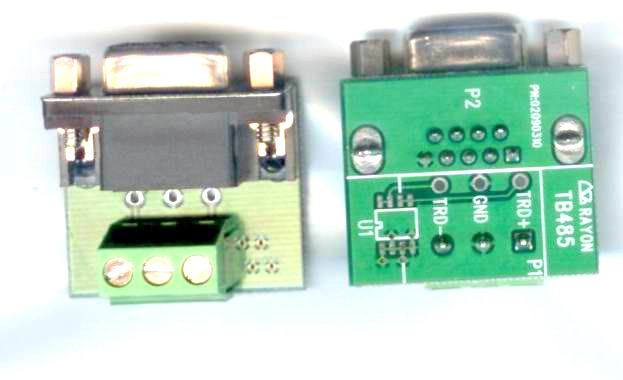
TB485
LOOKING FOR THE RIGHT
INDUSTRIAL SOLUTION?
Discover embedded, communication and automation solutions tailored to your application.
APort031
IP Device Server TX to Isolated 3*RS232 1*RS485/422
211,00 EUR
including VAT 251.09 EUR
- Multi-Port Serial Connectivity:
Provides 3 isolated RS232 ports and 1 isolated RS422/485 port, all accessible through a single Ethernet connection.
- Network Integration:
Converts serial data to TCP/IP or UDP/IP packets, enabling remote access and control of serial devices over LAN or WAN.
- High-Performance Embedded System:
Equipped with a 32-bit 100 MHz MIPS RISC CPU, 16 MB Flash ROM, and 16 MB SDRAM for stable, high-speed data processing.
- Flexible Communication Modes:
Supports TCP Server, TCP Client, UDP Send/Receive, and UDP Multi-Serial modes for diverse networking applications.
- Cross-Platform Driver Support:
- Windows NT/2000/XP/Vista/7 Virtual COM driver (APORT or TPORT mode)
- Linux raw TTY and GVMODEM driver
- SCO UNIX real TTY (RTTY) driver
- Ground Isolation:
All serial ports are galvanically isolated from system ground, protecting against ground loops and electrical noise.
- Web, Telnet, and Console Configuration:
Supports configuration via web browser, Telnet session, or local console terminal.
- Auto-Detecting Ethernet Interface:
Automatically negotiates 10/100 Mbps connection speeds.
- Firmware Upgradeable:
Supports TFTP-based firmware updates via console and DIP switch configuration.
- Industrial Reliability:
Designed for continuous operation in industrial environments with wide humidity tolerance and robust power design.
Provides 3 isolated RS232 ports and 1 isolated RS422/485 port, all accessible through a single Ethernet connection.
- Network Integration:
Converts serial data to TCP/IP or UDP/IP packets, enabling remote access and control of serial devices over LAN or WAN.
- High-Performance Embedded System:
Equipped with a 32-bit 100 MHz MIPS RISC CPU, 16 MB Flash ROM, and 16 MB SDRAM for stable, high-speed data processing.
- Flexible Communication Modes:
Supports TCP Server, TCP Client, UDP Send/Receive, and UDP Multi-Serial modes for diverse networking applications.
- Cross-Platform Driver Support:
- Windows NT/2000/XP/Vista/7 Virtual COM driver (APORT or TPORT mode)
- Linux raw TTY and GVMODEM driver
- SCO UNIX real TTY (RTTY) driver
- Ground Isolation:
All serial ports are galvanically isolated from system ground, protecting against ground loops and electrical noise.
- Web, Telnet, and Console Configuration:
Supports configuration via web browser, Telnet session, or local console terminal.
- Auto-Detecting Ethernet Interface:
Automatically negotiates 10/100 Mbps connection speeds.
- Firmware Upgradeable:
Supports TFTP-based firmware updates via console and DIP switch configuration.
- Industrial Reliability:
Designed for continuous operation in industrial environments with wide humidity tolerance and robust power design.
Comprehensive Product Summary – APort031 IP Device Server
### 1. Product Overview
Product Name: APort031
Article Number: APort031
Series: APORT400 Series – IP to Serial Port Converter
Model Type: TX to Isolated 3×RS232 + 1×RS485/422
Manufacturer: Rayon Technology Co., Ltd.
Manufacturer Address: 2F, No. 177, Chung-Shan 2 Rd., Lu-Chou City, Taipei Hsien, Taiwan
Contact:
- Tel: +886-2-82858362
- Fax: +886-2-82857065
- Email: rayon@ms1.hinet.net
- Web: [www.rayontech.com](http://www.rayontech.com)
The APort031 is a member of Rayon’s APORT400 series of industrial-grade IP-to-serial device servers. It provides a reliable and isolated interface for connecting legacy serial devices to modern Ethernet networks. Designed for industrial automation, control systems, and remote monitoring, the APort031 integrates three ground-isolated RS232 ports and one ground-isolated RS422/485 port, all accessible via a 10/100 Mbps Ethernet interface.
### 2. Key Features
- Multi-Port Serial Connectivity:
Provides 3 isolated RS232 ports and 1 isolated RS422/485 port, all accessible through a single Ethernet connection.
- Network Integration:
Converts serial data to TCP/IP or UDP/IP packets, enabling remote access and control of serial devices over LAN or WAN.
- High-Performance Embedded System:
Equipped with a 32-bit 100 MHz MIPS RISC CPU, 16 MB Flash ROM, and 16 MB SDRAM for stable, high-speed data processing.
- Flexible Communication Modes:
Supports TCP Server, TCP Client, UDP Send/Receive, and UDP Multi-Serial modes for diverse networking applications.
- Cross-Platform Driver Support:
- Windows NT/2000/XP/Vista/7 Virtual COM driver (APORT or TPORT mode)
- Linux raw TTY and GVMODEM driver
- SCO UNIX real TTY (RTTY) driver
- Ground Isolation:
All serial ports are galvanically isolated from system ground, protecting against ground loops and electrical noise.
- Web, Telnet, and Console Configuration:
Supports configuration via web browser, Telnet session, or local console terminal.
- Auto-Detecting Ethernet Interface:
Automatically negotiates 10/100 Mbps connection speeds.
- Firmware Upgradeable:
Supports TFTP-based firmware updates via console and DIP switch configuration.
- Industrial Reliability:
Designed for continuous operation in industrial environments with wide humidity tolerance and robust power design.
### 3. Technical Specifications
Processor & Memory:
- CPU: 32-bit MIPS RISC, 100 MHz
- Flash ROM: 16 MB
- SDRAM: 16 MB
Network Interface:
- Ethernet: 10/100 Mbps auto-detecting
- Connector: RJ45 (100Base-TX)
- Protocols: TCP/IP, UDP/IP
Serial Interfaces:
- Total Ports: 4
- 3 × Ground-Isolated RS232 (DB9 male)
- 1 × Ground-Isolated RS422/485 (DB9 male)
- Baud Rate: Up to 230,400 bps
- Console Port: Shared with Serial Port 1
- Isolation: Ground-isolated per port
- Signal Lines (RS232): DCD, RXD, TXD, DTR, GND, DSR, RTS, CTS, RI
- Signal Lines (RS422/485): TX+, TX–, RX+, RX–, isolated GND
- RS485 Mode: 2-wire or 4-wire selectable via DIP switch
Power Requirements:
- Input Voltage: 5 VDC
- Current Consumption: 1200 mA
- Power Adapter: UP110/UP220 (included)
Environmental Conditions:
- Operating Temperature: 5°C to 40°C
- Storage Temperature: 0°C to 65°C
- Operating Humidity: 10–90% RH (non-condensing)
- Storage Humidity: 5–90% RH
Physical Characteristics:
- Dimensions: 205 × 135 × 29 mm
- Enclosure Material: Industrial-grade Rayon metal housing
- Weight: Approx. 0.8 kg (typical)
### 4. Functionality
The APort031 functions as an IP-to-serial converter, bridging Ethernet networks and serial devices. It encapsulates serial data into TCP or UDP packets, allowing remote access to serial equipment such as PLCs, sensors, barcode scanners, and industrial controllers.
Operating Modes:
1. TCP Server Mode:
The APort031 listens for incoming TCP connections from remote clients. Each serial port can be assigned a unique TCP port number. Supports standard TCP or Telnet negotiation (RFC2217).
2. TCP Client Mode:
The device initiates a connection to a specified remote server. Connection can start automatically at power-up or upon receiving serial data.
3. UDP Mode:
Enables broadcast or unicast communication to up to four remote hosts. Ideal for real-time data distribution.
4. UDP Multi-Serial Mode:
Allows multiple serial ports to share the same UDP port number for simultaneous data transmission.
5. Real TTY Modes:
- COM Real TTY Mode: UDP-based communication for Windows or SCO UNIX systems.
- GVMODEM Real TTY Mode: TCP-based communication for Linux/UNIX systems.
Use Cases:
- Industrial automation and SCADA systems
- Remote serial device management
- Data acquisition and logging
- Modbus RTU over TCP/IP integration
- Legacy serial equipment networking
Compatibility:
- Windows NT/2000/XP/Vista/7
- Linux distributions (with GVMODEM driver)
- SCO UNIX and UNIX variants
### 5. Components & Accessories
Included Items:
- APort031 main unit
- UP110/UP220 5VDC power adapter
- User manual and software CD (drivers and utilities)
Optional Accessories:
- Console cable (RS232)
- Ethernet cable (RJ45)
- DIN-rail or wall-mounting brackets
Connectors:
- 1 × RJ45 Ethernet port
- 4 × DB9 male serial connectors
- Power input jack (5VDC)
### 6. Installation & Setup
Hardware Installation:
1. Connect the APort031 to a network hub or switch using a standard Ethernet cable.
2. Attach serial cables to the RS232 or RS422/485 ports as required.
3. Configure DIP switches:
- Bit 1: Console port enable (ON = console, OFF = normal serial)
- Bit 2: Firmware upgrade mode (ON = upgrade, OFF = normal)
- Bit 3: RS422/RS485 selection for port 3 (ON = RS422, OFF = RS485)
- Bit 4: RS422/RS485 selection for port 4 (ON = RS422, OFF = RS485)
4. Connect the 5VDC power adapter and power on the device.
5. Verify LED indicators for power and LAN link status.
Software Configuration:
- Access via Web Browser (default IP: 192.168.1.254, password: 11111)
- Configure IP address (static recommended), subnet mask, and gateway.
- Set each serial port’s mode (TCP/UDP/Real TTY) and parameters (baud rate, parity, stop bits, flow control).
- Save and reboot to apply settings.
Driver Installation (Windows):
- Use aport_ap.exe for APORT mode or tport_ap.exe for TPORT mode.
- Map virtual COM ports to APort031’s IP and serial port numbers.
- Install drivers via ainstall.exe or tinstall.exe utilities.
- Verify COM port availability in Device Manager.
Linux/UNIX Setup:
- Install gvmodem or rtty drivers.
- Configure `/etc/gtstcpd/gtstcpd.cf` or `/etc/nasd.rc` for IP and port mapping.
- Start the daemon using `./gtstcpd.rc start`.
### 7. Performance & Capabilities
- Data Rate: Up to 230.4 kbps per serial port
- Network Throughput: 10/100 Mbps auto-negotiation
- Latency: Dependent on network conditions; optimized for low-latency serial data exchange
- Concurrent Connections: Each serial port can handle one TCP/UDP session
- Buffering: Internal FIFO buffering for stable data flow
- Reliability: Continuous operation supported; watchdog and heartbeat mechanisms in TPORT driver maintain connection integrity
- Limitations:
- TPORT driver supports one dedicated Windows host per serial port
- RPORT driver recommended for multi-host environments
- Network latency may affect timing-sensitive applications
### 8. Standards & Compliance
- Ethernet Standards: IEEE 802.3 10/100Base-TX
- Serial Standards: EIA/TIA RS232, RS422, RS485
- Protocol Support: TCP/IP, UDP/IP, Telnet (RFC2217)
- Operating System Compatibility: Windows NT/2000/XP/Vista/7, Linux, SCO UNIX
- Safety & Isolation: Ground-isolated serial interfaces for electrical protection
- Firmware Upgrade Protocol: TFTP (Trivial File Transfer Protocol)
- Environmental Compliance: Designed for industrial environments with wide humidity and temperature tolerance
### 9. Additional Information
Firmware Upgrade Procedure:
- Enable firmware upgrade mode via DIP switch (bit 2 ON).
- Connect console terminal (115200 bps, 8N1).
- Use TFTP client to upload new firmware (default IP 192.168.1.254).
- Verify version via web interface or console output.
Maintenance & Troubleshooting:
- Power LED indicates operational status.
- LAN LEDs show link and activity.
- Serial port LEDs indicate TX/RX activity.
- Use “ping” to verify network connectivity.
- Console terminal provides Linux boot messages and diagnostic access.
- “aport_search.exe” and “tport_search.exe” utilities locate devices on the network.
Warranty & Support:
- Warranty Period: 1 year limited warranty covering defects in materials and workmanship.
- Exclusions: Damage from misuse, unauthorized servicing, or incorrect power supply.
- Repair Policy:
- RMA required before return.
- Warranty repairs free of charge.
- Out-of-warranty repairs available at flat-rate service fee.
- Technical Support: Provided via email (rayon@ms1.hinet.net).
Model Identification Scheme:
- APORTxyz
- *x* = Number of RS232 ports
- *y* = Number of isolated RS232 ports
- *z* = Number of isolated RS422/485 ports
Example: APORT031 → 0 RS232, 3 isolated RS232, 1 isolated RS422/485.
Related Models in APORT400 Series:
- APORT400 – 4×RS232
- APORT040 – 4×Isolated RS232
- APORT031 – 3×Isolated RS232 + 1×Isolated RS422/485
- APORT022 – 2×Isolated RS232 + 2×Isolated RS422/485
- APORT301 – 3×RS232 + 1×Isolated RS422/485
- APORT202 – 2×RS232 + 2×Isolated RS422/485
- APORT220 – 2×RS232 + 2×Isolated RS232
- APORT211 – 2×RS232 + 1×Isolated RS232 + 1×Isolated RS422/485
### Summary
The Rayon APort031 is a robust, Linux-based IP device server designed to bridge Ethernet networks and isolated serial interfaces. With its 32-bit RISC architecture, multi-protocol support, and industrial-grade isolation, it provides a reliable solution for integrating legacy serial devices into modern IP-based control systems. Its flexible configuration options, cross-platform driver support, and comprehensive management interfaces make it suitable for automation, SCADA, and remote monitoring applications where reliability, isolation, and network transparency are critical.

### 1. Product Overview
Product Name: APort031
Article Number: APort031
Series: APORT400 Series – IP to Serial Port Converter
Model Type: TX to Isolated 3×RS232 + 1×RS485/422
Manufacturer: Rayon Technology Co., Ltd.
Manufacturer Address: 2F, No. 177, Chung-Shan 2 Rd., Lu-Chou City, Taipei Hsien, Taiwan
Contact:
- Tel: +886-2-82858362
- Fax: +886-2-82857065
- Email: rayon@ms1.hinet.net
- Web: [www.rayontech.com](http://www.rayontech.com)
The APort031 is a member of Rayon’s APORT400 series of industrial-grade IP-to-serial device servers. It provides a reliable and isolated interface for connecting legacy serial devices to modern Ethernet networks. Designed for industrial automation, control systems, and remote monitoring, the APort031 integrates three ground-isolated RS232 ports and one ground-isolated RS422/485 port, all accessible via a 10/100 Mbps Ethernet interface.
### 2. Key Features
- Multi-Port Serial Connectivity:
Provides 3 isolated RS232 ports and 1 isolated RS422/485 port, all accessible through a single Ethernet connection.
- Network Integration:
Converts serial data to TCP/IP or UDP/IP packets, enabling remote access and control of serial devices over LAN or WAN.
- High-Performance Embedded System:
Equipped with a 32-bit 100 MHz MIPS RISC CPU, 16 MB Flash ROM, and 16 MB SDRAM for stable, high-speed data processing.
- Flexible Communication Modes:
Supports TCP Server, TCP Client, UDP Send/Receive, and UDP Multi-Serial modes for diverse networking applications.
- Cross-Platform Driver Support:
- Windows NT/2000/XP/Vista/7 Virtual COM driver (APORT or TPORT mode)
- Linux raw TTY and GVMODEM driver
- SCO UNIX real TTY (RTTY) driver
- Ground Isolation:
All serial ports are galvanically isolated from system ground, protecting against ground loops and electrical noise.
- Web, Telnet, and Console Configuration:
Supports configuration via web browser, Telnet session, or local console terminal.
- Auto-Detecting Ethernet Interface:
Automatically negotiates 10/100 Mbps connection speeds.
- Firmware Upgradeable:
Supports TFTP-based firmware updates via console and DIP switch configuration.
- Industrial Reliability:
Designed for continuous operation in industrial environments with wide humidity tolerance and robust power design.
### 3. Technical Specifications
Processor & Memory:
- CPU: 32-bit MIPS RISC, 100 MHz
- Flash ROM: 16 MB
- SDRAM: 16 MB
Network Interface:
- Ethernet: 10/100 Mbps auto-detecting
- Connector: RJ45 (100Base-TX)
- Protocols: TCP/IP, UDP/IP
Serial Interfaces:
- Total Ports: 4
- 3 × Ground-Isolated RS232 (DB9 male)
- 1 × Ground-Isolated RS422/485 (DB9 male)
- Baud Rate: Up to 230,400 bps
- Console Port: Shared with Serial Port 1
- Isolation: Ground-isolated per port
- Signal Lines (RS232): DCD, RXD, TXD, DTR, GND, DSR, RTS, CTS, RI
- Signal Lines (RS422/485): TX+, TX–, RX+, RX–, isolated GND
- RS485 Mode: 2-wire or 4-wire selectable via DIP switch
Power Requirements:
- Input Voltage: 5 VDC
- Current Consumption: 1200 mA
- Power Adapter: UP110/UP220 (included)
Environmental Conditions:
- Operating Temperature: 5°C to 40°C
- Storage Temperature: 0°C to 65°C
- Operating Humidity: 10–90% RH (non-condensing)
- Storage Humidity: 5–90% RH
Physical Characteristics:
- Dimensions: 205 × 135 × 29 mm
- Enclosure Material: Industrial-grade Rayon metal housing
- Weight: Approx. 0.8 kg (typical)
### 4. Functionality
The APort031 functions as an IP-to-serial converter, bridging Ethernet networks and serial devices. It encapsulates serial data into TCP or UDP packets, allowing remote access to serial equipment such as PLCs, sensors, barcode scanners, and industrial controllers.
Operating Modes:
1. TCP Server Mode:
The APort031 listens for incoming TCP connections from remote clients. Each serial port can be assigned a unique TCP port number. Supports standard TCP or Telnet negotiation (RFC2217).
2. TCP Client Mode:
The device initiates a connection to a specified remote server. Connection can start automatically at power-up or upon receiving serial data.
3. UDP Mode:
Enables broadcast or unicast communication to up to four remote hosts. Ideal for real-time data distribution.
4. UDP Multi-Serial Mode:
Allows multiple serial ports to share the same UDP port number for simultaneous data transmission.
5. Real TTY Modes:
- COM Real TTY Mode: UDP-based communication for Windows or SCO UNIX systems.
- GVMODEM Real TTY Mode: TCP-based communication for Linux/UNIX systems.
Use Cases:
- Industrial automation and SCADA systems
- Remote serial device management
- Data acquisition and logging
- Modbus RTU over TCP/IP integration
- Legacy serial equipment networking
Compatibility:
- Windows NT/2000/XP/Vista/7
- Linux distributions (with GVMODEM driver)
- SCO UNIX and UNIX variants
### 5. Components & Accessories
Included Items:
- APort031 main unit
- UP110/UP220 5VDC power adapter
- User manual and software CD (drivers and utilities)
Optional Accessories:
- Console cable (RS232)
- Ethernet cable (RJ45)
- DIN-rail or wall-mounting brackets
Connectors:
- 1 × RJ45 Ethernet port
- 4 × DB9 male serial connectors
- Power input jack (5VDC)
### 6. Installation & Setup
Hardware Installation:
1. Connect the APort031 to a network hub or switch using a standard Ethernet cable.
2. Attach serial cables to the RS232 or RS422/485 ports as required.
3. Configure DIP switches:
- Bit 1: Console port enable (ON = console, OFF = normal serial)
- Bit 2: Firmware upgrade mode (ON = upgrade, OFF = normal)
- Bit 3: RS422/RS485 selection for port 3 (ON = RS422, OFF = RS485)
- Bit 4: RS422/RS485 selection for port 4 (ON = RS422, OFF = RS485)
4. Connect the 5VDC power adapter and power on the device.
5. Verify LED indicators for power and LAN link status.
Software Configuration:
- Access via Web Browser (default IP: 192.168.1.254, password: 11111)
- Configure IP address (static recommended), subnet mask, and gateway.
- Set each serial port’s mode (TCP/UDP/Real TTY) and parameters (baud rate, parity, stop bits, flow control).
- Save and reboot to apply settings.
Driver Installation (Windows):
- Use aport_ap.exe for APORT mode or tport_ap.exe for TPORT mode.
- Map virtual COM ports to APort031’s IP and serial port numbers.
- Install drivers via ainstall.exe or tinstall.exe utilities.
- Verify COM port availability in Device Manager.
Linux/UNIX Setup:
- Install gvmodem or rtty drivers.
- Configure `/etc/gtstcpd/gtstcpd.cf` or `/etc/nasd.rc` for IP and port mapping.
- Start the daemon using `./gtstcpd.rc start`.
### 7. Performance & Capabilities
- Data Rate: Up to 230.4 kbps per serial port
- Network Throughput: 10/100 Mbps auto-negotiation
- Latency: Dependent on network conditions; optimized for low-latency serial data exchange
- Concurrent Connections: Each serial port can handle one TCP/UDP session
- Buffering: Internal FIFO buffering for stable data flow
- Reliability: Continuous operation supported; watchdog and heartbeat mechanisms in TPORT driver maintain connection integrity
- Limitations:
- TPORT driver supports one dedicated Windows host per serial port
- RPORT driver recommended for multi-host environments
- Network latency may affect timing-sensitive applications
### 8. Standards & Compliance
- Ethernet Standards: IEEE 802.3 10/100Base-TX
- Serial Standards: EIA/TIA RS232, RS422, RS485
- Protocol Support: TCP/IP, UDP/IP, Telnet (RFC2217)
- Operating System Compatibility: Windows NT/2000/XP/Vista/7, Linux, SCO UNIX
- Safety & Isolation: Ground-isolated serial interfaces for electrical protection
- Firmware Upgrade Protocol: TFTP (Trivial File Transfer Protocol)
- Environmental Compliance: Designed for industrial environments with wide humidity and temperature tolerance
### 9. Additional Information
Firmware Upgrade Procedure:
- Enable firmware upgrade mode via DIP switch (bit 2 ON).
- Connect console terminal (115200 bps, 8N1).
- Use TFTP client to upload new firmware (default IP 192.168.1.254).
- Verify version via web interface or console output.
Maintenance & Troubleshooting:
- Power LED indicates operational status.
- LAN LEDs show link and activity.
- Serial port LEDs indicate TX/RX activity.
- Use “ping” to verify network connectivity.
- Console terminal provides Linux boot messages and diagnostic access.
- “aport_search.exe” and “tport_search.exe” utilities locate devices on the network.
Warranty & Support:
- Warranty Period: 1 year limited warranty covering defects in materials and workmanship.
- Exclusions: Damage from misuse, unauthorized servicing, or incorrect power supply.
- Repair Policy:
- RMA required before return.
- Warranty repairs free of charge.
- Out-of-warranty repairs available at flat-rate service fee.
- Technical Support: Provided via email (rayon@ms1.hinet.net).
Model Identification Scheme:
- APORTxyz
- *x* = Number of RS232 ports
- *y* = Number of isolated RS232 ports
- *z* = Number of isolated RS422/485 ports
Example: APORT031 → 0 RS232, 3 isolated RS232, 1 isolated RS422/485.
Related Models in APORT400 Series:
- APORT400 – 4×RS232
- APORT040 – 4×Isolated RS232
- APORT031 – 3×Isolated RS232 + 1×Isolated RS422/485
- APORT022 – 2×Isolated RS232 + 2×Isolated RS422/485
- APORT301 – 3×RS232 + 1×Isolated RS422/485
- APORT202 – 2×RS232 + 2×Isolated RS422/485
- APORT220 – 2×RS232 + 2×Isolated RS232
- APORT211 – 2×RS232 + 1×Isolated RS232 + 1×Isolated RS422/485
### Summary
The Rayon APort031 is a robust, Linux-based IP device server designed to bridge Ethernet networks and isolated serial interfaces. With its 32-bit RISC architecture, multi-protocol support, and industrial-grade isolation, it provides a reliable solution for integrating legacy serial devices into modern IP-based control systems. Its flexible configuration options, cross-platform driver support, and comprehensive management interfaces make it suitable for automation, SCADA, and remote monitoring applications where reliability, isolation, and network transparency are critical.
-
APORT400_Catalog.pdf
PDF Catalog
-
APORT_manual.pdf
Manual
-
TPORT driver feature.pdf
Manual
- TB485 - DB9 Female to RS485 terminal screw block kit