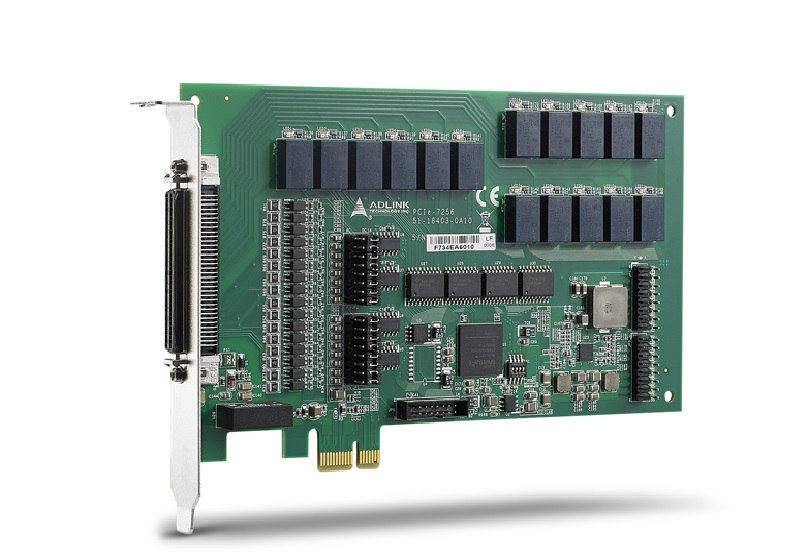
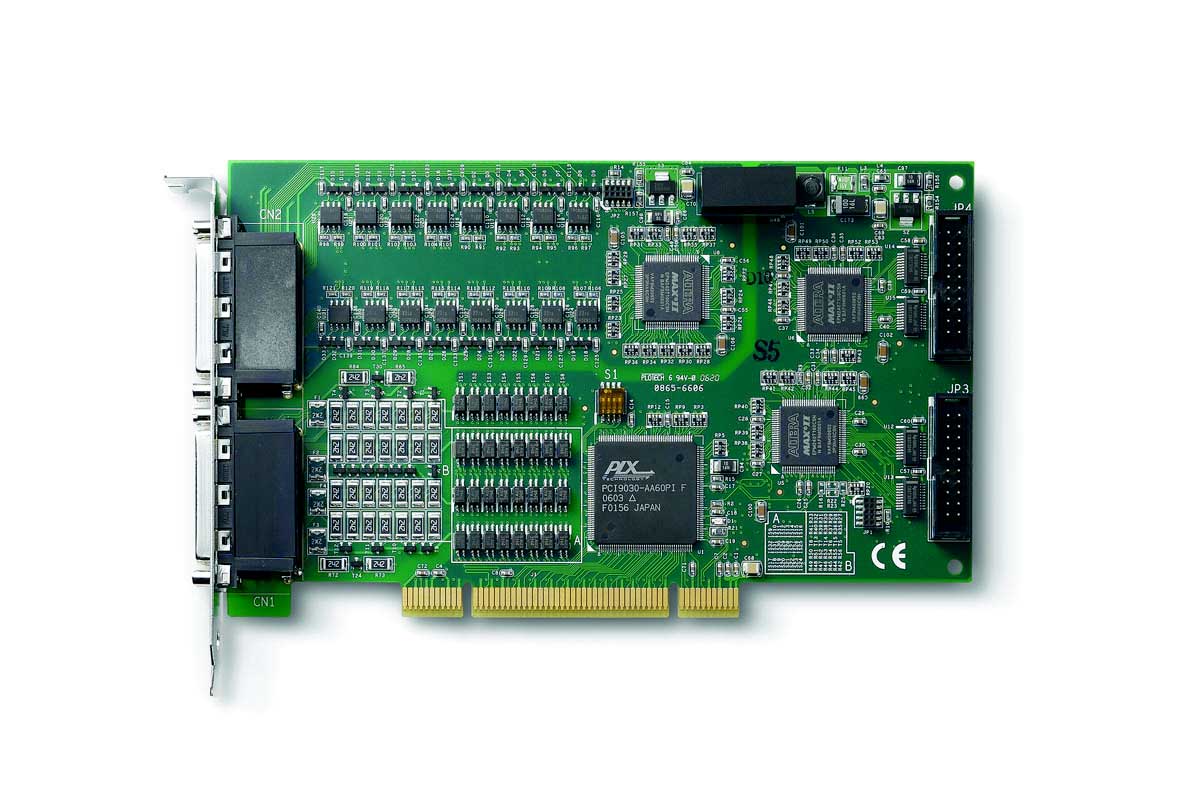
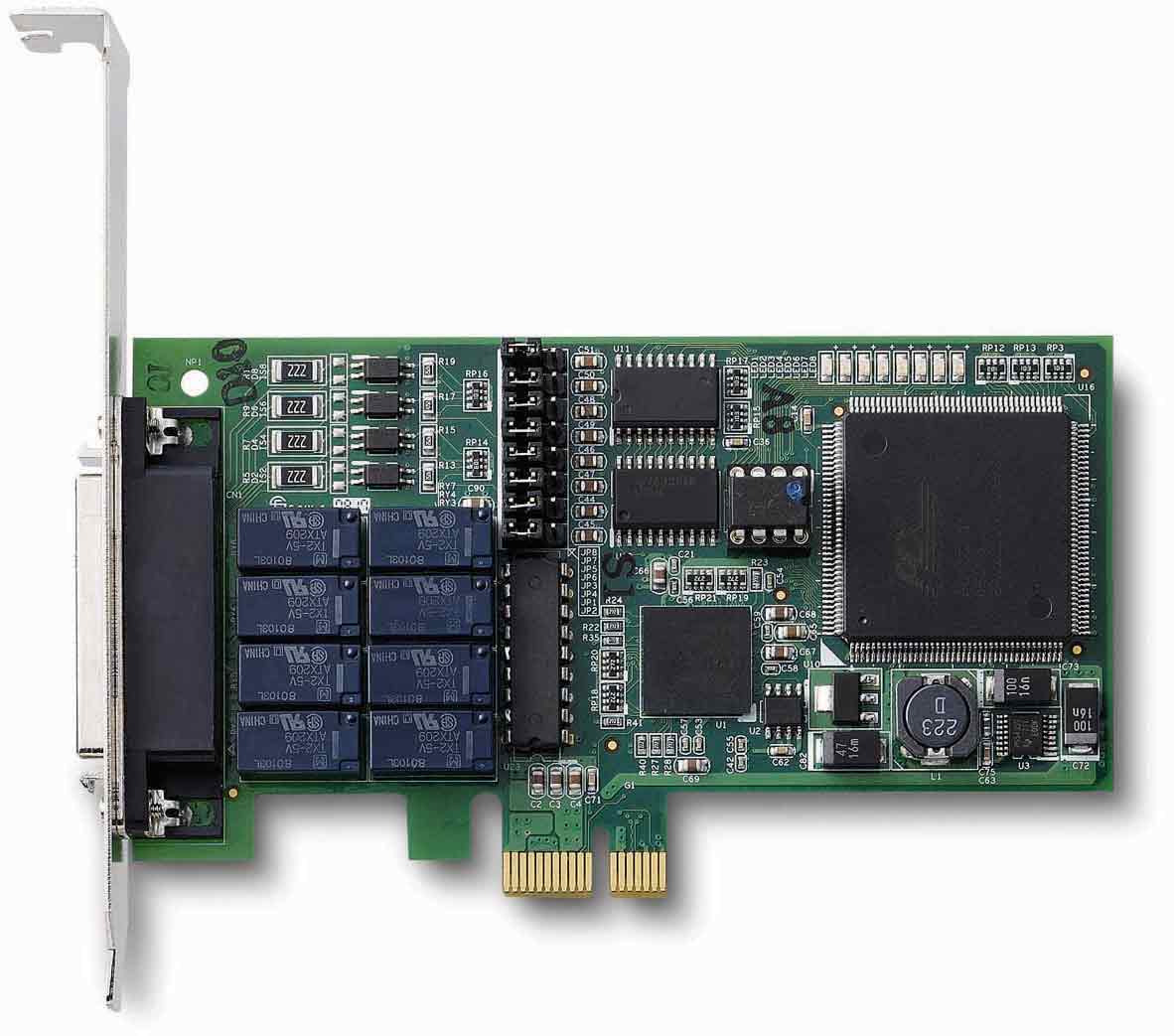
Comprehensive Product Summary: ADLINK LPCIe‑7250 PCI Express Low‑Profile 8‑Relay Output & 8‑Isolated Digital Input Card
### 1. Product Overview
Product Name: LPCIe‑7250
Model Number: LPCIe‑7250
Series: PCI‑/cPCI‑/LPCI‑/LPCIe‑725X Series
Article Number: LPCIe‑7250
Manufacturer: ADLINK Technology Inc.
Product Type: PCI Express Low‑Profile Digital I/O Card with 8 Relay Outputs and 8 Isolated Digital Inputs
Form Factor: Low‑Profile PCI Express x1 Lane Interface
Manufacturer Website: [www.adlinktech.com](http://www.adlinktech.com)
The ADLINK LPCIe‑7250 is a compact, low‑profile PCI Express digital I/O card designed for industrial automation, laboratory control, and general‑purpose digital signal interfacing. It provides eight single‑pole double‑throw (SPDT, Form C) relay outputs and eight optically isolated digital input channels. The card is part of ADLINK’s 725X family, which includes PCI, CompactPCI, and PCIe variants, offering consistent functionality across multiple bus architectures.
### 2. Key Features
- PCI Express x1 Interface: Fully compliant with PCI Express Base Specification, supporting 3.3 V signaling.
- 8‑Channel SPDT (Form C) Relay Outputs: Each relay provides normally open (NO), normally closed (NC), and common (COM) contacts for flexible switching.
- 8‑Channel Optically Isolated Digital Inputs: Non‑polarity inputs with 5000 VRMS isolation for noise‑immune signal acquisition.
- Onboard LED Indicators: Each relay output has a dedicated LED to display its energized/de‑energized state.
- Relay Readback Function: Software can read the actual relay output status for verification.
- Onboard Relay Driving Circuits: Integrated driver circuitry ensures reliable relay actuation without external components.
- Non‑Latching Relays: Ensures predictable power‑up state and safe operation.
- Low‑Pass Filtering for Inputs: Optional RC filtering selectable via onboard jumpers for AC or DC signal conditioning.
- Compact Low‑Profile PCB: 120 mm × 69 mm board size suitable for space‑constrained systems.
- High Isolation Voltage: 5000 VRMS isolation between input channels and system ground.
- Wide Input Voltage Range: Accepts 5–24 V logic‑high signals, 0–1.5 V logic‑low.
- Industrial‑Grade Reliability: Designed for continuous operation in harsh environments (0 °C – 60 °C).
- Software Support: Compatible with Windows and Linux drivers, LabVIEW™, MATLAB®, and ADLINK’s DAQPilot SDK.
- Expandable Family: Functionally equivalent to PCI‑7250, LPCI‑7250, and cPCI‑7252 models for cross‑platform integration.
### 3. Technical Specifications
Physical Characteristics
- Dimensions (PCB only): 120 mm × 69 mm
- Form Factor: Low‑Profile PCI Express (MD1)
- Weight: Approx. 120 g (typical)
- Connector Type: 50‑pin SCSI‑II female
- Mounting: Standard low‑profile bracket
Relay Output Specifications
- Number of Channels: 8
- Relay Type: SPDT (Form C, normally open)
- Contact Rating: 30 V DC @ 2 A resistive load
- Breakdown Voltage: 1000 VRMS minimum
- Contact Resistance: 100 mΩ maximum
- Operate Time: 8 ms typical
- Release Time: 8 ms typical
- Expected Mechanical Life:
- > 1 × 10⁵ operations @ 2 A 30 V DC
- > 5 × 10⁵ operations @ 1 A 30 V DC
- Coil Voltage: +5 V, 33 mA per relay (total ≈ 0.26 A)
- LED Indicators: One per relay channel
Isolated Digital Input Specifications
- Number of Channels: 8
- Input Type: Optically isolated, non‑polarity
- Input Voltage Range: 0 – 24 V DC (non‑polarity)
- Logic Levels:
- Logic High: 5 – 24 V
- Logic Low: 0 – 1.5 V
- Input Resistance: 2.2 kΩ @ 0.33 W
- Isolation Voltage: 5000 VRMS channel‑to‑system
- Input Device: PC3H4 photo‑coupler
- Data Transfer Method: Programmed I/O
Environmental Conditions
- Operating Temperature: 0 °C – 60 °C
- Storage Temperature: –20 °C – 80 °C
- Relative Humidity: 5 % – 95 %, non‑condensing
Power Requirements
- +3.3 V @ 280 mA
- +12 V @ 180 mA
- Total Power Consumption: ≈ 3.5 W typical
### 4. Functionality
The LPCIe‑7250 provides eight relay outputs and eight isolated digital inputs accessible through a 50‑pin SCSI‑II connector. Each relay channel can switch external loads such as solenoids, lamps, or contactors, while the isolated inputs can monitor external logic or contact closures.
Operating Principle:
- Relay Outputs: Controlled via software registers; each bit corresponds to one relay. Writing a logic 1 energizes the relay coil, closing the NO contact.
- Input Channels: Each input passes through an opto‑isolator, converting external voltage signals into logic levels readable by the host system.
- Readback: The card supports readback of relay states and input status through programmed I/O.
- Filtering: Each input channel can be configured for AC‑filtered or DC‑filtered operation using jumpers JP1–JP8.
Typical Applications:
- Industrial ON/OFF control of actuators and solenoids
- Machine status monitoring and interlock control
- Laboratory automation and test sequencing
- External high‑power relay driving
- Limit switch and contact sensing
- Integration with analog I/O cards for complete DAQ systems
Compatibility:
- PCI Express x1 slot (compatible with x4/x8/x16 mechanical slots)
- Supported Operating Systems: Windows 7/Vista/XP/2000/2003 Server, Linux
- Supported Software: AD‑Logger, DAQBench, VB.NET, VC++, Delphi, LabVIEW™, MATLAB®
### 5. Components & Accessories
Included Items:
- LPCIe‑7250 card
- ADLINK software CD (drivers and utilities)
- User’s Manual and Installation Guide
Optional Terminal Boards & Cables:
- DIN‑50S‑01: Terminal board with one 50‑pin SCSI‑II connector and DIN‑rail mounting (cable not included)
- ACL‑10250‑1M: 50‑pin SCSI‑II cable (1 m, mating with AMP‑787082‑5)
Connector Pinout (CN1 – 50‑pin SCSI‑II):
Pins 1–12: Relay 0–3 (NO/COM/NC)
Pins 26–37: Relay 4–7 (NO/COM/NC)
Pins 18–25 & 43–50: Isolated Digital Inputs 0–7 (H/L pairs)
Unused pins (13–17, 38–42): N/C
### 6. Installation & Setup
System Requirements:
- Available PCI Express x1 slot
- Supported OS (Windows or Linux)
- Administrative privileges for driver installation
Installation Procedure:
1. Power off the host PC and disconnect peripherals.
2. Insert the LPCIe‑7250 into an available PCIe slot.
3. Secure the bracket and close the chassis.
4. Power on the system; Windows Plug‑and‑Play will detect the new device.
5. Install ADLINK’s DAQPilot or PCIS‑DASK driver package.
6. Verify installation using DAQMaster or AD‑Logger utilities.
Input Configuration:
- Each input channel has a jumper (JP1–JP8) to select AC‑filtered or DC‑filtered mode.
- Pins 2–3: Non‑AC‑Filter (default, DC input)
- Pins 1–2: AC‑Filter (for AC input signals)
Mounting Options:
- Standard low‑profile PCIe bracket
- Optional DIN‑rail terminal board for field wiring
### 7. Performance & Capabilities
Relay Performance:
- Switching Speed: 8 ms operate / 8 ms release
- Maximum Switching Voltage: 30 V DC
- Maximum Switching Current: 2 A per channel
- Isolation: 1000 VRMS contact‑to‑coil
- Mechanical Durability: > 10⁵ operations @ 2 A 30 V DC
Input Performance:
- Input Range: 0–24 V DC
- Input Current: ≈ 10 mA @ 24 V
- Isolation: 5000 VRMS channel‑to‑system
- Input Impedance: 2.2 kΩ
- Filter Time Constant: ≈ 5 ms (AC‑filter mode)
Data Transfer:
- Programmed I/O (no DMA)
- Register‑based control and readback
- Typical update rate limited by system I/O performance
Limitations:
- Not intended for high‑speed switching or PWM control
- Relay contacts suitable for resistive or light inductive loads only
- No hardware interrupt generation
### 8. Standards & Compliance
- Bus Interface: PCI Express x1, 3.3 V signaling
- Isolation: 5000 VRMS (inputs), 1000 VRMS (relay contacts)
- Form Factor: Low‑Profile PCIe MD1 compliant
- Environmental: 0 °C – 60 °C operation, 5 % – 95 % RH non‑condensing
- CompactPCI Compliance (family reference): PICMG 2.0 R2.1 (for cPCI‑7252 variant)
- Electrical Safety: Designed to meet industrial insulation and creepage standards
- RoHS Compliance: Lead‑free manufacturing process
- EMC: Designed for CE/FCC Class A industrial environments
### 9. Additional Information
Warranty & Support:
- Standard ADLINK limited warranty (typically 2 years)
- Technical support via email: service@adlinktech.com
- Telephone: +886‑2‑82265877
- Fax: +886‑2‑82265717
- Address: 9F, No. 166, Jian Yi Road, Chungho City, Taipei 235, Taiwan
Maintenance:
- No periodic calibration required
- Keep connectors clean and free of debris
- Avoid exceeding rated contact loads to prolong relay life
Software & Driver Updates:
- Windows Drivers: DAQPilot (recommended), PCIS‑DASK (legacy)
- Linux Drivers: PCIS‑DASK/X
- Third‑Party Integration:
- LabVIEW™: DAQ‑LVIEW PnP VI set
- MATLAB®: DAQ‑MTLB adapter
- Agilent VEE™: PCIS‑VEE driver
- ActiveX/SCADA: DAQBench controls
- Configuration Utility: DAQMaster for device management and task setup
Documentation:
- User’s Manual Rev. 2.03 (Part No. 50‑11038‑1000, June 24 2008)
- Updated specifications (Nov 21 2018)
Ordering Information:
- LPCIe‑7250: 8‑CH Relay Outputs & 8‑CH Isolated DI Low‑Profile PCI Express Card
- Optional Accessories: DIN‑50S‑01 Terminal Board, ACL‑10250‑1M Cable
### Summary
The ADLINK LPCIe‑7250 is a robust, low‑profile PCI Express digital I/O card engineered for industrial control and monitoring applications requiring reliable relay actuation and isolated input sensing. With eight SPDT relays rated at 30 V DC @ 2 A, eight optically isolated inputs tolerant up to 24 V, and 5000 VRMS isolation, it ensures safe and noise‑immune operation in demanding environments. The card’s compact MD1 form factor, onboard LED indicators, and comprehensive software ecosystem make it ideal for integration into automated test systems, machine control, and data acquisition platforms.
Its compatibility with Windows and Linux, along with support for LabVIEW™, MATLAB®, and ADLINK’s DAQPilot SDK, provides developers with flexible programming options. The LPCIe‑7250 continues ADLINK’s tradition of delivering industrial‑grade reliability, ease of integration, and long‑term support for PCI Express‑based digital I/O solutions.


 LOOKING FOR THE RIGHT
 PCI-7250_7251_datasheet_20181121.pdf
PDF Catalog
PCI-7250_7251_datasheet_20181121.pdf
PDF Catalog
 06-07.pdf
PDF Catalog
06-07.pdf
PDF Catalog
 06-00.pdf
PDF Catalog
06-00.pdf
PDF Catalog
 Digital_IO_Selection_Guide_20151230.pdf
PDF Catalog
Digital_IO_Selection_Guide_20151230.pdf
PDF Catalog
 PCI-725X_manual.pdf
Manual
PCI-725X_manual.pdf
Manual