 SUCHEN SIE DIE PASSENDE
INDUSTRIELLE LÖSUNG?
Entdecken Sie Embedded-, Kommunikations- und Automatisierungslösungen für Ihre Anwendung.
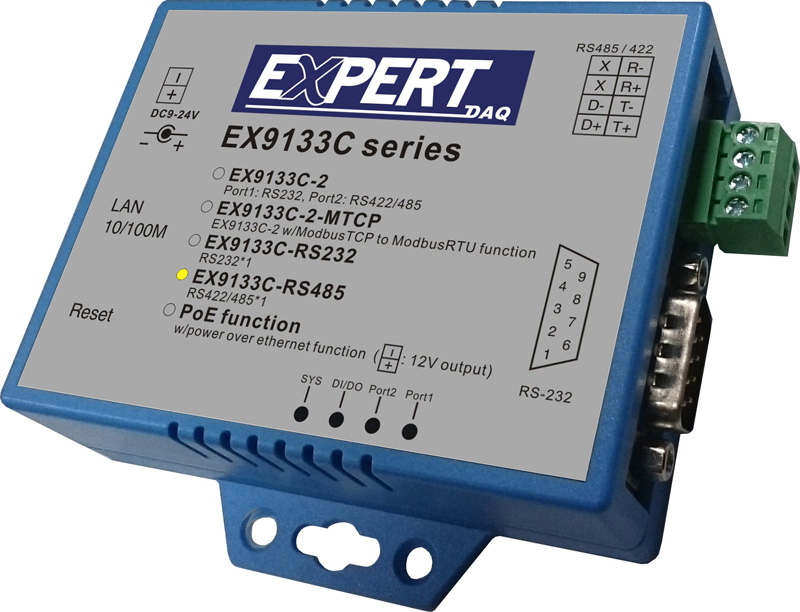
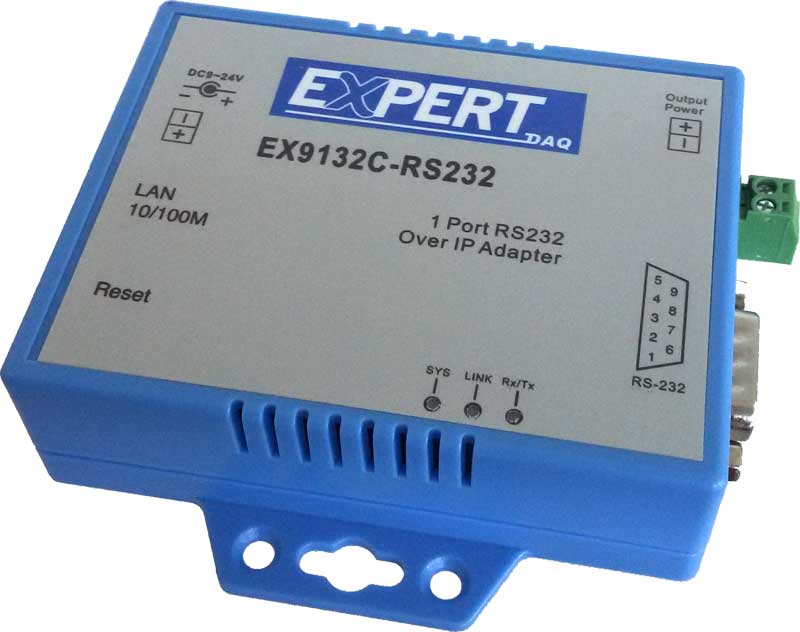
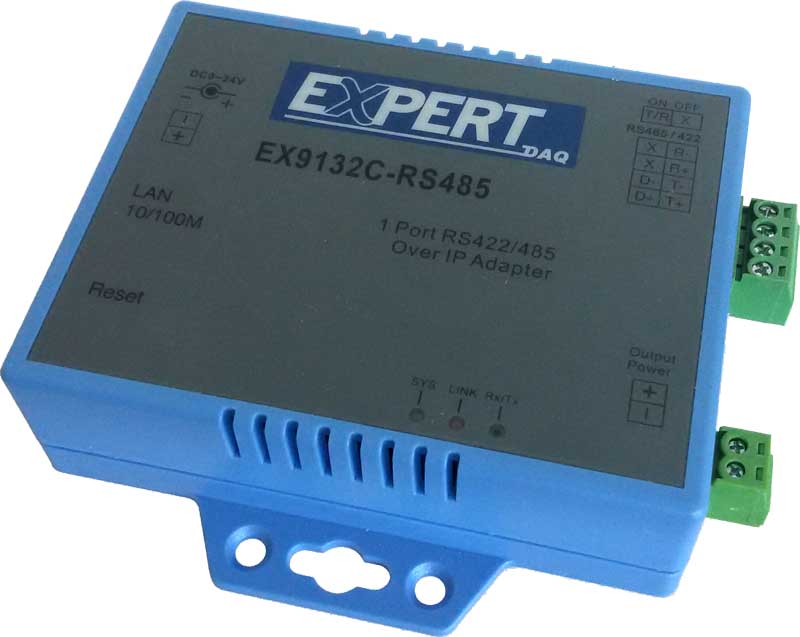
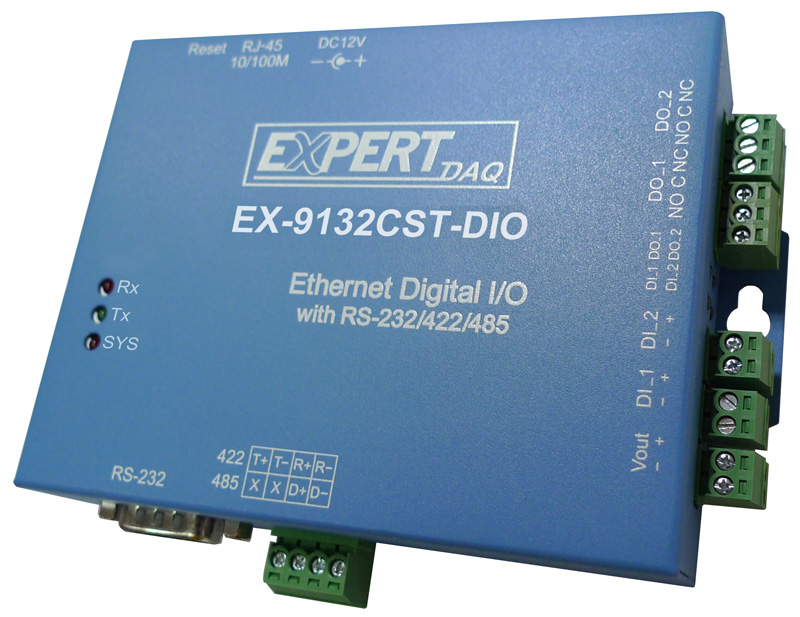
EX9133C-2
M4 120Mhz 128K RAM 512K ROM Ethernet to RS-232*1(DB9) RS-232/422/485 *1(AutoDetect) (Plastic)
119,00 EUR
inkl. Umsatzsteuer 141,61 EUR
- Multi‑Protocol Serial Conversion:
Converts RS‑232, RS‑422, or RS‑485 serial data to Ethernet (TCP/IP) seamlessly.
Auto‑detects RS‑422/RS‑485 interface type.
- High‑Performance Processor:
Equipped with an ARM Cortex‑M4 32‑bit CPU running at 120 MHz, providing 1.25 DMIPS/MHz computational efficiency and low power consumption.
- Memory Resources:
128 KB SRAM and 512 KB Flash ROM for firmware, buffering, and configuration storage.
- Flexible Network Operation Modes:
Supports TCP Server, TCP Client, UDP Client, Virtual COM, and Pairing modes for versatile integration with networked systems.
- Web‑Based Configuration:
All parameters can be configured via a standard web browser (HTTP interface). No proprietary software required.
- Virtual COM Port Support:
Includes Windows Virtual COM software (Windows 2000/2003/XP/Vista/7/10) for transparent serial‑over‑Ethernet communication.
- Dynamic IP Management:
Supports DHCP client mode for automatic IP assignment or static IP configuration.
- Security and Access Control:
Password‑protected login prevents unauthorized configuration changes.
- Remote Firmware Update:
Firmware can be updated directly via Ethernet to maintain compatibility with evolving network standards.
- Industrial‑Grade Reliability:
Built‑in watchdog timer, 15 kV ESD protection on all signal lines, and 1.5 kV magnetic isolation on Ethernet port.
- Extended Temperature Operation:
Designed for 0 °C – 70 °C operating range, suitable for industrial environments.
- Optional Digital I/O (TTL):
Eight digital input/output pins (optional) for remote sensor monitoring or control via TCP/IP.
- PoE (Power over Ethernet) Option:
Optional PoE splitter provides approximately 12 V DC output from Cat5 cabling, enabling single‑cable data and power delivery.
Converts RS‑232, RS‑422, or RS‑485 serial data to Ethernet (TCP/IP) seamlessly.
Auto‑detects RS‑422/RS‑485 interface type.
- High‑Performance Processor:
Equipped with an ARM Cortex‑M4 32‑bit CPU running at 120 MHz, providing 1.25 DMIPS/MHz computational efficiency and low power consumption.
- Memory Resources:
128 KB SRAM and 512 KB Flash ROM for firmware, buffering, and configuration storage.
- Flexible Network Operation Modes:
Supports TCP Server, TCP Client, UDP Client, Virtual COM, and Pairing modes for versatile integration with networked systems.
- Web‑Based Configuration:
All parameters can be configured via a standard web browser (HTTP interface). No proprietary software required.
- Virtual COM Port Support:
Includes Windows Virtual COM software (Windows 2000/2003/XP/Vista/7/10) for transparent serial‑over‑Ethernet communication.
- Dynamic IP Management:
Supports DHCP client mode for automatic IP assignment or static IP configuration.
- Security and Access Control:
Password‑protected login prevents unauthorized configuration changes.
- Remote Firmware Update:
Firmware can be updated directly via Ethernet to maintain compatibility with evolving network standards.
- Industrial‑Grade Reliability:
Built‑in watchdog timer, 15 kV ESD protection on all signal lines, and 1.5 kV magnetic isolation on Ethernet port.
- Extended Temperature Operation:
Designed for 0 °C – 70 °C operating range, suitable for industrial environments.
- Optional Digital I/O (TTL):
Eight digital input/output pins (optional) for remote sensor monitoring or control via TCP/IP.
- PoE (Power over Ethernet) Option:
Optional PoE splitter provides approximately 12 V DC output from Cat5 cabling, enabling single‑cable data and power delivery.
Comprehensive Product Summary – EX9133C‑2 Ethernet to Serial Converter
### 1. Product Overview
Product Name: EX9133C‑2
Model: EX9133C‑2
Series: EX9133C (ARM Cortex‑M4 CPU Series)
Article Number: EX9133C‑2
Manufacturer: TOPSCCC / EXSYS (Industrial Networking Solutions Division)
The EX9133C‑2 is a compact, high‑performance Ethernet‑to‑Serial converter designed to connect legacy serial devices (RS‑232, RS‑422, RS‑485) to modern TCP/IP networks. It belongs to the EX9133C series of ARM Cortex‑M4‑based converters, offering robust industrial communication capabilities, web‑based configuration, and optional Power over Ethernet (PoE) support. The device is housed in a durable plastic enclosure suitable for industrial and commercial environments.
### 2. Key Features
- Multi‑Protocol Serial Conversion:
Converts RS‑232, RS‑422, or RS‑485 serial data to Ethernet (TCP/IP) seamlessly.
Auto‑detects RS‑422/RS‑485 interface type.
- High‑Performance Processor:
Equipped with an ARM Cortex‑M4 32‑bit CPU running at 120 MHz, providing 1.25 DMIPS/MHz computational efficiency and low power consumption.
- Memory Resources:
128 KB SRAM and 512 KB Flash ROM for firmware, buffering, and configuration storage.
- Flexible Network Operation Modes:
Supports TCP Server, TCP Client, UDP Client, Virtual COM, and Pairing modes for versatile integration with networked systems.
- Web‑Based Configuration:
All parameters can be configured via a standard web browser (HTTP interface). No proprietary software required.
- Virtual COM Port Support:
Includes Windows Virtual COM software (Windows 2000/2003/XP/Vista/7/10) for transparent serial‑over‑Ethernet communication.
- Dynamic IP Management:
Supports DHCP client mode for automatic IP assignment or static IP configuration.
- Security and Access Control:
Password‑protected login prevents unauthorized configuration changes.
- Remote Firmware Update:
Firmware can be updated directly via Ethernet to maintain compatibility with evolving network standards.
- Industrial‑Grade Reliability:
Built‑in watchdog timer, 15 kV ESD protection on all signal lines, and 1.5 kV magnetic isolation on Ethernet port.
- Extended Temperature Operation:
Designed for 0 °C – 70 °C operating range, suitable for industrial environments.
- Optional Digital I/O (TTL):
Eight digital input/output pins (optional) for remote sensor monitoring or control via TCP/IP.
- PoE (Power over Ethernet) Option:
Optional PoE splitter provides approximately 12 V DC output from Cat5 cabling, enabling single‑cable data and power delivery.
### 3. Technical Specifications
Processor & Memory
- CPU: ARM Cortex‑M4 32‑bit, 120 MHz
- RAM: 128 KB SRAM
- ROM: 512 KB Flash ROM
Ethernet Interface
- Connector: RJ‑45 (10/100 Mbps Auto‑Detect)
- Protocols: ARP, IP, ICMP, UDP, TCP, HTTP, DHCP
- Modes: TCP Server, TCP Client, UDP Client, Virtual COM, Pairing
- Configuration: HTTP Browser Setup (IE, Netscape)
- Security: Password Login
- Isolation: 1.5 kV Magnetic Isolation
- PoE Support: Optional (12 V output after splitter)
Serial Interfaces
- RS‑232: 1 × DB9 connector
- RS‑422/RS‑485: 1 × Terminal Block (Auto‑Detect)
- Baud Rate: 300 bps – 115.2 Kbps
- Data Bits: 5, 6, 7, 8
- Stop Bits: 1 or 2
- Parity: None, Odd, Even, Mark, Space
- RS‑422 Signals: Rx+, Rx−, Tx+, Tx− (with surge and over‑current protection)
- RS‑485 Signals: Data+, Data− (with surge and over‑current protection)
- Built‑in Pull High/Low Resistors
- ESD Protection: 15 kV on all signal lines
Power Requirements
- Input Voltage: DC 9 – 24 V (500 mA)
- Power Connector: DC Jack (default) / Terminal Block (optional)
- PoE Option: 12 V output after splitter
Indicators (LEDs)
- PORT‑1 (Red): Data Transmit Indicator
- PORT‑2 (Green): Data Receive Indicator
- DI/DO (Red): Digital I/O Activity
- SYS (Green): System Status (blinks once per second in normal operation)
Environmental Conditions
- Operating Temperature: 0 °C – 70 °C
- Storage Temperature: −10 °C – 80 °C
- Humidity: 5 % – 95 % (non‑condensing)
Physical Characteristics
- Dimensions: 115 × 90 × 27 mm (W × D × H)
- Weight: 140 g
- Enclosure: Plastic (PVC)
- Mounting: Desktop or optional DIN rail kit
Compliance
- RoHS Compliant
- FCC and CE Certified
Warranty
- 1 Year Limited Manufacturer Warranty
### 4. Functionality
The EX9133C‑2 functions as a Serial‑to‑Ethernet converter, bridging traditional serial communication protocols with modern IP‑based networks. It encapsulates serial data into TCP/IP packets for transmission over Ethernet and decapsulates incoming network data back into serial form.
Operating Modes:
- TCP Server: Listens for incoming connections from remote clients.
- TCP Client: Initiates connections to a designated server.
- UDP Client: Supports connectionless data exchange.
- Virtual COM: Emulates a local COM port on a Windows PC for legacy software compatibility.
- Pairing Mode: Links two converters for transparent serial‑to‑serial communication over Ethernet.
Use Cases & Applications:
- Industrial automation (PLC networking, SCADA integration)
- Remote sensor and meter data collection
- Serial device management over LAN/WAN
- Building automation and environmental monitoring
- Legacy equipment integration into IP networks
Compatibility:
- Works with Windows 2000/2003/XP/Vista/7/10 via Virtual COM driver.
- Supports standard network APIs (Winsock, BSD Sockets).
- Accessible via web browsers for configuration (HTTP interface).
### 5. Components & Accessories
Included Items:
- 1 × EX9133C‑2 Converter Unit
- Quick Installation Guide and Software (CD or download)
Optional Accessories:
- DIN Rail Mounting Kit: €2 (add on request)
- Power Cable: €2 (add on request)
- 12 V Power Adapter: €9 (add on request)
- PoE Splitter Module: Optional for PoE operation
Connectors:
- RJ‑45 Ethernet Port
- DB9 RS‑232 Port
- Terminal Block for RS‑422/RS‑485
- DC Power Jack and Reset Button
### 6. Installation & Setup
Power Connection:
Connect a 9–24 V DC power supply (inner positive, outer negative) to the DC jack or terminal block. For PoE models, connect via Cat5 cable to a PoE switch or injector.
Network Connection:
Attach the RJ‑45 Ethernet port to a LAN switch or hub. The LAN LED will illuminate when connected; data LEDs blink during transmission.
Serial Connection:
Connect the RS‑232 (DB9) or RS‑422/485 (Terminal Block) to the serial device. The converter auto‑detects RS‑422 or RS‑485 mode.
Reset Procedure:
Press and hold the reset button for 3 seconds to restore factory defaults (password cleared). Holding for > 5 seconds enters firmware update mode.
Configuration Methods:
1. EXBrowser Utility: Windows tool for device discovery and IP configuration via UDP broadcast.
2. Web Interface: Access via browser using device IP address to configure network and serial parameters.
3. Virtual COM Software: Creates a virtual COM port for legacy applications.
Typical Setup Steps:
1. Power on the converter.
2. Use EXBrowser to assign IP address (static or DHCP).
3. Access the web interface for detailed configuration (baud rate, parity, socket mode, etc.).
4. Save settings and reboot the device.
5. Verify communication via HyperTerminal or application software.
### 7. Performance & Capabilities
- Data Rate: 300 bps – 115.2 Kbps (serial)
- Network Speed: 10/100 Mbps (auto‑negotiation)
- Socket Connections: 1 active connection per device
- Latency: Low (< 10 ms typical in LAN environment)
- Reliability: Watchdog function ensures continuous operation; auto‑reset on communication failure.
- Efficiency: Low power consumption due to ARM Cortex‑M4 architecture.
- Limitations: Single serial port operation; one socket connection per device; no built‑in Wi‑Fi.
### 8. Standards & Compliance
- Electrical Safety & EMC: FCC and CE certified.
- Environmental: RoHS compliant materials and manufacturing.
- Network Protocols: Compliant with IEEE 802.3 (10/100 Base‑T), TCP/IP stack standards.
- Firmware Integrity: Supports online updates to maintain protocol compatibility.
### 9. Additional Information
Warranty & Support:
- 1‑year limited manufacturer warranty covering defects in materials and workmanship.
- Technical support available via manufacturer’s website and email.
- Firmware updates and Virtual COM software available for download.
Maintenance:
- Periodically check connections and clean ports with dry air.
- Avoid exposure to moisture or corrosive environments.
- Firmware updates recommended to maintain security and performance.
Troubleshooting Highlights:
- If EXBrowser cannot detect the device, verify power and network connections.
- If web setup fails, ensure the PC and converter are on the same subnet.
- Reset to factory defaults if password is lost or configuration is corrupted.
Pin Assignments (Summary):
- RS‑422: Pin 1 R−, Pin 2 R+, Pin 3 T−, Pin 4 T+
- RS‑485: D+ ↔ D+, D− ↔ D−
- RJ‑45: Standard Ethernet pinout (10/100 Base‑T)
### Summary
The EX9133C‑2 Ethernet‑to‑Serial Converter is a robust, cost‑effective solution for integrating serial‑based industrial equipment into modern Ethernet networks. Powered by a 120 MHz ARM Cortex‑M4 processor, it delivers reliable, low‑latency communication with flexible configuration options. Its dual serial interfaces (RS‑232 and RS‑422/485), web‑based management, and optional PoE capability make it ideal for automation, monitoring, and remote control applications. With comprehensive protocol support, industrial‑grade protection, and straightforward setup, the EX9133C‑2 ensures seamless connectivity between legacy serial systems and IP‑based infrastructures.
### 1. Product Overview
Product Name: EX9133C‑2
Model: EX9133C‑2
Series: EX9133C (ARM Cortex‑M4 CPU Series)
Article Number: EX9133C‑2
Manufacturer: TOPSCCC / EXSYS (Industrial Networking Solutions Division)
The EX9133C‑2 is a compact, high‑performance Ethernet‑to‑Serial converter designed to connect legacy serial devices (RS‑232, RS‑422, RS‑485) to modern TCP/IP networks. It belongs to the EX9133C series of ARM Cortex‑M4‑based converters, offering robust industrial communication capabilities, web‑based configuration, and optional Power over Ethernet (PoE) support. The device is housed in a durable plastic enclosure suitable for industrial and commercial environments.
### 2. Key Features
- Multi‑Protocol Serial Conversion:
Converts RS‑232, RS‑422, or RS‑485 serial data to Ethernet (TCP/IP) seamlessly.
Auto‑detects RS‑422/RS‑485 interface type.
- High‑Performance Processor:
Equipped with an ARM Cortex‑M4 32‑bit CPU running at 120 MHz, providing 1.25 DMIPS/MHz computational efficiency and low power consumption.
- Memory Resources:
128 KB SRAM and 512 KB Flash ROM for firmware, buffering, and configuration storage.
- Flexible Network Operation Modes:
Supports TCP Server, TCP Client, UDP Client, Virtual COM, and Pairing modes for versatile integration with networked systems.
- Web‑Based Configuration:
All parameters can be configured via a standard web browser (HTTP interface). No proprietary software required.
- Virtual COM Port Support:
Includes Windows Virtual COM software (Windows 2000/2003/XP/Vista/7/10) for transparent serial‑over‑Ethernet communication.
- Dynamic IP Management:
Supports DHCP client mode for automatic IP assignment or static IP configuration.
- Security and Access Control:
Password‑protected login prevents unauthorized configuration changes.
- Remote Firmware Update:
Firmware can be updated directly via Ethernet to maintain compatibility with evolving network standards.
- Industrial‑Grade Reliability:
Built‑in watchdog timer, 15 kV ESD protection on all signal lines, and 1.5 kV magnetic isolation on Ethernet port.
- Extended Temperature Operation:
Designed for 0 °C – 70 °C operating range, suitable for industrial environments.
- Optional Digital I/O (TTL):
Eight digital input/output pins (optional) for remote sensor monitoring or control via TCP/IP.
- PoE (Power over Ethernet) Option:
Optional PoE splitter provides approximately 12 V DC output from Cat5 cabling, enabling single‑cable data and power delivery.
### 3. Technical Specifications
Processor & Memory
- CPU: ARM Cortex‑M4 32‑bit, 120 MHz
- RAM: 128 KB SRAM
- ROM: 512 KB Flash ROM
Ethernet Interface
- Connector: RJ‑45 (10/100 Mbps Auto‑Detect)
- Protocols: ARP, IP, ICMP, UDP, TCP, HTTP, DHCP
- Modes: TCP Server, TCP Client, UDP Client, Virtual COM, Pairing
- Configuration: HTTP Browser Setup (IE, Netscape)
- Security: Password Login
- Isolation: 1.5 kV Magnetic Isolation
- PoE Support: Optional (12 V output after splitter)
Serial Interfaces
- RS‑232: 1 × DB9 connector
- RS‑422/RS‑485: 1 × Terminal Block (Auto‑Detect)
- Baud Rate: 300 bps – 115.2 Kbps
- Data Bits: 5, 6, 7, 8
- Stop Bits: 1 or 2
- Parity: None, Odd, Even, Mark, Space
- RS‑422 Signals: Rx+, Rx−, Tx+, Tx− (with surge and over‑current protection)
- RS‑485 Signals: Data+, Data− (with surge and over‑current protection)
- Built‑in Pull High/Low Resistors
- ESD Protection: 15 kV on all signal lines
Power Requirements
- Input Voltage: DC 9 – 24 V (500 mA)
- Power Connector: DC Jack (default) / Terminal Block (optional)
- PoE Option: 12 V output after splitter
Indicators (LEDs)
- PORT‑1 (Red): Data Transmit Indicator
- PORT‑2 (Green): Data Receive Indicator
- DI/DO (Red): Digital I/O Activity
- SYS (Green): System Status (blinks once per second in normal operation)
Environmental Conditions
- Operating Temperature: 0 °C – 70 °C
- Storage Temperature: −10 °C – 80 °C
- Humidity: 5 % – 95 % (non‑condensing)
Physical Characteristics
- Dimensions: 115 × 90 × 27 mm (W × D × H)
- Weight: 140 g
- Enclosure: Plastic (PVC)
- Mounting: Desktop or optional DIN rail kit
Compliance
- RoHS Compliant
- FCC and CE Certified
Warranty
- 1 Year Limited Manufacturer Warranty
### 4. Functionality
The EX9133C‑2 functions as a Serial‑to‑Ethernet converter, bridging traditional serial communication protocols with modern IP‑based networks. It encapsulates serial data into TCP/IP packets for transmission over Ethernet and decapsulates incoming network data back into serial form.
Operating Modes:
- TCP Server: Listens for incoming connections from remote clients.
- TCP Client: Initiates connections to a designated server.
- UDP Client: Supports connectionless data exchange.
- Virtual COM: Emulates a local COM port on a Windows PC for legacy software compatibility.
- Pairing Mode: Links two converters for transparent serial‑to‑serial communication over Ethernet.
Use Cases & Applications:
- Industrial automation (PLC networking, SCADA integration)
- Remote sensor and meter data collection
- Serial device management over LAN/WAN
- Building automation and environmental monitoring
- Legacy equipment integration into IP networks
Compatibility:
- Works with Windows 2000/2003/XP/Vista/7/10 via Virtual COM driver.
- Supports standard network APIs (Winsock, BSD Sockets).
- Accessible via web browsers for configuration (HTTP interface).
### 5. Components & Accessories
Included Items:
- 1 × EX9133C‑2 Converter Unit
- Quick Installation Guide and Software (CD or download)
Optional Accessories:
- DIN Rail Mounting Kit: €2 (add on request)
- Power Cable: €2 (add on request)
- 12 V Power Adapter: €9 (add on request)
- PoE Splitter Module: Optional for PoE operation
Connectors:
- RJ‑45 Ethernet Port
- DB9 RS‑232 Port
- Terminal Block for RS‑422/RS‑485
- DC Power Jack and Reset Button
### 6. Installation & Setup
Power Connection:
Connect a 9–24 V DC power supply (inner positive, outer negative) to the DC jack or terminal block. For PoE models, connect via Cat5 cable to a PoE switch or injector.
Network Connection:
Attach the RJ‑45 Ethernet port to a LAN switch or hub. The LAN LED will illuminate when connected; data LEDs blink during transmission.
Serial Connection:
Connect the RS‑232 (DB9) or RS‑422/485 (Terminal Block) to the serial device. The converter auto‑detects RS‑422 or RS‑485 mode.
Reset Procedure:
Press and hold the reset button for 3 seconds to restore factory defaults (password cleared). Holding for > 5 seconds enters firmware update mode.
Configuration Methods:
1. EXBrowser Utility: Windows tool for device discovery and IP configuration via UDP broadcast.
2. Web Interface: Access via browser using device IP address to configure network and serial parameters.
3. Virtual COM Software: Creates a virtual COM port for legacy applications.
Typical Setup Steps:
1. Power on the converter.
2. Use EXBrowser to assign IP address (static or DHCP).
3. Access the web interface for detailed configuration (baud rate, parity, socket mode, etc.).
4. Save settings and reboot the device.
5. Verify communication via HyperTerminal or application software.
### 7. Performance & Capabilities
- Data Rate: 300 bps – 115.2 Kbps (serial)
- Network Speed: 10/100 Mbps (auto‑negotiation)
- Socket Connections: 1 active connection per device
- Latency: Low (< 10 ms typical in LAN environment)
- Reliability: Watchdog function ensures continuous operation; auto‑reset on communication failure.
- Efficiency: Low power consumption due to ARM Cortex‑M4 architecture.
- Limitations: Single serial port operation; one socket connection per device; no built‑in Wi‑Fi.
### 8. Standards & Compliance
- Electrical Safety & EMC: FCC and CE certified.
- Environmental: RoHS compliant materials and manufacturing.
- Network Protocols: Compliant with IEEE 802.3 (10/100 Base‑T), TCP/IP stack standards.
- Firmware Integrity: Supports online updates to maintain protocol compatibility.
### 9. Additional Information
Warranty & Support:
- 1‑year limited manufacturer warranty covering defects in materials and workmanship.
- Technical support available via manufacturer’s website and email.
- Firmware updates and Virtual COM software available for download.
Maintenance:
- Periodically check connections and clean ports with dry air.
- Avoid exposure to moisture or corrosive environments.
- Firmware updates recommended to maintain security and performance.
Troubleshooting Highlights:
- If EXBrowser cannot detect the device, verify power and network connections.
- If web setup fails, ensure the PC and converter are on the same subnet.
- Reset to factory defaults if password is lost or configuration is corrupted.
Pin Assignments (Summary):
- RS‑422: Pin 1 R−, Pin 2 R+, Pin 3 T−, Pin 4 T+
- RS‑485: D+ ↔ D+, D− ↔ D−
- RJ‑45: Standard Ethernet pinout (10/100 Base‑T)
### Summary
The EX9133C‑2 Ethernet‑to‑Serial Converter is a robust, cost‑effective solution for integrating serial‑based industrial equipment into modern Ethernet networks. Powered by a 120 MHz ARM Cortex‑M4 processor, it delivers reliable, low‑latency communication with flexible configuration options. Its dual serial interfaces (RS‑232 and RS‑422/485), web‑based management, and optional PoE capability make it ideal for automation, monitoring, and remote control applications. With comprehensive protocol support, industrial‑grade protection, and straightforward setup, the EX9133C‑2 ensures seamless connectivity between legacy serial systems and IP‑based infrastructures.

Kein Zubehör vorhanden.