DK-35A
SUCHEN SIE DIE PASSENDE
INDUSTRIELLE LÖSUNG?
Entdecken Sie Embedded-, Kommunikations- und Automatisierungslösungen für Ihre Anwendung.
- ARM9-based Industrial Computer: Powered by the ATMEL AT91RM9200 CPU running at 180 MHz with integrated Memory Management Unit (MMU).
- Linux-ready Platform: Preloaded with Linux kernel 2.6.14, U-Boot 1.1.2 bootloader, and multiple file systems (JFFS2, EXT2, VFAT/FAT, NFS).
- Comprehensive Development Environment: Includes GNU C/C++ cross-compilation toolchain and POSIX-compliant GLIBC library for application development on Linux or Windows hosts.
- Integrated Networking: 10/100 Mbps Ethernet interface with DAVICOM DM9161 PHY and 1.5 kV magnetic isolation for industrial reliability.
- Multiple Serial Interfaces: Four high-speed UARTs (up to 921.6 Kbps), one configurable as RS-232/422/485 with hardware auto-direction control and 9-bit multi-drop mode.
- USB Connectivity: Two USB 2.0 full-speed host ports (12 Mbps) supporting flash drives, Wi-Fi adapters, Ethernet adapters, and serial converters.
- Expandable Storage: One SD card interface (SD 1.0 standard, up to 2 GB non-SDHC).
- Rich I/O Options: 32 programmable GPIO channels, I2C, SPI, I2S, and local bus interfaces for peripheral expansion.
- Low Power, Fanless Design: Consumes less than 2.5 W, ideal for embedded and industrial environments.
- Wide Operating Range: Supports 9–48 VDC input, 300 mA @ 12 VDC, and operates from -10°C to +60°C (standard kit) or -20°C to +80°C (M-501T wide-temperature version).
- Compact Form Factor: SoM dimensions 80 × 50 mm; carrier board 150 × 100 mm.
- Preloaded Network Services: SSH, FTP, Telnet, web server (lighttpd), and system daemons for remote management.
- Industrial-grade Reliability: Flash-based architecture, watchdog timer, and hardware-level protection for stable long-term operation.
- Linux-ready Platform: Preloaded with Linux kernel 2.6.14, U-Boot 1.1.2 bootloader, and multiple file systems (JFFS2, EXT2, VFAT/FAT, NFS).
- Comprehensive Development Environment: Includes GNU C/C++ cross-compilation toolchain and POSIX-compliant GLIBC library for application development on Linux or Windows hosts.
- Integrated Networking: 10/100 Mbps Ethernet interface with DAVICOM DM9161 PHY and 1.5 kV magnetic isolation for industrial reliability.
- Multiple Serial Interfaces: Four high-speed UARTs (up to 921.6 Kbps), one configurable as RS-232/422/485 with hardware auto-direction control and 9-bit multi-drop mode.
- USB Connectivity: Two USB 2.0 full-speed host ports (12 Mbps) supporting flash drives, Wi-Fi adapters, Ethernet adapters, and serial converters.
- Expandable Storage: One SD card interface (SD 1.0 standard, up to 2 GB non-SDHC).
- Rich I/O Options: 32 programmable GPIO channels, I2C, SPI, I2S, and local bus interfaces for peripheral expansion.
- Low Power, Fanless Design: Consumes less than 2.5 W, ideal for embedded and industrial environments.
- Wide Operating Range: Supports 9–48 VDC input, 300 mA @ 12 VDC, and operates from -10°C to +60°C (standard kit) or -20°C to +80°C (M-501T wide-temperature version).
- Compact Form Factor: SoM dimensions 80 × 50 mm; carrier board 150 × 100 mm.
- Preloaded Network Services: SSH, FTP, Telnet, web server (lighttpd), and system daemons for remote management.
- Industrial-grade Reliability: Flash-based architecture, watchdog timer, and hardware-level protection for stable long-term operation.
Comprehensive Product Summary – M-501 Starter Kit
### 1. Product Overview
Product Name: M-501 Starter Kit
Model: M-501
Series: M-500 Series – Linux-ready ARM9 System-on-Module (SoM)
Article Number: M-501-Starter-Kit
Manufacturer: Artila Electronics Co., Ltd.
Product Type: Industrial Embedded Linux Development Kit
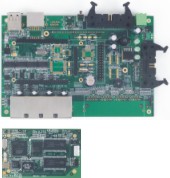
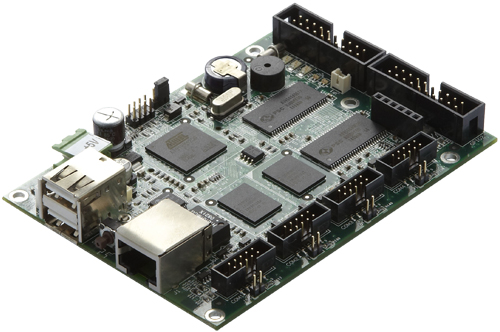
Description: The Artila M-501 Starter Kit is a complete embedded development platform based on the ARM9 ATMEL AT91RM9200 processor. It integrates a Linux 2.6.x operating system, a carrier board, and a comprehensive GNU C/C++ toolchain for both Linux and Windows environments. Designed for industrial and embedded applications, the kit provides a fanless, flash-based architecture with extensive I/O interfaces, networking capabilities, and robust environmental tolerance.
### 2. Key Features
- ARM9-based Industrial Computer: Powered by the ATMEL AT91RM9200 CPU running at 180 MHz with integrated Memory Management Unit (MMU).
- Linux-ready Platform: Preloaded with Linux kernel 2.6.14, U-Boot 1.1.2 bootloader, and multiple file systems (JFFS2, EXT2, VFAT/FAT, NFS).
- Comprehensive Development Environment: Includes GNU C/C++ cross-compilation toolchain and POSIX-compliant GLIBC library for application development on Linux or Windows hosts.
- Integrated Networking: 10/100 Mbps Ethernet interface with DAVICOM DM9161 PHY and 1.5 kV magnetic isolation for industrial reliability.
- Multiple Serial Interfaces: Four high-speed UARTs (up to 921.6 Kbps), one configurable as RS-232/422/485 with hardware auto-direction control and 9-bit multi-drop mode.
- USB Connectivity: Two USB 2.0 full-speed host ports (12 Mbps) supporting flash drives, Wi-Fi adapters, Ethernet adapters, and serial converters.
- Expandable Storage: One SD card interface (SD 1.0 standard, up to 2 GB non-SDHC).
- Rich I/O Options: 32 programmable GPIO channels, I2C, SPI, I2S, and local bus interfaces for peripheral expansion.
- Low Power, Fanless Design: Consumes less than 2.5 W, ideal for embedded and industrial environments.
- Wide Operating Range: Supports 9–48 VDC input, 300 mA @ 12 VDC, and operates from -10°C to +60°C (standard kit) or -20°C to +80°C (M-501T wide-temperature version).
- Compact Form Factor: SoM dimensions 80 × 50 mm; carrier board 150 × 100 mm.
- Preloaded Network Services: SSH, FTP, Telnet, web server (lighttpd), and system daemons for remote management.
- Industrial-grade Reliability: Flash-based architecture, watchdog timer, and hardware-level protection for stable long-term operation.
### 3. Technical Specifications
Processor & Memory
- CPU: ATMEL AT91RM9200 ARM9, 180 MHz with MMU
- SDRAM: 64 MB
- NOR Flash: 16 MB
Networking
- Ethernet: 1 × 10/100 Mbps (DAVICOM DM9161 PHY)
- Isolation: 1.5 kV magnetic isolation
Serial Communication (UART)
- Total Ports: 4 × UARTs (CMOS 3.3V level)
- Baud Rate: Up to 921.6 Kbps
- Parity: None, Even, Odd, Mark, Space
- Data Bits: 5, 6, 7, 8
- Stop Bits: 1, 1.5, 2
- Flow Control: RTS/CTS, XON/XOFF, None
- RS-485 Mode: 9-bit multi-drop, hardware auto-direction control
USB Interface
- 2 × USB 2.0 Host Ports (Full Speed, 12 Mbps)
- Supported Devices: Flash drives, Wi-Fi adapters (Ralink rt73usb), Ethernet adapters (RT8150), RS-232 adapters (PL-2303), ADSL/ISDN modems
Storage Interface
- SD Card Slot: 1 × SD (SD 1.0 standard, up to 2 GB, non-SDHC)
Peripheral Interfaces
- I2C: TWD, TWCK (driver built-in)
- I2S: TSCK, TWS, TSD (TX); RSCK, RWS, RSD (RX)
- SPI: MISO, MOSI, SPCK, CS1, CS2
- Local Bus: 8-bit data (D0–D7), 8-bit address (A0–A7), 4 × chip select (CS3–CS6), RD, WR
GPIO
- 32 × programmable GPIOs (digital input/output)
- Interrupt support on input mode
- Signal Level: CMOS 3.3V
Predefined Pins
- Reset Button (CN2 pin 35)
- Buzzer Output (CN2 pin 37)
- 2-pin DIP Switch (CN2 pins 12, 13)
- System Ready LED (CN2 pin 38)
- LAN Activity LED (CN3 pin 11)
Power & Consumption
- Input Voltage (SoM): 3–3.6 VDC (nominal 3.3 V)
- Power Consumption: < 2 W (SoM), 300 mA @ 12 VDC (Starter Kit)
- Input Range (Kit): 9–48 VDC
Physical Characteristics
- SoM Dimensions: 80 × 50 mm
- Carrier Board Dimensions: 150 × 100 mm
- Connectors: CN1 (28-pin), CN2 (50-pin), CN3 (50-pin), 2.0 mm pitch
- Mounting Holes: 4 × M2 (2.0 mm diameter)
Environmental
- Operating Temperature:
- M-501: 0°C to +70°C
- M-501T: -20°C to +80°C
- Storage Temperature: -40°C to +85°C (typical)
- Cooling: Fanless
### 4. Functionality
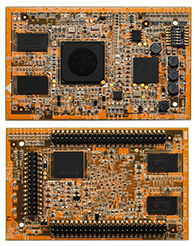
The M-501 Starter Kit functions as a complete embedded Linux development and evaluation platform. The core M-501 System-on-Module (SoM) provides the processing, memory, and I/O subsystems, while the carrier board offers standard connectors and power circuitry for rapid prototyping.
Operation Overview:
Upon power-up, the U-Boot bootloader initializes the hardware and loads the Linux kernel (2.6.14) from NOR flash. The system mounts its root file system (JFFS2 or EXT2) and starts essential daemons such as SSH, FTP, and web server services. Developers can connect via Ethernet or serial console to configure, deploy, and debug applications.
Use Cases & Applications:
- Industrial automation controllers
- Remote data acquisition and monitoring systems
- Embedded web servers and gateways
- IoT edge computing nodes
- Networked instrumentation and control devices
- Educational and research platforms for embedded Linux development
Compatibility:
- Compatible with standard Linux development tools and cross-compilers
- Supports integration with external peripherals via UART, SPI, I2C, and GPIO
- Works with standard SD cards (non-SDHC) and USB peripherals
### 5. Components & Accessories
Included in the Starter Kit:
- 1 × M-501 System-on-Module (SoM)
- 1 × Carrier Board with integrated power circuitry
- 3 × RS-232 ports
- 1 × RS-232/422/485 selectable port
- 1 × 10/100 Mbps Ethernet port
- 2 × USB 2.0 host ports
- 1 × SD card socket (rear side)
- 2 × GPIO connectors
- 1 × Real-Time Clock (RTC)
- 1 × EEPROM (AT24C16 or compatible)
- 1 × Local bus connector
Optional Accessories:
- Power adapter (9–48 VDC)
- Serial and Ethernet cables
- Mounting hardware (M2 screws)
- SD memory card (up to 2 GB)
- USB peripherals (Wi-Fi, Ethernet, serial adapters)
Connectors:
- CN1: 28-pin I/O connector
- CN2: 50-pin system connector (GPIO, control signals)
- CN3: 50-pin peripheral connector (Ethernet, LEDs, etc.)
### 6. Installation & Setup
Requirements:
- DC power supply (9–48 VDC, 300 mA @ 12 VDC typical)
- Host PC with Linux or Windows for cross-compilation
- Ethernet or serial connection for configuration
Mounting Options:
- Four M2 mounting holes for secure installation on carrier or custom boards
- 2.0 mm pitch connectors for reliable electrical connection
Configuration Steps:
1. Connect the M-501 SoM to the carrier board.
2. Attach power supply and peripheral cables (Ethernet, serial, USB).
3. Insert SD card if additional storage is required.
4. Power on the system; U-Boot initializes and loads Linux.
5. Access via serial console or SSH for configuration.
6. Use the provided GNU toolchain to compile and deploy applications.
Software Setup:
- Preinstalled Linux kernel and file systems
- Default network services (SSH, FTP, web server)
- Customization via configuration files and startup scripts
### 7. Performance & Capabilities
Processing Performance:
- 180 MHz ARM9 CPU optimized for embedded control and networking tasks
- Efficient MMU-based memory management for multitasking Linux applications
Networking Performance:
- 10/100 Mbps Ethernet with low-latency stack and hardware isolation
- Supports TCP/IP, UDP, HTTP, FTP, SSH, and SSL protocols
Serial Communication:
- High-speed UARTs up to 921.6 Kbps
- Flexible configuration for RS-232, RS-422, or RS-485 modes
Storage & File Systems:
- NOR Flash for OS and bootloader
- SD card for data logging and application storage
- Supported file systems: JFFS2, EXT2, VFAT/FAT, NFS
Power Efficiency:
- Typical consumption < 2.5 W
- Fanless operation ensures silent, maintenance-free performance
Limitations:
- SD card limited to 2 GB (non-SDHC)
- USB host ports limited to full-speed (12 Mbps)
- Single Ethernet interface
### 8. Standards & Compliance
Hardware Standards:
- ARM9 architecture (AT91RM9200)
- USB 2.0 (Full Speed)
- Ethernet IEEE 802.3 10/100Base-TX
- SD Card Specification 1.0
- RS-232/422/485 serial communication standards
Software Standards:
- Linux kernel 2.6.14 (POSIX-compliant)
- GNU C/C++ toolchain (GCC, GLIBC)
- Network protocols: TCP/IP, SSH, SSL, FTP, HTTP
Regulatory Compliance:
- Designed for industrial-grade operation
- 1.5 kV isolation on Ethernet interface for EMC protection
- RoHS-compliant manufacturing (lead-free components)
Certifications:
- CE and FCC compliance (typical for Artila industrial modules)
- Conforms to industrial temperature and vibration standards (M-501T variant)
### 9. Additional Information
Warranty:
- Standard manufacturer warranty (typically 1 year) covering defects in materials and workmanship.
Technical Support:
- Documentation, schematics, and software resources available at [www.artila.com](http://www.artila.com)
- Developer support for Linux kernel, drivers, and toolchain integration
Maintenance:
- No moving parts; fanless design minimizes maintenance
- Firmware and software updates available via network or serial interface
- Watchdog timer ensures automatic recovery from system faults
Software Updates & Customization:
- Kernel and bootloader can be updated via TFTP or serial interface
- User applications can be deployed via SSH, FTP, or SD card
- Custom drivers and daemons can be integrated using the provided toolchain
Ordering Information:
- M-501: Standard temperature version (0–70°C)
- M-501T: Wide-temperature version (-20–80°C)
- M-501 Starter Kit: Includes M-501 SoM, carrier board, and all essential interfaces for development
### Summary
The Artila M-501 Starter Kit is a robust, Linux-ready embedded development platform built around the ARM9 AT91RM9200 processor. It combines industrial-grade hardware reliability with a flexible open-source software environment, making it ideal for embedded control, automation, and IoT applications. With its comprehensive I/O set, low power consumption, and pre-integrated Linux toolchain, the M-501 Starter Kit provides developers with a ready-to-use foundation for rapid prototyping and deployment of networked embedded systems.

### 1. Product Overview
Product Name: M-501 Starter Kit
Model: M-501
Series: M-500 Series – Linux-ready ARM9 System-on-Module (SoM)
Article Number: M-501-Starter-Kit
Manufacturer: Artila Electronics Co., Ltd.
Product Type: Industrial Embedded Linux Development Kit
Description: The Artila M-501 Starter Kit is a complete embedded development platform based on the ARM9 ATMEL AT91RM9200 processor. It integrates a Linux 2.6.x operating system, a carrier board, and a comprehensive GNU C/C++ toolchain for both Linux and Windows environments. Designed for industrial and embedded applications, the kit provides a fanless, flash-based architecture with extensive I/O interfaces, networking capabilities, and robust environmental tolerance.
### 2. Key Features
- ARM9-based Industrial Computer: Powered by the ATMEL AT91RM9200 CPU running at 180 MHz with integrated Memory Management Unit (MMU).
- Linux-ready Platform: Preloaded with Linux kernel 2.6.14, U-Boot 1.1.2 bootloader, and multiple file systems (JFFS2, EXT2, VFAT/FAT, NFS).
- Comprehensive Development Environment: Includes GNU C/C++ cross-compilation toolchain and POSIX-compliant GLIBC library for application development on Linux or Windows hosts.
- Integrated Networking: 10/100 Mbps Ethernet interface with DAVICOM DM9161 PHY and 1.5 kV magnetic isolation for industrial reliability.
- Multiple Serial Interfaces: Four high-speed UARTs (up to 921.6 Kbps), one configurable as RS-232/422/485 with hardware auto-direction control and 9-bit multi-drop mode.
- USB Connectivity: Two USB 2.0 full-speed host ports (12 Mbps) supporting flash drives, Wi-Fi adapters, Ethernet adapters, and serial converters.
- Expandable Storage: One SD card interface (SD 1.0 standard, up to 2 GB non-SDHC).
- Rich I/O Options: 32 programmable GPIO channels, I2C, SPI, I2S, and local bus interfaces for peripheral expansion.
- Low Power, Fanless Design: Consumes less than 2.5 W, ideal for embedded and industrial environments.
- Wide Operating Range: Supports 9–48 VDC input, 300 mA @ 12 VDC, and operates from -10°C to +60°C (standard kit) or -20°C to +80°C (M-501T wide-temperature version).
- Compact Form Factor: SoM dimensions 80 × 50 mm; carrier board 150 × 100 mm.
- Preloaded Network Services: SSH, FTP, Telnet, web server (lighttpd), and system daemons for remote management.
- Industrial-grade Reliability: Flash-based architecture, watchdog timer, and hardware-level protection for stable long-term operation.
### 3. Technical Specifications
Processor & Memory
- CPU: ATMEL AT91RM9200 ARM9, 180 MHz with MMU
- SDRAM: 64 MB
- NOR Flash: 16 MB
Networking
- Ethernet: 1 × 10/100 Mbps (DAVICOM DM9161 PHY)
- Isolation: 1.5 kV magnetic isolation
Serial Communication (UART)
- Total Ports: 4 × UARTs (CMOS 3.3V level)
- Baud Rate: Up to 921.6 Kbps
- Parity: None, Even, Odd, Mark, Space
- Data Bits: 5, 6, 7, 8
- Stop Bits: 1, 1.5, 2
- Flow Control: RTS/CTS, XON/XOFF, None
- RS-485 Mode: 9-bit multi-drop, hardware auto-direction control
USB Interface
- 2 × USB 2.0 Host Ports (Full Speed, 12 Mbps)
- Supported Devices: Flash drives, Wi-Fi adapters (Ralink rt73usb), Ethernet adapters (RT8150), RS-232 adapters (PL-2303), ADSL/ISDN modems
Storage Interface
- SD Card Slot: 1 × SD (SD 1.0 standard, up to 2 GB, non-SDHC)
Peripheral Interfaces
- I2C: TWD, TWCK (driver built-in)
- I2S: TSCK, TWS, TSD (TX); RSCK, RWS, RSD (RX)
- SPI: MISO, MOSI, SPCK, CS1, CS2
- Local Bus: 8-bit data (D0–D7), 8-bit address (A0–A7), 4 × chip select (CS3–CS6), RD, WR
GPIO
- 32 × programmable GPIOs (digital input/output)
- Interrupt support on input mode
- Signal Level: CMOS 3.3V
Predefined Pins
- Reset Button (CN2 pin 35)
- Buzzer Output (CN2 pin 37)
- 2-pin DIP Switch (CN2 pins 12, 13)
- System Ready LED (CN2 pin 38)
- LAN Activity LED (CN3 pin 11)
Power & Consumption
- Input Voltage (SoM): 3–3.6 VDC (nominal 3.3 V)
- Power Consumption: < 2 W (SoM), 300 mA @ 12 VDC (Starter Kit)
- Input Range (Kit): 9–48 VDC
Physical Characteristics
- SoM Dimensions: 80 × 50 mm
- Carrier Board Dimensions: 150 × 100 mm
- Connectors: CN1 (28-pin), CN2 (50-pin), CN3 (50-pin), 2.0 mm pitch
- Mounting Holes: 4 × M2 (2.0 mm diameter)
Environmental
- Operating Temperature:
- M-501: 0°C to +70°C
- M-501T: -20°C to +80°C
- Storage Temperature: -40°C to +85°C (typical)
- Cooling: Fanless
### 4. Functionality
The M-501 Starter Kit functions as a complete embedded Linux development and evaluation platform. The core M-501 System-on-Module (SoM) provides the processing, memory, and I/O subsystems, while the carrier board offers standard connectors and power circuitry for rapid prototyping.
Operation Overview:
Upon power-up, the U-Boot bootloader initializes the hardware and loads the Linux kernel (2.6.14) from NOR flash. The system mounts its root file system (JFFS2 or EXT2) and starts essential daemons such as SSH, FTP, and web server services. Developers can connect via Ethernet or serial console to configure, deploy, and debug applications.
Use Cases & Applications:
- Industrial automation controllers
- Remote data acquisition and monitoring systems
- Embedded web servers and gateways
- IoT edge computing nodes
- Networked instrumentation and control devices
- Educational and research platforms for embedded Linux development
Compatibility:
- Compatible with standard Linux development tools and cross-compilers
- Supports integration with external peripherals via UART, SPI, I2C, and GPIO
- Works with standard SD cards (non-SDHC) and USB peripherals
### 5. Components & Accessories
Included in the Starter Kit:
- 1 × M-501 System-on-Module (SoM)
- 1 × Carrier Board with integrated power circuitry
- 3 × RS-232 ports
- 1 × RS-232/422/485 selectable port
- 1 × 10/100 Mbps Ethernet port
- 2 × USB 2.0 host ports
- 1 × SD card socket (rear side)
- 2 × GPIO connectors
- 1 × Real-Time Clock (RTC)
- 1 × EEPROM (AT24C16 or compatible)
- 1 × Local bus connector
Optional Accessories:
- Power adapter (9–48 VDC)
- Serial and Ethernet cables
- Mounting hardware (M2 screws)
- SD memory card (up to 2 GB)
- USB peripherals (Wi-Fi, Ethernet, serial adapters)
Connectors:
- CN1: 28-pin I/O connector
- CN2: 50-pin system connector (GPIO, control signals)
- CN3: 50-pin peripheral connector (Ethernet, LEDs, etc.)
### 6. Installation & Setup
Requirements:
- DC power supply (9–48 VDC, 300 mA @ 12 VDC typical)
- Host PC with Linux or Windows for cross-compilation
- Ethernet or serial connection for configuration
Mounting Options:
- Four M2 mounting holes for secure installation on carrier or custom boards
- 2.0 mm pitch connectors for reliable electrical connection
Configuration Steps:
1. Connect the M-501 SoM to the carrier board.
2. Attach power supply and peripheral cables (Ethernet, serial, USB).
3. Insert SD card if additional storage is required.
4. Power on the system; U-Boot initializes and loads Linux.
5. Access via serial console or SSH for configuration.
6. Use the provided GNU toolchain to compile and deploy applications.
Software Setup:
- Preinstalled Linux kernel and file systems
- Default network services (SSH, FTP, web server)
- Customization via configuration files and startup scripts
### 7. Performance & Capabilities
Processing Performance:
- 180 MHz ARM9 CPU optimized for embedded control and networking tasks
- Efficient MMU-based memory management for multitasking Linux applications
Networking Performance:
- 10/100 Mbps Ethernet with low-latency stack and hardware isolation
- Supports TCP/IP, UDP, HTTP, FTP, SSH, and SSL protocols
Serial Communication:
- High-speed UARTs up to 921.6 Kbps
- Flexible configuration for RS-232, RS-422, or RS-485 modes
Storage & File Systems:
- NOR Flash for OS and bootloader
- SD card for data logging and application storage
- Supported file systems: JFFS2, EXT2, VFAT/FAT, NFS
Power Efficiency:
- Typical consumption < 2.5 W
- Fanless operation ensures silent, maintenance-free performance
Limitations:
- SD card limited to 2 GB (non-SDHC)
- USB host ports limited to full-speed (12 Mbps)
- Single Ethernet interface
### 8. Standards & Compliance
Hardware Standards:
- ARM9 architecture (AT91RM9200)
- USB 2.0 (Full Speed)
- Ethernet IEEE 802.3 10/100Base-TX
- SD Card Specification 1.0
- RS-232/422/485 serial communication standards
Software Standards:
- Linux kernel 2.6.14 (POSIX-compliant)
- GNU C/C++ toolchain (GCC, GLIBC)
- Network protocols: TCP/IP, SSH, SSL, FTP, HTTP
Regulatory Compliance:
- Designed for industrial-grade operation
- 1.5 kV isolation on Ethernet interface for EMC protection
- RoHS-compliant manufacturing (lead-free components)
Certifications:
- CE and FCC compliance (typical for Artila industrial modules)
- Conforms to industrial temperature and vibration standards (M-501T variant)
### 9. Additional Information
Warranty:
- Standard manufacturer warranty (typically 1 year) covering defects in materials and workmanship.
Technical Support:
- Documentation, schematics, and software resources available at [www.artila.com](http://www.artila.com)
- Developer support for Linux kernel, drivers, and toolchain integration
Maintenance:
- No moving parts; fanless design minimizes maintenance
- Firmware and software updates available via network or serial interface
- Watchdog timer ensures automatic recovery from system faults
Software Updates & Customization:
- Kernel and bootloader can be updated via TFTP or serial interface
- User applications can be deployed via SSH, FTP, or SD card
- Custom drivers and daemons can be integrated using the provided toolchain
Ordering Information:
- M-501: Standard temperature version (0–70°C)
- M-501T: Wide-temperature version (-20–80°C)
- M-501 Starter Kit: Includes M-501 SoM, carrier board, and all essential interfaces for development
### Summary
The Artila M-501 Starter Kit is a robust, Linux-ready embedded development platform built around the ARM9 AT91RM9200 processor. It combines industrial-grade hardware reliability with a flexible open-source software environment, making it ideal for embedded control, automation, and IoT applications. With its comprehensive I/O set, low power consumption, and pre-integrated Linux toolchain, the M-501 Starter Kit provides developers with a ready-to-use foundation for rapid prototyping and deployment of networked embedded systems.

-
M-501_Datasheet.pdf
PDF Catalog
- DK-35A - DIN rail mounting kit (2pcs, 4 screws)
- CB-RJ45F9-150 - Data Cable DB9f Matrix-5xx series
- CB-RJ2Con-100 - Console Cable Matrix-5xx series