CB-RJ45F9-150
SUCHEN SIE DIE PASSENDE
INDUSTRIELLE LÖSUNG?
Entdecken Sie Embedded-, Kommunikations- und Automatisierungslösungen für Ihre Anwendung.
- ARM9-based Embedded Computer: Powered by the Atmel AT91SAM9G20 SoC featuring a 400 MHz ARM926EJ-S ARM Thumb processor with integrated Memory Management Unit (MMU).
- Compact Form Factor: Credit-card-sized SoM (50 × 80 mm) suitable for space-constrained embedded designs.
- Pre-installed Linux System: Linux kernel 2.6.29 with U-Boot bootloader, BusyBox utilities, and lighttpd web server preloaded in NAND Flash.
- Comprehensive Connectivity:
- 10/100 Mbps Ethernet interface with 1.5 kV magnetic isolation.
- Four UARTs (RS-232/422/485 software-selectable).
- Two USB 2.0 full-speed (12 Mbps) host ports and one USB 2.0 device port.
- SD memory card interface compliant with SD Specification 1.0.
- SPI, I²C, and I²S buses for peripheral expansion.
- Programmable I/O: 32 general-purpose digital I/O lines (3.3 V CMOS compatible) with interrupt capability.
- Onboard Real-Time Clock: ST M41T81 RTC with 48 mAh lithium backup battery.
- Low Power Consumption: Operates from 3.0–3.6 V DC (nominal 3.3 V) with typical power consumption of 2–2.5 W.
- Industrial-Grade Design: Fanless operation, flash-based architecture, and 0 °C to 70 °C operating temperature range.
- Software Development Environment: Includes GNU C/C++ cross-compilation toolchain for Linux and Windows, with support for Java acceleration and WinCE.
- Security and Networking: Built-in SSH (v1/v2), SSL, FTP, Telnet, and SNMP services.
- Carrier Board Integration: Provides convenient access to all SoM interfaces, DIN-rail mountable enclosure, and ready-to-use Linux toolchain.
- Compact Form Factor: Credit-card-sized SoM (50 × 80 mm) suitable for space-constrained embedded designs.
- Pre-installed Linux System: Linux kernel 2.6.29 with U-Boot bootloader, BusyBox utilities, and lighttpd web server preloaded in NAND Flash.
- Comprehensive Connectivity:
- 10/100 Mbps Ethernet interface with 1.5 kV magnetic isolation.
- Four UARTs (RS-232/422/485 software-selectable).
- Two USB 2.0 full-speed (12 Mbps) host ports and one USB 2.0 device port.
- SD memory card interface compliant with SD Specification 1.0.
- SPI, I²C, and I²S buses for peripheral expansion.
- Programmable I/O: 32 general-purpose digital I/O lines (3.3 V CMOS compatible) with interrupt capability.
- Onboard Real-Time Clock: ST M41T81 RTC with 48 mAh lithium backup battery.
- Low Power Consumption: Operates from 3.0–3.6 V DC (nominal 3.3 V) with typical power consumption of 2–2.5 W.
- Industrial-Grade Design: Fanless operation, flash-based architecture, and 0 °C to 70 °C operating temperature range.
- Software Development Environment: Includes GNU C/C++ cross-compilation toolchain for Linux and Windows, with support for Java acceleration and WinCE.
- Security and Networking: Built-in SSH (v1/v2), SSL, FTP, Telnet, and SNMP services.
- Carrier Board Integration: Provides convenient access to all SoM interfaces, DIN-rail mountable enclosure, and ready-to-use Linux toolchain.
1. Product Overview
Product Name: M-502 Starter Kit
Model: M-502
Series: M-500 Series Embedded Linux System-on-Module (SoM)
Article Number: M-502-Starter-Kit
Manufacturer: Artila Electronics Co., Ltd.
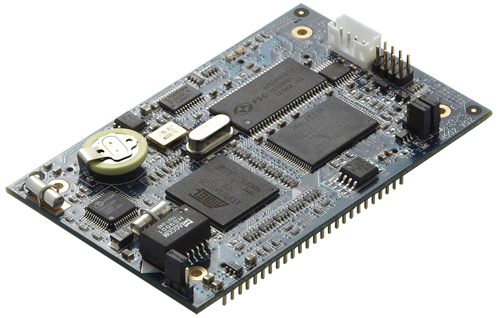
Product Description: The Artila M-502 Starter Kit is a complete development and evaluation platform for the M-502 ARM9-based System-on-Module (SoM). It integrates the M-502 module, a carrier board, and a pre-configured Linux 2.6.29 operating system with a full GNU C/C++ toolchain. Designed for industrial and embedded applications, the M-502 provides a compact, fanless, and flash-based computing solution with extensive I/O interfaces, networking capabilities, and flexible software support.
2. Key Features
- ARM9-based Embedded Computer: Powered by the Atmel AT91SAM9G20 SoC featuring a 400 MHz ARM926EJ-S ARM Thumb processor with integrated Memory Management Unit (MMU).
- Compact Form Factor: Credit-card-sized SoM (50 × 80 mm) suitable for space-constrained embedded designs.
- Pre-installed Linux System: Linux kernel 2.6.29 with U-Boot bootloader, BusyBox utilities, and lighttpd web server preloaded in NAND Flash.
- Comprehensive Connectivity:
- 10/100 Mbps Ethernet interface with 1.5 kV magnetic isolation.
- Four UARTs (RS-232/422/485 software-selectable).
- Two USB 2.0 full-speed (12 Mbps) host ports and one USB 2.0 device port.
- SD memory card interface compliant with SD Specification 1.0.
- SPI, I²C, and I²S buses for peripheral expansion.
- Programmable I/O: 32 general-purpose digital I/O lines (3.3 V CMOS compatible) with interrupt capability.
- Onboard Real-Time Clock: ST M41T81 RTC with 48 mAh lithium backup battery.
- Low Power Consumption: Operates from 3.0–3.6 V DC (nominal 3.3 V) with typical power consumption of 2–2.5 W.
- Industrial-Grade Design: Fanless operation, flash-based architecture, and 0 °C to 70 °C operating temperature range.
- Software Development Environment: Includes GNU C/C++ cross-compilation toolchain for Linux and Windows, with support for Java acceleration and WinCE.
- Security and Networking: Built-in SSH (v1/v2), SSL, FTP, Telnet, and SNMP services.
- Carrier Board Integration: Provides convenient access to all SoM interfaces, DIN-rail mountable enclosure, and ready-to-use Linux toolchain.
3. Technical Specifications
Processor and Memory
- CPU: Atmel AT91SAM9G20 (ARM926EJ-S core, 400 MHz)
- Caches: 32 KB instruction cache, 32 KB data cache
- SDRAM: 64 MB
- NAND Flash: 128 MB
- DataFlash: 2 MB (for system backup and bootloader)
Networking
- Ethernet: 10/100 Mbps (DAVICOM DM9161 PHY)
- Isolation: 1.5 kV magnetic isolation
- Connector Signals: ETX0+, ETX0−, ERX0+, ERX0−
Serial Interfaces
- UART Ports: 4 (TXD, RXD, RTS, CTS; COM2 includes DCD, DTR, DSR)
- Baud Rate: Up to 921.6 kbps
- Data Bits: 5–9 bits
- Parity: None, Even, Odd, Mark, Space
- Stop Bits: 1, 1.5, 2
- Flow Control: RTS/CTS, XON/XOFF, or None
- Signal Level: CMOS 3.3 V compatible
- RS-485 Support: 9-bit multi-drop mode, hardware auto-direction control
USB Interfaces
- Host Ports: 2 × USB 2.0 full-speed (12 Mbps)
- Device Port: 1 × USB 2.0 client
- Signals: UDataA+/−, UDataB+/−, DDP, DDM, UDIO
Peripheral Buses
- I²C: TWD, TWCK (two-wire serial bus, built-in driver)
- I²S: TSCK, TWS, TSD (transmit); RSCK, RWS, RSD (receive)
- SPI: MISO, MOSI, SPCK, CS1, CS2 (two chip selects)
- Local Bus: 8-bit data (D0–D7), 8-bit address (A0–A7), 3 chip selects (NCS0, NCS5, NCS6)
Storage Interfaces
- SD/MMC: SD memory card interface (SD Spec 1.0 compliant)
- File Systems Supported: UBI, JFFS2, EXT2/EXT3, VFAT/FAT, NFS
GPIO
- Count: 32 programmable I/O lines
- Voltage Levels: 3.3 V CMOS/TTL compatible
- Interrupt Support: Yes (when configured as input)
- Predefined Pins:
- Reset Button (CN2 #35)
- Buzzer Output (CN2 #37)
- System Ready LED (CN2 #38)
- LAN Activity LED (CN3 #11)
- 2-pin DIP Switch (CN2 #12, #13)
Debug and Control
- JTAG Port: For low-level debugging
- Console Port: RS-232 serial console (TX/RX)
Power and Environmental
- Input Voltage: 3.0–3.6 V DC (nominal 3.3 V)
- Power Consumption: 2–2.5 W
- Operating Temperature: 0 °C – 70 °C
- Form Factor: 50 × 80 mm module
- Mounting Holes: 4 × M2 (2.0 mm diameter)
- Connectors: CN1 (28 pins), CN2 (50 pins), CN3 (50 pins), 2.0 mm pitch
4. Functionality
The M-502 Starter Kit functions as a fully integrated embedded computing platform. The SoM hosts the ARM9 processor, memory, and essential peripherals, while the carrier board exposes all interfaces for rapid prototyping and deployment.
Operation:
- The system boots via U-Boot from DataFlash or NAND Flash.
- Linux kernel 2.6.29 initializes hardware drivers and mounts the root filesystem (UBI/JFFS2).
- Network and serial interfaces are automatically configured for communication.
- Developers can access the system via SSH, Telnet, or serial console for configuration and application deployment.
Use Cases:
- Industrial automation controllers
- Intelligent transportation systems (ITS)
- Building automation and energy management
- Remote data acquisition and monitoring
- Embedded web servers and IoT gateways
Compatibility:
- Supports Linux and Windows development environments.
- Compatible with standard USB peripherals (Wi-Fi adapters, flash drives, serial converters).
- Supports SD memory cards and SPI/I²C-based sensors or expansion modules.
5. Components & Accessories
Included in Starter Kit:
- M-502 System-on-Module (SoM)
- Carrier board with connectors and power interface
- Pre-installed Linux 2.6.29 OS and utilities
- GNU C/C++ cross-compilation toolchain (for Linux and Windows)
- Power adapter and cables (varies by kit configuration)
- Product CD with SDK, documentation, and example programs
Optional Accessories:
- DIN-rail mountable enclosure
- USB Wi-Fi adapters (Ralink RT73USB, RT2500USB, Realtek RTL8187, ZyDAS ZD1211RW)
- USB-to-RS232 adapters (Prolific PL-2303)
- USB Ethernet adapters (Realtek RT8150)
- ADSL or ISDN modems (CDC/ACM compatible)
- Audio codec (TI TLV320AIC23) for I²S interface
Connectors:
- CN1 (28-pin): Local bus and data/address lines
- CN2 (50-pin): UARTs, GPIOs, control signals
- CN3 (50-pin): Ethernet, SPI, SD, I²C, and additional GPIOs
6. Installation & Setup
Hardware Setup:
1. Mount the M-502 module onto the carrier board using the 2.0 mm pitch connectors.
2. Connect power (3.3 V DC regulated supply).
3. Attach Ethernet, serial, or USB peripherals as required.
4. Optionally mount the assembly on a DIN rail using the provided case.
Boot Configuration:
- JP1 Boot Mode Jumper:
- Pins 1–2: Boot from external Flash (default)
- Pins 2–3: Boot from internal ROM
Software Setup:
- Default IP: 192.168.2.127
- Netmask: 255.255.255.0
- SSH login: root/root
- Telnet login: guest/guest
- Terminal type: VT100
Mounting External Storage:
- USB Disk: `mount /mnt/sda1` or `mount /mnt/sdb1`
- SD Card: `mount /mnt/mmc`
Web Server Configuration:
- Web root: `/usr/www`
- Configuration file: `/etc/lighttpd.conf`
- Default homepage: `index.html`
7. Performance & Capabilities
- Processing Speed: 400 MHz ARM926EJ-S core with hardware multiply and divide.
- Memory Bandwidth: Optimized for 64 MB SDRAM with 32-bit data bus.
- Storage Capacity: 128 MB NAND Flash + 2 MB DataFlash; expandable via SD card or USB storage.
- Networking: 10/100 Mbps Ethernet throughput with integrated MAC/PHY.
- Serial Communication: Up to 921.6 kbps per UART; supports RS-232/422/485 modes.
- USB Performance: Full-speed 12 Mbps per host port.
- GPIO Responsiveness: Real-time interrupt-driven I/O suitable for control applications.
- Power Efficiency: 2–2.5 W typical consumption enables fanless, low-heat operation.
- Reliability: Flash-based storage eliminates mechanical failure points; watchdog timers ensure system recovery.
Limitations:
- Limited RAM (64 MB) restricts use of heavy graphical applications.
- USB ports are full-speed (12 Mbps), not high-speed (480 Mbps).
- Operating temperature limited to 0–70 °C (not suitable for extreme environments).
8. Standards & Compliance
- Processor Architecture: ARM926EJ-S (ARMv5TEJ compliant)
- Ethernet: IEEE 802.3 10/100 Base-TX
- USB: USB 2.0 full-speed compliant
- SD Interface: SD Specification 1.0 compliant
- I²C/I²S/SPI: Industry-standard serial communication protocols
- EMC Protection: 1.5 kV magnetic isolation on Ethernet port
- Software Standards: POSIX-compliant GLIBC library, GNU toolchain
- Security Protocols: SSL, SSH 1.0/2.0, SNMP v1/v3
- Regulatory Compliance: Designed for industrial embedded systems; RoHS compliant (per Artila manufacturing standards)
9. Additional Information
Warranty & Support:
- Standard manufacturer warranty (typically 1 year, extendable).
- Technical support via sales@artila.com and online documentation.
- Firmware and software updates available through Artila’s website (www.artila.com).
Maintenance:
- Flash-based architecture requires minimal maintenance.
- Periodic firmware updates recommended for security and performance.
- RTC battery (48 mAh lithium) should be replaced periodically for timekeeping accuracy.
Software Updates & SDK:
- SDK includes example source code, header files (e.g., `matrix504.h`), and sample applications demonstrating serial and GPIO control.
- Manager Utility (`manager.jar`) allows network discovery and configuration of M-502 devices via Java runtime environment.
- Supports package management via `ipkg` for installing or upgrading software modules.
- Web-based administration available through Webmin (installable via `ipkg install webmin`).
Summary:
The Artila M-502 Starter Kit provides a robust, low-power, and flexible embedded computing platform for industrial and automation applications. With its ARM9 processor, comprehensive I/O, and pre-integrated Linux environment, it enables rapid development and deployment of networked embedded systems. The combination of hardware reliability, open-source software support, and extensive connectivity makes the M-502 an ideal choice for OEMs, system integrators, and developers seeking a compact yet powerful embedded solution.

Product Name: M-502 Starter Kit
Model: M-502
Series: M-500 Series Embedded Linux System-on-Module (SoM)
Article Number: M-502-Starter-Kit
Manufacturer: Artila Electronics Co., Ltd.
Product Description: The Artila M-502 Starter Kit is a complete development and evaluation platform for the M-502 ARM9-based System-on-Module (SoM). It integrates the M-502 module, a carrier board, and a pre-configured Linux 2.6.29 operating system with a full GNU C/C++ toolchain. Designed for industrial and embedded applications, the M-502 provides a compact, fanless, and flash-based computing solution with extensive I/O interfaces, networking capabilities, and flexible software support.
2. Key Features
- ARM9-based Embedded Computer: Powered by the Atmel AT91SAM9G20 SoC featuring a 400 MHz ARM926EJ-S ARM Thumb processor with integrated Memory Management Unit (MMU).
- Compact Form Factor: Credit-card-sized SoM (50 × 80 mm) suitable for space-constrained embedded designs.
- Pre-installed Linux System: Linux kernel 2.6.29 with U-Boot bootloader, BusyBox utilities, and lighttpd web server preloaded in NAND Flash.
- Comprehensive Connectivity:
- 10/100 Mbps Ethernet interface with 1.5 kV magnetic isolation.
- Four UARTs (RS-232/422/485 software-selectable).
- Two USB 2.0 full-speed (12 Mbps) host ports and one USB 2.0 device port.
- SD memory card interface compliant with SD Specification 1.0.
- SPI, I²C, and I²S buses for peripheral expansion.
- Programmable I/O: 32 general-purpose digital I/O lines (3.3 V CMOS compatible) with interrupt capability.
- Onboard Real-Time Clock: ST M41T81 RTC with 48 mAh lithium backup battery.
- Low Power Consumption: Operates from 3.0–3.6 V DC (nominal 3.3 V) with typical power consumption of 2–2.5 W.
- Industrial-Grade Design: Fanless operation, flash-based architecture, and 0 °C to 70 °C operating temperature range.
- Software Development Environment: Includes GNU C/C++ cross-compilation toolchain for Linux and Windows, with support for Java acceleration and WinCE.
- Security and Networking: Built-in SSH (v1/v2), SSL, FTP, Telnet, and SNMP services.
- Carrier Board Integration: Provides convenient access to all SoM interfaces, DIN-rail mountable enclosure, and ready-to-use Linux toolchain.
3. Technical Specifications
Processor and Memory
- CPU: Atmel AT91SAM9G20 (ARM926EJ-S core, 400 MHz)
- Caches: 32 KB instruction cache, 32 KB data cache
- SDRAM: 64 MB
- NAND Flash: 128 MB
- DataFlash: 2 MB (for system backup and bootloader)
Networking
- Ethernet: 10/100 Mbps (DAVICOM DM9161 PHY)
- Isolation: 1.5 kV magnetic isolation
- Connector Signals: ETX0+, ETX0−, ERX0+, ERX0−
Serial Interfaces
- UART Ports: 4 (TXD, RXD, RTS, CTS; COM2 includes DCD, DTR, DSR)
- Baud Rate: Up to 921.6 kbps
- Data Bits: 5–9 bits
- Parity: None, Even, Odd, Mark, Space
- Stop Bits: 1, 1.5, 2
- Flow Control: RTS/CTS, XON/XOFF, or None
- Signal Level: CMOS 3.3 V compatible
- RS-485 Support: 9-bit multi-drop mode, hardware auto-direction control
USB Interfaces
- Host Ports: 2 × USB 2.0 full-speed (12 Mbps)
- Device Port: 1 × USB 2.0 client
- Signals: UDataA+/−, UDataB+/−, DDP, DDM, UDIO
Peripheral Buses
- I²C: TWD, TWCK (two-wire serial bus, built-in driver)
- I²S: TSCK, TWS, TSD (transmit); RSCK, RWS, RSD (receive)
- SPI: MISO, MOSI, SPCK, CS1, CS2 (two chip selects)
- Local Bus: 8-bit data (D0–D7), 8-bit address (A0–A7), 3 chip selects (NCS0, NCS5, NCS6)
Storage Interfaces
- SD/MMC: SD memory card interface (SD Spec 1.0 compliant)
- File Systems Supported: UBI, JFFS2, EXT2/EXT3, VFAT/FAT, NFS
GPIO
- Count: 32 programmable I/O lines
- Voltage Levels: 3.3 V CMOS/TTL compatible
- Interrupt Support: Yes (when configured as input)
- Predefined Pins:
- Reset Button (CN2 #35)
- Buzzer Output (CN2 #37)
- System Ready LED (CN2 #38)
- LAN Activity LED (CN3 #11)
- 2-pin DIP Switch (CN2 #12, #13)
Debug and Control
- JTAG Port: For low-level debugging
- Console Port: RS-232 serial console (TX/RX)
Power and Environmental
- Input Voltage: 3.0–3.6 V DC (nominal 3.3 V)
- Power Consumption: 2–2.5 W
- Operating Temperature: 0 °C – 70 °C
- Form Factor: 50 × 80 mm module
- Mounting Holes: 4 × M2 (2.0 mm diameter)
- Connectors: CN1 (28 pins), CN2 (50 pins), CN3 (50 pins), 2.0 mm pitch
4. Functionality
The M-502 Starter Kit functions as a fully integrated embedded computing platform. The SoM hosts the ARM9 processor, memory, and essential peripherals, while the carrier board exposes all interfaces for rapid prototyping and deployment.
Operation:
- The system boots via U-Boot from DataFlash or NAND Flash.
- Linux kernel 2.6.29 initializes hardware drivers and mounts the root filesystem (UBI/JFFS2).
- Network and serial interfaces are automatically configured for communication.
- Developers can access the system via SSH, Telnet, or serial console for configuration and application deployment.
Use Cases:
- Industrial automation controllers
- Intelligent transportation systems (ITS)
- Building automation and energy management
- Remote data acquisition and monitoring
- Embedded web servers and IoT gateways
Compatibility:
- Supports Linux and Windows development environments.
- Compatible with standard USB peripherals (Wi-Fi adapters, flash drives, serial converters).
- Supports SD memory cards and SPI/I²C-based sensors or expansion modules.
5. Components & Accessories
Included in Starter Kit:
- M-502 System-on-Module (SoM)
- Carrier board with connectors and power interface
- Pre-installed Linux 2.6.29 OS and utilities
- GNU C/C++ cross-compilation toolchain (for Linux and Windows)
- Power adapter and cables (varies by kit configuration)
- Product CD with SDK, documentation, and example programs
Optional Accessories:
- DIN-rail mountable enclosure
- USB Wi-Fi adapters (Ralink RT73USB, RT2500USB, Realtek RTL8187, ZyDAS ZD1211RW)
- USB-to-RS232 adapters (Prolific PL-2303)
- USB Ethernet adapters (Realtek RT8150)
- ADSL or ISDN modems (CDC/ACM compatible)
- Audio codec (TI TLV320AIC23) for I²S interface
Connectors:
- CN1 (28-pin): Local bus and data/address lines
- CN2 (50-pin): UARTs, GPIOs, control signals
- CN3 (50-pin): Ethernet, SPI, SD, I²C, and additional GPIOs
6. Installation & Setup
Hardware Setup:
1. Mount the M-502 module onto the carrier board using the 2.0 mm pitch connectors.
2. Connect power (3.3 V DC regulated supply).
3. Attach Ethernet, serial, or USB peripherals as required.
4. Optionally mount the assembly on a DIN rail using the provided case.
Boot Configuration:
- JP1 Boot Mode Jumper:
- Pins 1–2: Boot from external Flash (default)
- Pins 2–3: Boot from internal ROM
Software Setup:
- Default IP: 192.168.2.127
- Netmask: 255.255.255.0
- SSH login: root/root
- Telnet login: guest/guest
- Terminal type: VT100
Mounting External Storage:
- USB Disk: `mount /mnt/sda1` or `mount /mnt/sdb1`
- SD Card: `mount /mnt/mmc`
Web Server Configuration:
- Web root: `/usr/www`
- Configuration file: `/etc/lighttpd.conf`
- Default homepage: `index.html`
7. Performance & Capabilities
- Processing Speed: 400 MHz ARM926EJ-S core with hardware multiply and divide.
- Memory Bandwidth: Optimized for 64 MB SDRAM with 32-bit data bus.
- Storage Capacity: 128 MB NAND Flash + 2 MB DataFlash; expandable via SD card or USB storage.
- Networking: 10/100 Mbps Ethernet throughput with integrated MAC/PHY.
- Serial Communication: Up to 921.6 kbps per UART; supports RS-232/422/485 modes.
- USB Performance: Full-speed 12 Mbps per host port.
- GPIO Responsiveness: Real-time interrupt-driven I/O suitable for control applications.
- Power Efficiency: 2–2.5 W typical consumption enables fanless, low-heat operation.
- Reliability: Flash-based storage eliminates mechanical failure points; watchdog timers ensure system recovery.
Limitations:
- Limited RAM (64 MB) restricts use of heavy graphical applications.
- USB ports are full-speed (12 Mbps), not high-speed (480 Mbps).
- Operating temperature limited to 0–70 °C (not suitable for extreme environments).
8. Standards & Compliance
- Processor Architecture: ARM926EJ-S (ARMv5TEJ compliant)
- Ethernet: IEEE 802.3 10/100 Base-TX
- USB: USB 2.0 full-speed compliant
- SD Interface: SD Specification 1.0 compliant
- I²C/I²S/SPI: Industry-standard serial communication protocols
- EMC Protection: 1.5 kV magnetic isolation on Ethernet port
- Software Standards: POSIX-compliant GLIBC library, GNU toolchain
- Security Protocols: SSL, SSH 1.0/2.0, SNMP v1/v3
- Regulatory Compliance: Designed for industrial embedded systems; RoHS compliant (per Artila manufacturing standards)
9. Additional Information
Warranty & Support:
- Standard manufacturer warranty (typically 1 year, extendable).
- Technical support via sales@artila.com and online documentation.
- Firmware and software updates available through Artila’s website (www.artila.com).
Maintenance:
- Flash-based architecture requires minimal maintenance.
- Periodic firmware updates recommended for security and performance.
- RTC battery (48 mAh lithium) should be replaced periodically for timekeeping accuracy.
Software Updates & SDK:
- SDK includes example source code, header files (e.g., `matrix504.h`), and sample applications demonstrating serial and GPIO control.
- Manager Utility (`manager.jar`) allows network discovery and configuration of M-502 devices via Java runtime environment.
- Supports package management via `ipkg` for installing or upgrading software modules.
- Web-based administration available through Webmin (installable via `ipkg install webmin`).
Summary:
The Artila M-502 Starter Kit provides a robust, low-power, and flexible embedded computing platform for industrial and automation applications. With its ARM9 processor, comprehensive I/O, and pre-integrated Linux environment, it enables rapid development and deployment of networked embedded systems. The combination of hardware reliability, open-source software support, and extensive connectivity makes the M-502 an ideal choice for OEMs, system integrators, and developers seeking a compact yet powerful embedded solution.

-
M-502_Data-Sheet.pdf
PDF Catalog
-
Warranty Declaration.pdf
PDF Catalog
-
M-502 User Guide.pdf
Manual
- CB-RJ45F9-150 - Data Cable DB9f Matrix-5xx series
- CB-RJ2Con-100 - Console Cable Matrix-5xx series