 SUCHEN SIE DIE PASSENDE
INDUSTRIELLE LÖSUNG?
Entdecken Sie Embedded-, Kommunikations- und Automatisierungslösungen für Ihre Anwendung.
- High‑Performance ARM9 Processor:
400 MHz Atmel AT91SAM9G45 CPU with integrated MMU (Memory Management Unit) for full Linux support.
- Pre‑installed Linux Environment:
Linux kernel 2.6.38 with U‑Boot bootloader and root file system pre‑loaded in NAND Flash.
- Integrated Memory:
128 MB DDR2 SDRAM and 256 MB NAND Flash, plus 2 MB DataFlash® for system backup.
- Networking:
On‑board 10/100 Mbps Ethernet interface with integrated PHY (DAVICOM DM9161) and 1.5 kV magnetic isolation.
- Display & Touch Interface:
24‑bit TTL LCD interface supporting up to 1280 × 860 TFT panels with dimming and backlight control; 4‑wire resistive touchscreen interface.
- Multiple Serial Interfaces:
Four UARTs (up to 921.6 kbps) with hardware flow control and software‑configurable RS‑232/RS‑485 modes.
- USB Connectivity:
One USB 2.0 high‑speed (480 Mbps) host port and one USB 2.0 device (client) port.
- Expandable I/O:
15 GPIO pins (CMOS/3.3 V compatible), I²C, SPI, I²S, and AC97 interfaces.
- Storage Expansion:
SD/MMC interface supporting SD 2.0 cards up to 32 GB.
- Low Power Consumption:
Operates from 3.0 – 3.6 V DC (3.3 V nominal) with typical power draw under 2.5 W.
- Compact Form Factor:
80 mm × 50 mm board with 128‑pin (2.0 mm pitch) connectors.
- Industrial‑Grade Reliability:
Operating temperature range 0 °C – 70 °C; on‑board watchdog timer and real‑time clock with lithium backup battery.
- Comprehensive Software Stack:
Includes GNU C/C++ toolchain, web server (lighttpd), SSH, FTP, Telnet, MySQL, PHP, Python, Perl, QT4‑Embedded, GTK+, and more.
400 MHz Atmel AT91SAM9G45 CPU with integrated MMU (Memory Management Unit) for full Linux support.
- Pre‑installed Linux Environment:
Linux kernel 2.6.38 with U‑Boot bootloader and root file system pre‑loaded in NAND Flash.
- Integrated Memory:
128 MB DDR2 SDRAM and 256 MB NAND Flash, plus 2 MB DataFlash® for system backup.
- Networking:
On‑board 10/100 Mbps Ethernet interface with integrated PHY (DAVICOM DM9161) and 1.5 kV magnetic isolation.
- Display & Touch Interface:
24‑bit TTL LCD interface supporting up to 1280 × 860 TFT panels with dimming and backlight control; 4‑wire resistive touchscreen interface.
- Multiple Serial Interfaces:
Four UARTs (up to 921.6 kbps) with hardware flow control and software‑configurable RS‑232/RS‑485 modes.
- USB Connectivity:
One USB 2.0 high‑speed (480 Mbps) host port and one USB 2.0 device (client) port.
- Expandable I/O:
15 GPIO pins (CMOS/3.3 V compatible), I²C, SPI, I²S, and AC97 interfaces.
- Storage Expansion:
SD/MMC interface supporting SD 2.0 cards up to 32 GB.
- Low Power Consumption:
Operates from 3.0 – 3.6 V DC (3.3 V nominal) with typical power draw under 2.5 W.
- Compact Form Factor:
80 mm × 50 mm board with 128‑pin (2.0 mm pitch) connectors.
- Industrial‑Grade Reliability:
Operating temperature range 0 °C – 70 °C; on‑board watchdog timer and real‑time clock with lithium backup battery.
- Comprehensive Software Stack:
Includes GNU C/C++ toolchain, web server (lighttpd), SSH, FTP, Telnet, MySQL, PHP, Python, Perl, QT4‑Embedded, GTK+, and more.
Comprehensive Product Summary – Artila M‑9G45A Linux‑Ready ARM9 System‑on‑Module
### 1. Product Overview
Product Name: M‑9G45A
Model / Article Number: M‑9G45A
Series: Atmel 9G45 SoM (System‑on‑Module)
Manufacturer: Artila Electronics Co., Ltd.
Product Type: Embedded ARM9‑based Linux Industrial Computer Module
Processor Platform: Atmel AT91SAM9G45 (ARM926EJ‑S Core)
Operating System: Embedded Linux 2.6.38 with U‑Boot Bootloader
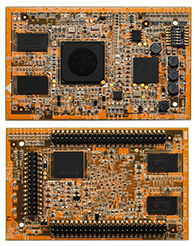
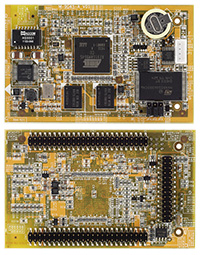
The Artila M‑9G45A is a compact, Linux‑ready System‑on‑Module (SoM) designed for industrial and embedded applications requiring high reliability, low power consumption, and flexible I/O. Built around the Atmel AT91SAM9G45 400 MHz ARM9 processor, it integrates memory, storage, networking, display, and multiple serial interfaces into a credit‑card‑sized board (80 × 50 mm). The module is pre‑loaded with Linux 2.6.38 and a comprehensive software suite, enabling rapid development and deployment of embedded systems, web servers, and control applications.
### 2. Key Features
- High‑Performance ARM9 Processor:
400 MHz Atmel AT91SAM9G45 CPU with integrated MMU (Memory Management Unit) for full Linux support.
- Pre‑installed Linux Environment:
Linux kernel 2.6.38 with U‑Boot bootloader and root file system pre‑loaded in NAND Flash.
- Integrated Memory:
128 MB DDR2 SDRAM and 256 MB NAND Flash, plus 2 MB DataFlash® for system backup.
- Networking:
On‑board 10/100 Mbps Ethernet interface with integrated PHY (DAVICOM DM9161) and 1.5 kV magnetic isolation.
- Display & Touch Interface:
24‑bit TTL LCD interface supporting up to 1280 × 860 TFT panels with dimming and backlight control; 4‑wire resistive touchscreen interface.
- Multiple Serial Interfaces:
Four UARTs (up to 921.6 kbps) with hardware flow control and software‑configurable RS‑232/RS‑485 modes.
- USB Connectivity:
One USB 2.0 high‑speed (480 Mbps) host port and one USB 2.0 device (client) port.
- Expandable I/O:
15 GPIO pins (CMOS/3.3 V compatible), I²C, SPI, I²S, and AC97 interfaces.
- Storage Expansion:
SD/MMC interface supporting SD 2.0 cards up to 32 GB.
- Low Power Consumption:
Operates from 3.0 – 3.6 V DC (3.3 V nominal) with typical power draw under 2.5 W.
- Compact Form Factor:
80 mm × 50 mm board with 128‑pin (2.0 mm pitch) connectors.
- Industrial‑Grade Reliability:
Operating temperature range 0 °C – 70 °C; on‑board watchdog timer and real‑time clock with lithium backup battery.
- Comprehensive Software Stack:
Includes GNU C/C++ toolchain, web server (lighttpd), SSH, FTP, Telnet, MySQL, PHP, Python, Perl, QT4‑Embedded, GTK+, and more.
### 3. Technical Specifications
Processor & Memory
- CPU: Atmel AT91SAM9G45 (ARM926EJ‑S core, 400 MHz)
- MMU: Integrated
- SDRAM: 128 MB DDR2
- NAND Flash: 256 MB
- DataFlash: 2 MB (system backup)
Networking
- Interface: 1 × 10/100 Mbps Ethernet (MAC + PHY on‑board)
- PHY: DAVICOM DM9161
- Isolation: 1.5 kV magnetic
- Signals: ETX+, ETX–, ERX+, ERX–
Serial Interfaces (UART)
- 4 × UARTs (TX, RX, RTS, CTS; UART1 also DCD, DTR, DSR)
- Baud Rate: up to 921.6 kbps
- Data Bits: 5–8 bits
- Parity: None, Even, Odd, Mark, Space
- Stop Bits: 1, 1.5, 2
- Flow Control: RTS/CTS, XON/XOFF, None
- Signal Level: CMOS 3.3 V
USB Ports
- Host: 1 × USB 2.0 (480 Mbps high‑speed)
- Device: 1 × USB 2.0 (client)
- Signals: USBA+, USBA–, Uddata+, Uddata–, Udio
I²C Bus
- Signals: TWD, TWCK
- Supported Devices: EEPROM, RTC
I²S Bus (Audio)
- Transmitter: TSCK, TWS, TSD
- Receiver: RSCK, RWS, RSD
- Supported Codec: TI TLV320AIC23
SPI Bus
- Signals: MISO, MOSI, SPCK, NPCS1, NPCS2
- Supported Device: Atmel DataFlash
SD/MMC Interface
- Signals: MCCDA, MCCK, MCDA0–3, CD, WP
- Compatibility: SD 2.0 specification
- Capacity: Up to 32 GB
GPIO
- 15 programmable I/O pins (PIO0–PIO14)
- Signal Level: CMOS/TTL 3.3 V
AC97 Interface
- Signals: RX, TX, FS, CK (shared with PIO11–14)
Real‑Time Clock (RTC)
- Chip: ST M41T81 (optional Ricoh RS5C372A)
- Backup Battery: Lithium BR1225 3 V 48 mAh (on‑board)
- External Battery Input: CN1 pin #5
Debug Port
- Type: RS‑232 serial console
- Signals: TX, RX, GND
- Baud Rate: 115200 bps (default)
Display Interface (TTL LCD)
- Resolution: Up to 1280 × 860 pixels (24‑bit RGB)
- Signals: R0–R7, G0–G7, B0–B7, Dot Clock, Data Enable, HSync, VSync, Dimming, Backlight
Touchscreen Interface
- Type: 4‑wire resistive
- Signals: Top, Bottom, Left, Right
Power Requirements
- Input Voltage: 3.0 – 3.6 V DC (3.3 V nominal)
- Typical Current: 170 mA (typ.), 240 mA (max)
- Power Consumption: < 2.5 W
Physical Characteristics
- Dimensions: 80 mm (W) × 50 mm (H)
- Connectors: 128 pins (2.0 mm pitch) – CN1 (28 pins), CN2 (50 pins), CN3 (50 pins)
- Mounting Holes: 2 × M2 (2.0 mm diameter)
- Operating Temperature: 0 °C to 70 °C
### 4. Functionality
The M‑9G45A operates as a self‑contained embedded computer module capable of running a full Linux environment. Upon power‑up, the U‑Boot bootloader initializes the hardware, loads the Linux 2.6.38 kernel from NAND Flash, and mounts the root file system. Users can access the system via Ethernet (SSH, Telnet, FTP, HTTP) or through the RS‑232 console.
Typical Applications:
- Industrial automation controllers
- Human‑machine interfaces (HMI) with LCD and touchscreen
- Embedded web servers and data loggers
- Networked sensors and IoT gateways
- Communication converters (RS‑232/RS‑485 to Ethernet)
- Educational and development platforms for ARM Linux
Compatibility:
Supports standard Linux software packages, GNU toolchains, and cross‑compilation environments for Linux and Windows. Compatible with Artila carrier boards and evaluation kits.
### 5. Components & Accessories
Included on Module:
- AT91SAM9G45 SoC
- 128 MB DDR2 SDRAM
- 256 MB NAND Flash + 2 MB DataFlash
- Ethernet PHY (DM9161) with transformer
- RTC (ST M41T81) with battery
- Watchdog timer
- USB host and device connectors (signals via headers)
- LCD and touchscreen connectors
- GPIO headers and debug port
Optional Accessories / Starter Kit:
- Carrier board with power circuitry
- 1 × RS‑485 port, 3 × RS‑232 ports
- 1 × Ethernet port, 4 × USB hosts, 1 × USB client
- MicroSD socket, RTC, EEPROM, local bus connector
- 12 V / 5 V backlight control headers
### 6. Installation & Setup
Power Requirements:
Supply 3.3 V DC regulated power to the module via CN connectors. Typical consumption is under 2 W.
Mounting:
Two M2 mounting holes allow secure attachment to carrier boards or custom PCBs. 128‑pin headers (CN1–CN3) provide signal and power connections.
Boot Process:
1. Apply power (3.3 V DC).
2. U‑Boot executes and loads Linux kernel from NAND Flash.
3. Root file system mounts automatically.
4. Default network IP: 192.168.2.127.
5. Login via SSH or Telnet using credentials: root/root or guest/guest.
Configuration:
- Network settings editable in `/etc/network/interfaces`.
- Wireless LAN supported via USB Wi‑Fi adapters (e.g., Ralink RT2571).
- Serial console configured at 115200 bps, 8N1.
- Run levels defined in `/etc/inittab` (default level 5).
Software Development:
- Cross‑compile applications using GNU toolchain (GCC 4.3.3, glibc 2.9).
- Transfer executables via FTP or USB and run from `/home/guest`.
- Auto‑start programs by adding commands to `/etc/rc.local`.
### 7. Performance & Capabilities
- CPU Speed: 400 MHz ARM926EJ‑S
- Memory Bandwidth: DDR2 SDRAM optimized for low latency
- Ethernet Throughput: 10/100 Mbps full‑duplex
- USB Speed: 480 Mbps (High‑Speed USB 2.0)
- UART Speed: Up to 921.6 kbps per port
- Storage Capacity: 256 MB NAND Flash + 32 GB SD card support
- Power Efficiency: < 2.5 W typical at 3.3 V
- Operating Temperature: 0 °C – 70 °C
Limitations:
- Single Ethernet interface (10/100 Mbps only)
- No native LVDS display output (uses TTL LCD interface)
- Limited RAM (128 MB) for memory‑intensive applications
### 8. Standards & Compliance
- Processor Architecture: ARM v5TEJ (ARM926EJ‑S)
- Operating System: Linux 2.6.38 (kernel compliant with POSIX standards)
- USB Compliance: USB 2.0 High‑Speed (480 Mbps)
- Ethernet Compliance: IEEE 802.3 10/100 Base‑T
- SD Card Compliance: SD 2.0 Specification
- Electrical Standards: CMOS/TTL 3.3 V logic levels
- Isolation: 1.5 kV magnetic isolation on Ethernet port
- Software Licensing: Open‑source GNU/Linux environment with GPL‑compliant utilities
### 9. Additional Information
Warranty & Support:
Artila provides standard manufacturer warranty and technical support for hardware and software components. Firmware updates and utility packages are available via Artila’s FTP server.
Maintenance & Recovery:
- Automatic fail‑safe boot from DataFlash if NAND file system fails.
- System recovery menu accessible via serial console for image update, filesystem creation, and environment reset.
- Recovery files (`m9g45a.alf`, `M9G45‑K`, `M9G45‑R`) provided on Artila CD.
Software Package Management:
- Uses `ipkg` for installing, upgrading, and removing software packages.
- Supports installation from Artila FTP or local USB storage.
- Webmin available for web‑based system administration (port 10000).
Pre‑installed Utilities and Daemons:
- SSH (sftp), Telnet, FTP (vsftpd), Web Server (lighttpd), Syslog/klogd, amgrd (Artila broadcast search daemon).
- BusyBox, bash, GTK+, X11, GPE, ALSA, madplayer, MySQL, PHP, Python, Perl, QT4‑Embedded, SQLite3, SNMP, iptables, ppp, wireless_tools, and Artila utilities.
Artila Utility Suite:
- `update` – update loader and kernel images
- `setuart` – configure serial ports (RS‑232/RS‑485)
- `version` – display OS version
- `gpioctl` – configure GPIO pins
- `lcdctl` – adjust LCD settings
Toolchain Support:
- Linux Toolchain: GCC 4.3.3, glibc 2.9, binutils 2.18
- Windows Toolchain: CodeSourcery arm‑none‑linux‑gnueabi (GCC 4.3.3, glibc 2.8)
Default Network Configuration:
- IP Address: 192.168.2.127
- Login: root / guest
- Password: root / guest
- Console Port: 115200 bps, 8N1
System Recovery Options:
1. Update Image (loader, kernel, filesystem) via USB.
2. Make Filesystem (create custom image).
3. Recover Environment (default settings).
4. Show System Info.
5. Reboot.
Web Server Configuration:
- Root directory: `/usr/www`
- Configuration file: `/etc/lighttpd.conf`
- Default homepage: `index.html`
Time Management:
- RTC adjustable via `date` and `hwclock –w` commands.
- Supports NTP client synchronization.
Software Development Example:
Developers can compile sample programs using the provided Makefiles, transfer executables via FTP, set permissions (`chmod +x`), and execute directly on the module. Programs can auto‑start on boot by editing `/etc/rc.local`.
Evaluation Kit Layout Highlights:
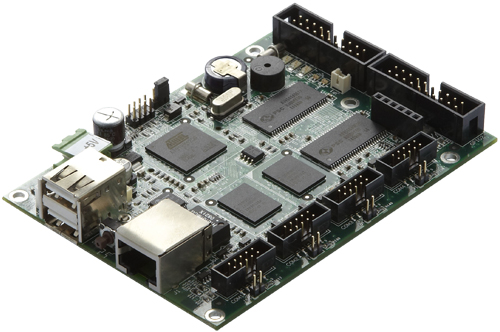
- Console port, RS‑232/RS‑485 ports, Ethernet, USB ports, microSD socket, LCD connectors (CMOS/LVDS), audio I/O, touchscreen connector, GPIO header, and power inputs (9–30 V DC).
### Summary
The Artila M‑9G45A is a robust, Linux‑ready ARM9 System‑on‑Module engineered for embedded and industrial applications requiring compact size, low power, and versatile connectivity. With its 400 MHz AT91SAM9G45 processor, integrated 128 MB DDR2 RAM, 256 MB Flash, Ethernet, USB, LCD, and touchscreen interfaces, it provides a complete embedded computing solution in a credit‑card‑sized form factor. Pre‑installed Linux 2.6.38 and a rich set of utilities enable developers to rapidly prototype and deploy applications ranging from industrial control to networked HMI systems. The module’s open architecture, comprehensive I/O, and software support make it an ideal platform for custom embedded designs and long‑term industrial deployments.
### 1. Product Overview
Product Name: M‑9G45A
Model / Article Number: M‑9G45A
Series: Atmel 9G45 SoM (System‑on‑Module)
Manufacturer: Artila Electronics Co., Ltd.
Product Type: Embedded ARM9‑based Linux Industrial Computer Module
Processor Platform: Atmel AT91SAM9G45 (ARM926EJ‑S Core)
Operating System: Embedded Linux 2.6.38 with U‑Boot Bootloader
The Artila M‑9G45A is a compact, Linux‑ready System‑on‑Module (SoM) designed for industrial and embedded applications requiring high reliability, low power consumption, and flexible I/O. Built around the Atmel AT91SAM9G45 400 MHz ARM9 processor, it integrates memory, storage, networking, display, and multiple serial interfaces into a credit‑card‑sized board (80 × 50 mm). The module is pre‑loaded with Linux 2.6.38 and a comprehensive software suite, enabling rapid development and deployment of embedded systems, web servers, and control applications.
### 2. Key Features
- High‑Performance ARM9 Processor:
400 MHz Atmel AT91SAM9G45 CPU with integrated MMU (Memory Management Unit) for full Linux support.
- Pre‑installed Linux Environment:
Linux kernel 2.6.38 with U‑Boot bootloader and root file system pre‑loaded in NAND Flash.
- Integrated Memory:
128 MB DDR2 SDRAM and 256 MB NAND Flash, plus 2 MB DataFlash® for system backup.
- Networking:
On‑board 10/100 Mbps Ethernet interface with integrated PHY (DAVICOM DM9161) and 1.5 kV magnetic isolation.
- Display & Touch Interface:
24‑bit TTL LCD interface supporting up to 1280 × 860 TFT panels with dimming and backlight control; 4‑wire resistive touchscreen interface.
- Multiple Serial Interfaces:
Four UARTs (up to 921.6 kbps) with hardware flow control and software‑configurable RS‑232/RS‑485 modes.
- USB Connectivity:
One USB 2.0 high‑speed (480 Mbps) host port and one USB 2.0 device (client) port.
- Expandable I/O:
15 GPIO pins (CMOS/3.3 V compatible), I²C, SPI, I²S, and AC97 interfaces.
- Storage Expansion:
SD/MMC interface supporting SD 2.0 cards up to 32 GB.
- Low Power Consumption:
Operates from 3.0 – 3.6 V DC (3.3 V nominal) with typical power draw under 2.5 W.
- Compact Form Factor:
80 mm × 50 mm board with 128‑pin (2.0 mm pitch) connectors.
- Industrial‑Grade Reliability:
Operating temperature range 0 °C – 70 °C; on‑board watchdog timer and real‑time clock with lithium backup battery.
- Comprehensive Software Stack:
Includes GNU C/C++ toolchain, web server (lighttpd), SSH, FTP, Telnet, MySQL, PHP, Python, Perl, QT4‑Embedded, GTK+, and more.
### 3. Technical Specifications
Processor & Memory
- CPU: Atmel AT91SAM9G45 (ARM926EJ‑S core, 400 MHz)
- MMU: Integrated
- SDRAM: 128 MB DDR2
- NAND Flash: 256 MB
- DataFlash: 2 MB (system backup)
Networking
- Interface: 1 × 10/100 Mbps Ethernet (MAC + PHY on‑board)
- PHY: DAVICOM DM9161
- Isolation: 1.5 kV magnetic
- Signals: ETX+, ETX–, ERX+, ERX–
Serial Interfaces (UART)
- 4 × UARTs (TX, RX, RTS, CTS; UART1 also DCD, DTR, DSR)
- Baud Rate: up to 921.6 kbps
- Data Bits: 5–8 bits
- Parity: None, Even, Odd, Mark, Space
- Stop Bits: 1, 1.5, 2
- Flow Control: RTS/CTS, XON/XOFF, None
- Signal Level: CMOS 3.3 V
USB Ports
- Host: 1 × USB 2.0 (480 Mbps high‑speed)
- Device: 1 × USB 2.0 (client)
- Signals: USBA+, USBA–, Uddata+, Uddata–, Udio
I²C Bus
- Signals: TWD, TWCK
- Supported Devices: EEPROM, RTC
I²S Bus (Audio)
- Transmitter: TSCK, TWS, TSD
- Receiver: RSCK, RWS, RSD
- Supported Codec: TI TLV320AIC23
SPI Bus
- Signals: MISO, MOSI, SPCK, NPCS1, NPCS2
- Supported Device: Atmel DataFlash
SD/MMC Interface
- Signals: MCCDA, MCCK, MCDA0–3, CD, WP
- Compatibility: SD 2.0 specification
- Capacity: Up to 32 GB
GPIO
- 15 programmable I/O pins (PIO0–PIO14)
- Signal Level: CMOS/TTL 3.3 V
AC97 Interface
- Signals: RX, TX, FS, CK (shared with PIO11–14)
Real‑Time Clock (RTC)
- Chip: ST M41T81 (optional Ricoh RS5C372A)
- Backup Battery: Lithium BR1225 3 V 48 mAh (on‑board)
- External Battery Input: CN1 pin #5
Debug Port
- Type: RS‑232 serial console
- Signals: TX, RX, GND
- Baud Rate: 115200 bps (default)
Display Interface (TTL LCD)
- Resolution: Up to 1280 × 860 pixels (24‑bit RGB)
- Signals: R0–R7, G0–G7, B0–B7, Dot Clock, Data Enable, HSync, VSync, Dimming, Backlight
Touchscreen Interface
- Type: 4‑wire resistive
- Signals: Top, Bottom, Left, Right
Power Requirements
- Input Voltage: 3.0 – 3.6 V DC (3.3 V nominal)
- Typical Current: 170 mA (typ.), 240 mA (max)
- Power Consumption: < 2.5 W
Physical Characteristics
- Dimensions: 80 mm (W) × 50 mm (H)
- Connectors: 128 pins (2.0 mm pitch) – CN1 (28 pins), CN2 (50 pins), CN3 (50 pins)
- Mounting Holes: 2 × M2 (2.0 mm diameter)
- Operating Temperature: 0 °C to 70 °C
### 4. Functionality
The M‑9G45A operates as a self‑contained embedded computer module capable of running a full Linux environment. Upon power‑up, the U‑Boot bootloader initializes the hardware, loads the Linux 2.6.38 kernel from NAND Flash, and mounts the root file system. Users can access the system via Ethernet (SSH, Telnet, FTP, HTTP) or through the RS‑232 console.
Typical Applications:
- Industrial automation controllers
- Human‑machine interfaces (HMI) with LCD and touchscreen
- Embedded web servers and data loggers
- Networked sensors and IoT gateways
- Communication converters (RS‑232/RS‑485 to Ethernet)
- Educational and development platforms for ARM Linux
Compatibility:
Supports standard Linux software packages, GNU toolchains, and cross‑compilation environments for Linux and Windows. Compatible with Artila carrier boards and evaluation kits.
### 5. Components & Accessories
Included on Module:
- AT91SAM9G45 SoC
- 128 MB DDR2 SDRAM
- 256 MB NAND Flash + 2 MB DataFlash
- Ethernet PHY (DM9161) with transformer
- RTC (ST M41T81) with battery
- Watchdog timer
- USB host and device connectors (signals via headers)
- LCD and touchscreen connectors
- GPIO headers and debug port
Optional Accessories / Starter Kit:
- Carrier board with power circuitry
- 1 × RS‑485 port, 3 × RS‑232 ports
- 1 × Ethernet port, 4 × USB hosts, 1 × USB client
- MicroSD socket, RTC, EEPROM, local bus connector
- 12 V / 5 V backlight control headers
### 6. Installation & Setup
Power Requirements:
Supply 3.3 V DC regulated power to the module via CN connectors. Typical consumption is under 2 W.
Mounting:
Two M2 mounting holes allow secure attachment to carrier boards or custom PCBs. 128‑pin headers (CN1–CN3) provide signal and power connections.
Boot Process:
1. Apply power (3.3 V DC).
2. U‑Boot executes and loads Linux kernel from NAND Flash.
3. Root file system mounts automatically.
4. Default network IP: 192.168.2.127.
5. Login via SSH or Telnet using credentials: root/root or guest/guest.
Configuration:
- Network settings editable in `/etc/network/interfaces`.
- Wireless LAN supported via USB Wi‑Fi adapters (e.g., Ralink RT2571).
- Serial console configured at 115200 bps, 8N1.
- Run levels defined in `/etc/inittab` (default level 5).
Software Development:
- Cross‑compile applications using GNU toolchain (GCC 4.3.3, glibc 2.9).
- Transfer executables via FTP or USB and run from `/home/guest`.
- Auto‑start programs by adding commands to `/etc/rc.local`.
### 7. Performance & Capabilities
- CPU Speed: 400 MHz ARM926EJ‑S
- Memory Bandwidth: DDR2 SDRAM optimized for low latency
- Ethernet Throughput: 10/100 Mbps full‑duplex
- USB Speed: 480 Mbps (High‑Speed USB 2.0)
- UART Speed: Up to 921.6 kbps per port
- Storage Capacity: 256 MB NAND Flash + 32 GB SD card support
- Power Efficiency: < 2.5 W typical at 3.3 V
- Operating Temperature: 0 °C – 70 °C
Limitations:
- Single Ethernet interface (10/100 Mbps only)
- No native LVDS display output (uses TTL LCD interface)
- Limited RAM (128 MB) for memory‑intensive applications
### 8. Standards & Compliance
- Processor Architecture: ARM v5TEJ (ARM926EJ‑S)
- Operating System: Linux 2.6.38 (kernel compliant with POSIX standards)
- USB Compliance: USB 2.0 High‑Speed (480 Mbps)
- Ethernet Compliance: IEEE 802.3 10/100 Base‑T
- SD Card Compliance: SD 2.0 Specification
- Electrical Standards: CMOS/TTL 3.3 V logic levels
- Isolation: 1.5 kV magnetic isolation on Ethernet port
- Software Licensing: Open‑source GNU/Linux environment with GPL‑compliant utilities
### 9. Additional Information
Warranty & Support:
Artila provides standard manufacturer warranty and technical support for hardware and software components. Firmware updates and utility packages are available via Artila’s FTP server.
Maintenance & Recovery:
- Automatic fail‑safe boot from DataFlash if NAND file system fails.
- System recovery menu accessible via serial console for image update, filesystem creation, and environment reset.
- Recovery files (`m9g45a.alf`, `M9G45‑K`, `M9G45‑R`) provided on Artila CD.
Software Package Management:
- Uses `ipkg` for installing, upgrading, and removing software packages.
- Supports installation from Artila FTP or local USB storage.
- Webmin available for web‑based system administration (port 10000).
Pre‑installed Utilities and Daemons:
- SSH (sftp), Telnet, FTP (vsftpd), Web Server (lighttpd), Syslog/klogd, amgrd (Artila broadcast search daemon).
- BusyBox, bash, GTK+, X11, GPE, ALSA, madplayer, MySQL, PHP, Python, Perl, QT4‑Embedded, SQLite3, SNMP, iptables, ppp, wireless_tools, and Artila utilities.
Artila Utility Suite:
- `update` – update loader and kernel images
- `setuart` – configure serial ports (RS‑232/RS‑485)
- `version` – display OS version
- `gpioctl` – configure GPIO pins
- `lcdctl` – adjust LCD settings
Toolchain Support:
- Linux Toolchain: GCC 4.3.3, glibc 2.9, binutils 2.18
- Windows Toolchain: CodeSourcery arm‑none‑linux‑gnueabi (GCC 4.3.3, glibc 2.8)
Default Network Configuration:
- IP Address: 192.168.2.127
- Login: root / guest
- Password: root / guest
- Console Port: 115200 bps, 8N1
System Recovery Options:
1. Update Image (loader, kernel, filesystem) via USB.
2. Make Filesystem (create custom image).
3. Recover Environment (default settings).
4. Show System Info.
5. Reboot.
Web Server Configuration:
- Root directory: `/usr/www`
- Configuration file: `/etc/lighttpd.conf`
- Default homepage: `index.html`
Time Management:
- RTC adjustable via `date` and `hwclock –w` commands.
- Supports NTP client synchronization.
Software Development Example:
Developers can compile sample programs using the provided Makefiles, transfer executables via FTP, set permissions (`chmod +x`), and execute directly on the module. Programs can auto‑start on boot by editing `/etc/rc.local`.
Evaluation Kit Layout Highlights:
- Console port, RS‑232/RS‑485 ports, Ethernet, USB ports, microSD socket, LCD connectors (CMOS/LVDS), audio I/O, touchscreen connector, GPIO header, and power inputs (9–30 V DC).
### Summary
The Artila M‑9G45A is a robust, Linux‑ready ARM9 System‑on‑Module engineered for embedded and industrial applications requiring compact size, low power, and versatile connectivity. With its 400 MHz AT91SAM9G45 processor, integrated 128 MB DDR2 RAM, 256 MB Flash, Ethernet, USB, LCD, and touchscreen interfaces, it provides a complete embedded computing solution in a credit‑card‑sized form factor. Pre‑installed Linux 2.6.38 and a rich set of utilities enable developers to rapidly prototype and deploy applications ranging from industrial control to networked HMI systems. The module’s open architecture, comprehensive I/O, and software support make it an ideal platform for custom embedded designs and long‑term industrial deployments.
-
 M-9G45A_Datasheet.pdf
PDF Catalog
M-9G45A_Datasheet.pdf
PDF Catalog
-
 M-9G45A Data Sheet.pdf
PDF Catalog
M-9G45A Data Sheet.pdf
PDF Catalog
-
 Warranty Declaration.pdf
PDF Catalog
Warranty Declaration.pdf
PDF Catalog
-
 M-9G45A User Guide.pdf
Manual
M-9G45A User Guide.pdf
Manual
Kein Zubehör vorhanden.