
 LOOKING FOR THE RIGHT
INDUSTRIAL SOLUTION?
Discover embedded, communication and automation solutions tailored to your application.
Special Cards
PC Add-On Cards are special cards that can be added to a computer to enhance its capabilities. These cards can be used to increase the performance of a computer, such as adding more RAM, providing better graphics, or providing additional ports. They can also be used to provide additional functions, such as providing wireless networking or extra storage.
Subcategories
Products
 GP-IB(PCI)FL
- **IEEE‑488.1 / IEEE‑488.2 Compliance:** Fully conforms to international GPIB standards, ensuring interoperability with a broad range of test and measurement devices. - **High‑Speed Data Transfer:** Achieves up to **1.5 Mbyte/sec** maximum transfer rate, suitable for high‑throughput data acquisition and control. - **Bus Master Transfer:** Enables direct memory access (DMA‑like) data transfer between the board and system memory without CPU overhead, improving system efficiency. - **2 Kbyte FIFO Buffer:** Dedicated FIFO memory for both transmission and reception ensures stable high‑speed communication and minimizes data loss. - **Stable Long‑Term Supply:** Uses a CONTEC‑developed GPIB controller compatible with the NEC µPD7210C, ensuring long‑term product availability and reliability. - **Compact PCI Form Factor:** Standard PCI short‑size board (121.69 mm × 63.41 mm) fits standard and low‑profile PCI slots. - **Plug & Play Configuration:** Automatic resource allocation (I/O address and IRQ) via PCI PnP architecture. - **Interrupt Support:** One interrupt request line (INTA#) for efficient event‑driven communication. - **Multi‑Device Connectivity:** Supports up to **15 devices** on a single GPIB bus. - **Cable Length Compliance:** Up to **4 m** between adjacent devices and **20 m total** bus length. - **Software Support:** Includes Windows API libraries and supports Linux, MATLAB, and LabVIEW environments. - **Optional Accessories:** GPIB connector adapter (CN‑GP/C) and double‑shielded GPIB cables (PCN‑T02 2 m / PCN‑T04 4 m).
Manufacturer: Contec
Category: IEEE (GPIB) Cards
GP-IB(PCI)L
- **IEEE‑488.1 / IEEE‑488.2 Compliance:** Fully conforms to international GPIB standards, ensuring compatibility with a wide range of test and measurement instruments. - **PCI Bus Interface:** 32‑bit, 33 MHz PCI interface supporting plug‑and‑play configuration and automatic resource allocation. - **High‑Reliability FPGA Controller:** Uses CONTEC’s proprietary FPGA controller compatible with the µPD7210C GPIB controller, ensuring long‑term availability and stable operation. - **Data Transfer Rate:** Supports up to **120 Kbytes/sec** maximum data transfer speed. - **Signal Logic:** Negative logic signaling with TTL‑compatible voltage levels (Low ≤ 0.8 V, High ≥ 2.0 V). - **Interrupt‑Driven Operation:** One interrupt request signal (INTA) for efficient CPU utilization. - **GPIB Control Timer:** Built‑in precision timer for accurate control and synchronization of GPIB transactions. - **Bus Monitoring:** Supports monitoring of key GPIB control lines (IFC, SRQ, ATN) with latch functionality. - **Compact PCI Form Factor:** Short‑size PCI board suitable for standard PC/AT compatible systems. - **Software Support:** Compatible with CONTEC’s API‑PAC(W32) and ACX‑PAC(W32) driver libraries for Windows; LabVIEW and MATLAB drivers available. - **Ease of Integration:** Plug‑and‑play installation with automatic IRQ and I/O address assignment. - **High Noise Immunity:** Designed for stable operation in industrial and laboratory environments. - **Long‑Term Supply:** FPGA‑based design ensures continued availability without dependence on obsolete controller ICs.
Manufacturer: Contec
Category: IEEE (GPIB) Cards
GP-IB(PM)
- **IEEE‑488.1 / IEEE‑488.2 Compliance:** Fully conforms to the international GPIB communication standards, ensuring compatibility with a wide range of laboratory and industrial instruments. - **Compact PCMCIA Type II Form Factor:** Designed for notebook PCs and embedded systems with PC Card slots, providing portable GPIB connectivity without external power. - **Data Transfer Rate:** Supports up to **50 Kbyte/sec** maximum transmission speed, suitable for standard instrument control and data acquisition tasks. - **Interrupt Flexibility:** Selectable IRQ levels (3–7, 9–12, 14, or 15) for optimal system integration and conflict avoidance. - **Electrical Interface:** 8 parallel data lines and 3 handshake lines, negative logic signaling (Low ≤ 0.8 V, High ≥ 2.0 V). - **Device Connectivity:** Supports up to **15 GPIB devices** on a single bus segment. - **Cable Length:** Up to **4 m between devices** and **20 m total bus length**, compliant with IEEE‑488 specifications. - **Plug‑and‑Play Operation:** Automatically recognized by PCMCIA‑compliant operating systems; no manual configuration required. - **Software Support:** Compatible with CONTEC’s **ACX‑PAC(W32)** and **API‑PAC(W32)** driver libraries, enabling integration with Windows‑based control software and development environments such as LabVIEW and MATLAB. - **High Reliability:** Uses CONTEC’s proprietary GPIB controller technology for long‑term supply stability and robust operation. - **Lightweight and Portable:** Approximately **250 g including cable**, ideal for field measurement and mobile test setups.
Manufacturer: Contec
Category: IEEE (GPIB) Cards
GPIB-F-LPE
- **IEEE-488.1 / IEEE-488.2 Compliance:** Fully compliant with both IEEE-488.1 and IEEE-488.2 standards, ensuring compatibility with a wide range of GPIB instruments and controllers. - **High-Speed Data Transfer:** Supports a maximum transfer rate of **1.5 Mbyte/sec**, enabling rapid communication with multiple instruments. - **Bus Master Transfer:** Allows direct data transfer between the PC and the board without CPU load, improving system efficiency and throughput. - **Integrated GPIB Bus Analyzer:** Provides real-time monitoring and analysis of GPIB bus signals, enabling debugging and performance optimization. - **2Kbyte FIFO Memory:** Onboard FIFO buffers for both transmission and reception ensure stable, high-speed data flow and reduced latency. - **High-Precision Timer:** Built-in timer for precise time measurement and synchronization in Windows environments. - **Low Profile PCI Express Form Factor:** Compliant with PCI Express Base Specification Rev. 1.0a ×1; includes both low-profile and standard brackets for flexible installation. - **Multi-Board Support:** Up to four boards can be installed in a single system, allowing expansion of GPIB channels. - **Interrupt Handling:** One interrupt request signal (INTA#) for efficient event-driven communication. - **Long-Term Availability:** Uses CONTEC’s proprietary high-speed GPIB controller (compatible with PD7210 and later), ensuring stable long-term supply and support. - **Diagnostic and Utility Software:** Includes diagnostic tools for hardware verification, interrupt testing, and communication validation. - **Line Monitoring:** Capable of reading control line states (IFC, ATN, SRQ, REN, EOI, DAV, NRFD, NDAC) and data line status (DIO1–DIO8). - **Cross-Platform Software Support:** Compatible with Windows and Linux API-TOOL drivers, MATLAB, and LabVIEW environments. - **RoHS and Lead-Free Compliance:** Environmentally friendly design meeting modern regulatory standards.
Manufacturer: Contec
Category: IEEE (GPIB) Cards
GPIB-FL-LPE
- **IEEE-488.1 / IEEE-488.2 Compliance:** Fully conforms to both IEEE-488.1 and IEEE-488.2 standards, ensuring compatibility with a wide range of GPIB instruments. - **High-Speed Data Transfer:** Achieves up to **1.5 MByte/sec** maximum transfer rate, supporting high-throughput data acquisition and control. - **Bus Master Operation:** Enables direct memory access (DMA) transfers between the board and system memory without CPU overhead, improving system efficiency. - **Dual 2Kbyte FIFO Buffers:** Independent 2Kbyte send and receive buffers allow smooth, high-speed data flow and minimize latency during communication. - **SPAS Event Function:** Supports the SPAS (Serial Poll Active State) event, enhancing flexibility in serial polling and system control. - **High-Precision Internal Timer:** Integrated timer allows accurate time monitoring and synchronization under Windows environments. - **Long-Term Availability:** Utilizes CONTEC’s proprietary high-speed GPIB controller (µPD7210 register compatible), ensuring product longevity and stable supply. - **Diagnostic Utility:** Includes a diagnostic program for verifying hardware operation, interrupts, I/O addresses, and performing communication tests. - **Low Profile and Standard Slot Support:** Ships with a low-profile bracket pre-installed and includes a standard bracket for full-height PCIe slots. - **Software Development Support:** Compatible with CONTEC’s API-PAC(W32) driver library, supporting Win32 API-based programming languages and LabVIEW integration.
Manufacturer: Contec
Category: IEEE (GPIB) Cards
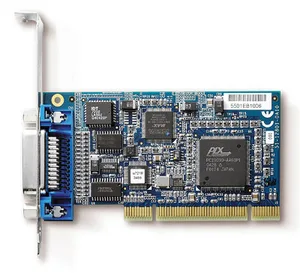 LPCI-3488
- **Full IEEE‑488.1 and IEEE‑488.2 Compliance:** Ensures compatibility with all standard GPIB instruments and controllers. - **High‑Speed Data Transfer:** Achieves up to **1.5 MB/s** GPIB transfer rate using block transfer mode. - **On‑Board FIFO Buffer:** 1 KB FIFO memory buffers read/write operations, bridging the speed gap between the GPIB bus (~1.5 MB/s) and the PCI bus (132 MB/s). - **Dual Voltage PCI Support:** Operates on both **3.3 V and 5 V** PCI buses for broad system compatibility. - **Low‑Profile Design:** Conforms to MD1 low‑profile PCI mechanical specifications (120 mm × 64.5 mm). - **Software Compatibility:** Binary‑compatible with **NI‑488.2** driver API (GPIB‑32.DLL) and supports **VISA** libraries for seamless integration with existing applications. - **Wide ADE Support:** Compatible with **Microsoft Visual C++**, **Visual Basic**, **Delphi**, **NI LabVIEW**, **NI LabWindows/CVI**, and **Agilent TestExec**. - **Plug‑and‑Play Configuration:** Automatic resource allocation via PCI BIOS; no jumper or DIP switch settings required. - **Interactive Diagnostic Utility:** ADLINK GPIB Utility for testing, configuration, and communication verification. - **Robust Environmental Tolerance:** Operates from 0 °C to 55 °C; storage from −20 °C to 80 °C. - **Regulatory Compliance:** Certified to **CE** and **FCC Class A** EMC/EMI standards.
Manufacturer: Adlink Technology Inc.
Category: IEEE (GPIB) Cards
 LPCI-3488A
- **IEEE‑488.1/488.2 Compliance:** Fully compatible with both hardware and software GPIB standards. - **High Data Throughput:** Supports data transfer rates up to **1.5 MB/s** in programmed I/O mode. - **Low‑Profile PCI Form Factor:** MD1‑compliant PCB (120 mm × 64 mm) suitable for compact industrial and desktop systems. - **Dual Voltage PCI Support:** Operates on **3.3 V or 5 V PCI buses**, ensuring broad system compatibility. - **On‑Board FIFO Buffer:** 2 kB FIFO for read/write operations to bridge the speed gap between the GPIB bus (~1.5 MB/s) and PCI bus (132 MB/s). - **Software Compatibility:** Binary‑compatible with **NI‑488.2** driver software and supports **VISA** library for seamless integration with existing instrument drivers. - **Plug‑and‑Play Configuration:** Automatic resource allocation via PCI BIOS; no jumper or DIP switch settings required. - **Interactive Diagnostic Utility:** ADLINK GPIB Utility for testing, configuration, and troubleshooting. - **Wide ADE Support:** Compatible with **Microsoft Visual Studio (VC++/VB/.NET)**, **Borland C++ Builder**, **Delphi**, **NI LabVIEW™**, **LabWindows/CVI™**, **Agilent TestExec**, and **MATLAB®**. - **Multi‑Instrument Control:** Supports up to **14 instruments** connected in linear, star, or hybrid topologies. - **Industrial‑Grade Reliability:** CE and FCC Class A certified for EMC/EMI compliance. - **Operating System Support:** Windows XP, Windows 7/8 (x86/x64).
Manufacturer: Adlink Technology Inc.
Category: IEEE (GPIB) Cards
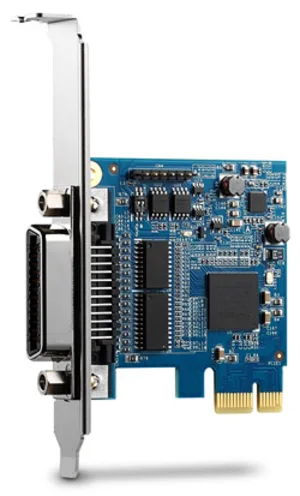 LPCIe-3488A
- **Full IEEE-488.1 and IEEE-488.2 Compliance:** Ensures interoperability with a wide range of GPIB instruments and systems. - **PCI Express 1.1 Interface:** Provides high-speed, low-latency communication with host systems. - **High Data Transfer Rate:** Supports up to 1.2 MB/s GPIB data transfer rate for the LPCIe-3488A model. - **Onboard FIFO Buffer:** 2 kB FIFO memory for efficient read/write operations and reduced CPU overhead. - **Software Compatibility:** Fully compatible with National Instruments NI-488.2 driver APIs and VISA library, ensuring seamless integration with existing applications. - **Plug-and-Play Configuration:** Automatic resource allocation via PCIe bus; no manual jumper or switch settings required. - **Interactive Diagnostic Utility:** ADLINK GPIB Utility software for testing, configuration, and troubleshooting. - **Wide Software Support:** Compatible with Visual Studio .NET, Borland C++ Builder, LabVIEW™, MATLAB®, and Delphi environments. - **Low-Profile Form Factor:** Compact design suitable for industrial and desktop PCs with limited space. - **Environmental Compliance:** RoHS and WEEE compliant, reflecting ADLINK’s commitment to environmental responsibility. - **EMC/EMI Certification:** CE and FCC Class A certified for electromagnetic compatibility.
Manufacturer: Adlink Technology Inc.
Category: IEEE (GPIB) Cards
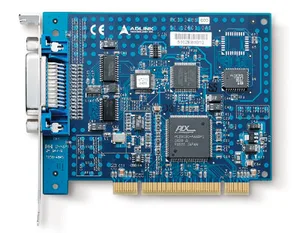 PCI-3488
- **IEEE-488.1 and IEEE-488.2 Compliance:** Fully compatible with both hardware and software GPIB standards. - **High Data Throughput:** Achieves up to **1.5 MB/s** GPIB transfer rate using block transfer mode. - **On-Board FIFO Buffer:** 1 KB FIFO memory buffers read/write operations, bridging the speed gap between the GPIB bus (~1.5 MB/s) and PCI bus (132 MB/s). - **PCI Bus Compatibility:** Supports both **3.3V and 5V PCI** signaling for broad system compatibility. - **PXI Compliance:** PXI-3488 conforms to **PXI Specification Rev. 2.0** and **CompactPCI PICMG 2.0 R3.0** standards. - **Software Compatibility:** Binary-compatible with **NI-488.2** driver API (GPIB-32.DLL) and supports **VISA** libraries for maximum interoperability. - **Plug and Play:** Automatic resource configuration via PCI/PXI plug-and-play architecture. - **Cross-Platform ADE Support:** Works with **Microsoft Visual C++/VB**, **Delphi**, **LabVIEW**, **LabWindows/CVI**, and **Agilent TestExec**. - **Diagnostic Utility:** Includes ADLINK GPIB Utility for interface testing and instrument communication verification. - **Compact Design:** Half-size PCI and low-profile MD1 PCB options for space-constrained systems. - **Industrial Reliability:** CE and FCC Class A certified for EMI/EMC compliance. - **Wide Operating Range:** Designed for industrial environments with 0–55°C operating temperature and 5–95% non-condensing humidity.
Manufacturer: Adlink Technology Inc.
Category: IEEE (GPIB) Cards
 PCI-GPIB
- **IEEE-488.2 Compliant:** Fully conforms to the IEEE-488.2 standard, ensuring compatibility with a wide range of GPIB instruments and controllers. - **High Data Throughput:** Supports data transfer rates exceeding **1 MByte/s** in programmed I/O mode, enabling fast communication with connected devices. - **Plug & Play Compatibility:** Designed for **Windows 95/98** plug-and-play operation, simplifying installation and configuration. - **Multi-Platform Driver Support:** Includes **HP-IB driver (SICL/TULIP)** for integration with HP-VEE, HP-Basic, and HP-BenchLink environments. - **Broad Software Compatibility:** Works seamlessly with popular test and measurement software such as **HP-VEE, HAT-Basic, TestPoint, DIAdem, Visual Designer, DASYLab, Visual C++, Visual Basic, and Delphi**. - **Integrated BIOS Support:** Features an **ines IEEE-488.2 BIOS**, providing low-level hardware control and ensuring reliable communication. - **Cross-Platform Device Driver:** Includes a **C-source IEEE-488.2 device driver** for multiple operating systems, allowing developers to integrate the card into custom applications across diverse platforms. - **Industrial-Grade Reliability:** Built for continuous operation in laboratory, industrial, and embedded environments. - **Backward Compatibility:** Fully compatible with legacy HP-IB instruments and existing GPIB setups.
Manufacturer: Adlink Technology Inc.
Category: IEEE (GPIB) Cards
 PXI-3488
- **IEEE‑488.1 and IEEE‑488.2 Compliance:** Fully compatible with both hardware and software specifications of the IEEE‑488 (GPIB) standard. - **PXI Specification Compliance:** Conforms to PXI Specification Rev. 2.0 and CompactPCI (PICMG 2.0 R3.0) standards. - **High Data Throughput:** Achieves up to **1.5 MB/s** GPIB transfer rate using block transfer mode. - **On‑Board FIFO Buffer:** 1 KB FIFO memory buffers read/write operations between the GPIB bus and PXI controller, bridging the speed gap between the slower GPIB bus (~1.5 MB/s) and the faster PXI bus (132 MB/s). - **Multi‑Instrument Control:** Supports up to **14 instruments** on a single GPIB bus. - **Plug‑and‑Play Compatibility:** Automatic resource configuration via PXI backplane; no jumper or DIP switch settings required. - **Software Compatibility:** - Binary‑compatible with **NI‑488.2** driver software through ADLINK’s **GPIB‑32.DLL**. - Supports **VISA** library for use with existing instrument drivers. - Compatible with **Agilent I/O Library**, **NI VISA**, and most third‑party instrument drivers. - **Application Development Environment (ADE) Support:** Works with **Microsoft Visual C++**, **Visual Basic**, **Delphi**, **LabVIEW**, **LabWindows/CVI**, and **Agilent TestExec**. - **Interactive Diagnostic Utility:** Includes ADLINK GPIB Utility for testing and verifying GPIB connections. - **Robust Mechanical Design:** 3U Eurocard form factor with rugged construction suitable for industrial and laboratory environments. - **Cross‑Platform Driver Support:** ADL‑GPIB driver package supports Windows 98/NT/2000/XP/2003 operating systems.
Manufacturer: Adlink Technology Inc.
Category: IEEE (GPIB) Cards
Support-PAC(PC)202
- **High-Speed GPIB Communication:** Optimized driver architecture for rapid data exchange between PC and IEEE-488.2-compliant instruments. - **Comprehensive DOS Support:** Fully compatible with DOS environments, ensuring legacy system integration and continued operation of industrial measurement and control systems. - **Multi-Language Development Support:** Compatible with Microsoft C/C++, Borland C/C++, Borland Pascal, and Assembler, allowing developers to integrate GPIB communication into a wide range of applications. - **IEEE-488.2 Compliance:** Supports standard IEEE-488.2 command sets for reliable and standardized instrument communication. - **Hardware Compatibility:** Designed for CONTEC’s GP-IB(PC), GP-IB(PC)F, and GP-IB(PM) boards, ensuring seamless operation across multiple interface types (ISA, PC Card). - **High-Speed Driver Architecture:** Incorporates optimized interrupt handling and DMA (Direct Memory Access) for efficient data throughput. - **Diagnostic and Configuration Utilities:** Includes setup and diagnostic tools for configuring board parameters and verifying communication integrity. - **Backward Compatibility:** Maintains compatibility with earlier CONTEC GPIB hardware and software ecosystems, ensuring smooth migration from older systems.
Manufacturer: Contec
Category: IEEE (GPIB) Cards
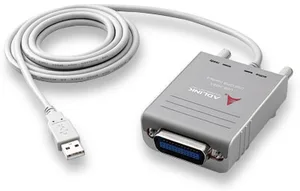 USB-3488A
- **Full IEEE-488.1 and IEEE-488.2 Compliance:** Ensures compatibility with a wide range of GPIB instruments and systems. - **USB 2.0 Interface:** Provides plug-and-play connectivity for desktop and laptop computers without requiring external power. - **High Data Throughput:** Supports data transfer rates up to **1.2 MB/s** in programmed I/O mode. - **Large Onboard FIFO:** Equipped with a **32 KB FIFO buffer** for optimized read/write operations and reduced latency. - **Driver and API Compatibility:** Fully compatible with **NI-488.2** driver software and supports **VISA** libraries for seamless integration with existing instrument drivers. - **Cross-Platform Software Support:** Works with **Visual Studio .NET**, **Borland C++ Builder**, **LabVIEW™**, **MATLAB®**, and **Delphi**. - **Interactive Diagnostic Utility:** Includes ADLINK GPIB Utility for testing, configuration, and troubleshooting. - **No External Power Supply Required:** Draws power directly from the USB port. - **Compact and Portable Design:** Ideal for mobile test setups and field applications. - **LED Indicators:** - **Ready (Green):** Device active and connected. - **Active (Amber, blinking):** Data transfer in progress. - **Backward Compatibility:** Command set (e.g., ibdev, ibrd, ibwrt) compatible with ADLINK PCI-3488 series without recompilation. - **Supports up to 14 Instruments:** Can control multiple GPIB devices in linear, star, or mixed topologies.
Manufacturer: Adlink Technology Inc.
Category: IEEE (GPIB) Cards
AD12-8(PM)
- **Multifunction Analog I/O:** Combines analog input, analog output, and digital I/O functions in one PCMCIA Type II card. - **High-Speed A/D Conversion:** 12-bit resolution with a maximum conversion speed of 10 µs per channel. - **Analog Output Capability:** Two 12-bit D/A channels with 0 to +4.095 V output range and 16 µs conversion speed. - **Digital I/O Interface:** Four TTL-level digital inputs and four TTL-level digital outputs for control and monitoring. - **FIFO Buffer Memory:** 16,384-word (16K-word) onboard FIFO memory enables continuous high-speed sampling independent of host CPU load. - **Flexible Clocking:** Supports both internal and external sampling clocks, selectable in 100 ns intervals from 10 µs to 104.8576 s. - **Trigger Control:** One TTL-level external trigger input for synchronized sampling and one TTL-level control output for external device coordination. - **Compact PCMCIA Type II Form Factor:** Ideal for laptops and portable measurement systems. - **Software Support:** Compatible with Windows and LabVIEW environments; includes API-TOOLs for Windows and Linux for custom application development. - **Industrial Reliability:** Designed for stable operation in industrial and laboratory environments; conforms to PCMCIA Rel. 2.0 / JEIDA 4.1 standards.
Manufacturer: Contec
Category: CardBus
ADA16-32/2(CB)F
- **Multi‑Function Integration:** Combines analog input (A/D), analog output (D/A), digital I/O, and counter functions on a single CardBus PC card. - 32 single‑ended / 16 differential analog inputs (16‑bit) - 2 analog outputs (16‑bit) - 4 digital inputs + 4 digital outputs (LVTTL) - 1 32‑bit up‑counter channel - **High‑Speed, High‑Resolution Conversion:** - Analog input: 16‑bit resolution, 2 µs per channel maximum conversion speed - Analog output: 16‑bit resolution, 10 µs per channel maximum update rate - **Bus Master Transfer Function:** Direct DMA‑based data transfer between the card and host memory without CPU load. Supports simultaneous transfer of analog, digital, and counter data synchronized to the analog input clock. - **Event Controller for Synchronized Sampling:** Hardware‑based event controller manages start/stop/clock control for analog input/output, enabling precise synchronization between multiple functions or external triggers. - **On‑Board Buffer Memory:** 64 k‑word FIFO or ring buffer for both A/D and D/A channels, allowing background sampling independent of host CPU performance. - **Software‑Based Calibration:** Analog input/output ranges and calibration parameters can be set entirely via software—no jumpers required. - **Digital Filtering:** Built‑in digital filters on digital I/O, counter, and external control lines to suppress chatter and noise. - **Compact, Portable Design:** Type II CardBus form factor (85.6 × 54.0 × 5.0 mm) ideal for notebook PCs and portable measurement systems. - **Cross‑Platform Compatibility:** Functionally equivalent to the PCI‑bus model ADA16‑32/2(PCI)F, allowing seamless migration between desktop and laptop systems. - **Comprehensive Software Support:** Includes API‑PAC(W32) driver library for Windows and API‑AIO(LNX) for Linux. Compatible with LabVIEW and MATLAB through downloadable VI‑DAQ and ML‑DAQ libraries.
Manufacturer: Contec
Category: CardBus
ADA16-8/2(CB)L
- **Multi-Function Integration:** Combines 8-channel analog input, 2-channel analog output, 4-channel digital input, 4-channel digital output, and a 32-bit counter on one compact CardBus card. - **High Precision 16-bit Resolution:** Both A/D and D/A converters provide 16-bit resolution for accurate signal acquisition and generation. - **Analog Input Performance:** ±10V bipolar input range, 10 µs maximum conversion speed per channel, and 1 MΩ or higher input impedance. - **Analog Output Performance:** ±10V bipolar output range, 10 µs maximum conversion speed, ±3 LSB accuracy, and 1 k-word buffer memory. - **Onboard Buffer Memory:** 1k-word buffer for both analog input and output enables background sampling independent of host CPU load. - **Software-Based Calibration:** Analog input/output range and calibration can be configured entirely through software—no jumpers or manual adjustments required. - **Digital I/O:** 4 TTL-level inputs and 4 TTL-level outputs (positive logic) for control and monitoring tasks. - **Counter Function:** 32-bit up counter with one channel, capable of handling binary data and generating interrupts. - **Compact and Portable:** Designed for notebook PCs, enabling mobile data acquisition and control systems. - **Low Power Consumption:** 3.3VDC, 500 mA typical consumption. - **Compatibility:** Functionally equivalent to the ADA16-8/2(LPCI)L (Low Profile PCI version), allowing seamless migration between desktop and laptop systems. - **Filtering and Noise Reduction:** Built-in digital filters on analog and digital I/O lines to minimize chatter and noise interference. - **Software Support:** Includes Windows and Linux drivers, plus libraries for MATLAB and LabVIEW integration.
Manufacturer: Contec
Category: CardBus
COM-1(CB)H
- **CardBus (32-bit PC Card) Compatibility:** Fully compliant with the PC Card Standard Type II (CardBus) interface, enabling use in modern notebook PCs and embedded systems with CardBus slots. - **High-Speed Serial Communication:** Supports RS-232C asynchronous communication at selectable baud rates from 15 bps up to 921,600 bps. - **Standard COM Port Emulation:** Appears as a standard COM port under Windows or Linux, allowing use with existing serial communication software without modification. - **Advanced UART Controller:** Equipped with a 162850-compatible UART featuring a 128-byte FIFO buffer for both transmission and reception, ensuring stable high-speed data transfer and reduced CPU load. - **Interrupt Handling:** Utilizes one interrupt request signal (INTA) for efficient communication management. - **Compact and Portable:** Type II PC Card form factor allows easy installation and removal, ideal for mobile and field applications. - **Cross-Platform Driver Support:** Includes standard COM drivers for Windows (XP/2000/Me/98) and Linux, along with the COM Setup Disk for easy configuration. - **Surge Protection:** Integrated surge protection circuitry safeguards communication lines against voltage spikes and transient currents. - **Industrial Reliability:** Designed for industrial automation, instrumentation, and control systems requiring robust serial connectivity. - **Multiple Board Support:** Up to two COM-1(CB)H cards can be installed in a single system (limited to one under Windows Me/98SE/98 and Linux).
Manufacturer: Contec
Category: CardBus
COM-1(PM)
- **RS-232C Standard Compliance:** Fully compliant with the EIA RS-232C asynchronous serial communication standard, ensuring compatibility with a wide range of serial devices such as modems, sensors, and industrial controllers. - **PCMCIA Type II Interface:** Conforms to PCMCIA Release 2.0 and JEIDA 4.1 standards, allowing installation in standard PCMCIA slots on laptops and embedded systems. - **UART 16550 Controller:** Incorporates a 16550-compatible UART with a 16-byte FIFO buffer for both transmission and reception, providing stable data flow and reduced CPU load. - **Selectable Communication Speed:** Supports baud rates from 2 to 115,200 bps, configurable through software. - **Standard COM Port Emulation:** Appears as a standard COM port (COM1–COM4) under Windows or Linux, enabling use with existing serial communication software without modification. - **Cross-Platform Driver Support:** Includes Windows and Linux drivers, along with the CONTEC COM Setup Disk and API-PAC(W32) software for configuration and integration. - **Compact and Portable:** Designed for mobile and embedded applications where space and power efficiency are critical. - **Low Power Consumption:** Operates at 5VDC with a maximum current draw of 100mA, suitable for battery-powered systems. - **High Reliability:** Industrial-grade design ensures stable operation in demanding environments. - **Wide Compatibility:** Compatible with legacy and modern operating systems including Windows XP/2000/Me/98 and Linux distributions supporting PCMCIA interfaces.
Manufacturer: Contec
Category: CardBus
COM-1D(PM)
- **Optical Isolation:** Each communication channel is electrically isolated from the PC and other channels, preventing ground loops, signal interference, and damage from electrical noise or surges. - **Surge Protection:** Built-in surge protection circuitry safeguards the communication line from transient voltage spikes, ensuring stable operation in industrial environments. - **RS-422A/RS-485 Compatibility:** Supports both RS-422A (full-duplex) and RS-485 (half-duplex) communication modes, allowing flexible integration with a wide range of industrial devices. - **PCMCIA Type II Interface:** Fully compliant with PCMCIA Release 2.0 and JEIDA 4.1 standards, enabling plug-and-play installation in compatible notebook PCs and embedded systems. - **High Communication Distance:** Supports communication distances up to 1,200 meters (1.2 km), ideal for long-distance industrial control and monitoring applications. - **Standard COM Port Emulation:** Appears as a standard COM port under Windows or Linux, allowing use with existing serial communication software without modification. - **Cross-Platform Driver Support:** Includes standard COM drivers for Windows (XP/2000/Me/98) and Linux, along with the CONTEC COM Setup Disk for easy configuration. - **UART 16550 Compatible Controller:** Provides a 16-byte FIFO buffer for both transmission and reception, ensuring stable data flow and reduced CPU load. - **Compact and Portable:** Designed for mobile computing environments, the PCMCIA form factor allows easy insertion and removal without system shutdown. - **Industrial Reliability:** Engineered for measurement, control, and automation systems requiring robust serial communication in harsh electrical environments.
Manufacturer: Contec
Category: CardBus
COM-1PD(CB)H
- **High-Speed Serial Communication:** Supports asynchronous RS‑422A/RS‑485 communication at baud rates from 2 bps up to 921,600 bps (software selectable). - **Electrical Isolation:** Incorporates an internal isolation circuit between the PC bus and communication lines, providing 300 V DC dielectric strength to protect against ground potential differences and electrical noise. - **Surge Protection:** All communication lines are equipped with surge protection circuits to prevent damage from transient voltage spikes. - **Long-Distance Communication:** Supports communication distances up to 1,200 m (depending on baud rate and cable quality). - **Flexible Duplex Modes:** Switch-selectable full‑duplex or half‑duplex operation; supports RTS/CTS control and automatic RTS switching for half‑duplex mode. - **Configurable Termination:** Built‑in 100 Ω terminating resistors can be enabled or disabled via DIP switch for proper line termination in multi‑drop (party‑line) networks. - **FIFO Buffers:** 128‑byte transmit and 128‑byte receive FIFO buffers per channel reduce CPU load and ensure stable high‑speed data transfer. - **Standard COM Port Emulation:** Appears as a standard COM port under Windows or Linux, allowing use with existing serial communication software. - **Multi‑OS Support:** Compatible with Windows XP/2000/Server 2003/Me/98SE/98 and Linux. - **Compact and Portable:** Type II CardBus form factor suitable for notebook PCs and portable test systems. - **Diagnostic and Development Tools:** Includes self‑diagnostic utilities (CommChk, CTstCom) and sample programs for Visual Basic and Visual C++. - **Software Development Kit:** Supports CONTEC’s API‑PAC(W32) library for high‑speed, low‑level control via Win32 API functions. - **Dual‑Card Operation:** Up to two COM‑1PD(CB)H cards can be used simultaneously under Windows XP/2000/Server 2003. - **Industrial Reliability:** Designed for stable operation in environments with electrical noise, vibration, and extended temperature ranges.
Manufacturer: Contec
Category: CardBus
COM-2(CB)H
- **Dual RS-232C Channels:** Provides two independent asynchronous serial communication ports compliant with the RS-232C standard. - **High-Speed Data Transfer:** Supports baud rates from 15 bps up to 921,600 bps, selectable via software. - **CardBus Interface:** Fully compliant with the 32-bit CardBus (PC Card Type II) standard, ensuring high throughput and compatibility with modern notebook PCs. - **Compact and Portable:** Type II PC Card form factor allows easy installation in laptops and compact embedded systems. - **Advanced UART Controller:** Equipped with a 162850-compatible UART featuring a 128-byte FIFO buffer for both transmission and reception, ensuring stable high-speed communication. - **Single Interrupt Line:** Utilizes one interrupt request signal (INTA) for efficient system resource management. - **Surge Protection:** Built-in surge protection circuits safeguard communication lines against voltage spikes and transient currents. - **Cross-Platform Support:** Includes standard COM drivers for Windows and Linux, enabling plug-and-play recognition as standard serial ports (COM1, COM2, etc.). - **Multiple Board Support:** Up to two COM-2(CB)H cards can be installed in a single system (limited to one card under Windows Me/98/98SE and Linux). - **Industrial Reliability:** Designed for industrial automation, measurement, and control applications requiring robust and stable serial communication.
Manufacturer: Contec
Category: CardBus
COM-2(PM)
- **Dual RS-232C Channels:** Provides two independent asynchronous serial communication ports compliant with the RS-232C standard. - **PCMCIA Type II Interface:** Fully compliant with PCMCIA Release 2.0 and JEIDA 4.1 standards, ensuring compatibility with a wide range of notebook and industrial PCs. - **High-Speed Communication:** Supports data transfer rates from 2 to 115,200 bps, suitable for most industrial and instrumentation applications. - **16550 UART Controller:** Each channel is equipped with a 16550-compatible UART featuring a 16-byte FIFO buffer for both transmission and reception, ensuring stable data flow and reduced CPU load. - **Standard COM Port Emulation:** Appears as standard COM ports (COM1–COM4) under Windows or Linux, allowing use with existing serial communication software without modification. - **Cross-Platform Driver Support:** Includes standard COM drivers for Windows (XP/2000/Me/98) and Linux, along with the CONTEC COM Setup Disk for easy installation. - **Compact and Portable:** Designed for mobile computing environments, the card fits into any PCMCIA Type II slot without external power requirements. - **Industrial Reliability:** Built for industrial automation, measurement, and control systems requiring stable serial communication in portable or embedded form factors. - **Plug-and-Play Configuration:** Automatically recognized by the operating system; IRQ and I/O address assignments are handled dynamically. - **Wide Compatibility:** Works with a variety of serial devices such as modems, barcode readers, PLCs, sensors, and measurement instruments.
Manufacturer: Contec
Category: CardBus
COM-4(CB)H
- **Four Independent RS-232C Channels:** Provides four asynchronous serial communication ports, each operating independently for simultaneous multi-device communication. - **High-Speed Data Transfer:** Supports baud rates from 15 bps up to 921,600 bps, enabling high-performance serial communication with a wide range of devices. - **CardBus (32-bit PC Card) Interface:** Fully compliant with the CardBus standard, ensuring compatibility with modern notebook and embedded systems equipped with PC Card slots. - **UART 162850 Controller:** Each channel is equipped with a 162850-compatible UART featuring a 128-byte FIFO buffer for both transmission and reception, minimizing CPU load and ensuring stable data throughput. - **Single Interrupt (INTA):** Utilizes one interrupt request signal (INTA) for efficient system resource management. - **Compact Type II Form Factor:** Designed to fit standard PC Card Type II slots, making it ideal for portable and space-constrained applications. - **Windows and Linux Compatibility:** Includes standard COM drivers and setup utilities for Windows XP/2000/Me/98 and Linux, allowing the card to function as standard COM ports (COM1–COM256). - **Multiple Board Support:** Up to two COM-4(CB)H cards can be installed in a single system (limited to one card under Windows Me/98/98SE and Linux). - **Surge Protection:** Integrated surge protection circuits safeguard communication lines from voltage spikes and transient currents. - **Industrial Reliability:** Designed for robust operation in industrial automation, instrumentation, and control systems.
Manufacturer: Contec
Category: CardBus
 COMpad-32B-2
- **Dual RS-232 Ports:** Provides two independent serial communication channels via standard DB9 male connectors. - **PCMCIA Type II Interface:** Fully compliant with PCMCIA Type II standards, enabling plug-and-play installation in compatible laptops and embedded systems. - **High-Performance UART:** Equipped with **16550C UARTs** featuring **16-byte FIFO buffers** for each transmit and receive channel, minimizing CPU load and improving data throughput. - **Reliable Data Transmission:** Hardware and software flow control support ensures stable communication even under high data rates. - **Compact and Portable Design:** Slim Type II form factor ideal for mobile computing and field service applications. - **Industrial-Grade Build Quality:** Designed by Moxa for long-term reliability in demanding environments. - **Compatibility:** Supports a wide range of operating systems and legacy serial devices. - **Plug-and-Play Operation:** Automatic resource allocation and configuration through PCMCIA interface standards. - **DB9 Male Connectors:** Standardized connectors for easy integration with existing RS-232 equipment. - **Low Power Consumption:** Optimized for battery-powered systems such as laptops and portable terminals.
Manufacturer: Moxa
Category: CardBus
COMpad-32B-4
- **Four Independent RS-232 Ports:** Provides four fully functional RS-232 serial channels through a single PCMCIA Type II interface, allowing simultaneous communication with multiple serial devices. - **High-Performance UART:** Each port is equipped with a **16-byte FIFO UART (16550C)**, ensuring efficient data buffering and minimizing CPU load during high-speed data transfers. - **Compact PCMCIA Type II Form Factor:** Designed for laptops and compact embedded systems, the card fits standard PCMCIA Type II slots, offering plug-and-play convenience. - **Standard DB9 Male Connectors:** Each RS-232 port terminates in a standard **DB9 male connector**, ensuring compatibility with a wide range of serial devices such as modems, sensors, PLCs, and instrumentation equipment. - **Reliable Industrial Design:** Built with Moxa’s proven serial communication technology, ensuring stable operation in demanding environments. - **Driver Support:** Compatible with major operating systems supporting PCMCIA serial interfaces, including Windows and Linux distributions. - **Hot-Swappable Interface:** Supports PCMCIA hot insertion and removal, allowing flexible deployment in mobile and field applications. - **Low Power Consumption:** Optimized for portable systems, minimizing power draw from the host device. - **Extended Communication Range:** Supports standard RS-232 signaling for communication distances up to 15 meters (depending on cable quality and baud rate).
Manufacturer: Moxa
Category: CardBus