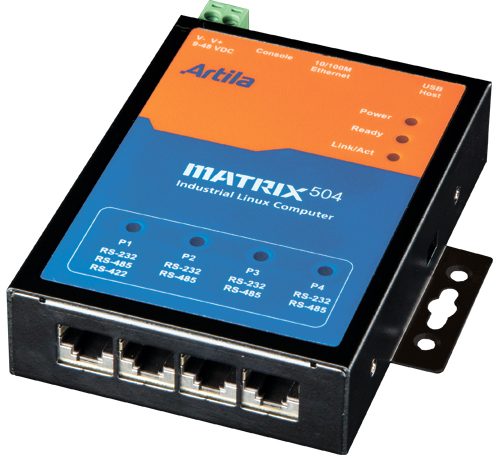
Comprehensive Product Summary – Artila M-503 Linux System-on-Module
### 1. Product Overview
Product Name: M-503 Linux-ready ARM9 System-on-Module
Model: M-503
Series: Matrix 500 Series
Article Number: M-503
Manufacturer: Artila Electronics Co., Ltd.
Product Type: Embedded System-on-Module (SoM)
Processor Platform: ATMEL AT91SAM9G45 ARM9 CPU
Operating System: Linux Kernel 2.6.38 (pre-installed)
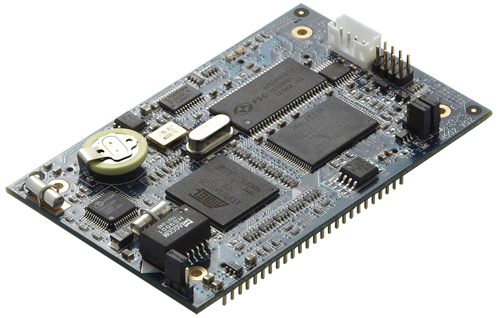
The Artila M-503 is a compact, high-performance System-on-Module (SoM) designed for embedded Linux applications requiring robust connectivity, low power consumption, and flexible I/O capabilities. It integrates an ARM9-based microprocessor, memory, networking, and peripheral interfaces into a single 80 × 50 mm board, providing a ready-to-deploy computing platform for industrial automation, communication gateways, and embedded control systems.
### 2. Key Features
- Processor: ATMEL AT91SAM9G45 ARM926EJ-S CPU with integrated MMU, operating at 400 MHz.
- Memory: 128 MB DDR2 SDRAM and 256 MB NAND Flash, plus 2 MB DataFlash® for system backup.
- Operating System: Linux kernel 2.6.38 with U-Boot bootloader and full file system support (UBI, JFFS2, EXT2/3, VFAT/FAT, NFS, NTFS).
- Networking: On-board 10/100 Mbps Ethernet interface with integrated PHY (DAVICOM DM9161) and 1.5 kV magnetic isolation.
- Serial Communication: Four UARTs (up to 921.6 Kbps) with hardware flow control; configurable RS-232/422/485 modes.
- USB Connectivity: One USB 2.0 high-speed host port (480 Mbps) and one USB 2.0 device/client port.
- Expansion Interfaces: SD card slot (up to 32 GB), SPI, I2C, I2S, and 32 programmable GPIO lines (3.3V CMOS).
- Real-Time Clock: ST M41T81 RTC with on-board 48 mAh lithium backup battery.
- Power Efficiency: Operates from 3.0–3.6 VDC (nominal 3.3 V) with typical consumption of 2 W.
- Compact Design: 80 × 50 mm board with 128-pin (2.0 mm pitch) connectors for integration.
- Software Ecosystem: Preloaded Linux utilities, web server (lighttpd), SSH, FTP, SNMP, and Artila management tools.
- Development Support: GNU C/C++ cross-compilation toolchain for Linux and Windows, Webmin for web-based administration, and IPKG package management.
### 3. Technical Specifications
Processor & Memory
- CPU: ATMEL AT91SAM9G45, ARM926EJ-S core, 400 MHz
- Cache: 32 KB instruction + 32 KB data cache
- SDRAM: 128 MB DDR2
- Flash: 256 MB NAND Flash
- DataFlash: 2 MB (system backup)
Networking
- Interface: 1 × 10/100 Mbps Ethernet
- PHY: DAVICOM DM9161
- Isolation: 1.5 kV magnetic
- Signals: ETX+, ETX−, ERX+, ERX−
Serial Interfaces (UARTs)
- Quantity: 4 UARTs
- Baud Rate: Up to 921.6 Kbps
- Data Bits: 5–8
- Stop Bits: 1, 1.5, 2
- Parity: None, Even, Odd, Mark, Space
- Flow Control: RTS/CTS, XON/XOFF, None
- Signal Level: CMOS 3.3V
- Ports:
- UART1: TX, RX, RTS, CTS, GND
- UART2: TX, RX, RTS, CTS, DCD, DTR, DSR, GND
- UART3: TX, RX, RTS, CTS, GND
- UART4: TX, RX, RTS, CTS, GND
USB Interfaces
- Host: 1 × USB 2.0 (480 Mbps high-speed)
- Device: 1 × USB 2.0 client
- Host Signals: USBA+, USBA−
- Device Signals: Uddata+, Uddata−, Udio
I2C Bus
- Signals: TWD, TWCK
- Supported Devices: EEPROM, RTC
I2S Audio Interface
- Transmitter: TSCK, TWS, TSD
- Receiver: RSCK, RWS, RSD
SPI Interface
- Signals: MISO, MOSI, SPCK
- Chip Selects: CS1, CS2
SD Card Interface
- Signals: MCCDA, MCCK, MCDA0–MCDA3
- Auxiliary: CD (Card Detect), WP (Write Protect)
- Compatibility: SD 2.0 standard
- Capacity: Up to 32 GB
GPIO
- Total: 32 programmable I/O lines (PIO0–PIO31)
- Voltage: 3.3V CMOS compatible
- IRQ Support: PIO32
- Predefined Pins:
- Reset Button (CN2 pin 35)
- System Reset (CN2 pin 34)
- Buzzer (CN2 pin 37)
- System Ready LED (CN2 pin 38)
- LAN Activity LED (CN3 pin 11)
Real-Time Clock
- Chip: ST M41T81
- Backup Battery: 48 mAh lithium (on-board)
- External Battery Input: CN1 pin 5
Debug & Development Ports
- RS-232 serial console (Tx, Rx, GND)
- JTAG interface for low-level debugging
Power
- Input Voltage: 3.0–3.6 VDC (nominal 3.3 V)
- Power Consumption: 2 W typical
Physical Characteristics
- Dimensions: 80 mm × 50 mm
- Connectors: 128 pins total (2.0 mm pitch)
- CN1: 28 pins
- CN2: 50 pins
- CN3: 50 pins
- Mounting Holes: 2 × M2 (2.0 mm diameter)
### 4. Functionality
The M-503 operates as a self-contained embedded computing module capable of running Linux-based applications directly from its onboard flash memory. It provides a complete hardware and software environment for developing and deploying industrial control, data acquisition, and communication systems.
Typical Use Cases:
- Industrial automation controllers
- IoT gateways and edge computing nodes
- Networked data loggers
- Embedded HMI systems
- Communication protocol converters (RS-232/422/485 to Ethernet)
- Remote monitoring and control units
Compatibility:
- Compatible with Artila carrier boards and starter kits
- Supports Linux and WinCE environments
- Works with standard USB peripherals (Wi-Fi adapters, flash drives, modems, webcams, keyboards, mice, etc.)
### 5. Components & Accessories
Included Components:
- M-503 System-on-Module
- Pre-installed Linux OS and bootloader
- On-board RTC with lithium backup battery
- Ethernet PHY and transformer
- 128 MB DDR2 SDRAM, 256 MB NAND Flash, 2 MB DataFlash
Optional Accessories:
- M-503 Starter Kit, which includes:
- M-503 SoM
- Carrier board with power circuitry
- 3 × RS-232 ports
- 1 × RS-232/422/485 selectable port
- 1 × Ethernet port
- 2 × USB host ports
- 1 × SD socket
- 2 × GPIO connectors
- RTC, EEPROM, and local bus connector
Connectors:
- CN1 (28-pin): Power, address/data bus, control signals
- CN2 (50-pin): UARTs, GPIOs, control lines
- CN3 (50-pin): Ethernet, SPI, SD, I2C, and additional GPIOs
### 6. Installation & Setup
Requirements:
- 3.3 VDC regulated power supply
- Carrier board or custom baseboard with 2.0 mm pitch connectors
- Linux or Windows host for cross-compilation and configuration
Mounting Options:
- Two M2 mounting holes for secure attachment
- DIN-rail mountable when used with Artila carrier board
Configuration:
- Bootloader: U-Boot (supports boot from NAND Flash or SD card)
- Default IP Address: 192.168.2.127
- Default Netmask: 255.255.255.0
- SSH Login: root/root
- Telnet Login: guest/guest
- Terminal Type: VT100
Software Setup:
- Web-based administration via Webmin
- Package management using IPKG
- Remote access via SSH, Telnet, or serial console
- File system mounting for USB and SD storage using standard Linux commands
### 7. Performance & Capabilities
Processing Performance:
- 400 MHz ARM9 CPU with MMU ensures efficient multitasking and memory protection.
- Optimized for embedded Linux applications requiring real-time responsiveness.
Networking:
- Reliable 10/100 Mbps Ethernet with hardware isolation for industrial environments.
I/O Performance:
- UARTs support up to 921.6 Kbps for high-speed serial communication.
- USB 2.0 host supports 480 Mbps throughput for external devices.
Storage:
- 256 MB NAND Flash for OS and applications.
- SD card expansion up to 32 GB for data logging or extended storage.
Power Efficiency:
- Typical consumption of 2 W enables fanless operation and low thermal footprint.
Operating Conditions:
- Temperature Range: 0°C to +70°C (commercial grade)
- Fanless design suitable for embedded and industrial environments.
Limitations:
- Single Ethernet interface (no dual LAN redundancy).
- Limited to 3.3V I/O voltage levels.
- No integrated display controller (requires external interface for HMI).
### 8. Standards & Compliance
Hardware Standards:
- Compliant with ARM9 architecture specifications
- USB 2.0, SD 2.0, and IEEE 802.3 (Ethernet) standards
Software Standards:
- POSIX-compliant GLIBC library
- Linux kernel 2.6.38 with standard device drivers
Regulatory Compliance:
- Designed for CE and FCC Class A industrial environments (manufacturer dependent)
- RoHS-compliant components and lead-free manufacturing
Supported Protocols:
- IPv4, ICMP, ARP, DHCP, NTP, TCP, UDP, FTP, Telnet, HTTP, PPP, PPPoE, SNMP v1/v3, SSL, SSH 1/2
### 9. Additional Information
Warranty & Support:
- Standard manufacturer warranty (typically 1 year, region-dependent)
- Technical documentation, SDK, and software tools available from Artila’s website
- Developer support via Artila technical forums and email
Maintenance:
- Flash-based architecture eliminates moving parts
- Software updates via IPKG or manual package installation
- RTC battery replacement recommended every 5 years
Software Updates & Tools:
- GNU C/C++ cross-compilation toolchain for Linux and Windows
- Webmin for remote system management
- Artila Manager Utility (manager.jar) for network discovery and configuration
- Preloaded utilities: bash, busybox, gtk+, x11, gpe, alsa, lighttpd, vsftpd, iptables, openssh, mysql, php, qt4-embedded, sqlite3, snmp, and more
Developer Resources:
- SDK with example programs and header files (e.g., matrix504.h)
- Full pin assignment documentation for CN1, CN2, CN3 connectors
- JTAG and serial console access for debugging
### Summary
The Artila M-503 is a robust, Linux-ready System-on-Module built around the ATMEL AT91SAM9G45 ARM9 processor, offering a balanced combination of performance, connectivity, and low power consumption. With its integrated Ethernet, multiple serial ports, USB interfaces, and extensive GPIO support, it serves as a versatile platform for embedded and industrial applications. The pre-installed Linux environment, comprehensive software stack, and available development tools make it ideal for rapid prototyping and deployment in automation, networking, and IoT systems.
Its compact 80 × 50 mm form factor, 3.3V operation, and fanless design enable seamless integration into space-constrained and energy-efficient embedded systems. The M-503’s combination of hardware reliability, open-source software support, and developer-friendly ecosystem positions it as a cost-effective and scalable solution for modern embedded computing needs.


 LOOKING FOR THE RIGHT
 M-503_Datasheet.pdf
PDF Catalog
M-503_Datasheet.pdf
PDF Catalog
 Warranty Declaration.pdf
PDF Catalog
Warranty Declaration.pdf
PDF Catalog
 M-502 User Guide.pdf
Manual
M-502 User Guide.pdf
Manual